

Business
Nike posts surprise sales growth but turnaround work is far from over


Nike on Tuesday posted surprise sales growth in its fiscal first quarter, but the sneaker giant still has work ahead to execute its turnaround.
The company said revenue rose 1% in the three months ended Aug. 31, after previously saying it anticipated sales would fall by a mid-single digit percentage in the period.
Still, Nike’s profits fell 31% while gross margin dropped 3.2 percentage points to 42.2% during the quarter — a warning sign to investors that its efforts to clear through old inventory are still ongoing.
In a press release, finance chief Matt Friend warned that “progress will not be linear.”
“I’m encouraged by the momentum we generated in the quarter, but progress will not be linear as dimensions of our business recover on different timelines,” said Friend. “While we navigate several external headwinds, our teams are focused on executing against what we can control.”
Here’s how Nike performed during the quarter compared with what Wall Street was anticipating, according to consensus estimates from LSEG:
- Earnings per share: 49 cents vs. 27 cents expected
- Revenue: $11.72 billion vs. $11.0 billion expected
Nike’s reported net income for the period was $727 million, or 49 cents per share, compared with earnings of $1.05 billion, or 70 cents per share, in the year-ago quarter.
Sales rose to $11.72 billion, up about 1% from $11.59 billion a year earlier.
In a statement, CEO Elliott Hill said the company is making strides in three key areas: wholesale, running and North America. During the quarter, wholesale revenue rose 7 to about $6.8 billion%, while sales in North America climbed 4% to $5.02 billion — better than the $4.55 billion analysts were expecting, according to StreetAccount.
However, beyond those three areas, Hill acknowledged parts of the business are still struggling.
“While we’re getting wins under our belt, we still have work ahead to get all sports, geographies, and channels on a similar path as we manage a dynamic operating environment,” said Hill.
During the quarter, Nike direct sales fell 4% to about $4.5 billion. Revenue in China — one of the company’s most important markets — was down 9%.
Since Hill took over nearly a year ago, he’s been working to get Nike back to growth and undo some of the work his predecessor John Donahoe implemented. One of the most important parts of that strategy has been reigniting Nike’s innovation engine and clearing through stale inventory to make way for new styles.
Though the strategy is crucial to Nike’s efforts to grow again and take back market share, it comes with pain in the short term. Clearing out old inventory has required Nike to rely on discounting and less profitable sales channels to move products, which has impacted its profitability.
During the quarter, inventories were down 2% compared to the prior year as units decreased, which was offset by increased product costs related to higher tariffs.
Ahead of Nike’s release, investors were looking for any clues into how those efforts are going and how much longer they’ll take. The company was expected to provide more insight into its progress during a conference call with analysts at 5 p.m. ET.
Beyond inventory management, Hill has also pledged to realign Nike’s corporate structure so it would once again segment teams by sport instead of by women’s, men’s and kids. In late August, the company started shuffling teams. As part of the restructuring, Nike said it would cut around 1% of its staff, and most employees would be moved into new roles by Sept. 21.
Hill has said a focus on sports over lifestyle will help the company win back its crucial athlete consumer, but lifestyle merchandise is still an important part of the strategy because it allows Nike to reach a larger consumer segment, and more women. Growing the number of female customers has been another important part of Hill’s strategy and Nike’s recent partnership with Kim Kardashian’s shapewear brand Skims is one of the ways it’s getting there.
NikeSKIMS, originally slated to release in the spring, officially launched last week. Investors will be looking out for color on how the new brand is performing and how it could affect sales.
This story is developing. Please check back for updates.



Business
US wholesale inflation data: Producer prices rise 4% as Iran war fuels energy surge, Fed faces policy dilemma – The Times of India
US wholesale prices rose sharply in March as the Iran war drove up energy costs, adding to inflation pressures and complicating the Federal Reserve’s policy outlook.Producer prices, which measure inflation at the wholesale level before it reaches consumers, rose 0.5% from February and 4% from March 2025, marking the biggest annual increase in more than three years, AP reported.Energy prices surged 8.5% month-on-month, reflecting the impact of the Middle East conflict on global oil markets.However, core producer prices –which exclude volatile food and energy components- rose a modest 0.1% from February and 3.8% year-on-year, indicating relatively contained underlying inflation.The rise in wholesale inflation adds to challenges for the US Federal Reserve, which has been under pressure from President Donald Trump to cut interest rates, even as some policymakers lean toward tightening due to persistent price pressures.Food prices, a politically sensitive component ahead of next year’s midterm elections, declined 0.3% in March after rising 2.4% in February.Economists track wholesale inflation closely as it provides early signals on consumer prices, with components such as healthcare and financial services feeding into the Fed’s preferred gauge — the personal consumption expenditures (PCE) index.“The decline in food prices is overdue, and welcome news for everyone,” Carl Weinberg, chief economist at High Frequency Economics, said. “Food price increases are at the core of political arguments over affordability.”The latest data follows a sharp rise in consumer inflation, with gasoline prices pushing the consumer price index up 3.3% year-on-year in March — the biggest increase since May 2024 — and 0.9% month-on-month, the steepest gain in nearly four years.Meanwhile, the International Energy Agency (IEA) warned that the Iran war could lead to an annual decline in global oil demand for the first time since the pandemic.The agency said oil demand is expected to fall by an average of 80,000 barrels per day this year, a sharp reversal from its earlier forecast of an increase of 850,000 barrels per day.The drop in demand has been driven by attacks on energy infrastructure and the shutdown of the Strait of Hormuz, with the IEA projecting a decline of 1.5 million barrels per day in the current quarter.While the initial impact has been concentrated in the Middle East and Asia-Pacific, demand destruction is expected to spread as oil prices rise and supply constraints persist.
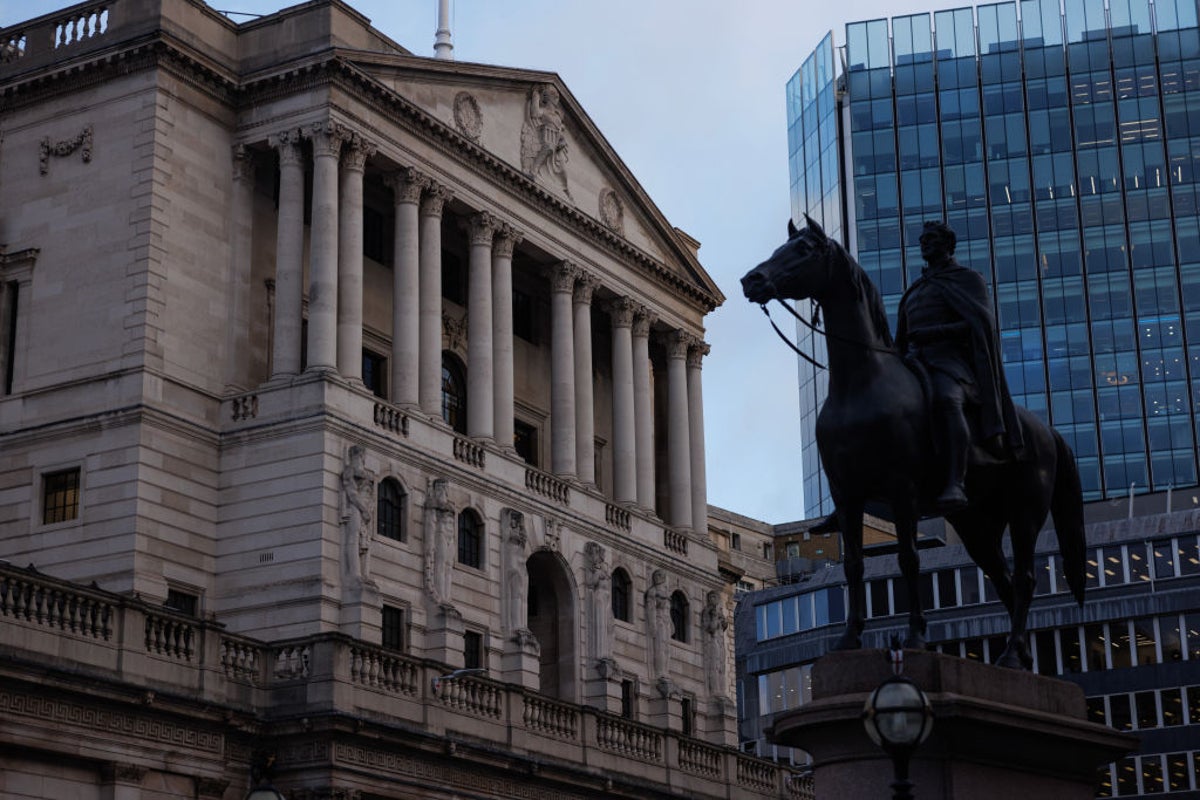
Britain is heading for “stagflation”, according to at least one gloomy forecast, as energy prices bite and inflation jumps as a result of the Iran war.
Stagflation – a combination of rising inflation, higher unemployment and low or zero economic growth – is seen as a “worst of both worlds” scenario because it is hard for policymakers to make clear choices.
If they boost employment, that only adds to inflation. If they fight inflation, that hurts growth.
Thomas Pugh, chief economist at RSM UK, said: “President Trump’s announcement of a naval blockade of the Strait of Hormuz has shifted the focus back to the risks of higher energy prices and recession. It’s now looking inevitable that the UK is in for another bout of stagflation, even if inflation won’t go as high as in 2023.
“Further constraining supply leaving the region pushes energy prices to levels that would trigger demand destruction in Europe, the UK and Asia. That would tip the UK into recession and potentially force the Bank of England to raise interest rates.”
Inflation hit 12.8 per cent in 2023. It is now at 3.3 per cent, according to official March figures.
Last time the Bank of England met to discuss rates, it held them at 3.75 per cent. Before the war, the strong expectation was that rates could come down two or three times this year, cutting borrowing costs for homeowners and businesses.
Economists still say the Bank can resume its original path as long as the Iran conflict doesn’t drag out past the summer. Inflation, the Bank thought, was coming down prior to the first attack.
Not all City economists are so pessimistic. None thinks the economy is about to boom, but they doubt a recession looms.
Paul Dales, chief UK economist at Capital Economics, said: “While acknowledging the huge uncertainty, we think it is more likely that the UK economy will stagnate rather than contract significantly. And because the labour market is much weaker now than in 2021-22, this bout of inflation will probably be milder and shorter, perhaps with inflation rising from 3 per cent in February to a peak of 4 per cent around the turn of the year. And with interest rates already reasonably high, I doubt the Bank of England will raise interest rates in response.”
However, Mr Pugh said the UK will suffer stagflation even if the ceasefire is resumed because of the damage done to consumer confidence by higher fuel and mortgage costs.
He added: “Energy prices at current levels are still enough to push inflation above 3 per cent by the end of the year. Once we add in higher shipping and raw material costs and supply chain disruptions, it’s easy to get to inflation of around 3.5 per cent/4 per cent by the end of the year. That’s significantly higher than the 2 per cent to 2.5 per cent we were expecting back in February.”
Meanwhile, business bosses are also concerned. HSBC CEO Georges Elhedery told Bloomberg: “We’re saddened and concerned with what’s happening in the Middle East, and we’re concerned not just with what’s happened, but also with how long this will take. Unfortunately, some of these uncertainties have initially started to weigh on general confidence.”
Oil giant BP has said it is now set for an “exceptional” oil trading result in the first three months of the year after the Iran war sent the cost of crude soaring.
The FTSE 100 firm upgraded its first quarter oil trading guidance, which follows a “weak” out-turn for the division in the final quarter of 2025.
BP said it was seeing “impacts associated with the ongoing situation in the Middle East and the current market conditions resulting in heightened volatility in crude oil, natural gas and refined products prices in the latter part of the first quarter”.
“These market conditions are expected to impact financial results, including trading results and working capital movements,” it added, pointing to an increased impact of so-called price lags.
Oil prices have surged higher since the US-Israel war on Iran started on February 28 and are now more than 60% up so far this year.
Brent crude reached close to 120 US dollars a barrel at one stage and is still hovering around the 100 dollars level as peace talks falter and amid fears over a looming global energy supply crisis.
BP said Brent crude prices averaged 81.13 dollars a barrel over the first quarter as a whole, which includes just over four weeks of volatility caused by the Middle East conflict.
This is up sharply from 63.73 dollars a barrel in the previous three months.
Every one dollar movement per barrel in oil prices leads to a 340 million-dollar (£251 million) impact on pre-tax operating profits, according to BP.
BP said upstream production was now expected to be broadly flat compared with the previous quarter, while oil production would be slightly lower, adding that net debt was set to increase to between 25 and 27 billion US dollars (£18.5 billion to £20 billion), up from 22.2 billion dollars (£16.4 billion) in the fourth quarter.
The firm will report first quarter figures on April 28.
BP shares fell around 1% in Tuesday morning trading as oil prices edged below 100 US dollars a barrel on that latest hopes of a revival in US-Iran negotiations.
Susannah Streeter, chief investment strategist at Wealth Club, said: “Crude prices have dipped back a little as hopes rise for fresh talks to end the Iran conflict, but the squeeze on energy supplies is likely to remain a disruptive force, and markets are set to stay jittery.
“BP’s trading update reflects this uncertainty, with the company highlighting that volatile commodity markets will be a key feature of its first-quarter results.”
She added that net debt at BP is rising “because more cash is being tied up in day-to-day operations”.
“As oil prices rise, BP is likely to need more money to hold the same barrels and to keep its trading activity running, which pushes up borrowing in the short term,” she said.
Fellow FTSE 100 oil major Shell last week also said the recent spike in prices was boosting trading in its chemical and products business, which includes oil trading.
But Shell cut its guidance for first quarter integrated gas production after volumes from Qatar were particularly impacted during recent attacks.
Last month, Shell’s PearlGTL site in Qatar stopped production after being hit during attacks while LNG facilities in the country partly owned by Shell have also been impacted.
BP’s upcoming first quarter results will be the first under new chief executive Meg O’Neill, who took over on April 1.
She replaced Murray Auchincloss, who was ousted last year as part of a leadership overhaul by new chairman Albert Manifold.


UK revises intellectual property fee structure effective April 2026
US wholesale inflation data: Producer prices rise 4% as Iran war fuels energy surge, Fed faces policy dilemma – The Times of India

President Zardari lauds Pakistan’s untiring efforts in facilitating US-Iran dialogue

-

 Fashion1 week ago
India’s exports face reset as EU links trade to carbon metrics: EY
-
 Tech6 days ago
As the Strait of Hormuz Reopens, Global Shipping Will Take Months to Recover
-

 Entertainment6 days ago
Queen Elizabeth II emotional message for Archie, Lilibet sparks speculation
-

 Tech6 days ago
Azure customers up in arms over ‘full’ UK South region | Computer Weekly
-

 Entertainment1 week ago
Lamar Odom shocking response to Khloé Kardashian account of his overdose
-

 Sports1 week ago
With Messi goal, Inter Miami open new stadium with dream moment
-

 Tech5 days ago
This AI Button Wearable From Ex-Apple Engineers Looks Like an iPod Shuffle
-

 Fashion6 days ago
CII submits 20-pt agenda to Indian govt to back firms hit by Iran war