

Business
How a surge in legal betting fueled an ugly fight: The battle for 1-800-GAMBLER


The booming business of betting across America has led to soaring concerns over problem gambling.
Generally, ads for legitimate, licensed casinos and sportsbooks carry some kind of disclaimer that gambling is supposed to be for entertainment. The small print might offer: “Gambling problem? Call 1-800-GAMBLER.”
That number is about as memorable and sticky as you can get. And it prompted a brief but intense legal battle over who has the right or the moral imperative to operate the closest thing the U.S. has to a national gambling hotline.
The National Council on Problem Gambling (NCPG) has been running the helpline since 2022, leasing it for $150,000 annually from the Council on Compulsive Gambling of New Jersey (CCGNJ), which had previously operated it since 1983.
Since the national organization took over, monthly call traffic has increased 34% and media mentions have soared more than 5,000%, leading to a third of Americans recognizing 1-800-GAMBLER as a national hotline, according to the NCPG.
Now the CCGNJ wants its number back.
The contract between the two groups ends Tuesday. The national group notified the New Jersey group of its intention to exercise its right of renewal and extend for another five years. CCGNJ refused.
“It’s our property, ” Luis Del Orbe, CCGNJ’s executive director, told CNBC. The group also owns 800gambler.org.
The National Council sued for an emergency stay this summer to prevent the New Jersey council from taking back operations, arguing that the local group doesn’t have the resources to staff or operate the hotline around the clock.
NCPG has significant financial backing from the NFL — more than $12 million over six years — and major sportsbook operators. The council spends $1.5 million annually providing infrastructure and connection for callers in 10 states and serving as a kind of call-in way station for dozens of other jurisdictions.
Lawyers for the national council argued that reverting it back under New Jersey’s operation would have devastating consequences.
“Thousands of individuals and families could suddenly find themselves without access to the only national lifeline for problem gambling,” said Amanda Szmuc, an attorney with Offit Kurman.
Del Orbe of the New Jersey organization said his staff is prepared for an increase in calls. When calls come into his office after-hours, they’re forwarded to a 24-hour call center in Louisiana — the same one that services many states and local jurisdictions that funnel through 1-800-GAMBLER, he said.
Del Orbe told CNBC his organization felt NCPG was “weaponizing the number,” demanding data on problem gambling from local councils and threatening to bar them from the hotline if they refused.
The NCPG collects and analyzes data from problem gambling calls, often to illustrate the danger of addiction to betting. But not every state that uses 1-800-GAMBLER shares its statistics with the national council.
The national council said, “Despite repeated outreach and offers of consultation, training, and stipends, two state councils declined to participate, and one failed to meet requirements.” It said it began rerouting calls from those states to the call center in Louisiana.
“Our greatest fear is that people in crisis will pick up the phone, or send a text, and find no one on the other end,” said Jaime Costello, director of programs at NCPG.
The NFL said in a statement to CNBC, “Under NCPG’s stewardship, 1-800-GAMBLER has been transformed into a vitally important national resource—making it easier for anyone, anywhere in the country to get quality care when they need it. Any disruption or degradation of that service is deeply concerning.”
On Monday, the New Jersey Supreme Court denied NCPG’s request for an emergency stay, a last ditch effort to keep the number from reverting to the local council.
The National Council on Problem Gambling says for now it will revert to using its old number, 1-800-522-4700, which isn’t quite as easy to remember.




Illuminated logo for Pepsi on a soda fountain in Walnut Creek, California, March 4, 2026.
Smith Collection | Gado | Archive Photos | Getty Images
PepsiCo on Thursday reported quarterly earnings and revenue that topped analysts’ expectations as its struggling North American food business reported a return to volume growth.
Here’s what the company reported compared with what Wall Street was expecting, based on a survey of analysts by LSEG:
- Earnings per share: $1.61 adjusted vs. $1.55 expected
- Revenue: $19.44 billion vs. $18.94 billion expected
Pepsi reported first-quarter net income attributable to the company of $2.32 billion, or $1.70 per share, up from $1.83 billion, or $1.33 per share, a year earlier.
Excluding items, the company earned $1.61 per share.
Net sales rose 8.5% to $19.44 billion.
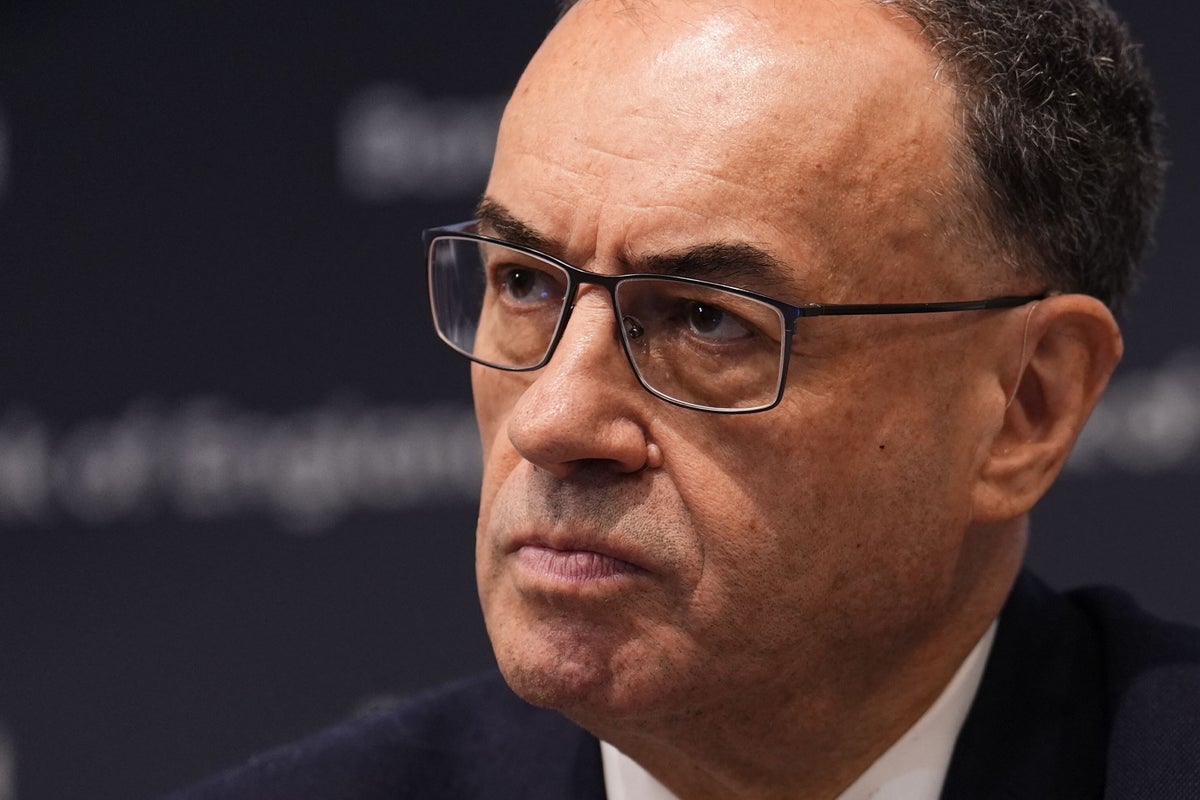
Bank of England governor Andrew Bailey has warned the global economy is set for a “very big energy shock” that will lead to surging inflation, but said policymakers would not rush to hike interest rates.
Speaking at the International Monetary Fund (IMF) spring meeting in Washington DC, Mr Bailey told the BBC the Bank is facing a “very, very difficult” decision on rates at its meeting on April 30.
The Middle East conflict has sent oil prices surging by around 60% since the start of the year, at one stage hitting nearly 120 US dollars a barrel, which is pushing up fuel and energy costs.
This is expected to feed through to wider prices, with forecasts for UK inflation to jump higher in the coming months and Britain’s growth outlook sharply downgraded.
But official figures on Thursday, which were released after Mr Bailey’s comments, showed the UK economy was far stronger than expected at the start of the year, with growth of 0.5% in February following upwardly revised expansion of 0.1% in January.
Experts said while welcome, UK activity is still set to slow sharply as higher energy prices weigh on spending and hamper growth.
Mr Bailey told the BBC: “There’s really difficult judgments to be made.
“We’re not going to rush to judgments on those things, because there are a lot of uncertainties around this, not just how it’s going to play out, but also how it’s going to pass through into the UK economy.”
The IMF’s economic outlook report earlier this week showed the UK facing the biggest downgrade to growth among the G7 group of countries, with 0.8% forecast for 2026, down sharply from the 1.3% predicted in January.
The influential financial body said the spike in energy prices caused by the war will help push UK inflation towards 4% – double the Bank of England’s target.
But the IMF cautioned central banks about making hasty decisions on interest rates.
The Bank of England had previously been expected to cut rates further this year, down from 3.75% currently, but the predicted inflation surge caused by the Iran war has led to forecasts that hikes could be on the way.
Mr Bailey said the Bank is taking the IMF’s “serious advice” into account.
On fears over supply shortages caused by the Iran war disruption and blockage of the crucial Strait of Hormuz shipping route, Mr Bailey said there is “a certain amount of resilience in the system” but that will only last so long.
He added: “The faster there is a resolution to this situation – I particularly mean in terms of the supply of energy coming out of the Gulf – the easier and better the outcome will be.
“That’s really critical at this moment.”
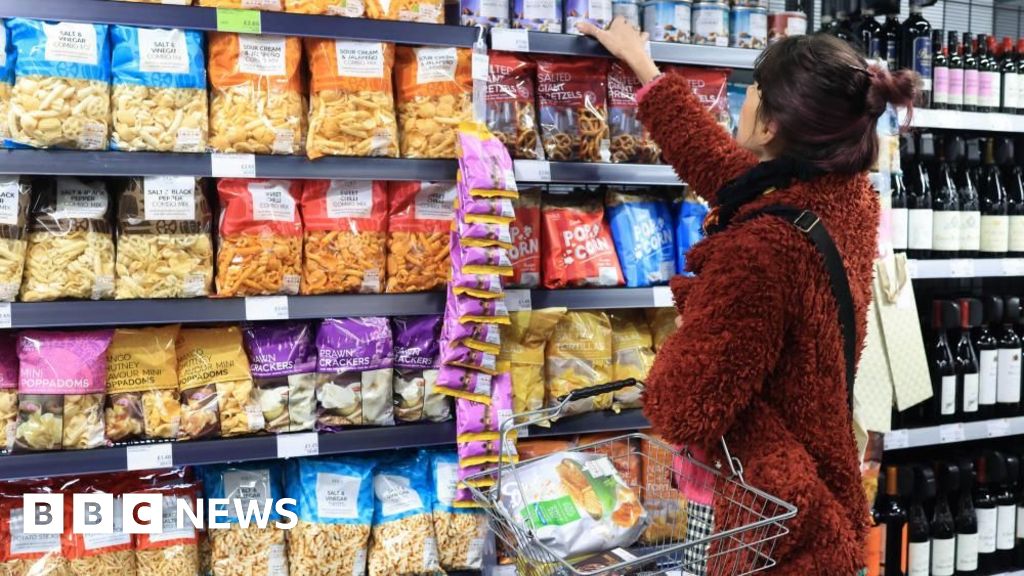
The economy saw its biggest monthly rise in more than two years just before the outbreak of the US-Israeli war with Iran.
Source link


Australian consumer confidence drops in April on rising living costs

LG’s High-End Soundbar System Makes My Living Room Feel Like a Home Theater

‘Miss Congeniality’ Benjamin Bratt opens up on working with Sandra Bullock

-

 Entertainment1 week ago
Queen Elizabeth II emotional message for Archie, Lilibet sparks speculation
-

 Tech1 week ago
Azure customers up in arms over ‘full’ UK South region | Computer Weekly
-

 Tech1 week ago
As the Strait of Hormuz Reopens, Global Shipping Will Take Months to Recover
-

 Fashion1 week ago
CII submits 20-pt agenda to Indian govt to back firms hit by Iran war
-

 Tech1 week ago
This AI Button Wearable From Ex-Apple Engineers Looks Like an iPod Shuffle
-

 Politics6 days ago
Indian airlines hit hardest after Dubai limits foreign flights until May 31
-

 Fashion1 week ago
ICE cotton hits 11-month high on drought concerns, demand boost
-

 Politics6 days ago
Chinese, Taiwanese will unite, Xi tells Taiwan opposition leader