

Politics
Indian airlines hit hardest after Dubai limits foreign flights until May 31

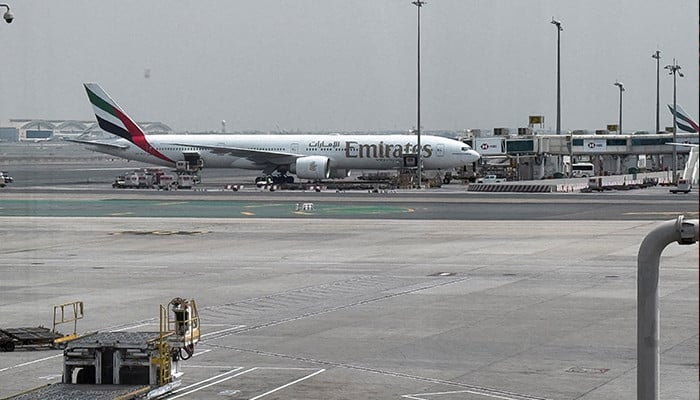
- Indian airlines face revenue loss due to Dubai’s flight curbs.
- Airlines group urges reciprocal measures.
- India was Dubai Airport’s top passenger source last year.
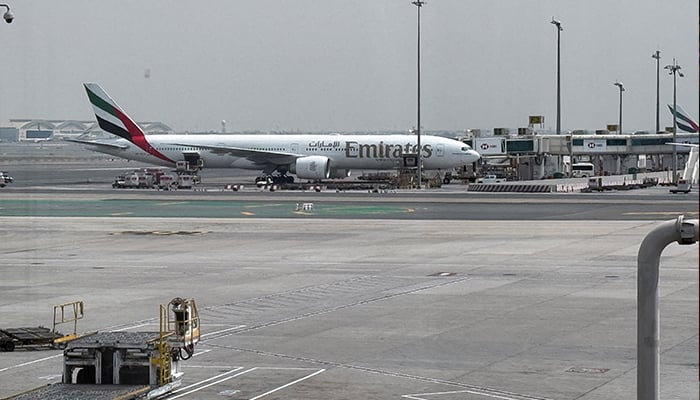
Dubai has restricted foreign airlines to just one daily flight to its airports until May 31 due to the Iran crisis, igniting revenue loss fears among Indian carriers that had planned more flights than airlines from any other country, letters show.
The Federation of Indian Airlines (FIA), which represents top carriers IndiGo, Air India and SpiceJet, has asked India to push Dubai authorities to lift the curbs and, failing that, to consider reciprocal measures on Dubai carriers, including Emirates and flydubai, according to a letter it sent to the Indian government on March 31.
Indian carriers are already under financial pressure from higher fuel prices and longer routings to Western destinations because they have been banned from using Pakistani airspace since last year, following military tensions between the two neighbours.
In a private email to airlines on March 27, seen by Reuters, Dubai Airports said carriers would be allowed one round trip per day to Dubai International Airport (DXB), normally the world’s busiest international travel hub, and the smaller Al Maktoum International Airport (DWC) during the summer season between April 20 and May 31, extending restrictions implemented after the war began.
“Carriers continue to be limited to one rotation per day, until capacity allows more to be facilitated … Additional slots will be allocated if capacity is available,” it said.
The FIA told the Indian government the curbs were not being applied to Dubai’s airlines such as Emirates and flydubai, creating an uneven playing field that could lead to “substantial” revenue losses.
Dubai Airports and Dubai’s media office did not respond to repeated requests for comment. Flydubai said its flight schedules were approved by the relevant authorities. Emirates did not respond to a request for comment.
The measures come after Emirates and other Gulf airlines have long complained about India’s bilateral air service agreements that cap the number of seats that can be deployed between countries. Indian authorities have said such pacts protect Indian airlines in the cutthroat market.
Indian carriers hardest hit by caps
India was the largest source of passengers for DXB in 2025, with 11.9 million travellers passing through the hub.
The Dubai caps will hit Indian airlines the hardest, according to April and May schedules data from Cirium.
Air India and its budget carrier Air India Express have scheduled more than 750 flights into DXB in that period. IndiGo has 481, followed by Saudia and Gulf Air, which planned for 480 and 404, respectively. India’s SpiceJet had planned 61.
The one-flight-per-day cap would mean 30 or 31 per month for each foreign airline, versus the hundreds of daily flights being flown by Emirates and flydubai, according to Flightradar24 data.
IndiGo told Reuters in a statement that the Middle East crisis and the new Dubai extended restrictions “significantly constrained” its operations as it had an approved summer schedule of 15 daily flights from India to Dubai.
“As a result, a significant portion of IndiGo’s capacity and aircraft time is currently underutilised,” IndiGo said in its first comments on the crisis.
Air India, SpiceJet and Indian authorities did not respond to requests for comment.
Other major airlines such as Lufthansa, Singapore Airlines, and British Airways had far fewer flights to Dubai than Indian carriers before the crisis began and have cancelled all flights to the city until at least May 31.
They are instead adding more non-stop Asia-Europe flights to take advantage of strong passenger demand that has pushed up prices.


Britain broke its record on Monday for the hottest day in May, according to the national weather agency, with the mercury rising to 33.5℃ near London as the country baked in a sweltering heatwave.
The previous hottest May day saw 32.8℃ heat, first registered in 1922 and again in 1944.
It is just the latest temperature record to tumble in the UK, which saw its hottest year on the books in 2025, with scientists warning that the country is unprepared for the ever-more frequent heatwaves driven by man-made climate change.
The Met Office had earlier forecast highs of 35℃, after heatwave conditions spread to parts of southeast England and London by Sunday night.
“Temperatures at Heathrow have recently reached 33.5℃, provisionally beating the all-time May record,” the Met Office wrote on social media.
“Records are usually only broken by tenths of a degree — making this heatwave unprecedented for the time of year,” the weather agency added earlier.
Monday is also expected to be the hottest bank holiday ever.
“We rarely see temperatures above 35℃, even in the summer months, so to see temperatures getting close to 35℃ in May is, as I say, pretty historic,” Met Office meteorologist Tom Morgan told the domestic Press Association news agency.
“It’s nice to have it, but it is much, much hotter than it should be in the UK,” Andrea Quaine, a 41-year-old mother, told AFP in London as temperatures exceeded 30℃ on Sunday.
“I am worried about it because it obviously shows that global warming is happening,” she added.
“The weather here, it’s like a mini version of hell. It’s boiling. It’s like really hot. The sunscreen, it will protect me, but it’s really hot,” said 10-year-old Liza Nizari, who was visiting London from Manchester in the northwest.
Scientists say human-induced climate change is making extreme weather events like heatwaves, droughts and floods more intense, resulting in temperature records being broken more frequently.
Climate advisers last week warned the UK government that the country was “built for a climate that no longer exists” and urged it to adapt infrastructure like schools and hospitals for a warming planet.
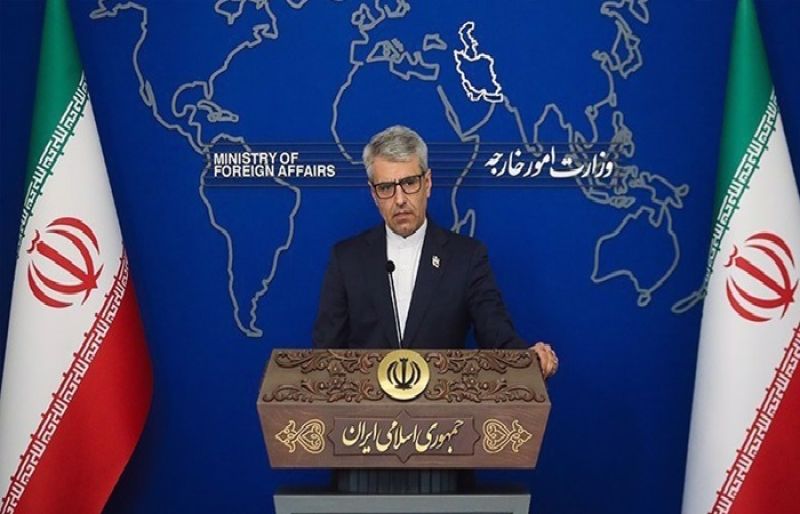
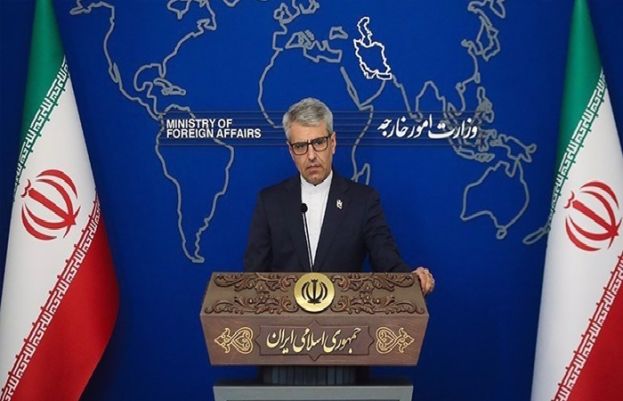
Iran’s Foreign Ministry spokesperson Ismail Baghaei said that Tehran’s current priority is to end the ongoing tensions and conflict through negotiations. Addressing a press conference today, he clarified that there are currently no plans to send an Iranian delegation to Pakistan, while noting that Iran remains in contact with countries cooperating on issues related to the Strait of Hormuz. Baghaei added that recent progress in negotiations has been made possible through the mediation efforts of Pakistan and other countries.
Baghaei said that the management of the Strait of Hormuz falls within the jurisdiction of coastal states, adding that Iran will ensure the protection of ships passing through the waterway and will respond to any act of aggression. He further stated that any proposed memorandum of understanding does not include detailed provisions on the management of the strait.
He said that most points in the ongoing negotiations have been agreed upon, but stressed that this does not mean a final deal or signing is imminent. According to him, Iran is currently focused on practical steps and shaping its strategy based on ground realities, while continuing to define its own policy independently. He added that pressure and threats are part of politics, but Iran makes its decisions based on its own assessments.
Baghaei further said that Iran and the United States have reached a general framework and are engaged in talks aimed at ending the conflict, although nuclear issues are not part of the current discussions. He cautioned against assumptions that a formal agreement or announcement is close.
He also said that a proposed ceasefire framework reportedly covers all fronts of the conflict, and that Iran is acting with a focus on implementation rather than rhetoric.


- BJP govt claims move aimed at targeting illegal migrants.
- Critics say measure reflects hardline stance on immigration.
- Order sparks fear among minorities about arbitrary expulsions.
India’s ruling Hindu-nationalist party has ordered detention centres for undocumented Bangladeshis and Rohingyas in West Bengal state, sparking fear among minorities that it could lead to arbitrary expulsions.
The directive comes just days after Prime Minister Narendra Modi’s Bharatiya Janata Party (BJP) won power in the eastern state for the first time since the country’s independence in 1947.
The order calls on local authorities to set up “holding centres” for “apprehended foreigners” awaiting deportation, as part of a broader crackdown on illegal migration.
The government has defended its “detect, delete, deport” principle, saying those targeted are migrants staying illegally in the country.
“Illegal migration has security and socio-economic ramifications which are often well beyond law enforcement” read the order, issued last week.
The decision has fuelled anxiety among West Bengal’s roughly 35 million Muslims, many of whom share linguistic and cultural ties with neighbouring Bangladesh.
Critics say the measure reflects the government’s long-standing hardline stance on immigration, with top BJP members referring to Bangladeshi migrants as “termites” and “infiltrators” in the past.
The party has pursued similar policies in the neighbouring state of Assam, where it has overseen sweeping identification drives and largescale detentions.
Rights activists say hundreds have been deported to Bangladesh from Assam without due legal process, often based on ethnic profiling.
Many of them have been allegedly pushed across the border at gunpoint, according to activists and lawyers who have challenged the measures in court.
They argue the policies disproportionately impact the Muslim population by conflating religious identity with illegal migration.
The planned centres in West Bengal have drawn particular concern because of the state’s porous border with Bangladesh and its long history of migration.
The inclusion of Rohingya refugees in the order has also drawn criticism.
India has previously been accused by humanitarian groups of forcibly returning Rohingya to Myanmar, despite ongoing conflict there, in potential violation of international norms on refugee protection.
Adding to the unease of the Muslims, the BJP-led government in Assam on Monday introduced legislation to amend personal religious laws, which critics say could further marginalise minorities.


Vietnam launches Hai Phong customs pilot from June 1

Is American men’s tennis in trouble as French Open begins?

Memorial Day Deals on Our Top Smart Bird Feeders, Camera Bags, and More

-

 Tech1 week ago
Why Is Your Grill So Dumb? The Best Grills Set Temp Like an Oven
-

 Tech1 week ago
This Solar-Powered Smart Sprinkler Keeps My Lawn Watered Without Any Power Cables
-

 Fashion4 days ago
ICE cotton sees mixed trend as rain forecasts weaken sentiment
-

 Fashion5 days ago
US cotton planting advances to 41%, concerns persist in Texas
-
 Fashion1 week ago
Turkiye’s current account deficit expected to widen in 2026: Minister
-

 Fashion1 week ago
India’s Pearl Global’s FY26 revenue crosses $521 mn milestone
-

 Tech1 week ago
A Danish Couple’s Maverick African Research Finds Its Moment in RFK Jr.’s Vaccine Policy
-

 Fashion6 days ago
Nigeria Kwara Garment Factory, KWS Garment Production Village ink pact