

Politics
Nuclear Submarines Deployed as Trump Escalates Dispute with Russia

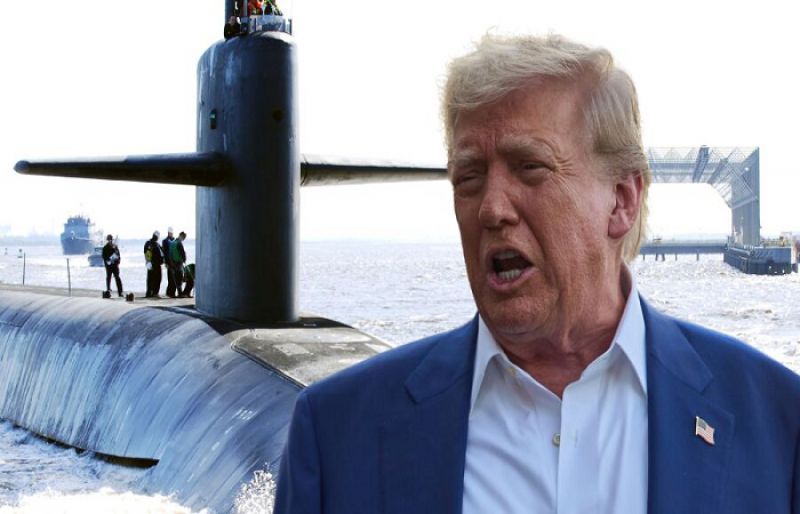

US President Donald Trump ordered the deployment of two nuclear submarines on Friday, marking a dramatic escalation in what had previously been a war of words with a senior Russian official over Ukraine and tariffs.
The move follows days of heated exchanges between Trump and Dmitry Medvedev, deputy chairman of Russia’s Security Council, on social media.
In a post on his Truth Social platform, Trump appeared to shift the confrontation into the realm of military posturing — and notably, nuclear deterrence.
“Based on the highly provocative statements,” Trump wrote, “I have ordered two nuclear submarines to be positioned in the appropriate regions, just in case these foolish and inflammatory statements are more than just that.”
The decision signals a rare public acknowledgment of nuclear force movements by a sitting or former U.S. president and adds to growing geopolitical tensions between Washington and Moscow.
“Words are very important, and can often lead to unintended consequences, I hope this will not be one of those instances,” the 79-year-old Republican posted.
Trump did not say in his post whether he meant nuclear-powered or nuclear-armed submarines.
He also did not elaborate on the exact deployment locations, which are kept secret by the US military.
But in an interview with Newsmax that aired Friday night, Trump said the submarines were “closer to Russia.”
“We always want to be ready. And so, I have sent to the region two nuclear submarines,” he said.
“I just want to make sure that his words are only words and nothing more than that.”
Trump’s remarks came hours after Russian President Vladimir Putin said Moscow had started mass producing its hypersonic nuclear-capable Oreshnik missile, and could deploy them to Belarus, a close Russian ally neighbouring Ukraine, by year-end.
The nuclear sabre-rattling came against the backdrop of a deadline set by Trump for the end of next week for Russia to take steps to ending the Ukraine war or face unspecified new sanctions.
Despite the pressure from Washington, Russia’s onslaught against its pro-Western neighbor continues to unfold at full bore.
An AFP analysis Friday showed that Russian forces had launched a record number of drones at Ukraine in July.
Russian attacks have killed hundreds of Ukrainian civilians since June.
A combined missile and drone attack on the Ukrainian capital Kyiv early Thursday killed 31 people, rescuers said.
Putin, who has consistently rejected calls for a ceasefire, said Friday that he wants peace but that his demands for ending his nearly three-and-a-half year invasion were “unchanged”.
Those demands include that Ukraine abandon territory and end ambitions to join NATO.
Putin, speaking alongside Belarusian President Alexander Lukashenko, said Belarusian and Russian specialists “have chosen a place for future positions” of the Oreshnik missiles.
“Work is now underway to prepare these positions. So, most likely, we will close this issue by the end of the year,” he added.
The United States and Russia control the vast majority of the world’s nuclear weaponry, and Washington keeps nuclear-armed submarines on permanent patrol as part of its so-called nuclear triad of land, sea and air-launched weapons.
Trump told Newsmax that Medvedev’s “nuclear” reference prompted him to reposition US nuclear submarines.
“When you mention the word ‘nuclear’… my eyes light up. And I say, we better be careful, because it’s the ultimate threat,” Trump said in the interview.
Medvedev had criticised Trump on his Telegram account Thursday and alluded to the “fabled ‘Dead Hand’” — a reference to a highly secret automated system put in place during the Cold War to control the country’s nuclear weapons.
This came after Trump had lashed out at what he called the “dead economies” of Russia and India.
Medvedev had also harshly criticized Trump’s threat of new sanctions against Russia over its war in Ukraine.
Accusing Trump of “playing the ultimatum game,” he posted Monday on X that Trump “should remember” that Russia is a formidable force.
Trump responded by calling Medvedev “the failed former President of Russia, who thinks he’s still President.”
Medvedev should “watch his words,” Trump posted at midnight in Washington on Wednesday. “He’s entering very dangerous territory!”
Medvedev is a vocal proponent of Russia’s war — and generally antagonistic to relations with the West.
He served as president between 2008-2012, effectively acting as a placeholder for Putin, who was able to circumvent constitutional term limits and remain in de facto power.
The one-time reformer has rebranded over the years as an avid online troller, touting often extreme versions of official Kremlin nationalist messaging.


LONDON: A BBC undercover investigation has alleged that a network of immigration advisers, paralegals and associated intermediaries has been helping migrants fabricate asylum claims in the UK by falsely presenting themselves as gay, charging thousands of pounds for false narratives, staged evidence and interview coaching.
At least three law firms – one of these owned by Pakistanis – have been accused by the BBC of fabricating the asylum claims through illegal means.
The law firms include Law and Justice Solicitors and Connaught Law. Law and Justice is owned by Michael Oluyemi Makinde and Connaught Law is owned by Nauman Javid, Sheryar Khan, Zehra Tamkan and Awais Javed.
According to the BBC investigation, the abuse centres on migrants, particularly from Pakistan and Bangladesh, whose student, work or tourist visas are close to expiring and who are then allegedly advised to seek asylum on the basis of sexual orientation, as being gay or lesbian.
Using undercover reporters posing as international students from Pakistan and Bangladesh, the BBC said it tested whether immigration advisers would encourage false sexuality-based asylum claims.
It reported finding multiple individuals willing to discuss fake claims, suggest supporting evidence and quote fees for handling such cases. Among the findings were allegations that Connaught Law firm quoted up to £7,000 for a fabricated claim and described the chances of refusal as “very low”, while another adviser allegedly offered to arrange fake supporting letters, photographs and even a supposed sexual partner to back up an asylum application.
The BBC undercover reporter made an appointment with Aqeel Abbasi, a senior legal adviser at Connaught Law, which has its offices in Central London on Gray’s Inn Road.
Abbasi told the BBC reporter that he could help him stay in the country and appeared to be willing to direct him on how to fabricate evidence for a fake claim. He promised that the chance of refusal by the Home Office was “very low”.
He said his fee would be £7,000 and, once that had been paid, his office would contact the undercover reporter to guide them through the process and the kind of evidence required.
This would include advising him on “where to go or what specific actions to take”.
The legal adviser also suggested the undercover reporter would need to find someone willing to pretend to be his male/gay partner. When the reporter said he had a wife in Pakistan, Abbasi was quick to suggest a cover story to explain this, by saying that things were “more open” in the UK than in Pakistan and that he now had a male partner.
“We will prepare a statement for you, and once you read it, you will understand exactly how it is,” said Abbasi.
A significant part of the investigation focused on Worcester LGBT, a support organisation for gay and lesbian asylum seekers, which holds monthly meetings attended by large numbers of migrants from across the country.
The BBC traced the undercover reporter’s route to the group through Mazedul Hasan Shakil, a paralegal at Law and Justice Solicitors, an immigration firm based in Birmingham and London, who is also described as founder and chairman of Worcester LGBT.
The reporter received a call from a woman identified as Tanisa (Shakil’s associate), who, in Urdu, allegedly became much more direct about using a “gay case” as the only realistic route to stay in Britain.
When told the reporter was not gay, Tanisa replied: “There is nobody who is real. There is only one way out in order to live here now and that is the very method everyone is adopting.” The BBC identified her as Tanisa Khan, an adviser linked to Worcester LGBT.
The broadcaster then described an initial meeting in Forest Gate, east London, which took place in Tanisa’s home.
According to the report, she laid out a plan to fabricate an asylum claim on the grounds of same-sex orientation, warning that the applicant would have to memorise a false story convincingly for Home Office interviews. The report said she offered to obtain a letter from someone claiming to have had sexual relations with the applicant and said she would fully prepare him for the Home Office process.
She charged £2,500, with additional costs if the claim failed and went to appeal. The BBC also said she suggested that if the reporter later brought his wife from Pakistan to Britain, she too could make a false asylum claim by pretending to be lesbian.
The BBC showed its footage to immigration lawyer Ana Gonzalez, who has 30 years of experience. She said Tanisa appeared to be “committing fraud by manufacturing a claim” and warned that such conduct makes life harder for genuine asylum seekers, especially LGBT claimants whose cases are often difficult to prove objectively.
The report said precise figures for fabricated claims are impossible to establish, but Home Office data suggests a disproportionate number of sexuality-based asylum claims come from Pakistani nationals.
In 2023, there were 3,430 initial decisions on LGBT asylum claims and nearly 1,400 new claims based on sexual orientation. Of these, 42% were lodged by Pakistani nationals, who also accounted for the highest number in each of the previous five years. The article noted that Pakistanis were only the fourth most common nationality across all asylum applications and made up just 6% of total claims overall.
Nearly two-thirds of asylum seekers claiming persecution on grounds of sexual orientation had their claims granted at initial decision stage in 2023.
The Home Office told the BBC that making an asylum claim through deception is a criminal offence and that anyone convicted can face prison and deportation.
It said misuse of protections designed for people fleeing genuine persecution because of their sexuality was deplorable, but insisted that the asylum system includes safeguards and that claims are rigorously assessed.
The department added that abuse is actively investigated and procedures are continually reviewed.
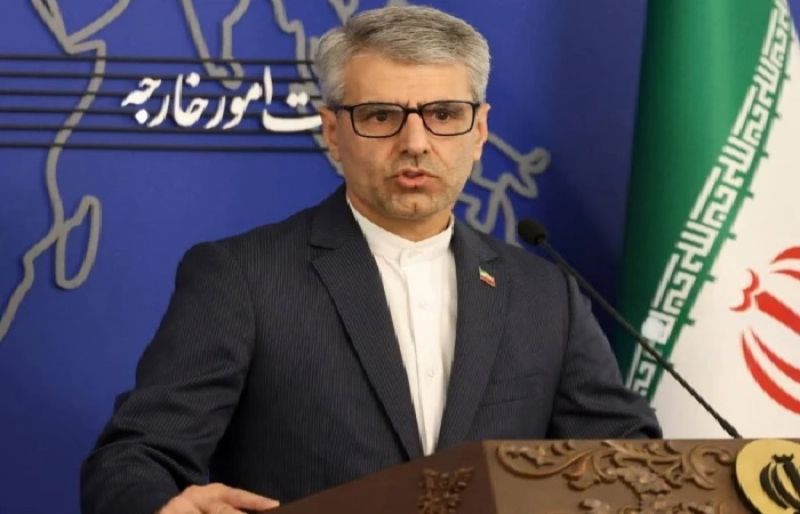
Iran will be hosting a high-ranking political and security delegation from Pakistan on Wednesday, as indirect exchanges of messages between Tehran and Washington continue, the Iranian Foreign Ministry spokesman announced.
Esmail Baghaei, speaking in response to a question from IRNA, confirmed that Tehran is expected to receive the Pakistani delegation today.
“Today, we are most likely hosting a delegation from Pakistan,” Baghaei said.
“Following the talks that took place in Islamabad, and also the discussions that the Pakistani side has had with the United States, our views have been conveyed and heard,” he said.
He added, “Naturally, during this visit, the two sides are expected to discuss their viewpoints in detail.”
Meanwhile, informed sources in Pakistan confirmed that a high-level security-political delegation, comprising prominent Pakistani figures, left Islamabad for Tehran a short while ago, IRIB news reported.
According to the sources, the delegation is carrying a new message from Washington for Tehran.
The delegation is scheduled to meet with Iranian officials to discuss future negotiations, the sources said.
The development comes as a two-week ceasefire between Iran and the United States will expire on April 22.
The United States and Israel launched their unprovoked war of aggression against Iran on February 28, assassinating the Leader of the Islamic Revolution and striking nuclear facilities, schools, hospitals and civilian infrastructure.
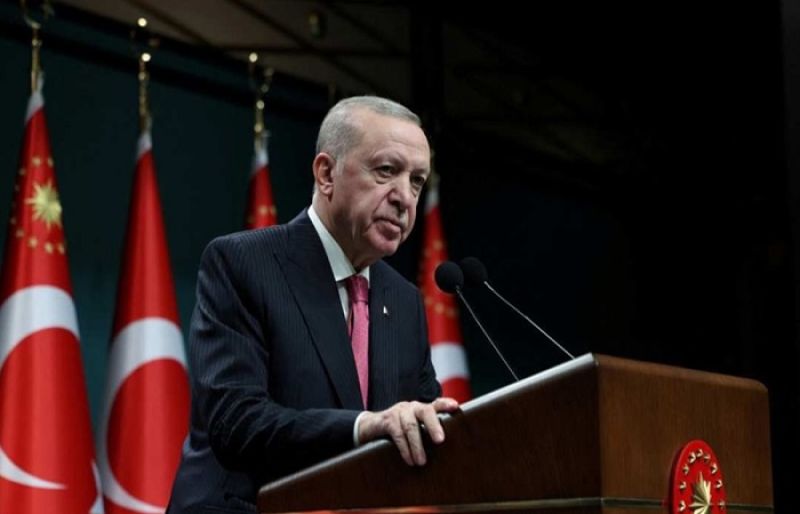
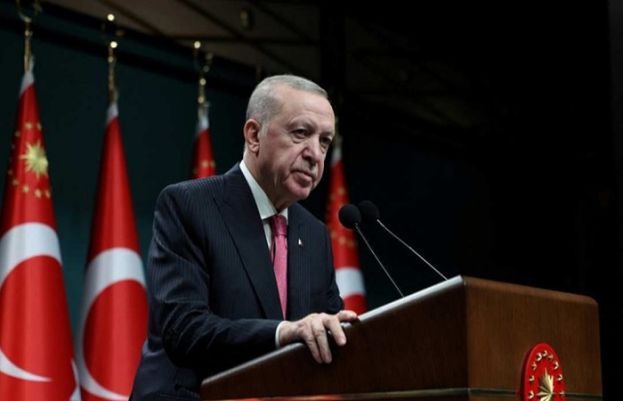
Turkish President Recep Tayyip Erdogan has warned against the Israeli regime’s attempts to sabotage a fragile ceasefire between the US and Iran, saying that Ankara will push for an extension of the truce and ensure peace talks continue in Pakistan.
Addressing a parliament session on Wednesday, Erdogan said that the Israeli prime minister’s cabinet, “which is known to be unhappy with the ceasefire process, must not be allowed to sabotage it.”
The Turkish leader said that his government is making the “necessary appeals and initiatives” to ease tensions and extend the ceasefire, which is set to expire on April 20.
The two-week ceasefire, announced last week, 40 days after the US and the Israeli regime launched their war of aggression against Iran, provided a fragile window for diplomacy. It will expire on April 22.
Over the weekend, high-level peace talks between US and Iranian officials took place in Pakistan’s capital, Islamabad. While the talks ended without an agreement, regional governments are urging both sides to return to the negotiating table.
Erdogan also urged the two sides to utilize “the window of opportunity opened by the ceasefire” before its expiration.
“If there is to be peace in our region, it will be despite the Zionist regime,” Erdogan said. “If stability is achieved, it will again be despite the Israeli government.”
The Turkish president also condemned the aggression against Lebanon, warning that continued airstrikes are harming hopes for peace.
He said that Turkey will continue “to be the follower of the cause of children killed in their sleep in Lebanon,” referring to Israel’s airstrikes that have killed more than 2,000 people—including many women and children—since early March, according to the Lebanese health ministry.
Despite the fact that the ceasefire between the US and Iran explicitly covered Lebanon, the Israeli regime continues its military aggression against the country, blatantly ignoring the terms of the truce.
This ongoing aggression is seen by regional observers as a deliberate attempt by Tel Aviv to sabotage the peace talks.


2026 NFL mock draft: Kiper’s pick predictions for Rounds 1-2
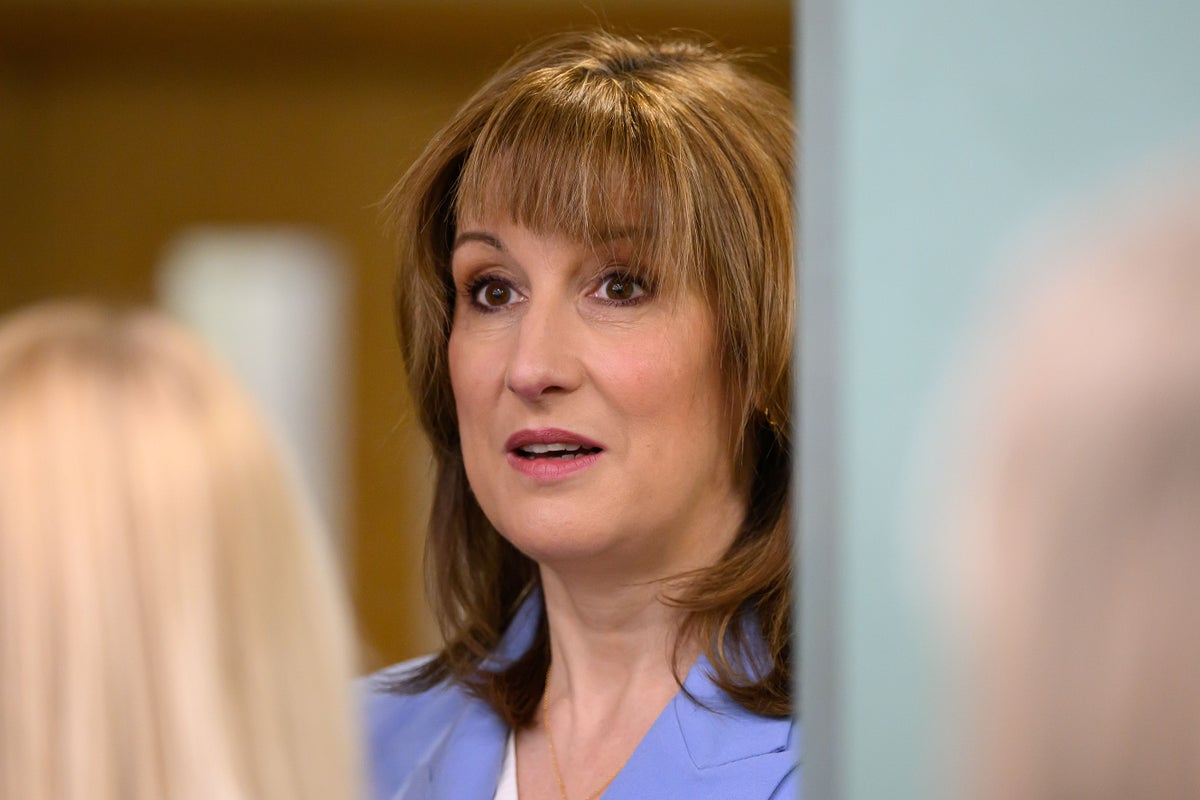
Chancellor cuts bills for thousands more firms as she continues Washington talks

‘The Last Airbender’ Leaked Online. Some Fans Say Paramount Deserves the Fallout

-

 Fashion1 week ago
India’s exports face reset as EU links trade to carbon metrics: EY
-

 Entertainment1 week ago
Queen Elizabeth II emotional message for Archie, Lilibet sparks speculation
-

 Entertainment1 week ago
Lamar Odom shocking response to Khloé Kardashian account of his overdose
-

 Tech1 week ago
Azure customers up in arms over ‘full’ UK South region | Computer Weekly
-

 Tech1 week ago
As the Strait of Hormuz Reopens, Global Shipping Will Take Months to Recover
-

 Fashion1 week ago
CII submits 20-pt agenda to Indian govt to back firms hit by Iran war
-

 Tech7 days ago
This AI Button Wearable From Ex-Apple Engineers Looks Like an iPod Shuffle
-

 Politics6 days ago
Indian airlines hit hardest after Dubai limits foreign flights until May 31