

Business
Pakistani rupee strengthens against US dollar in interbank trading – SUCH TV


The Pakistani rupee continued its upward trend against the US dollar on Friday, gaining 32 paisas during the early hours of trading in the interbank market. By 11:30 am, the local currency was trading at Rs281.90, up from the previous close.
On Wednesday, the rupee had settled at Rs282.22, while the interbank market remained closed on Thursday due to the Independence Day holiday.
The local currency has maintained a positive trajectory against the greenback in recent days on account of improved sentiment in the currency market amid an ongoing crackdown by law enforcement agencies against illegal currency dealers and smugglers.




Business
Gadkari urges shift to 100% ethanol blending, flags energy security and import risks – The Times of India
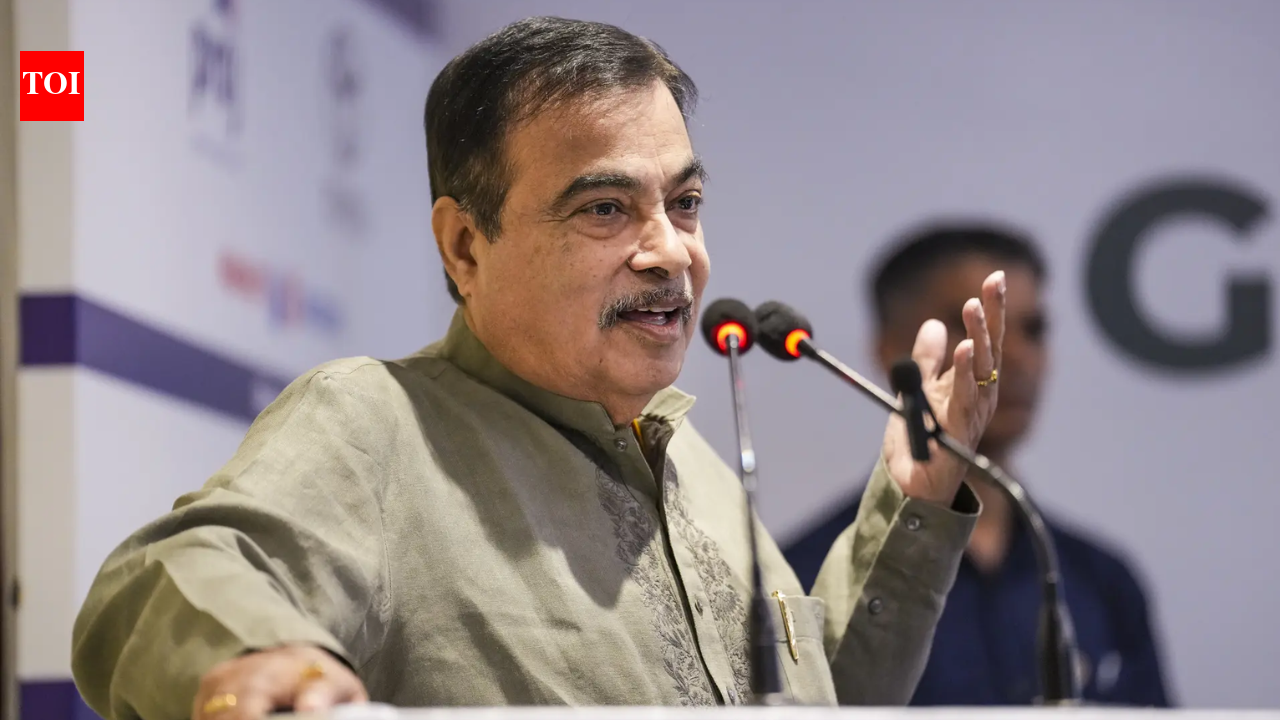
India should aim for 100 per cent ethanol blending in the near future to strengthen energy self-reliance, road transport and highways minister Nitin Gadkari said on Tuesday. He said that vulnerabilities in oil supplies due to the ongoing crisis in West Asia have made it essential for the country to reduce dependence on imports.Speaking at the Indian Federation of Green Energy’s Green Transport Conclave, Gadkari said, “In the near future, India should aspire to achieve 100 per cent ethanol blending… Today, we are facing an energy crisis due to the war in West Asia, so it is necessary for us to become self-reliant in the energy sector,” as quoted by PTI.India currently allows vehicles to run on E20 petrol, which contains 20 per cent ethanol, with minor engine modifications to avoid corrosion and related issues. In 2023, PM Modi launched petrol blended with 20 per cent ethanol. Countries such as Brazil have already achieved 100 per cent ethanol blending.Gadkari noted that India imports 87 per cent of its oil requirements, adding, “We import fossil fuels worth Rs 22 lakh crore, which is also causing pollution… so we need to work on increasing production of alternative fuel and bio-fuel.”On future energy solutions, he stressed the importance of green hydrogen but pointed out challenges in cost and transport. “Transport of hydrogen fuel is a problem. Also, we need to produce 1 kg of hydrogen at $1 dollar, to make India an exporter of energy,” he said, adding that hydrogen production from waste should be explored.The minister also emphasised the role of a circular economy in generating employment opportunities. While calling for reduced reliance on petrol and diesel vehicles, he clarified, “But we can not force people to stop buying petrol and diesel vehicles.”Addressing concerns about E20 fuel, Gadkari said the petroleum sector is lobbying against the move. He also urged automobile manufacturers to prioritise quality over cost to expand into new markets.Last year, Gadkari dismissed criticism against E20 (ethanol-blended petrol), saying a “paid” social media campaign is being run to “target me politically.” He said Society of Indian Automobile Manufacturers and Automotive Research Association of India have shared their findings on ethanol blending in petrol. He added that India’s ethanol programme has benefited farmers, noting that ethanol made from maize has helped them get better prices and led to gains of Rs 45,000 crore.

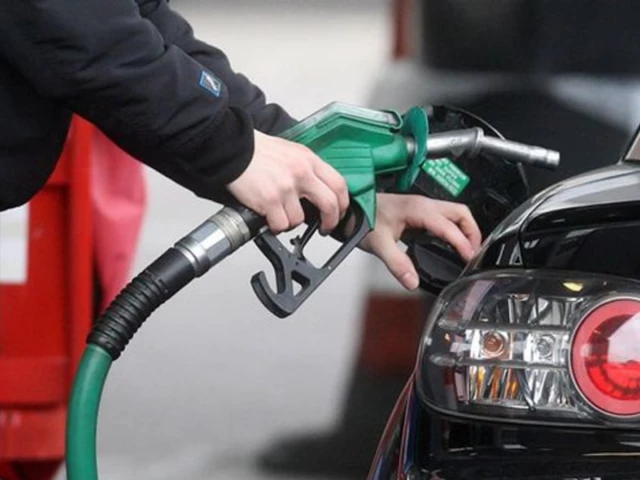
One petrol retailer says he is experiencing about five drive-offs a week at each forecourt, costing him thousands.
Source link
Business
Billions to be paid! US starts refund process for Trump tariffs: Can Indian exporters claim? – The Times of India
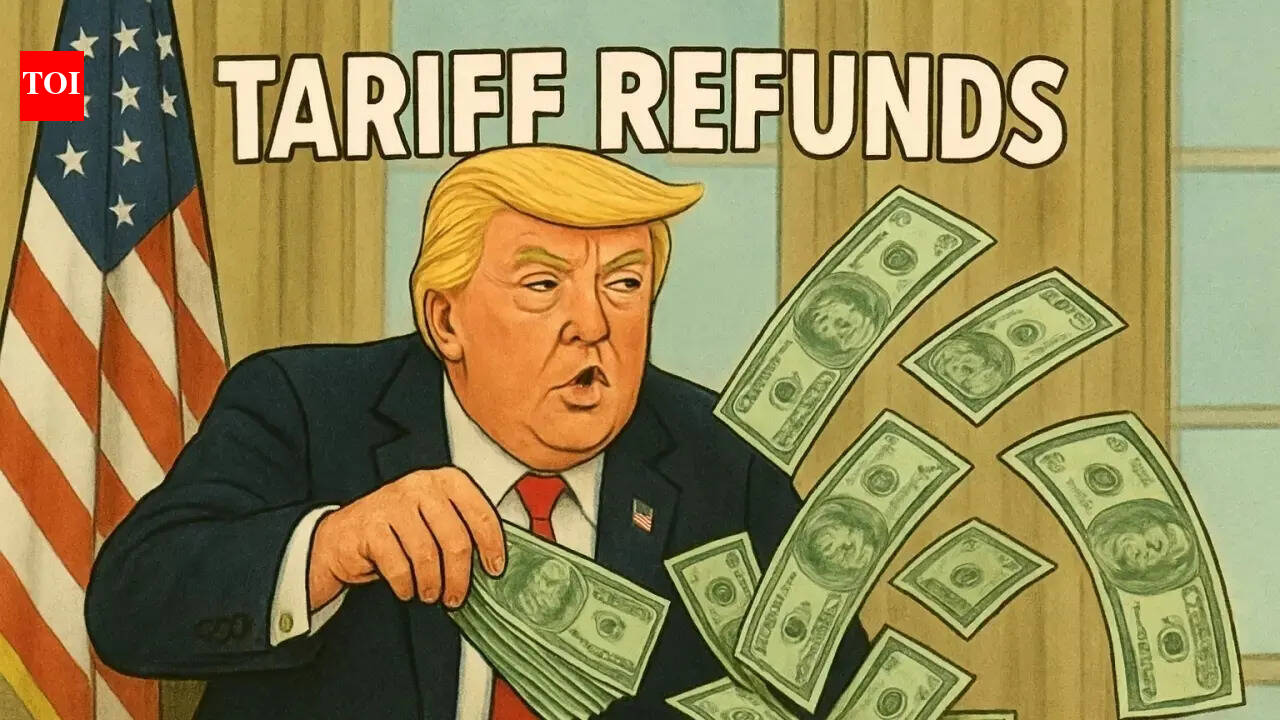
The US government has rolled out a system to facilitate refunds of over $166 billion from tariffs introduced by Donald Trump and later invalidated by the US Supreme Court. In February, the court struck down a broad set of reciprocal tariffs, delivering a significant setback to a central pillar of Trump’s economic agenda and paving the way for repayments.On Monday, US Customs and Border Protection announced that the first phase of its refund-processing platform is now operational, allowing importers and customs brokers to begin filing claims to recover the duties they had paid.The agency had earlier estimated in March that more than 330,000 importers may qualify for reimbursements on duties or deposits linked to over 53 million shipments. In its initial rollout, the platform covers about $127 billion in duty payments eligible for electronic refunds.
Tariff refunds What US Customs and Border Protection has said
The process to return reciprocal tariff payments starts on April 20 through a newly launched online platform, CAPE (Consolidated Administration and Processing of Entries), operated by US Customs and Border Protection.This move follows a February 20, 2026 judgment by the US Supreme Court, which ruled that tariffs introduced by Donald Trump were unlawful. The court found that these duties had been imposed under the International Emergency Economic Powers Act without adequate legal backing.Also Read | Iran has closed Strait of Hormuz completely: What does this mean for India’s crude oil, LPG, LNG supplies?The tariffs impacted a wide range of exports from countries including India. To receive repayments, importers in the US are required to submit claims which include shipment details, applicable tariff classifications and proof of payment. Once approved, these refunds along with interest are expected to be processed within 60 to 90 days. Eligibility is limited to those who originally paid the tariffs, primarily US importers and businesses.The total amount to be refunded is estimated at around $166 billion, with nearly $12 billion tied to Indian goods.The tariff structure began at 10% on April 2, 2025, before escalating quickly. Duties on Indian goods increased to 25% by August 7, 2025, and further to 50% by August 28, remaining at that level until early February 2026. On February 6, 2026, rates were lowered to 18% following negotiations. However, the Supreme Court’s ruling later that month nullified the entire regime, effectively rendering the tariffs void and paving the way for refunds.
What it means for India
Exporters and end consumers are not permitted to file claims directly, although some companies, such as FedEx, may opt to pass on the refunded amounts at their discretion.According to Global Trade Research Initiative (GTRI), around 53% of India’s shipments to the US, which largely comprises textiles and apparel, were subject to higher tariffs. This makes them the largest contributors to the refund pool. Of the nearly $12 billion tied to Indian exports, textiles and apparel are estimated to account for around $4 billion, followed by engineering goods with a similar share and chemicals contributing about $2 billion, while other sectors make up the remainder.However, what is important to understand is that these refunds will not flow directly to Indian exporters. The payments are meant only for US importers who bore the tariff burden.Also Read | Explained: On way to 4th largest, how India slipped to 6th rank & what it means for 3rd largest economy dream“Payments go only to US importers, and exporters have no legal right to claim them. Indian exporters, therefore, have no direct legal route to claim refunds,” explains Ajay Srivastava, founder of GTRI.Hence, any potential recovery of these refunds will depend on commercial discussions. Exporters will need to actively engage with their US counterparts to negotiate a share of the refunded duties, particularly in cases where earlier pricing factored in tariff costs. GTRI explains that this can be done by reopening contracts, adding rebate-sharing clauses, asking for price revisions or credit notes, and using invoices and tariff data to show how costs were absorbed. “Exporters with stronger bargaining power, especially in textiles and engineering goods, may secure better terms in future orders,” the think tank says.Industry bodies such as the Apparel Export Promotion Council, Engineering Export Promotion Council of India and Chemexcil can also assist exporters with guidance on contract renegotiation and sector-specific approaches, it adds.


I’ve Tested Gaming Laptops for Over a Decade. This Is What I Think You Should Buy
Gadkari urges shift to 100% ethanol blending, flags energy security and import risks – The Times of India

Global energy growth slows to 1.3% in 2025: Report

-

 Fashion5 days ago
France’s LVMH Q1 revenue falls 6%, shows resilience amid Iran war
-

 Sports1 week ago
The case for Man United’s Fernandes as Premier League’s best
-

 Entertainment1 week ago
Palace left in shock as Prince William cancels grand ceremony
-
 Business1 week ago
UK could adopt EU single market rules under new legislation
-

 Entertainment6 days ago
Is Claude down? Here’s why users are seeing errors
-

 Fashion1 week ago
Energy emerges as biggest cost driver in textile margins
-
 Business1 week ago
Delta Air Lines unveils first new Delta One suite in premium cabin arms race
-

 Entertainment1 week ago
Cop guarding polio vaccination team martyred in Hangu attack