

Fashion
Paris Fashion Week Saturday: Alaïa, Maison Margiela, Hermès, and Vivienne Westwood

Published
October 5, 2025
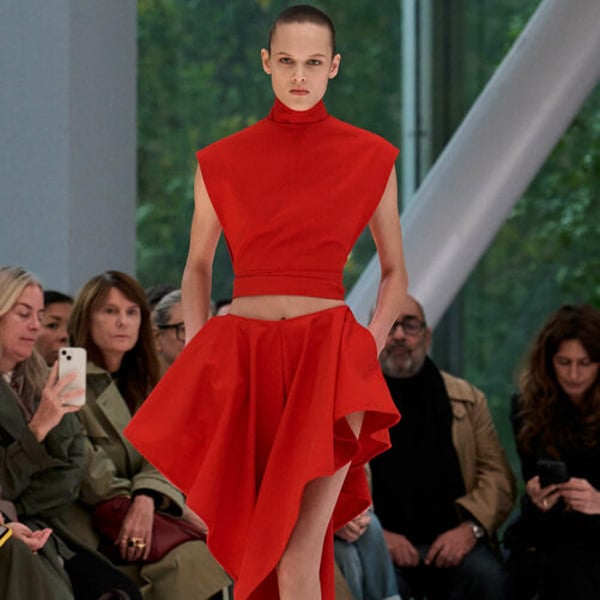
Amid downpours and traffic snarls, Paris Fashion Week enjoyed a quartet of hyper distinctive shows on Saturday from an epic Alaïa, disquieting Maison Margiela, uber equestrian Hermès, and boudoir-driven Vivienne Westwood.
Alaïa: Epic staging, energetic collection
Now that’s what we call smart synergy. Creative director Pieter Mulier took his latest show for the house of Alaïa to the Foundation Cartier – a fellow Richemont-owned brand – and the result was a show of pure beauty.
Staged on the ground floor of the Jean Nouvel-designed foundation, the entire floor was made of LED panels, allowing the cast to march on magnificent images of feminine beauty, with close-ups of faces the size of squash courts. A mirror ceiling meant the photography saturated the space, heightening a sense of drama.
“I wanted to create a cocoon of imagery,” smiled Mulier, as he was deluged with praise.
Riffing on the house’s DNA of sexy empowerment, the Belgian designer cut sleek cocktails in technical fibers, silk or ribbed knits with inserted transparent breastplates and diagonal fringes that were flawless.
He cut strict lizard-skin cloaks and tunics, and draped with enormous skill — a series of V-shape skirts in layers and folds of cotton and silk jersey were stunning. As was a black leather perfecto with displaced shoulders that morphed into a grand gown. One suspected founder Azzedine would have loved that look.

“Sexy, but always very simple and precise,” said Mulier, wearing a white sweatshirt and socks, old jeans and loafers, as he embraced his old boss Raf Simons in a huge hug at the finale.
He took plenty of risk, with hanging fringe pants worn with surgeon’s smocks. His cotton coats looked like conceptual fracks – short at the front, ankle grazing at the back. Though, Mulier could be occasionally guilty of over thinking with dresses that suddenly tied around the ankle, or jerseys that seemed to strap in models’ arms. Not exactly empowering, nor Alaïa.
But, overall, this was a memorable moment of mode. And a reminder that Richemont’s fashion division, once a problem child, is a happening center of excellence, and profits.
Maison Margiela: Silenced lambs, noisy kids
At his couture debut for Maison Margiela, Glenn Martens insisted on covering every models head a mask or hood. For his ready-to-wear debut for the house this season, Glenn stuck braces in each model’s mouth, so their teeth flared angrily – Silence of the Lambs-style.

In July, when masked ICE agents had just got into full swing cruelly rounding up allegedly illegal immigrants, to see masked models was at the very least disconcerting. Now, amid a brutal crackdown on free speech, watching a cast’s mouths forcibly kept open was bewilderingly heavy-handed. The point could have been made with just a few looks.
The discordant mood both leavened and highlighted by a live children’s orchestra. In full orchestral dress on an all-white stage, they played – in and out of tune – classic works like Bizet’s “Carmen”, Tchaikovsky’s “Swan Lake” and Prokofiev’s “Romeo and Juliet”.
A weird juxtaposition to the witness the Hannibal Lecter casting. That said, Martens produced a very good collection, at times a brilliant one, especially when it came to tailoring.

Riffing on a novel concept, a splendid new tuxedo waistcoat, and cutting some great blazers and dusters with dropped waistlines.
His lapel-free denim jackets and coolly twisted jeans with exposed drawstrings all looked great, as were similar versions in lived-in rawhide. And he had a very Margiela moment with some slip dresses finished with mock silver gaffer tape.
Glenn went into overdrive, as he “declined” an idea from his couture debut in July. A beautiful series of 16th-century floral prints seen in beguilingly punchy dresses and cocktails.
Though, the salient memory of the show would have to be the models’ mouths.
Hermès: Determinedly equestrian
No designer stuck closer to a brand’s DNA this season than Nadège Vanhee, who played on equestrian motifs with every single look.

Chez Hermès, they often refer to the horse as their first client, and equine motifs informed each passage in this show, staged with consummate elegance inside the riding center of the Garde Républicaine.
Her key fabric was the finest matelassé and quilted leather culled from horse blankets, used most notably in seductive tops, corsets and some superb wrap skirts.
Rarely have we seen a more body-con collection from Hermès – from the waxed leather sheaths in black and beige, paired with riding boots, the models prowling about seductively. Guests sat on wooden blacks, as the cast dashed by on a runway speckled with seashells.

Nadège got her inspiration from a Camargue saddle and Provencal motifs rippled through many looks. At times a tad too literally, and provincially.
A punchy series of boleros and urban hacking jackets were all finished with silver steel clasps, horse-bits, mini stirrups and leather reins. Racy, as much as racing, were the words that came to mind watching this show giving its strict silhouettes and revealing flesh. And quite frankly, hotpants and Hermès were two words we never expected to write in the same sentence.
Nadège is a very talented designer who has created a great body of work with Hermès. But this season it looked like she was trying too hard to be cool.
Vivienne Westwood: Boudoir and beautiful
Few British fashion houses are more loved in France than Vivienne Westwood, adored by the great public, respected by all designers, and celebrated on Saturday with an epic afternoon show.

A collection unveiled inside France’s Holy of Holies, the Institut de France, where the country’s greatest writers, intellectuals and scientists are consecrated.
Since Vivienne’s passing, her successor and former husband Andreas Kronthaler has guided the house. And this was his greatest collection so far. Entitled “Boudoir”, it managed to blended lingerie, pajamas, pampering, voluptuousness and naughtiness in a great display.
Made in rich Italian jacquards and damasks, mixed up with curtain materials, the collection was often an explosion of color. Created superb gowns that managed to perfectly mix historicism with hipness.
In a co-ed show, guys strutted in micro togs, topped by shards of contrasting silk tops – leopard print, tie-dye and tartan. One disco dragoon wowed in a check three-piece suit were the pants were mini shorts and his feet shod in perforated pirate boots.

Both men and women wore sleek silk double-breasted suits, like the one in which Andreas took his bow.
With Paris and Nicky Hilton sitting front row, Andreas delivered the coolest of finales: Heidi Klum, as an ironic take on her Victoria’s Secret era. Looking sensational as a Restoration-era femme fatale in crystal encrusted white leotard, garters and a cloud of taffeta.
Kronthaler garnering an immense burst of applause as he took his bow with Klum. Holding a five-foot-long bouquet of sunflowers, he then led the cast to posing together on the steps of the Institut, amid thunderous cheers.
Copyright © 2025 FashionNetwork.com All rights reserved.






“The improved order situation in industry has brightened sentiment somewhat. However, as a result of the Iran war, energy costs have risen sharply, and uncertainty among companies has also increased. That runs counter to a stronger economic recovery,” said Timo Wollmershauser, head of forecasts at ifo.
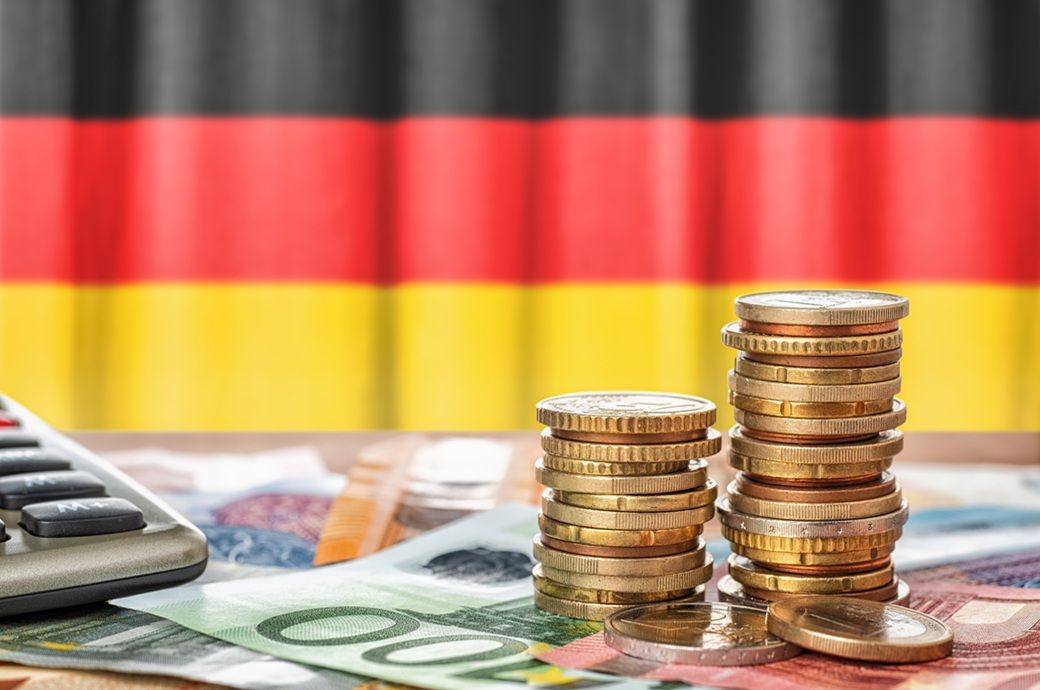
Firms in Germany have raised investment plans, with ifo expectations rising to 0.2 points in March from -3.1 in December 2025.
Industry led gains, especially non-energy sectors, while energy-intensive segments and chemicals remained weak.
Services showed modest optimism, but trade stayed pessimistic.
Rising energy costs and geopolitical uncertainty temper recovery.
The most notable rise in the willingness to invest was in industry. Expectations rose to +0.1 points in March, up from -6.9 points in December. The outlook improved particularly strongly in non-energy-intensive industries, where significantly more companies were planning to expand their investments this year, ifo said in a press release.
In energy-intensive industries, however, the willingness to invest remains subdued. At -9 points in March, the balance remained virtually unchanged from December (-8.9 points). In the chemical industry, investment expectations even declined further, from -15.8 to -16.2 points.
Overall, the corresponding balance in manufacturing rose from -4.1 to +1.2 points. “Companies across all sectors also want to invest more in software. The growing use of artificial intelligence is likely to play a role in that,” said ifo economic expert Lara Zarges.
In trade, companies remain the most pessimistic. The balance of investment expectations stood at -9.6 points in March, virtually unchanged from the level in December. Service providers, on the other hand, confirmed their slightly positive outlook from December: Their investment expectations improved from +1.1 to +2.8 points.
The points for the ifo investment expectations indicate the percentage of companies that intend to increase their investments on balance.
Fibre2Fashion News Desk (SG)
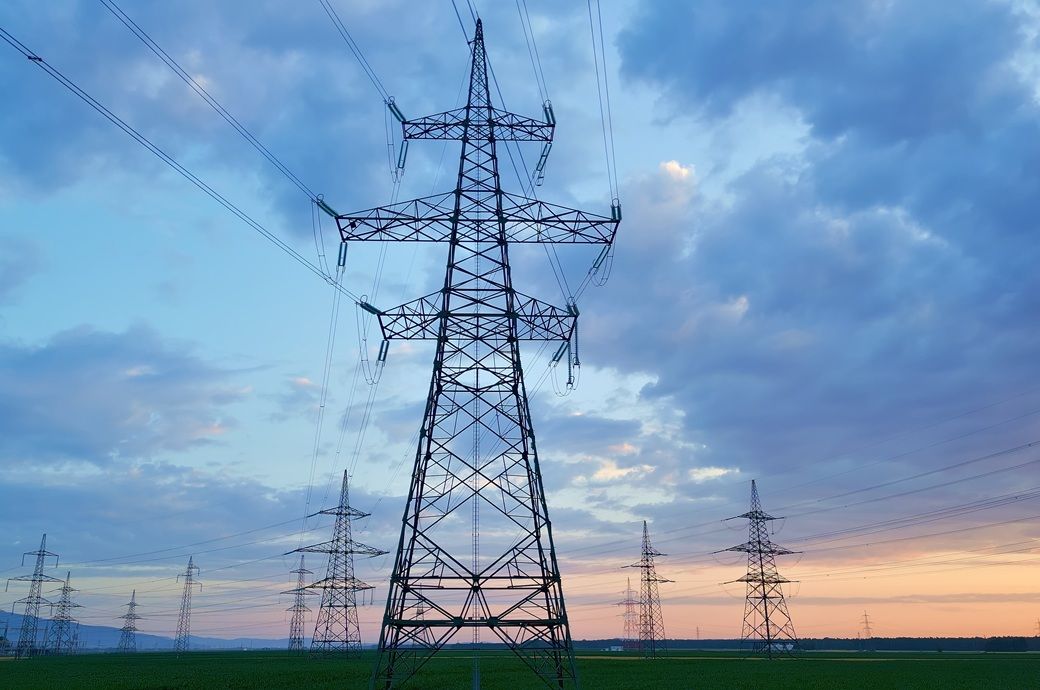
The report highlighted that although overall energy demand growth slowed compared with 2024 and remained slightly below the previous decade’s average, electricity demand rose by around 3 per cent, driven by increased usage across buildings, industry, electric vehicles, and data centres.
Global energy demand growth slowed to 1.3 per cent in 2025, while electricity demand rose around 3 per cent, driven by EVs, industry, and data centres, according to IEA.
Solar PV led supply growth for the first time.
Oil demand grew modestly, and coal growth slowed.
CO2 emissions rose slightly.
Renewables and nuclear expansion highlighted an accelerating shift towards cleaner energy systems.
Solar photovoltaic (PV) emerged as the largest contributor to global energy supply growth for the first time, accounting for over 25 per cent of the increase. Natural gas followed with a 17 per cent share, while renewables and nuclear together met nearly 60 per cent of additional demand.
Global oil demand rose modestly by 0.7 per cent, reflecting the continued expansion of electric vehicles, with sales surpassing 20 million units in 2025. Coal demand growth slowed overall, with declines in China offset by increases in the United States due to high natural gas prices.
“Global energy demand continued to increase in 2025 against a complex economic and geopolitical backdrop, with one trend unmistakeable: the expanding electrification of economies,” said Fatih Birol, IEA executive director.
He added that electricity consumption was growing much faster than overall energy demand, with one energy source outpacing all others. He noted that solar PV accounted for over a quarter of global energy demand growth for the first time, followed by natural gas, and added that countries prioritising resilience and diversification would be better placed to manage volatility and ensure secure, affordable energy.
Regional trends varied significantly. Energy demand growth in the United States rose sharply, supported by industrial activity, data centre expansion, and colder weather, while China’s growth slowed to 1.7 per cent due to rising renewable adoption and improved efficiency.
Global energy-related CO2 emissions increased marginally by around 0.4 per cent. Emissions declined in China and remained flat in India, aided by renewable deployment and favourable weather conditions, while advanced economies recorded higher emissions growth due to colder winter conditions.
In the power sector, solar PV generation surged by a record 600 terawatt-hours, marking the largest annual increase for any electricity generation technology. Battery storage emerged as the fastest-growing segment, with around 110 gigawatts of new capacity added, while nuclear energy also saw renewed momentum with over 12 gigawatts of new reactors under construction.
The IEA noted that cumulative deployment of low-emissions technologies since 2019 now offsets fossil fuel consumption equivalent to the entire energy demand of Latin America, underscoring the accelerating transition towards cleaner energy systems.
Fibre2Fashion News Desk (SG)
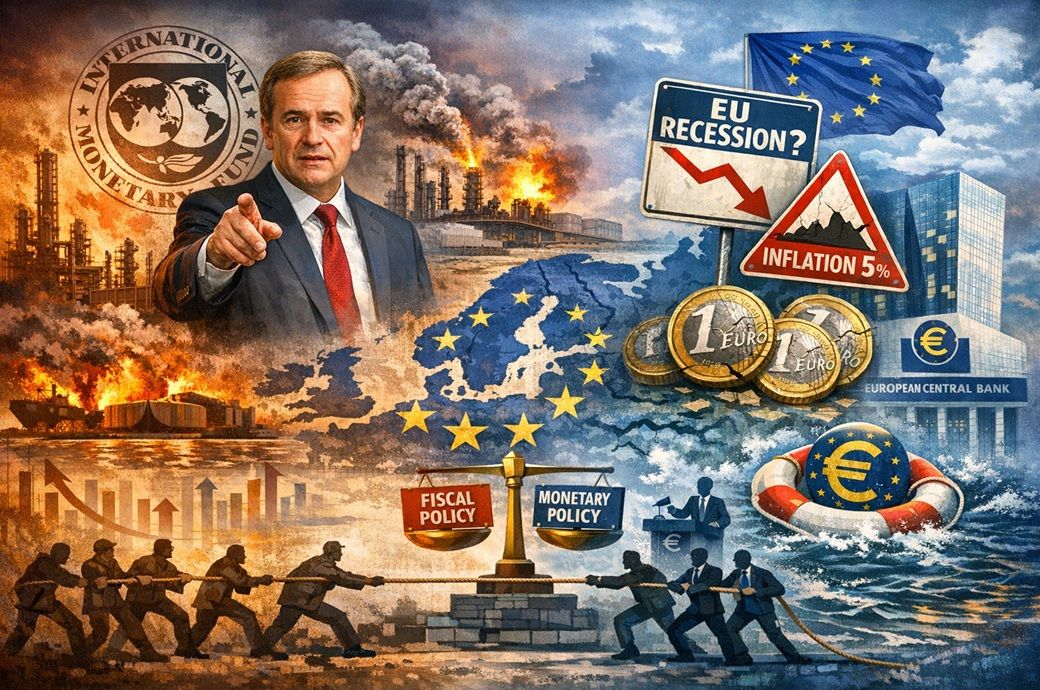
In a blog post, Alfred Kammer, director of the IMF’s European department, said his organisation sees growth slowing down in the continent. Initial data point already to weaker private investment and consumption.
The energy shock that has hit Europe due to the Middle East conflict, though smaller than in 2022, is weighing on growth and pushing inflation higher, an IMF expert recently cautioned.
IMF sees growth slowing down in the continent.
Initial data point already to weaker private investment and consumption.
Central banks must remain laser focused on keeping inflation expectations anchored, he wrote.
The outlook for euro area growth is projected at just 1.1 per cent in 2026, for the European Union it is 1.3 per cent; and this forecast comes with a high degree of uncertainty.
In a more severe scenario as described in the World Economic Outlook—a persistent supply shock compounded by tightening financial conditions—the EU could come close to recession with inflation approaching 5 per cent. No European country is spared, Kammer observed.
Policymakers face intense pressure—to act fast, visibly and for all, which results in policies that have more long-term downsides than short-term benefits, he wrote.
Targeted support is much more effective. Europe’s response to this shock should be shaped by two imperatives, he suggested. First, robust macroeconomic policy that is fit for a world with unpredictable and frequent shocks, and second, resilience built without wasting fiscal resources or getting in the way of markets.
The first imperative involves getting monetary and fiscal policy right. Central banks must remain laser focused on keeping inflation expectations anchored, the IMF expert wrote.
In the euro area, where inflation is close to target and medium-term expectations are broadly anchored, the European Central Bank has some scope to wait and observe the shock evolve before acting. IMF now expects a cumulative 50 basis point increase in the policy rate by the end of this year, maintaining a broadly neutral monetary stance in light of higher near-term inflation expectations, Kammer noted.
A rise in core inflation or increasing medium-term expectations would warrant a more restrictive stance, he wrote.
“Europe must reform under pressure. The current shock is not an argument for delay. It is all the more reason to push forward the reform agenda,” Kammer added.
Fibre2Fashion News Desk (DS)


Trump repeats call for Congress to rein in college sports
I was left with an £8,000 vet bill when my insurer cancelled my pet policy

Reese Witherspoon breaks silence after AI support controversy

-

 Fashion6 days ago
France’s LVMH Q1 revenue falls 6%, shows resilience amid Iran war
-

 Sports1 week ago
The case for Man United’s Fernandes as Premier League’s best
-

 Entertainment1 week ago
Palace left in shock as Prince William cancels grand ceremony
-
 Business1 week ago
UK could adopt EU single market rules under new legislation
-

 Entertainment6 days ago
Is Claude down? Here’s why users are seeing errors
-

 Fashion1 week ago
Energy emerges as biggest cost driver in textile margins
-
 Business1 week ago
Delta Air Lines unveils first new Delta One suite in premium cabin arms race
-
 Fashion1 week ago
Asia claims largest share of markets on Kearney FDI Confidence Index