

Business
More workers needing food banks – Wolverhampton support group

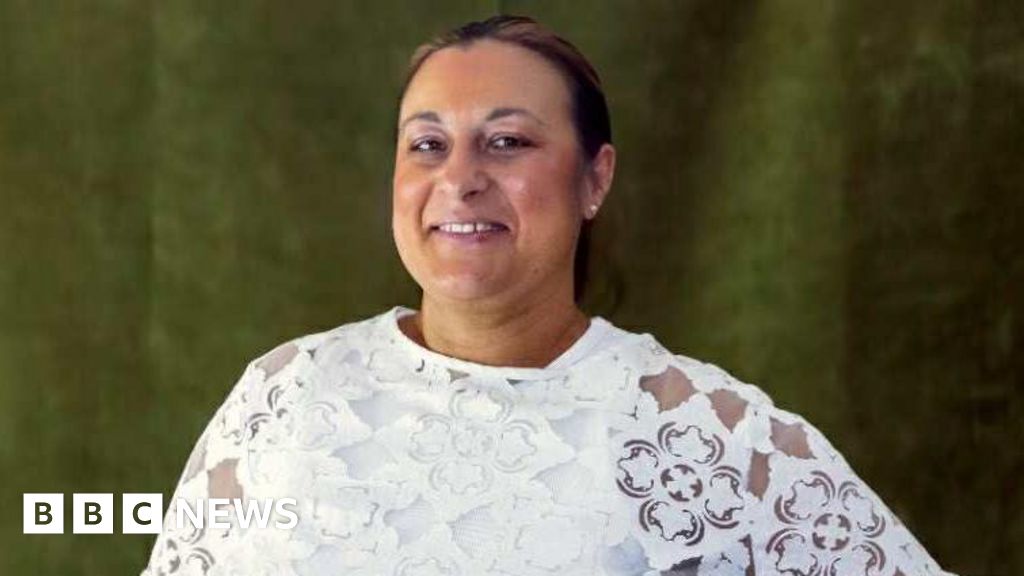
BBC News, West Midlands
 Anna-Mhairi Kane
The founder of a support group says she feels more working people and volunteers are facing “desperate times” amid the cost of living crisis.
During the pandemic, Leanne McDonald, from Wolverhampton, set up Simple Acts of Kindness in a bid to help people who were in difficult financial situations.
The group helps up to six or seven families every week across the city, Birmingham, and the Black Country, by distributing donated household items, including furniture and clothing, and acting as a signpost for other services.
Ms McDonald said she was seeing more people coming to them who were in employment, including full-time workers, seeking help.
Among them were teachers and nursing staff, many of whom were asking where they could access food banks.
“They’re highly skilled but unfortunately the wages just aren’t there…it was a surprise to me that many are struggling to feed their families,” she said.
“I feel that we are in quite desperate times at the moment.”

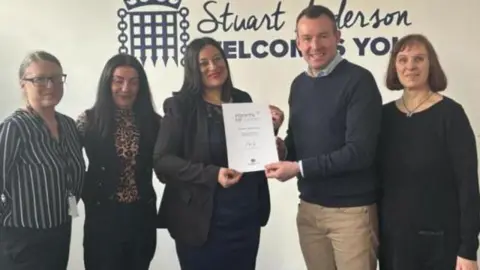 Stuart Anderson
Ms McDonald, who runs the charity alongside her full-time job at a training academy, said it was especially frustrating to her that teaching staff could not afford to pay for essentials like food and household goods.
“It’s really disheartening to see because we’re relying on these people to teach our children and provide care and support to families,” she added.
The rising cost of living also had an impact on the support group itself, Ms McDonald said, with volunteer numbers dropping from about 10 to three.
She said this was partly down to some taking on extra paid work after struggling with finances themselves.
Simple Acts of Kindness currently does not have a base and is mostly run from Ms McDonald’s family home, while she rents a storage space for donated items.
Despite the extra pressure from the demand and decreasing number of volunteers, Ms McDonald said she would persevere as the support was “still needed”.
“I’ve had to find a good balance – my family are really understanding,” she said.
“My children live in a house where we have constant people dropping items off or collecting items.”
In a bid to try and raise more funds to cover the group’s costs, Simple Acts of Kindness has organised a fun day, at the Golden Bar and Grill in Wolverhampton, on 30 August.
‘Breaking point’
Ms McDonald’s comments came after Citizens Advice warned people on the lowest incomes were “running out of options” in the face of rising bills.
A report from the Institute for Public Policy Research in March showed households in the lowest 10% for income spent about 41% of their earnings, after housing, on water, energy, broadband and car insurance.
That compared to 11% for those on middle incomes, with those in the top 10% of earners spending 5%.
Dame Clare Moriarty, chief executive of Citizens Advice, said: “For those on the lowest incomes, these unavoidable costs are already eating away at their finances, leaving their budgets stretched beyond breaking point.”
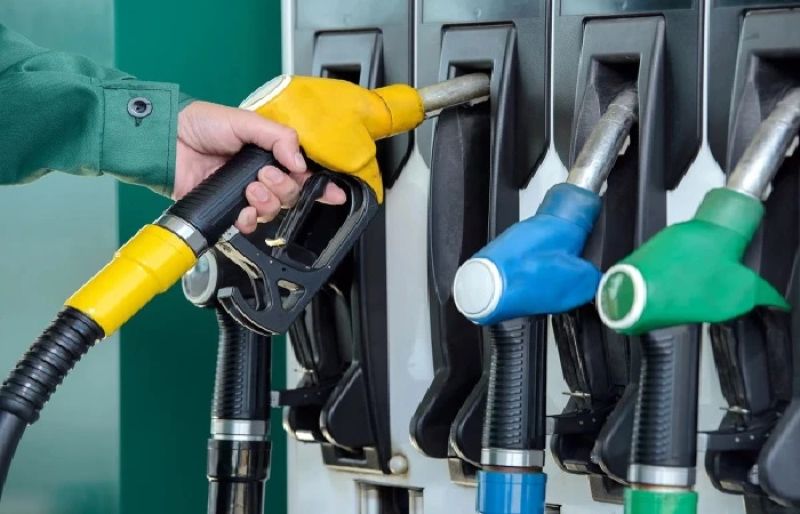
The federal government announced a Rs26.77 per litre hike in the price of petrol and high-speed diesel each on Friday, according to a notification issued by the Petroleum Division.
The new prices will be effective from April 25, 2026 for a week, the notification stated.
Following the increase, the price of HSD has jumped from Rs353.42 to Rs380.19, while the petrol price now stands at Rs393.35.
The government has been reviewing petroleum prices every Friday night following the now-paused US-Israel war on Iran, which began on February 28.
In the previous weekly review, the prime minister announced a reduction of Rs32.12 per litre in the price of high-speed diesel, while the petrol price remained unchanged.
The government jacked up petrol and diesel prices despite oil prices falling globally on Friday after it appeared a second round of Middle East talks was back on, bolstering prospects for an end to a war that has crippled energy shipments from the Gulf.
Oil prices had been climbing earlier as investors worried about a lack of progress in ending the Middle East crisis, with Tehran keeping the Strait of Hormuz closed and the US maintaining a blockade of Iranian ports.
But they dropped on reports that Iran’s Foreign Minister Abbas Araghchi was to arrive in Islamabad on Friday night.
Brent crude, the international benchmark contract, fell back below $100 a barrel.
facebook twitter
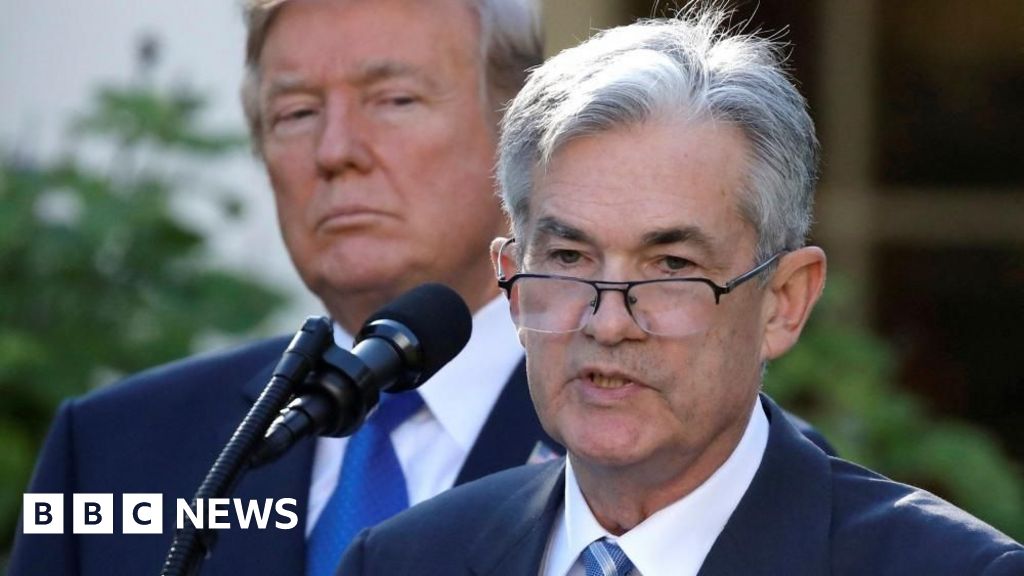
Powell’s term is nearing its end and the US Senate is considering Trump’s nominee for his replacement, Kevin Warsh. A key Republican, Thom Tillis, has withheld his support for Warsh unless the Trump administration would drop its investigation into Powell.
Business
Intel bags big gains! Chipmaker’s shares jump 26% on blockbuster results; how Trump admin benefits – The Times of India
Intel share price soared sharply on Friday after the chipmaker delivered a first-quarter performance that exceeded market expectations. And the win was not just for the chipmaker, but also the whole of US!The stock climbed 26.7% during trading on Friday, marking what could be its strongest single-day gain since 1987. Momentum continued after the closing bell, with shares rising a further 20% in after-hours trading as investors reacted to signs of a sustained turnaround driven by artificial intelligence.Intel reported revenue of $13.58 billion (€11.6bn) for the quarter, ahead of the $12.3 billion (€10.5 bn) forecast and up 7.2% from a year earlier. Adjusted earnings per share came in at $0.29, far exceeding expectations of $0.01.A key contributor to this performance was the company’s Data Centre and AI (DCAI) division, which delivered revenue of $5.05 billion (€4.2bn), up 22.4% year-on-year and well above analyst estimates of $4.41 billion (€3.77bn). The results indicate strong demand for Intel’s Xeon 6 processors and Gaudi 3 AI accelerators, particularly among enterprise clients and cloud service providers.Chief executive Lip-Bu Tan pointed to a broader shift in artificial intelligence usage as a major factor behind the growth. He said, “the next wave of AI will bring intelligence closer to the end user, moving from foundational models to inference to agentic.” He added, “This shift is significantly increasing the need for Intel’s CPUs and wafer and advanced packaging offerings.”The company also issued an upbeat outlook for the second quarter, forecasting revenue in the range of $13.8 billion (€11.8billion) to $14.8 billion (€12.6billion), surpassing investor expectations of $13 billion (€11.1billion).
But how is Washington winning?
The rally has had a direct impact on the US administration’s investment in Intel. In 2025, during a period of severe financial strain for the company, the administration of Donald Trump acquired a 9.9% stake in a move aimed at stabilising the business. The government invested $8.9 billion (€7.8bn) at a share price of $20.47 (€18.01), with $5.7 billion (€5bn) of that amount coming from previously approved but unpaid grants, according to the Euro News.At the time, Intel was facing multi-billion dollar losses and operational challenges, prompting concerns over its viability. As part of the intervention, the company cancelled planned factory projects in Germany and Poland, redirected focus towards US-based manufacturing, and reduced its global workforce by 25%, cutting around 25,000 jobs.Following the latest jump, Intel’s shares are now trading at $81.3 (€71.5), representing an increase of nearly 300% since the government first took its stake. The sharp rise highlights how the company’s improved financial performance has translated into substantial gains for the US administration.


Extended interview: Don Cheadle – CBS News

Charlie Sheen updates on relationship with old pal Jon Cryer

Iranian FM Abbas Araghchi lands in Pakistan ahead of renewed US talks

-

 Fashion1 week ago
France’s LVMH Q1 revenue falls 6%, shows resilience amid Iran war
-

 Tech1 week ago
CYBERUK ’26: UK lagging on legal protections for cyber pros | Computer Weekly
-

 Sports5 days ago
WWE WrestleMania 42 Night 2: Live match results and analysis
-

 Sports1 week ago
Faheem Ashraf backs Islamabad United’s push, calls league a ‘career-changing platform’
-

 Sports5 days ago
NCAA men’s gymnastics championship: All-time winners list
-
 Business1 week ago
PepsiCo earnings beat estimates as North American food business improves
-

 Tech1 week ago
Anthropic Plots Major London Expansion
-

 Entertainment4 days ago
Lee Anderson, Zarah Sultana kicked out of UK Parliament for calling PM ‘liar’