

Business
More workers needing food banks – Wolverhampton support group


BBC News, West Midlands
 Anna-Mhairi Kane
The founder of a support group says she feels more working people and volunteers are facing “desperate times” amid the cost of living crisis.
During the pandemic, Leanne McDonald, from Wolverhampton, set up Simple Acts of Kindness in a bid to help people who were in difficult financial situations.
The group helps up to six or seven families every week across the city, Birmingham, and the Black Country, by distributing donated household items, including furniture and clothing, and acting as a signpost for other services.
Ms McDonald said she was seeing more people coming to them who were in employment, including full-time workers, seeking help.
Among them were teachers and nursing staff, many of whom were asking where they could access food banks.
“They’re highly skilled but unfortunately the wages just aren’t there…it was a surprise to me that many are struggling to feed their families,” she said.
“I feel that we are in quite desperate times at the moment.”

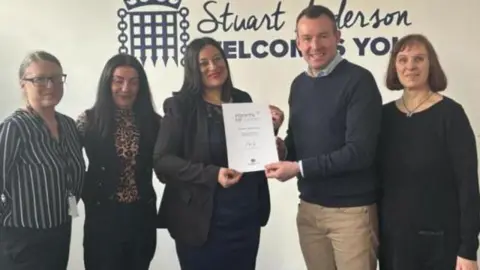 Stuart Anderson
Ms McDonald, who runs the charity alongside her full-time job at a training academy, said it was especially frustrating to her that teaching staff could not afford to pay for essentials like food and household goods.
“It’s really disheartening to see because we’re relying on these people to teach our children and provide care and support to families,” she added.
The rising cost of living also had an impact on the support group itself, Ms McDonald said, with volunteer numbers dropping from about 10 to three.
She said this was partly down to some taking on extra paid work after struggling with finances themselves.
Simple Acts of Kindness currently does not have a base and is mostly run from Ms McDonald’s family home, while she rents a storage space for donated items.
Despite the extra pressure from the demand and decreasing number of volunteers, Ms McDonald said she would persevere as the support was “still needed”.
“I’ve had to find a good balance – my family are really understanding,” she said.
“My children live in a house where we have constant people dropping items off or collecting items.”
In a bid to try and raise more funds to cover the group’s costs, Simple Acts of Kindness has organised a fun day, at the Golden Bar and Grill in Wolverhampton, on 30 August.
‘Breaking point’
Ms McDonald’s comments came after Citizens Advice warned people on the lowest incomes were “running out of options” in the face of rising bills.
A report from the Institute for Public Policy Research in March showed households in the lowest 10% for income spent about 41% of their earnings, after housing, on water, energy, broadband and car insurance.
That compared to 11% for those on middle incomes, with those in the top 10% of earners spending 5%.
Dame Clare Moriarty, chief executive of Citizens Advice, said: “For those on the lowest incomes, these unavoidable costs are already eating away at their finances, leaving their budgets stretched beyond breaking point.”

Chennai: Indian Overseas Bank’s annual net profit crossed Rs 5,000 crore for the first time, with the public sector lender reporting FY26 profits at Rs 5,209 crore, up 56% from Rs 3,335 crore in FY25, driven by higher income and lower provisions and tax expenses. The bank’s operating profit also crossed Rs 10,000 crore for the first time.

Lee Sustar, an analyst at Forrester, said there is still anxiety “about the sustainability of the AI boom” given the high cost and so far unrealised gains. Yet, tech companies are pushing forward with plans, for this year and next, to pour billions into its development.
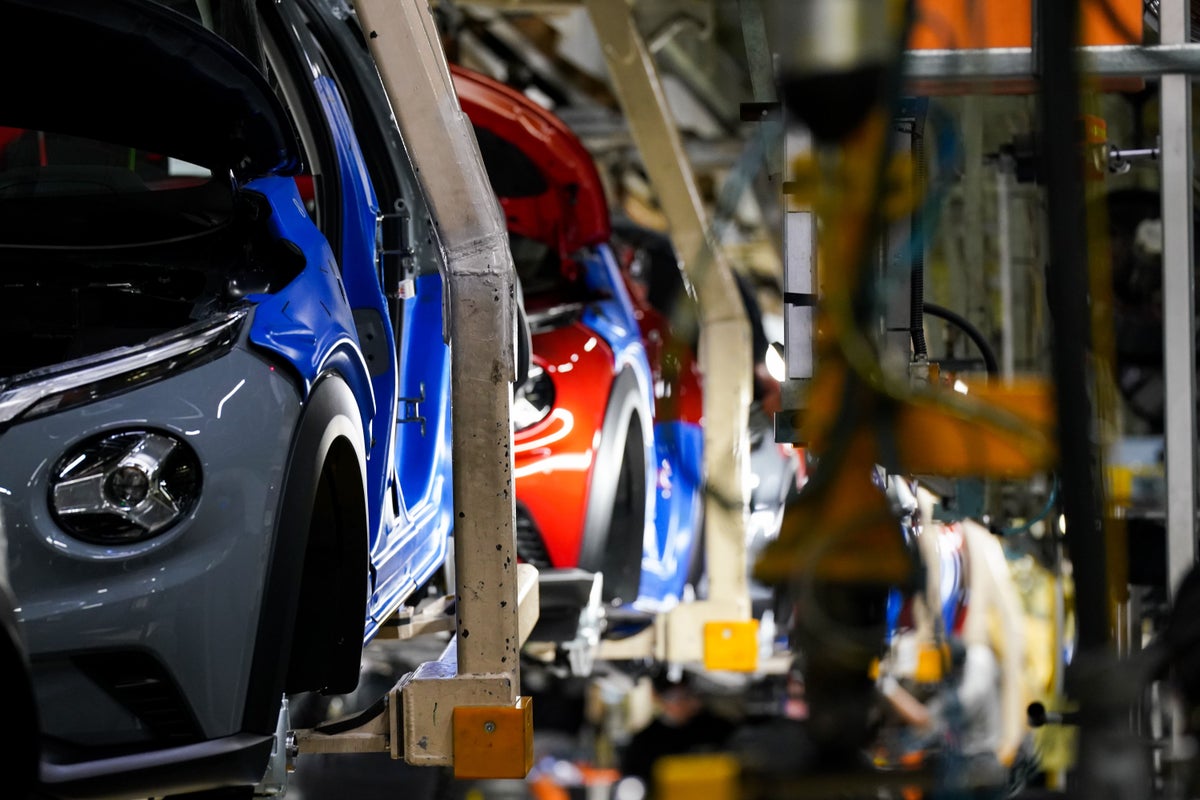
Car and commercial vehicle production fell last month amid issues including weak exports, model changeovers and restructuring, new figures show.
Vehicle production fell by 8.2% in March compared to a year ago, with 72,511 units leaving factories, according to the Society of Motor Manufacturers and Traders (SMMT).
The number of cars built was 69,755, down by 0.8%, while 2,756 commercial vehicles (CV) were produced, 68% fewer.
The SMMT said car output was affected by a parts supply challenge temporarily pausing production at a large plant, weak exports to Asian and US markets, and model changeovers, while commercial volumes continued to reflect restructuring.
Exports of cars and CVs fell, down by 4.3% and 54%, to 49,339 and 1,602 units respectively.
Despite this, production for overseas buyers still accounted for 70% of vehicle output, with the EU remaining the UK’s largest global market, taking 91.6% (1,467 units) of CV exports and 62.6% (30,899 units) of car exports.
EU demand for UK-built cars rose for a fourth consecutive month, said the SMMT.
Chief executive Mike Hawes said: “Car production stabilising in March is welcome news for both assembly and the wider supply chain.
“Government’s recent intervention to bring down electricity costs will provide a major and long-called for boost, but the scheme’s benefits must be delivered urgently as the geopolitical situation offers little optimism.
“We must ensure any ‘Made in Europe’ proposals from the European Commission do not exclude the UK as the two industries are integrated such that both would suffer if the free trade provisions enshrined in the Brexit deal were undermined.
“The EU and UK must work together to avoid that scenario – and the looming threat of tariffs arising from stricter rules of origin on electrified vehicles – to ensure a positive outcome for industry, economies and consumers on both sides of the Channel.”


War causes production loss, serious stress for Indian textile industry

Kris Jenner teases marriage plans with boyfriend Corey Gamble
IOB profit up 56% at Rs 5,200 crore in FY26 – The Times of India

-

 Politics1 week ago
UK’s Starmer seeks to deflect blame over Mandelson appointment
-

 Fashion1 week ago
India, US to resume BTA talks today
-
 Business1 week ago
Us-India Trade Talks: US–India trade deal: Where do talks stand & what to expect – explained – The Times of India
-

 Fashion1 week ago
Global energy growth slows to 1.3% in 2025: Report
-
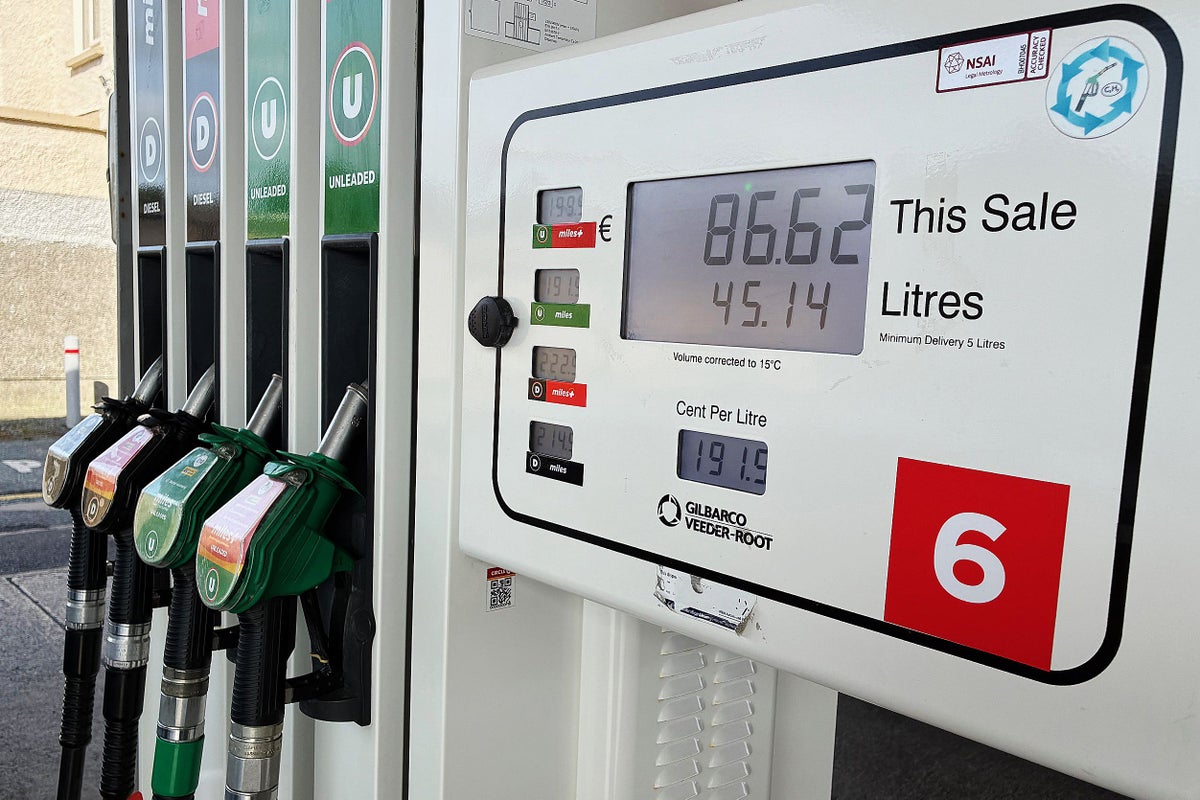 Business1 week ago
UK inflation accelerates after Iran war drives sharp rise in fuel prices
-

 Tech1 week ago
Nation states responsible for ‘nationally significant’ cyber attacks against UK, says NCSC chief | Computer Weekly
-

 Tech1 week ago
Microsoft faces court battle in £2bn Windows Server class action | Computer Weekly
-

 Tech1 week ago
How to Watch the Lyrids Meteor Shower at Its Peak