

Business
Ex-New York Times writer Bari Weiss to lead CBS after Paramount deal

 Getty Images
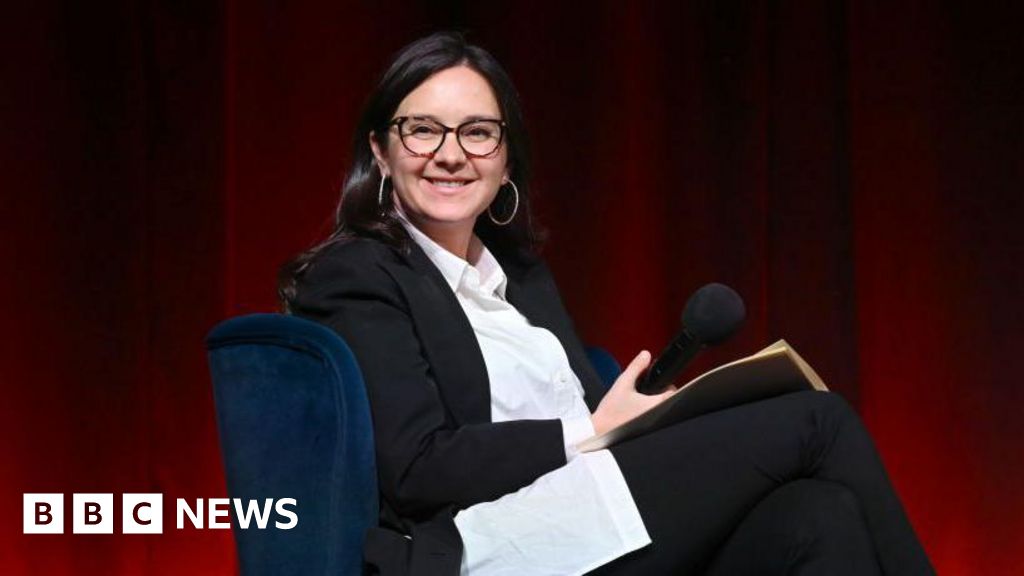
Paramount has named former New York Times opinion writer Bari Weiss to lead CBS News, in the latest move by new owners to reshape operations of one of America’s leading news organisations.
Paramount is also buying The Free Press, the digital outlet Weiss started after her acrimonious departure from the New York Times, in a deal reported to be worth $150m (£112m).
Ms Weiss, who has criticised broadcast media for becoming too partisan, said she was excited to put her stamp on CBS, which was taken over by David Ellison earlier this year as part of a wider merger with Paramount.
The deal has drawn scrutiny on the left because Mr Ellison is the son of tech billionaire and Trump ally Larry Ellison.
Ms Weiss, who started her career working at Jewish news outlets, is known for her support of Israel and her criticism of “cancel culture”.
Since its start as a newsletter in 2021, The Free Press has attracted 1.5 million subscribers, including more than 170,000 paid subscribers.
It has drawn attention for reports such as a piece critical of NPR by one of its former business editors, Uri Berliner, as well as an investigation of some photos used by mainstream news outlets to illustrate famine in Gaza, which said many of those featured suffered other health conditions.
Big name contributors include historian Niall Ferguson and economist Tyler Cowen.
Mr Ellison said the appointment of Ms Weiss as editor-in-chief was part of a bigger effort to modernise content at Paramount and make CBS the “most-trusted name in news”.
“We believe the majority of the country longs for news that is balanced and fact-based, and we want CBS to be their home,” he said.
More change at CBS
Terms of the deal were not disclosed. Paramount declined to comment on the reports that the firm had paid $150m in stock and cash.
Mr Ellison made his name as a Hollywood film producer of blockbusters such as Top Gun Maverick, True Grit and World War Z.
He has said his aim is to produce coverage that is less politically skewed, and therefore has the ability to reach all audiences.
His takeover of Paramount was approved by the Trump administration this summer, after the company agreed to pay $16m to settle a lawsuit brought by Trump over a 60 Minutes interview with his 2024 presidential rival Kamala Harris he said was deceptively edited to benefit Democrats.
To win approval of the deal, Mr Ellison agreed to install an independent ombudsman at CBS to review complaints of bias and committed to regulators that programming would reflect a diversity of view points.
He also said CBS’s long-running political show “Face the Nation” would no longer air edited interviews.
CBS News has a partnership agreement with the BBC, meaning news content including video footage can be shared. BBC News is editorially independent of CBS.
In a note announcing the deal, Ms Weiss said she believed in the Paramount boss and his leadership team.
“They are doubling down because they believe in news. Because they have courage. Because they love this country. And because they understand, as we do, that America cannot thrive without common facts, common truths, and a common reality,” she wrote.
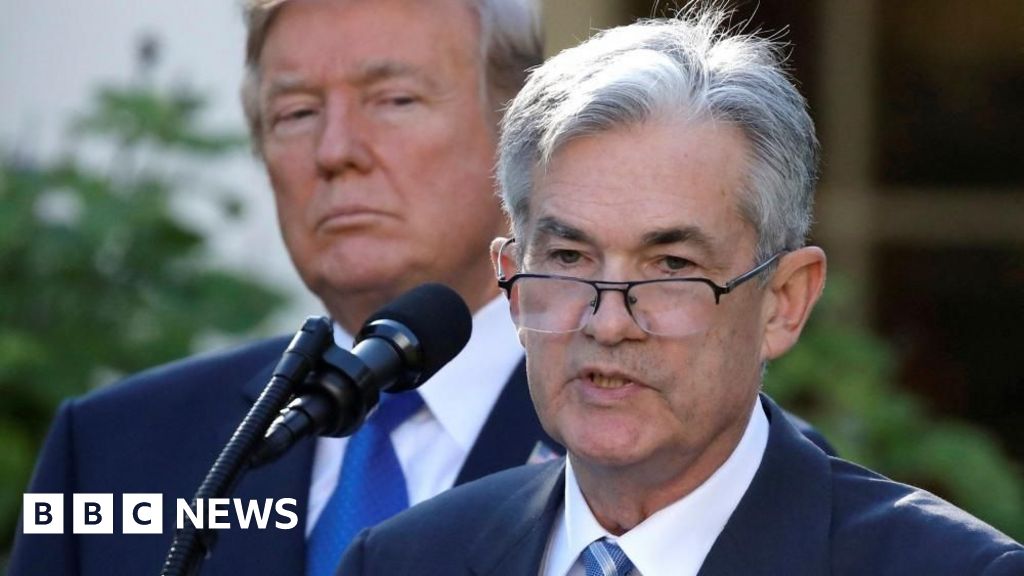
Powell’s term is nearing its end and the US Senate is considering Trump’s nominee for his replacement, Kevin Warsh. A key Republican, Thom Tillis, has withheld his support for Warsh unless the Trump administration would drop its investigation into Powell.
Business
Intel bags big gains! Chipmaker’s shares jump 26% on blockbuster results; how Trump admin benefits – The Times of India
Intel share price soared sharply on Friday after the chipmaker delivered a first-quarter performance that exceeded market expectations. And the win was not just for the chipmaker, but also the whole of US!The stock climbed 26.7% during trading on Friday, marking what could be its strongest single-day gain since 1987. Momentum continued after the closing bell, with shares rising a further 20% in after-hours trading as investors reacted to signs of a sustained turnaround driven by artificial intelligence.Intel reported revenue of $13.58 billion (€11.6bn) for the quarter, ahead of the $12.3 billion (€10.5 bn) forecast and up 7.2% from a year earlier. Adjusted earnings per share came in at $0.29, far exceeding expectations of $0.01.A key contributor to this performance was the company’s Data Centre and AI (DCAI) division, which delivered revenue of $5.05 billion (€4.2bn), up 22.4% year-on-year and well above analyst estimates of $4.41 billion (€3.77bn). The results indicate strong demand for Intel’s Xeon 6 processors and Gaudi 3 AI accelerators, particularly among enterprise clients and cloud service providers.Chief executive Lip-Bu Tan pointed to a broader shift in artificial intelligence usage as a major factor behind the growth. He said, “the next wave of AI will bring intelligence closer to the end user, moving from foundational models to inference to agentic.” He added, “This shift is significantly increasing the need for Intel’s CPUs and wafer and advanced packaging offerings.”The company also issued an upbeat outlook for the second quarter, forecasting revenue in the range of $13.8 billion (€11.8billion) to $14.8 billion (€12.6billion), surpassing investor expectations of $13 billion (€11.1billion).
But how is Washington winning?
The rally has had a direct impact on the US administration’s investment in Intel. In 2025, during a period of severe financial strain for the company, the administration of Donald Trump acquired a 9.9% stake in a move aimed at stabilising the business. The government invested $8.9 billion (€7.8bn) at a share price of $20.47 (€18.01), with $5.7 billion (€5bn) of that amount coming from previously approved but unpaid grants, according to the Euro News.At the time, Intel was facing multi-billion dollar losses and operational challenges, prompting concerns over its viability. As part of the intervention, the company cancelled planned factory projects in Germany and Poland, redirected focus towards US-based manufacturing, and reduced its global workforce by 25%, cutting around 25,000 jobs.Following the latest jump, Intel’s shares are now trading at $81.3 (€71.5), representing an increase of nearly 300% since the government first took its stake. The sharp rise highlights how the company’s improved financial performance has translated into substantial gains for the US administration.

Statistics Jersey says there have been “sharp increases” in some energy prices.
Source link


Mom’s Microwaved Coffee Won’t Stand a Chance With This Ember Smart Mug Deal

Giants legend Lawrence Taylor, 67, hospitalized after medical emergency: report

Here’s real update on POTUS’s health

-

 Fashion1 week ago
France’s LVMH Q1 revenue falls 6%, shows resilience amid Iran war
-

 Tech1 week ago
CYBERUK ’26: UK lagging on legal protections for cyber pros | Computer Weekly
-

 Sports5 days ago
WWE WrestleMania 42 Night 2: Live match results and analysis
-

 Sports1 week ago
Faheem Ashraf backs Islamabad United’s push, calls league a ‘career-changing platform’
-

 Sports5 days ago
NCAA men’s gymnastics championship: All-time winners list
-
 Business1 week ago
PepsiCo earnings beat estimates as North American food business improves
-

 Tech1 week ago
Anthropic Plots Major London Expansion
-
 Business1 week ago
Oil prices fall again amid Middle East ceasefire hopes