

Business
Gold prices in Pakistan Today – October 06, 2025 | The Express Tribune


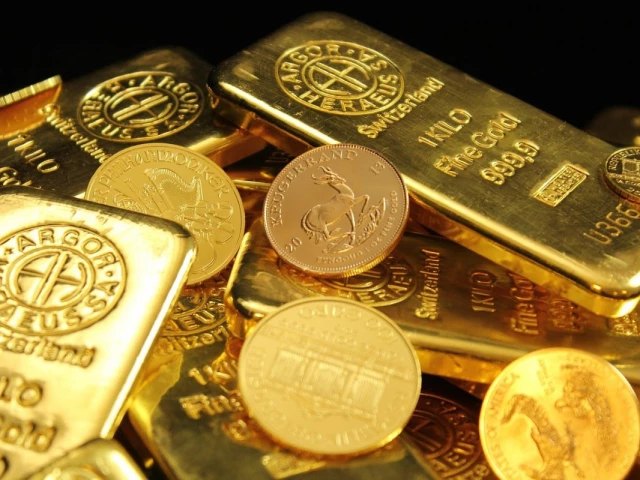
Gold prices have climbed to historic highs in both international and domestic markets.
In the international bullion market, the price of gold per ounce jumped $54, reaching a new peak of $3,940 per ounce.
In Pakistan, the price of gold per tola rose by Rs5,400, hitting a record Rs415,278 per tola.
Meanwhile, the price of 10 grams of gold increased by Rs4,629, reaching Rs356,033, the highest level ever recorded.
Read: Gold’s beast mode, 44% surge in nine months
Spot gold was up 1.4% at $3,940.04 per ounce, as of 1108 GMT, after hitting $3,949.34 earlier in the session.
Comparatively, spot silver climbed 1.2% to $48.53 per ounce, hitting its highest level in more than 14 years. Platinum rose 0.6% to $1,615.45 and palladium gained 1.6% to $1,280.75.



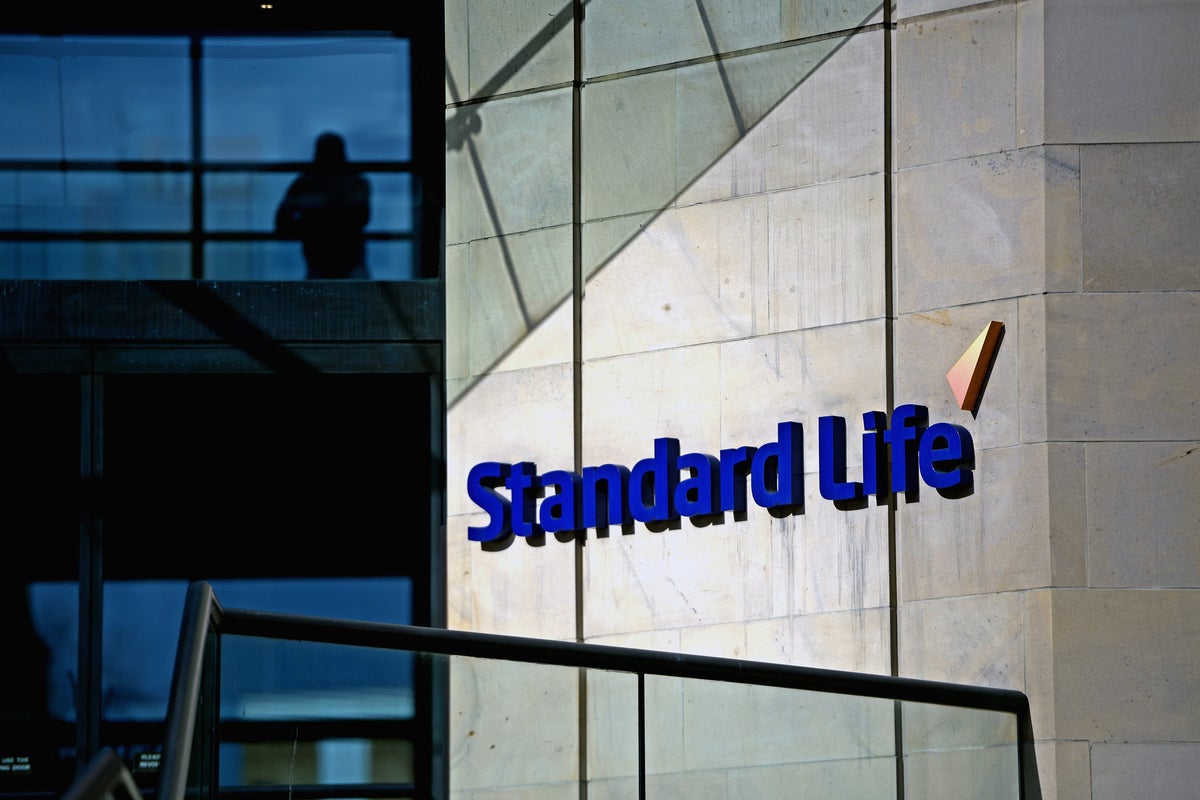
Standard Life has agreed to buy rival Aegon’s UK business for £2 billion in a move set to create a pension and savings giant.
The deal will see Standard Life, recently rebranded from Phoenix Group, oversee 16 million customers and £480 million in assets under administration.
Under the terms, Standard Life will pay £750 million in cash, part-funded through debt, and issue 181.1 million new shares to Dutch financial firm Aegon.
The transaction will grant Aegon a 15.3 per cent stake in the FTSE 100-listed Standard Life, along with the right to appoint one non-executive director to the combined group’s board.
Andy Briggs, Standard Life chief executive, said the agreement to acquire Aegon UK “significantly accelerates our vision to be the UK’s leading retirement savings and income business”.
“Together, we will not only be stronger, we will be better.”
Standard Life is understood to have seen off rival bidders, such as Lloyds Banking Group and Barclays, to secure the deal.
Amsterdam-listed Aegon, which is based in Schiphol in the Netherlands, put its UK arm up for sale at the end of last year as part of a group-wide overhaul that will see it move its headquarters to the US and be renamed as Transamerica.
Standard Life said the deal – set to complete around the end of 2026 – will catapult it to second place in Britain’s retail pensions and savings market and in the same position for workplace pensions, adding Aegon UK’s 3.8 million customers and £160 billion in assets under management.
It is aiming to drive savings of £110 million a year after the deal, with over half delivered by the end of 2029 and the rest by the end of 2031, driven by cuts made across combined group and head office operations and as the pair integrate their platforms.
Lard Friese, Aegon chief executive, said: “The businesses are complementary and the combination offers an excellent outcome for Aegon UK’s customers and colleagues.
“Aegon’s shareholding will provide an opportunity to participate in the future success of the enlarged group.”
Phoenix Group bought Standard Life’s insurance business from the then Standard Life Aberdeen in 2018 and announced plans to rebrand as Standard Life last year.
It also has brands including SunLife, Phoenix Life, ReAssure and Phoenix Wealth.
Panmure Liberum analyst Abid Hussain said: “Overall, this looks like a good deal, although there will be questions on why the expense and capital synergies take five years to fully realise; we would ordinarily expect this to be achieved in three years.”
Business
Fuel Prices Pakistan: Iran war impact: Will Pakistan be forced into rationing fuel if conflict drags on? – The Times of India
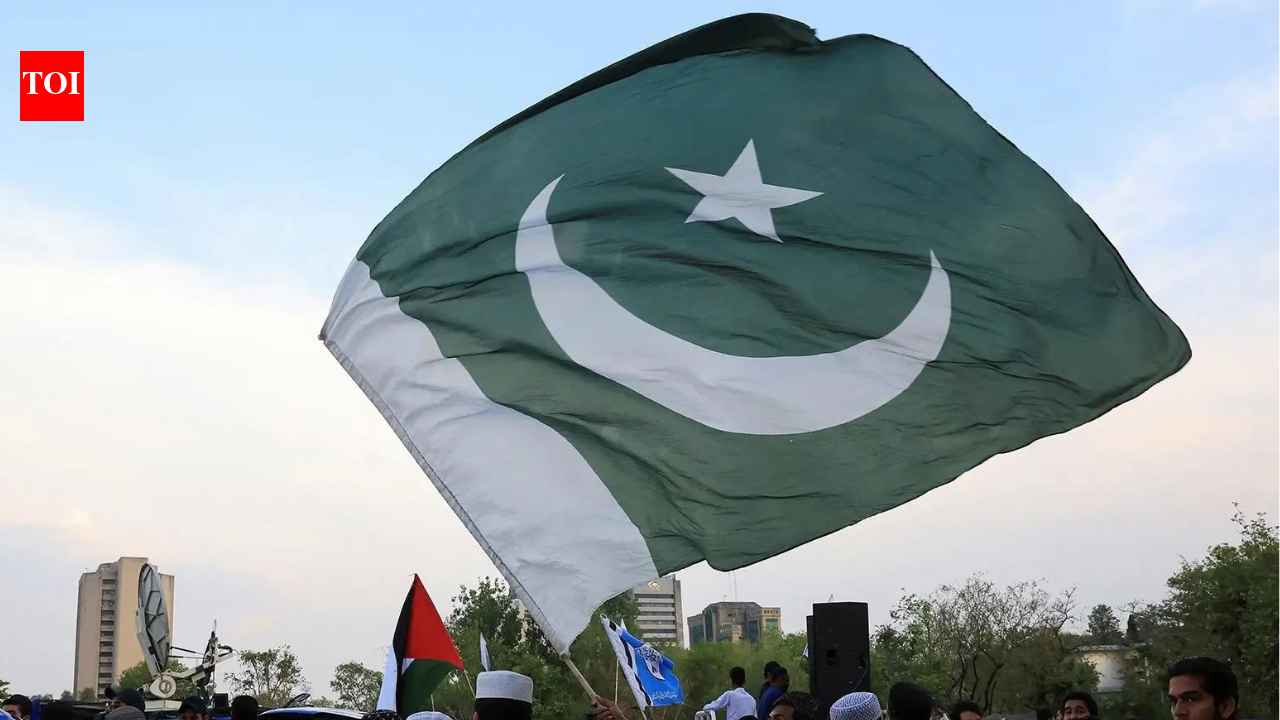
Pakistan could be forced to consider fuel rationing at petrol pumps if the ongoing US-Iran conflict continues for a prolonged period, finance minister Muhammad Aurangzeb has said.Speaking at the World Bank–IMF Spring Meetings 2026 in Washington, DC, Aurangzeb indicated that while Islamabad has so far avoided rationing, the situation remains fluid and dependent on how the conflict evolves.
“So far we have stayed away from interventions at the gas stations and at the petrol pumps… from our perspective that’s a much better way to go than going into rationing,” he said, while responding to a question on whether Pakistan may impose fuel restrictions.
Govt prefers price mechanism over rationing
The minister explained that the government is currently relying on price adjustments and targeted subsidies to manage demand, rather than imposing strict supply controls.“What we’ve seen is it has led to law and order situations in other countries,” he said, referring to rationing measures elsewhere. “If demand destruction can be done through price transmission combined with targeted subsidies… that’s a much better way to go.”However, he cautioned that this approach may not hold if the crisis deepens. “I have to put an asterisk there, it all depends how long this goes and how far this goes,” he added, signalling that rationing remains a fallback option.
Oil crisis driven by Hormuz disruption
The warning comes amid heightened global energy volatility triggered by the US-Iran war, which has disrupted supplies through the Strait of Hormuz — a key route for nearly a third of global oil flows,.Pakistan, which imports around 85% of its fuel through the strait, is particularly vulnerable to supply shocks and rising prices. The country has already witnessed sharp fuel price hikes in recent weeks, sparking protests and forcing the government to roll back increases.
Rising prices, public pressure shape policy
Petrol prices in Pakistan surged by over 40% earlier this month before being partially reduced following public backlash. The spike pushed transport costs higher and triggered unrest in several regions.To cushion the impact, the government introduced targeted subsidies for transporters, farmers and other key groups, alongside relief measures such as free public transport in some areas.Aurangzeb’s remarks highlight the delicate balancing act facing Islamabad managing dwindling energy supplies while avoiding public unrest, as the Middle East conflict continues to cast a long shadow over global oil markets.
Business
India-US trade deal back in focus: Indian delegation to visit Washington next week for talks – The Times of India
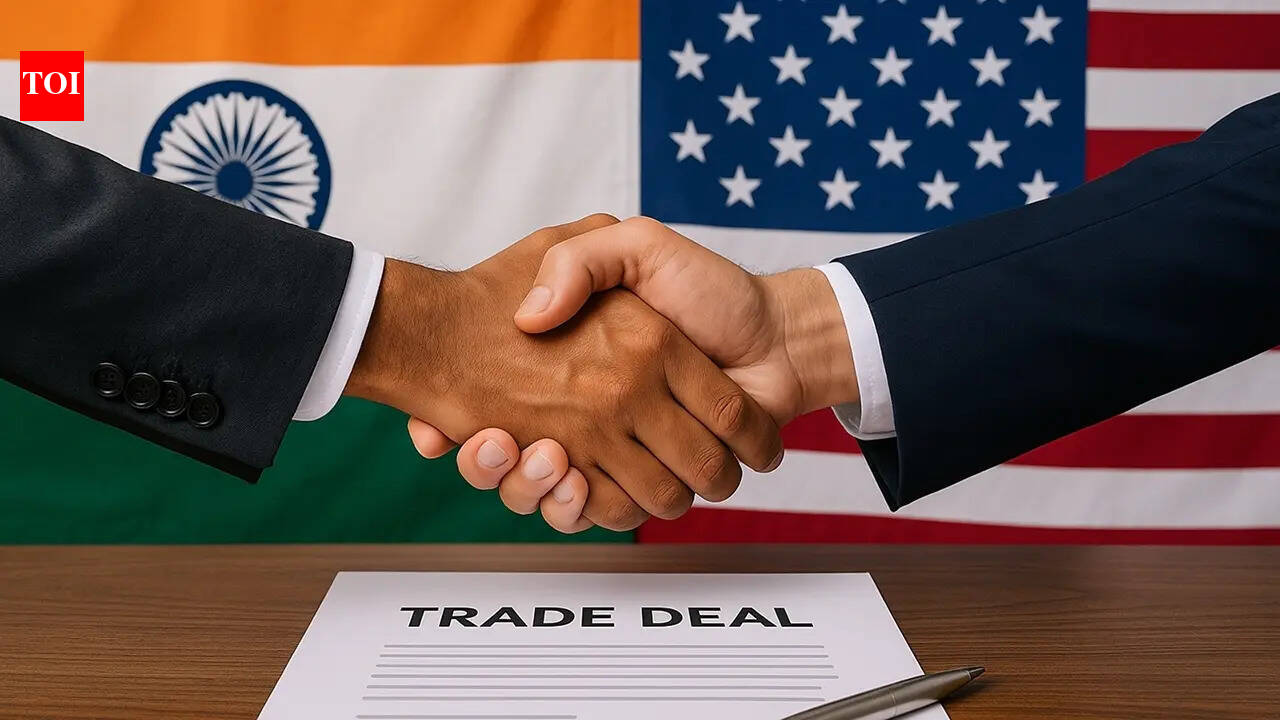
India-US trade deal update: Months after India and the US announced an interim trade agreement that reduces tariffs on India to 18%, an official Indian delegation is set to travel to Washington next week for discussions with US authorities, a government source said on Wednesday.According to a PTI source, the visit is scheduled for next week. The agreement had originally been expected to be signed in March, but developments in the Donald Trump tariff regime following a ruling by the Supreme Court of the United States have changed the circumstances.
In this light, the talks between trade representatives of India and the United States are seen as particularly significant. Officials had earlier indicated that the deal would be concluded only after clarity emerges on the revised tariff structure in the United States.In February, the two countries had announced that they had finalised the framework for the first phase of their bilateral trade pact. As part of this understanding, the US had agreed to bring down tariffs on Indian goods to 18 per cent.However, the tariff environment in the US shifted after the court struck down sweeping reciprocal tariffs introduced by President Donald Trump. Subsequently, the US administration imposed a uniform 10 per cent tariff on imports from all countries for a period of 150 days starting February 24.Amid these changes, a planned meeting between the chief negotiators from both sides was deferred last month. The two countries had been scheduled to meet in February to finalise the legal text of the agreement.At the time the framework was agreed, India enjoyed a relative advantage over competing nations. That edge has since narrowed, as all US trading partners are now subject to the same 10 per cent tariff.The upcoming talks will also be crucial in the context of two ongoing investigations initiated by the Office of the United States Trade Representative under Section 301.On March 12, the USTR launched a probe covering around 60 economies, including India and China. The investigation aims to assess whether policies or practices related to the enforcement of bans on goods produced using forced labour are unreasonable or discriminatory, or whether they restrict US trade.A day earlier, on March 11, the USTR had initiated another Section 301 investigation focusing on the policies and industrial practices of 16 economies, including India and China.


AI Slop Is Making the Internet Fake-Happy

Who is Johnnie Robbie? Meet West Coast Pro’s women’s champion and rising star on the indie scene

The Deepfake Nudes Crisis in Schools Is Much Worse Than You Thought

-

 Fashion1 week ago
India’s exports face reset as EU links trade to carbon metrics: EY
-

 Entertainment1 week ago
Queen Elizabeth II emotional message for Archie, Lilibet sparks speculation
-

 Tech7 days ago
As the Strait of Hormuz Reopens, Global Shipping Will Take Months to Recover
-

 Entertainment1 week ago
Lamar Odom shocking response to Khloé Kardashian account of his overdose
-

 Tech1 week ago
Azure customers up in arms over ‘full’ UK South region | Computer Weekly
-

 Fashion1 week ago
CII submits 20-pt agenda to Indian govt to back firms hit by Iran war
-

 Tech6 days ago
This AI Button Wearable From Ex-Apple Engineers Looks Like an iPod Shuffle
-

 Tech1 week ago
A Single Strike Won’t Shut Off the Gulf’s Desalination System