

Sports
Should Arsenal’s penalty have been overturned? Plus, Man United’s spot-kick escape

Video Assistant Referee causes controversy every week in the Premier League, but how are decisions made, and are they correct?
After each weekend we take a look at the major incidents to examine and explain the process both in terms of VAR protocol and the Laws of the Game.
In this week’s VAR Review: Should Arsenal‘s penalty against West Ham United have been canceled? What happened with Sunderland‘s overturned spot kick at Manchester United? And why didn’t Alexander Isak win a penalty for Liverpool at Chelsea?
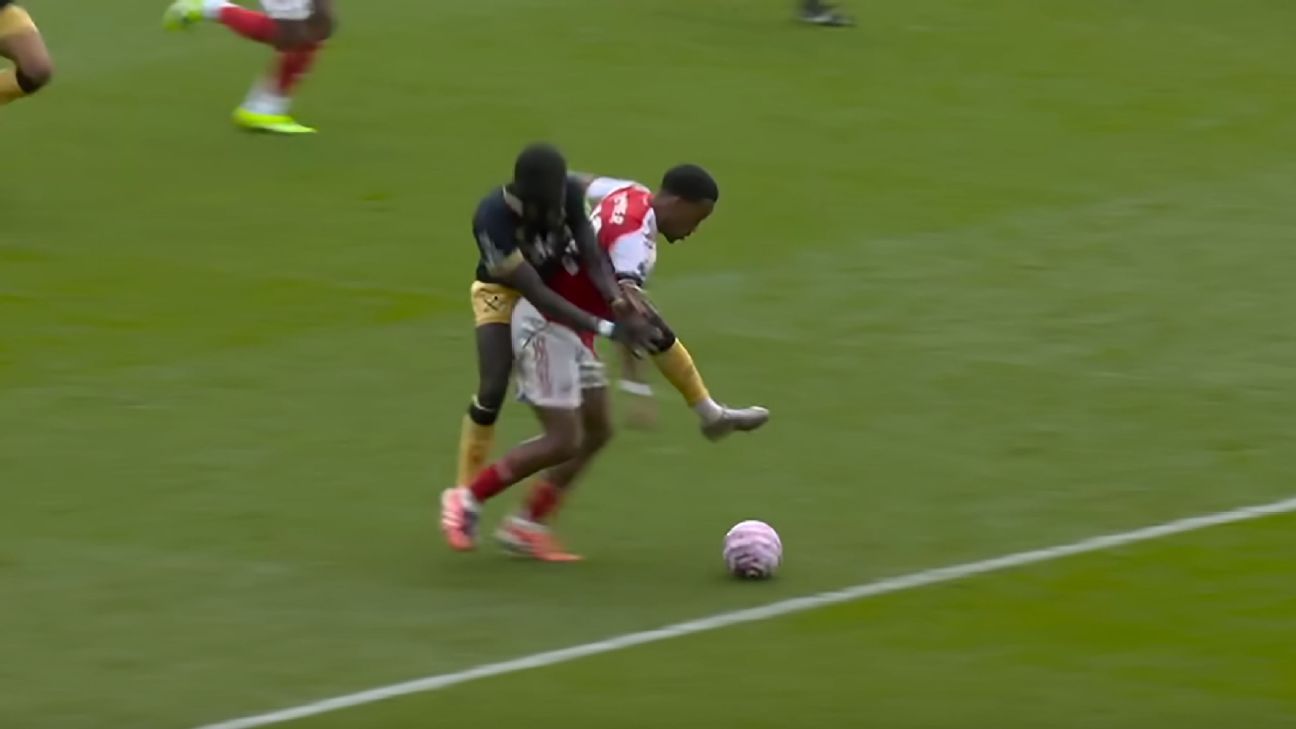
Possible penalty overturn: Position of foul by Diouf on Timber
What happened: Arsenal were awarded a penalty in the 67th minute when Jurriën Timber raced onto a pass and was brought down on the edge of the area by El Hadji Malick Diouf. Referee John Brooks pointed to the spot, and it was checked by the VAR, Michael Oliver.
VAR decision: Penalty stands, scored by Bukayo Saka.
VAR review: There’s no doubt this was a foul by Diouf, who clambered over the back of the Arsenal player. The query was about where it took place, with both players falling to the ground inside the area.
The referee and the VAR are looking for the point of contact that causes the foul. So it is possible for contact to begin outside the area and the foul to happen inside. This isn’t a foul continuing into the area, it’s the foul itself happening within it. It’s different than holding, which is the only offense that can start outside the box, continue into it, and be a penalty.
In December 2020, Southampton were awarded a VAR penalty against Brighton & Hove Albion when there was initial contact between Solly March and Kyle Walker-Peters outside the area, but the foul was judged to have taken place inside (watch here).
So in Saturday’s case, the VAR agreed that the first contact between Diouf and Timber outside the box wasn’t a foul, and it came on the line or inside.
Verdict: This would be considered a factual overturn, so the VAR alone would make the call and the referee wouldn’t be sent to the monitor. Yet other than situations determined by semi-automated offside technology, there’s no decision which is truly factual. The VAR is still looking at TV evidence and making a subjective judgement: Where did the foul take place? Was it handball by the goal scorer? Did the ball go out of play? The fact that different VARs could reach opposing judgements makes it subjective.
– Lindop, Olley: After dramatic Chelsea win, are Liverpool in crisis?
– Dawson: Pressure eases on Amorim — but for how long?
– Ogden: Hollywood derby gives us gritty realism rather than fairy tale
There’s a very strong argument that Diouf does foul Timber before the two players reach the box. The West Ham player is starting to climb over his opponent before they get to the line, and it really should have been a free kick … but it’s tight.
Subjective or objective? Oliver opted to leave the decision on the field, but would he have advised a penalty if a free kick had been given? It’s highly unlikely.
Possible goal: Offside check on Saka
What happened: Saka thought he had fired Arsenal into the lead in the 24th minute when he ran onto a pass over the top by Declan Rice. After the ball ended up in the net, the assistant referee raised the offside flag and the goal was disallowed.
VAR decision: No goal.
VAR review: As the ball was floated into the area, it bounced off the head of Diouf and dropped perfectly for Saka.
There was no question about Saka’s offside position — but did he commit an offside offence? Or should the offside phase have been canceled by the touch off Diouf?
Verdict: There are two considerations for the VAR. First, did Diouf make a “deliberate play” (meaning controlled) that would reset Saka’s offside position? As the ball simply landed on the West Ham player’s head, rather than him actually attempting to head it, this wasn’t a “deliberate play,” so Saka remains offside
Even if it was a “deliberate play,” Saka is so close to the defender that it would have been valid to consider whether the Arsenal forward had impacted or influenced him into playing the ball, so it’s highly unlikely the VAR would have stepped in.
Correct on-field decision.
Possible penalty: Handball by Mavropanos
What happened: Saka helped the ball into the area at the start of the second half, and it touched the arm of West Ham defender Konstantinos Mavropanos. Play continued, but was there a case for a penalty?
VAR decision: No penalty.
VAR review: The VAR determined that this was just part of Mavropanos’ running action, and the ball inadvertently touched his arm rather than the defender making his body unnaturally bigger, or making any deliberate action.
Verdict: The Premier League’s more-lenient application of the handball law gives far more consideration for how a player is naturally moving. There’s a chance this would be given as a spot kick in one of the other major European leagues, but it won’t be sent to review in England.
Possible penalty overturn: Challenge by Sesko on Hume
What happened: Sunderland delivered a long throw into the area in first-half stoppage time. As Trai Hume looked to win the ball, he went to ground under a high-foot challenge from Man United’s Benjamin Sesko. Referee Stuart Attwell allowed play to continue, and when the ball went out of play for a corner, the assistant advised that a penalty should be awarded. It was checked by the VAR, Neil Davies.
VAR decision: Penalty canceled.
VAR review: Last week we discussed how contact was required for a penalty kick to be awarded for a high boot. Chelsea‘s Malo Gusto escaped after the VAR determined he couldn’t be certain that he touched Yankuba Minteh. This was that situation in reverse.
Sesko tried to get to the ball ahead of Hume, and raised a boot — with the video evidence clear that there was no contact.
Verdict: It was a confusing situation at first, because of the delay between the incident and the penalty being awarded, and it may incorrectly have appeared that the VAR was advising a spot kick. But this was undoubtedly a correct intervention to cancel the penalty.
Usually, an overturned spot kick results in a restart with a dropped ball to the goalkeeper, because it has stayed in play. But when the ball has very clearly gone out of play before a penalty is given, the game restarts normally — in this case with a corner to Sunderland.
There’s an argument that the restart should have been an indirect free kick to Sunderland inside the area, as that’s how playing in a dangerous manner (no contact) should be dealt with. But this is never given in favor of the attacking team in the box.
Possible penalty: Challenge by Lammens and Fernandes on Traoré
What happened: Bertrand Traoré was booked for simulation in the 57th minute when he went to ground when trying to get past goalkeeper Senne Lammens and midfielder Bruno Fernandes on the edge of the box.
VAR decision: No penalty.
VAR review: There was glancing contact between Fernandes and Traoré, which took place just outside the area so the VAR wouldn’t be able to get involved.
The VAR could have considered a red card against Fernandes for denying an obvious goal-scoring opportunity, as Traore could have got to the ball inside the area with Lammens out of the game. However, there was enough doubt that there was enough in the contact to be a foul, and with Diogo Dalot mopping up the loose ball, it couldn’t be certain the Sunderland player would take control.
Verdict: While Traoré went down a little theatrically, he was probably unfortunate to pick up a yellow card, as he was nudged by the United captain as he tried to get past him.
Possible penalty: Challenge by Szoboszlai on Garnacho
What happened: Alejandro Garnacho moved into the penalty area in the 39th minute and went to ground under pressure from Dominik Szoboszlai. The Chelsea winger looked at Anthony Taylor asking for a penalty, but the referee waved away the claims. It was looked at by the VAR, Craig Pawson.
VAR decision: No penalty.
VAR review: There was a hand on the back of Garnacho, but the Argentina international went to ground too easily when he felt that contact.
Verdict: Definitely not enough in this for the VAR to get involved.
Possible penalty: Challenge by James on Isak
What happened: Alexander Isak ran onto a ball through the center in the 73rd minute and went down after being hit in the head by a flailing arm from Reece James. No penalty was awarded, so the VAR had a look.
VAR decision: No penalty.
VAR review: While Isak was caught in the face, this only came after the striker had pulled James back by his shirt.
Verdict: Arne Slot was annoyed by this decision, because Liverpool had conceded a penalty at Galatasaray in the Champions League on Tuesday when Szoboszlai caught Baris Alper Yilmaz in the face inside the area.
But there are two important differences: as ever, the crucial one being that the Galatasaray penalty was given by the on-field referee, and not through VAR. Also, there wasn’t any contact by Yilmaz on Szoboszlai that could be judged to have led to the touch on the head.
That’s not to say the Galatasaray penalty wasn’t exceptionally soft, but it doesn’t mean James should also be penalized, and definitely not through a VAR intervention.
Possible penalty: Challenge by Diop on Evanilson
What happened: James Hill lofted a ball into the area in the 54th minute, with Evanilson going to ground under a challenge from Issa Diop. Referee Simon Hooper wasn’t interested in the penalty appeals, so it was checked by the VAR, John Brooks.
VAR decision: No penalty.
VAR review: The VAR decided that while there was contact by Diop on the heel of Evanilson, it was accidental, so it didn’t reach the threshold for an intervention.
Verdict: Cast your mind back to the start of last season and the VAR penalty awarded to Fulham against Nottingham Forest, when Murillo stood on the heal of Andreas Pereira with the ball in the vicinity. The VAR? John Brooks.
There’s no doubt that the contact from Diop prevented Evanilson from being able to play the ball, and using Pereira as precedent, there’s a clear case for a VAR penalty. Consistency would say the same VAR might reach the same conclusion in both incidents.
The Premier League’s Key Match Incidents Panel supported the Pereira VAR intervention 5-0, though it did also note there was some contact on the attacker’s back. This perhaps isn’t quite as clear, but Diop was fortunate.
Possible red card: Violent conduct by Flemming on Buendía
What happened: Zian Flemming took control of the ball in the third minute of stoppage time, holding off Emiliano Buendía before then having his progress blocked. Buendía went down holding his face but referee Andrew Kitchen, in his third Premier League game, allowed play to continue. It was checked by the VAR, Michael Oliver, for a possible red card.
VAR decision: No red card.
VAR review: Flemming had his arm raised when Buendía came in from his blind side, with the Burnley player positioned to protect the space rather than throwing an elbow.
Verdict: This should at least have been a free kick to Aston Villa, and there’s an argument it should have been a yellow card. But there was no force or brutality in the way Flemming tried to hold off the Aston Villa player, and no deliberate act.
Two seasons ago, Fulham‘s João Palhinha escaped a red card after he caught Brighton’s Pascal Groß on the head with an arm when trying to keep possession. In that case, there was a clear movement into the opponent, with the KMI Panel voting 3-2 that it was a missed VAR intervention for a red card.
The Flemming incident doesn’t fall into the same category, so this won’t be seen as an error.
Possible penalty: Morato challenge on Burn
What happened: Newcastle United won a corner in the 54th minute; as it was delivered into the box, Dan Burn went down under pressure from Morato. Referee Peter Bankes allowed play to continue, and VAR Chris Kavanagh checked it out.
VAR decision: No penalty.
VAR review: Initially the two players were involved in mutual holding before Burn broke free. Morato didn’t seem to be interested in challenging for the ball, only stopping Burn from doing so. But the referee decided there wasn’t enough in it to give a penalty.
Verdict: Judging when holding goes from normal football contact to an offense is always a case of weighing up a variety of factors. Clear non-footballing actions, like dragging an opponent down by his shirt, are the only obvious examples.
There was a strong case for a penalty for a holding offense after Burn tried to get away from Morato, who can consider himself very fortunate.
The closest example is probably West Ham’s Mateus Fernandes holding back Tottenham Hotspur‘s Micky van de Ven last month. That wasn’t given as a spot kick, which the KMI Panel supported on a split 3-2 vote for both on-field and VAR judgements. But due to the non-footballing nature of the challenge, this could go down as a missed intervention.
Possible red card: Violent conduct by Uche on Tarkowski
What happened: The game was deep into added time when there was a VAR check for a possible punch by Christantus Uche on James Tarkowski. Should there have been a red card?
VAR decision: No red card.
VAR review: Quite a strange situation, because while Uche did appear to take a jab at Tarkowski, it seemed very light, and it was unclear whether there was contact. There doesn’t have to be contact for violent conduct, as “strikes or attempts to strike” is covered within the laws, but there does still need to be a level of brutality involved.
Verdict: Would there have been a different outcome had Tarkowski fallen to the ground? Possibly, but the fact that the Everton player barely had any reaction should be a decent indicator that there was very little in this.
A bizarre move by Uche, but there was not enough in it for violent conduct.
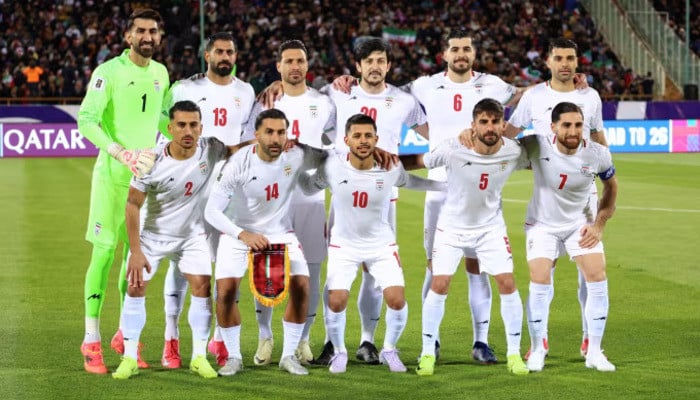
Secretary of State Marco Rubio said on Thursday Washington had no objections to Iranian players participating in the 2026 Fifa World Cup but he added the players will not be allowed to bring with them people with ties to Iran’s Islamic Revolutionary Guard Corps (IRGC).
“Nothing from the US has told them they can’t come,” Rubio told reporters.
President Donald Trump also said his administration “would not want to affect the athletes” in comments he made at the White House.
The 2026 soccer World Cup is set to begin on June 11 across the United States, Mexico and Canada.
Paolo Zampolli, a Trump envoy who has no official connection with the World Cup, had earlier suggested that Italy should replace Iran at the tournament.
“The problem with Iran would be not their athletes. It would be some of the other people they would want to bring with them, some of whom have ties to the IRGC. We may not be able to let them in but not the athletes themselves,” Rubio said.
“They can’t bring a bunch of IRGC terrorists into our country and pretend that they are journalists and athletic trainers,” Rubio added. Washington has designated the IRGC as a “foreign terrorist organisation.”
Currently there is no suggestion Iran will withdraw or be banned from the tournament that Italy missed out on.
After the start of the Iran war, Iran requested that Fifa move the team’s three group matches from the US to Mexico, which was rejected.
The US and Israel attacked Iran on February 28. Iran responded with its own strikes on Israel and Gulf states with US bases. US-Israeli strikes on Iran and Israeli attacks in Lebanon have killed thousands and displaced millions. A fragile ceasefire in the Iran war began over two weeks ago.
NEWYou can now listen to Fox News articles!
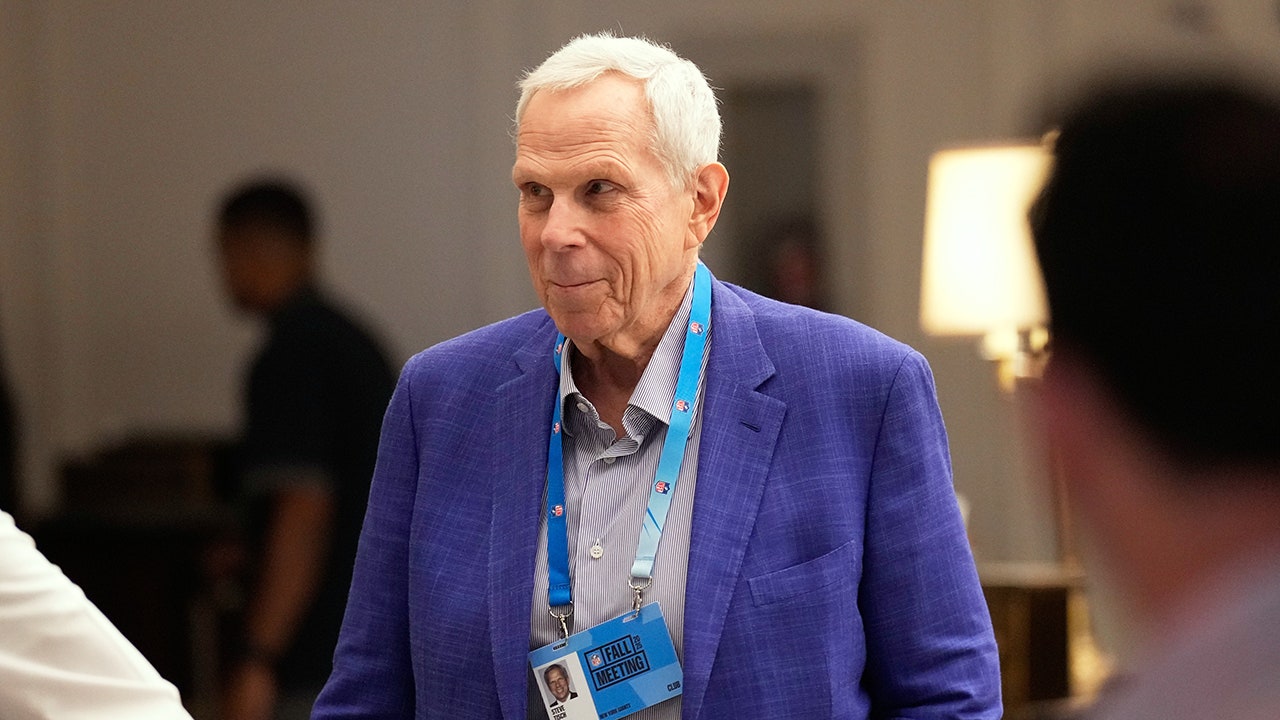
Cameras showed former New York Giants co-owner Steve Tisch in the team’s draft room Thursday night during the first round.
At one point, Tisch was seen standing near Giants head coach John Harbaugh. Despite no longer holding a majority stake in the NFL franchise, Tisch remains the Giants’ chairman of the board.
ESPN obtained an NFL memo last month detailing plans by Steve Tisch and his siblings to transfer their stake in the Giants to trusts for their children.
CLICK HERE FOR MORE SPORTS COVERAGE ON FOXNEWS.COM
New York Giants co-owner Steve Tisch warms up before the NFL game between the Washington Redskins and New York Giants at Met Life Stadium in East Rutherford, N.J., on Oct. 28, 2018. (Rich Graessle/Icon Sportswire)
“Prior transfers to these Trusts were completed pursuant to 2023 and 2024 Finance Committee approvals,” the memo stated. “The Sellers now propose to transfer their entire remaining interests, totaling 23.1% of the Club, to the Trusts. … Following the transactions, the Sellers will no longer own any interest in the Club.”
It was not clear if the transfer requests were in any way related to Tisch’s name appearing in the Epstein files released by the U.S. Justice Department in January. Tisch’s name came up more than 400 times in the files. Tisch at the time said he knew Epstein but denied visiting Epstein’s island.
As for draft night, the Giants made what some viewed as an unconventional pick at No. 10, selecting offensive lineman Francis Mauigoa.
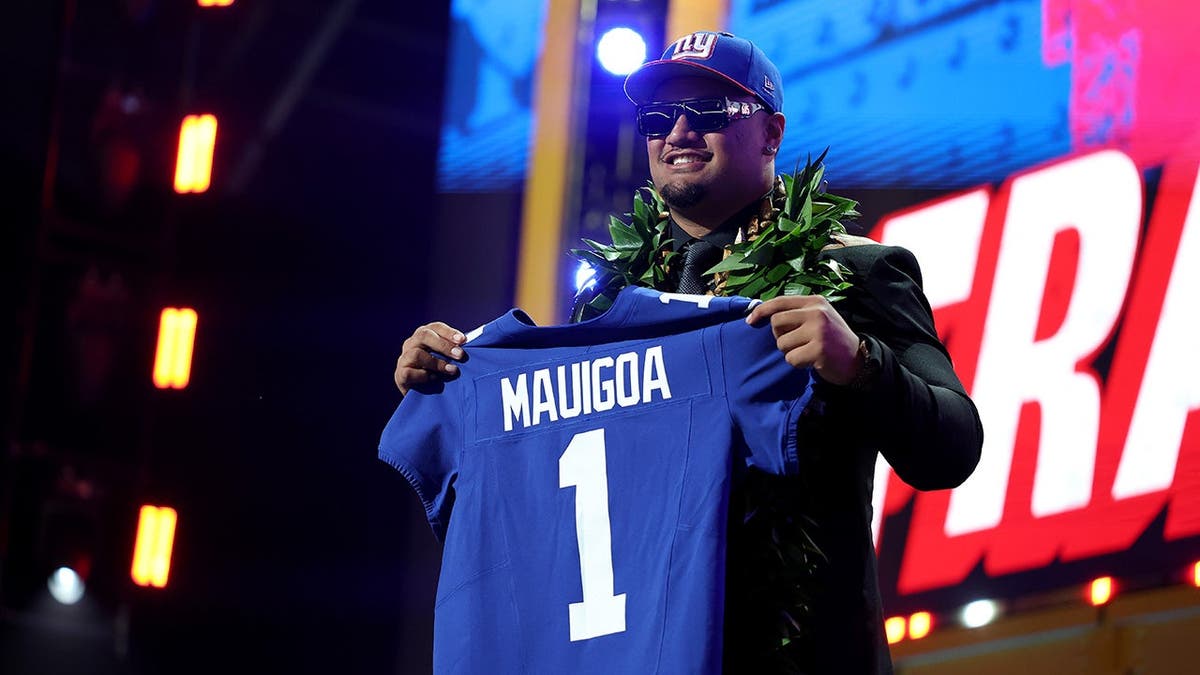
Francis Mauigoa of Miami celebrates after being selected as the tenth overall pick by the New York Giants during the first round of the 2026 NFL Draft at Acrisure Stadium in Pittsburgh, Pa., on April 23, 2026. (Emilee Chinn/Getty Images)
Before that, the Giants added another piece to their pass rush, selecting hybrid edge/off-ball linebacker Arvell Reese at No. 5.
Reese earned All-American honors at Ohio State and finished his first season as a full-time starter with 6.5 sacks.
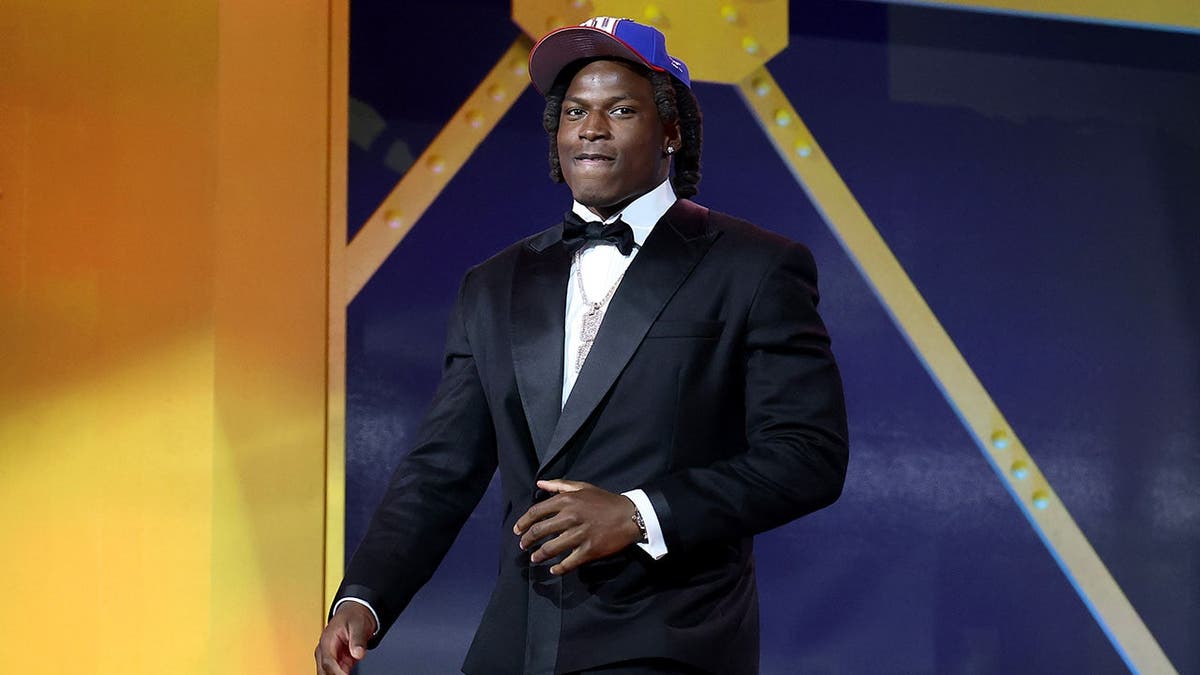
Arvell Reese of Ohio State celebrates after being selected as the fifth overall pick by the New York Giants during the first round of the 2026 NFL Draft at Acrisure Stadium in Pittsburgh, Pa., on April 23, 2026. (Emilee Chinn/Getty Images)
CLICK HERE TO DOWNLOAD THE FOX NEWS APP
Reese is set to join a pass rush that includes Brian Burns, Abdul Carter and, likely, Kayvon Thibodeaux.
Follow Fox News Digital’s sports coverage on X, and subscribe to the Fox News Sports Huddle newsletter.
NEWYou can now listen to Fox News articles!
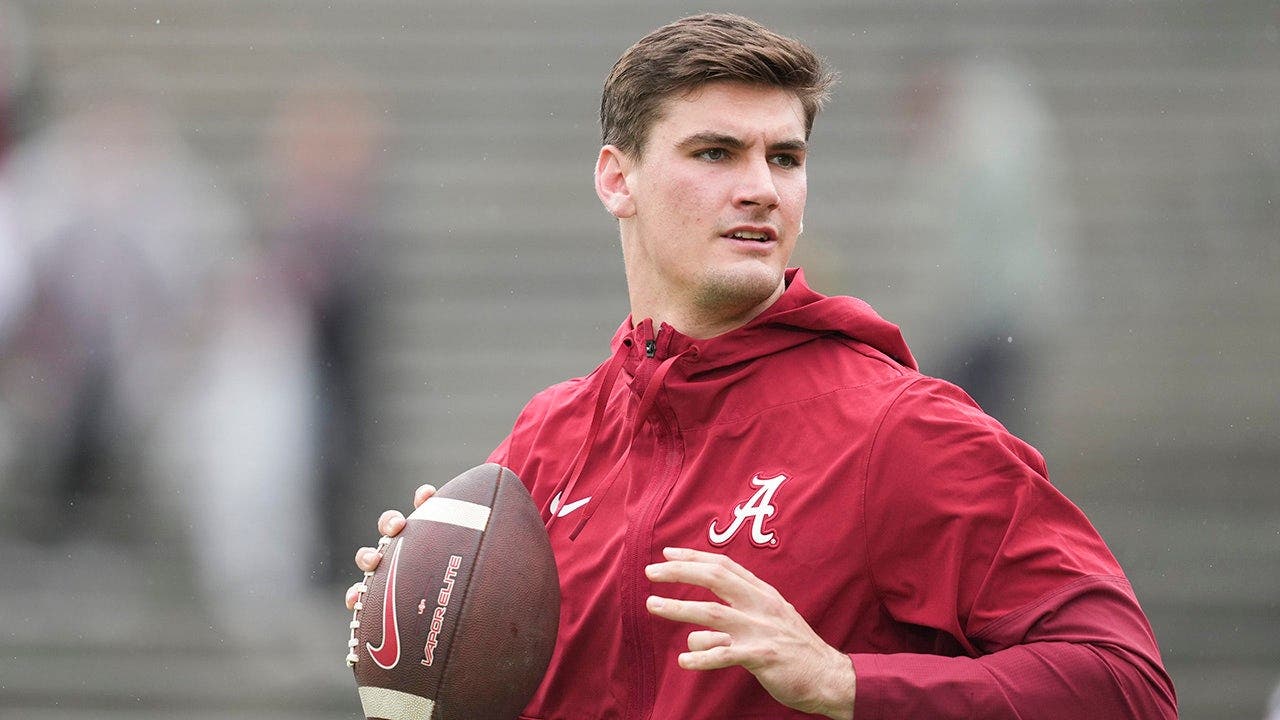
One of the most intriguing stories entering the first round of the NFL Draft was where Alabama quarterback Ty Simpson might land. Well, fans got their answer sooner than they expected.
The Los Angeles Rams surprisingly selected Simpson with the No. 13 pick in the 2026 NFL Draft.
The selection isn’t completely out of left field and is arguably the best-case scenario for Simpson. The Rams have Matthew Stafford as their starter for 2026, but Stafford has flirted with the idea of retirement each of the past two offseasons. It’s clear the clock is ticking on his NFL career.
CLICK HERE TO DOWNLOAD THE FOX NEWS APP
The Los Angeles Rams pulled a stunner and drafted Alababam QB Ty Simpson with the No. 13 pick in the NFL Draft. (CFP/Getty Images)
Now, Simpson gets to sit behind one of the NFL’s best veteran quarterbacks, learn the position while adapting to life in the NFL, and not face immediate pressure to succeed. Additionally, the Rams are one of the most well-run franchises in the league right now. Sean McVay is an elite head coach who led the team to a Super Bowl victory to cap the 2021 season and just had the team within one win of another Super Bowl berth before falling to the Seattle Seahawks in the NFC Championship.
ZERO BS. JUST DAKICH. TAKE THE DON’T @ ME PODCAST ON THE ROAD. DOWNLOAD NOW!
The most surprising aspect is the Rams looking toward the future, quite frankly. This is a team that has had no problem trading away first-round picks to make its team the best it can be each season. It seemed most likely the team would use the No. 13 pick to improve its team for next season, which could be Stafford’s last. Instead, the team decided to put itself in position for Stafford’s retirement without skipping a beat.
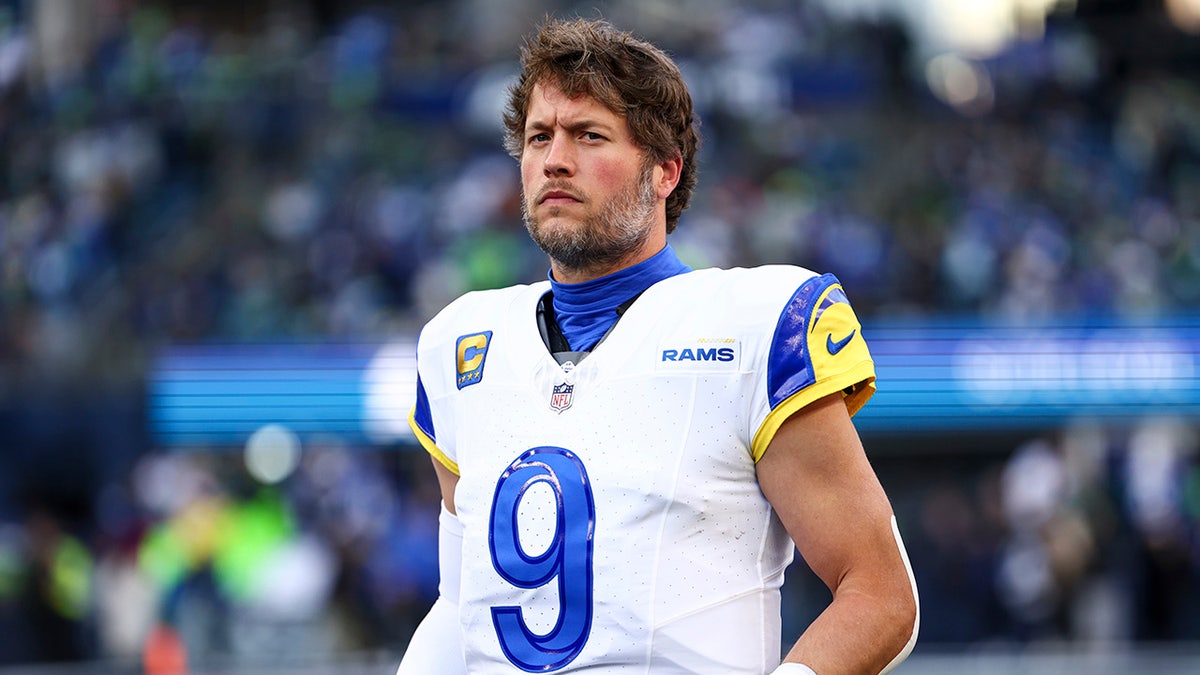
Los Angeles Rams QB Matthew Stafford, now 38-years-old, has flirted with retirement after each of the past two seasons. (Kevin Sabitus/Getty Images)
There were several surprises in the first 13 picks of the 2026 NFL Draft: the Cardinals taking Notre Dame running back Jeremiyah Love at No. 3, the Titans selecting Ohio State wide receiver Carnell Tate at No. 4, the Kansas City Chiefs trading up to take LSU cornerback Mansoor Delane at No. 6 and even the Cowboys trading up one spot to make sure they drafted Ohio State safety Caleb Downs at No. 11.
CLICK HERE FOR MORE SPORTS COVERAGE ON FOXNEWS.COM
But the Rams completely abandoning their recent strategy (usually trading away first-round picks and loading up for now) to select Stafford’s heir apparent is easily the biggest early shock of the 2026 NFL Draft.


Jada Pinkett Smith seeks $49K legal fees from Will Smith former friend
Bank of England set to hold interest rates despite Iran war pushing up inflation

Sweden’s H&M & Stella McCartney return with nostalgic 2026 collection

-

 Fashion1 week ago
France’s LVMH Q1 revenue falls 6%, shows resilience amid Iran war
-

 Entertainment1 week ago
Is Claude down? Here’s why users are seeing errors
-

 Sports1 week ago
PSL 11: Peshawar Zalmi win toss, opt to field first against Quetta Gladiators
-

 Tech1 week ago
CYBERUK ’26: UK lagging on legal protections for cyber pros | Computer Weekly
-

 Fashion1 week ago
Raymond unveils luxury Chairman’s Collection Store in Mumbai
-

 Sports5 days ago
WWE WrestleMania 42 Night 2: Live match results and analysis
-
 Business1 week ago
PepsiCo earnings beat estimates as North American food business improves
-

 Sports5 days ago
NCAA men’s gymnastics championship: All-time winners list