

Fashion
UK’s clothing exports down 7.6% to $293 mn in Jan-Feb

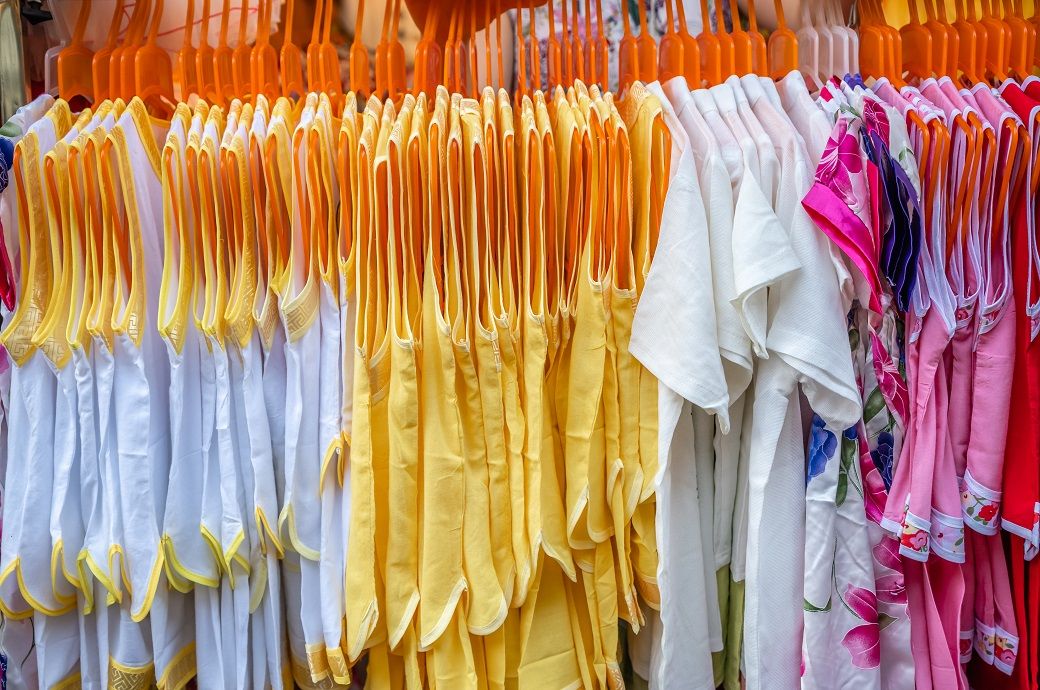
UK’s clothing exports declined 7.66 per cent to £217 million (~$293 million) in February 2026, amid weak European demand and cost pressures.
Textile and fibre exports also fell year on year, though month-on-month trends show mild recovery.
Full-year 2025 exports remained under pressure, extending a post-pandemic correction.
Q4 data indicates only a partial sequential rebound.
Source link









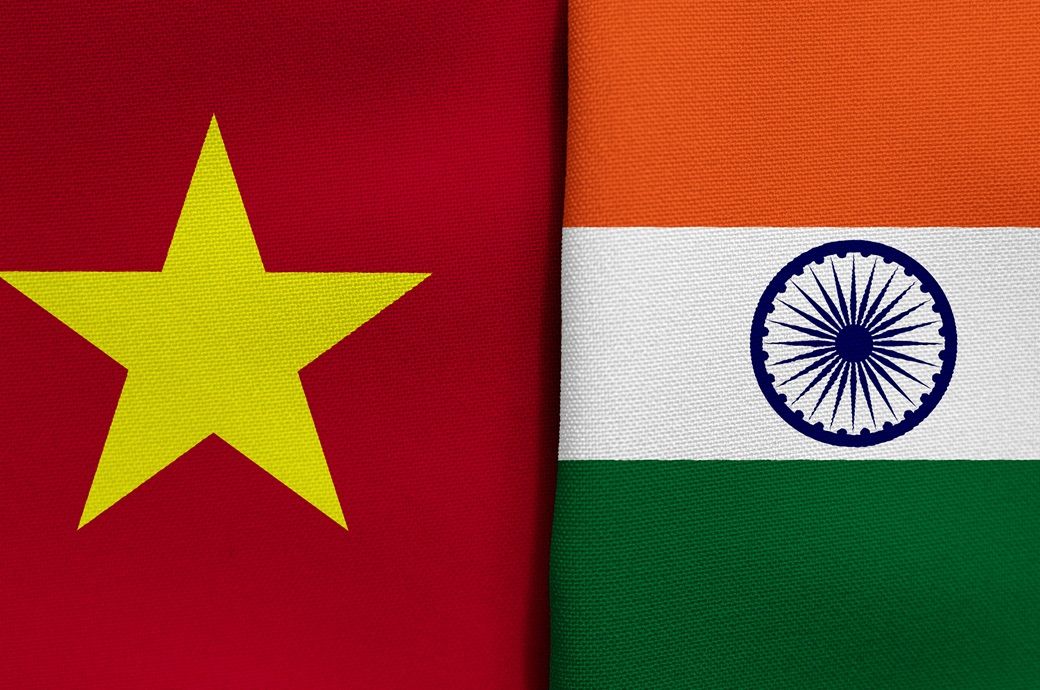
The discussion brought together policymakers, trade bodies, research institutions and industry stakeholders from India and Vietnam, reflecting growing interest in building deeper bilateral engagement. Participants examined opportunities arising from supply chain diversification, sustainability mandates and the increasing role of digital transformation in manufacturing, according to Vietnamese media reports.
The Vietnam Trade Office in India held an online seminar to boost textile, footwear and leather collaboration amid shifting global supply chains.
Stakeholders highlighted complementary strengths, with Vietnam strong in garments and India in raw materials.
Discussions focused on silk cooperation, investment opportunities and technology exchange.
Upcoming trade fairs and exhibitions were also promoted.
Vietnam’s Trade Counsellor in India, Bui Trung Thuong, noted that both economies complement each other across the value chain. He highlighted Vietnam’s strength in garment production alongside India’s capabilities in raw materials and textiles, suggesting that closer cooperation could support the development of integrated and higher-value supply chains.
He added that the forum aims to encourage direct engagement between businesses and investors to unlock opportunities in technology adoption, investment and sustainable practices.
India’s silk sector emerged as a key area for collaboration. P Sivakumar, CEO of the Central Silk Board, outlined India’s strong research base and global standing in silk production. He identified scope for joint work in silkworm breeding, technology transfer and workforce development, while also pointing to opportunities in value-added applications beyond textiles, including cosmetics and pharmaceuticals. He further encouraged Vietnam’s participation in international sericulture platforms to deepen knowledge exchange.
From an investment standpoint, Invest India representative Aditya Das underscored India’s manufacturing ecosystem and policy support for foreign investors. He observed that complementary strengths between the two countries could drive partnerships in trade, joint ventures and integrated production networks.
Vietnamese representatives echoed interest in expanding technical cooperation. Nguyen Thi Nhai of the Vietnam Sericulture Research Centre emphasised the need for deeper collaboration in post-cocoon technologies, product innovation and training exchanges, while seeking greater institutional linkages with Indian counterparts.
The seminar also highlighted upcoming industry events aimed at fostering business connections. Vietnam will host the 26th International Shoes and Leather Exhibition in Ho Chi Minh City from July 8 to 10, while India’s Bharat Tex 2026 is scheduled for July 14 to 17 as a comprehensive global textile platform. Industry representatives also promoted sector-specific exhibitions such as Meet at Agra 2026 to encourage partnerships.
Fibre2Fashion News Desk (SG)
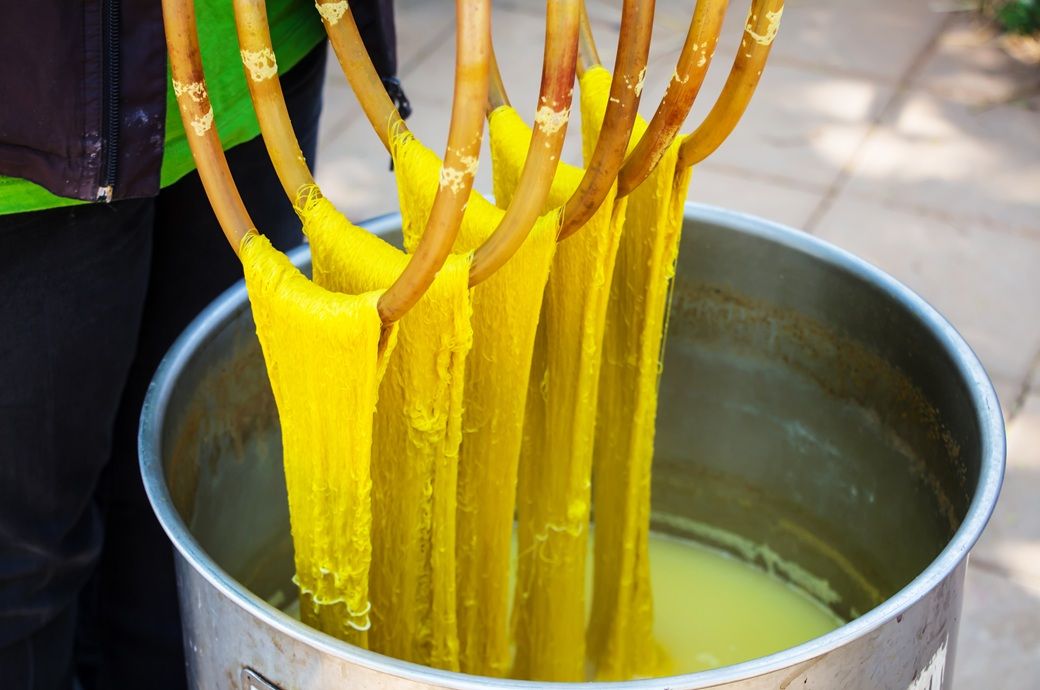
A significant minority equity investment from John Hogg Technical Solutions will now support the spinout’s industrial validation in working mill environments.
SwitchDye, a University of Leeds spinout, has secured investment from John Hogg Technical Solutions to scale its eco-friendly polyester dyeing technology.
Using a fizzy water-based system, it cuts chemical use, water consumption, and energy needs.
It will support real-world mill validation and commercialisation, aiming to reduce textile pollution and enable more circular manufacturing.
John Hogg will provide technical input, manufacturing and stewardship expertise, along with access to customer networks to help SwitchDye move from lab to mill at pace.
“SwitchDye’s pioneering approach to polyester dyeing will help to drive a more circular and sustainable textile industry,” said professor Nick Plant, University of Leeds.
Polyester makes up more than half of all global fibre output. Dyeing fibre is highly energy intensive and consumes 600 billion litres of water every year across the globe, the university said in a press release.
Textile production is estimated to be responsible for about 20 per cent of global clean water pollution, and polyester dyeing alone releases around 280,000 tonnes of waste dye and other chemicals annually.
“SwitchDye’s pioneering approach to polyester dyeing will help to drive a more circular and sustainable textile industry. This is another example of the outstanding talent that exists within our research community and our strength in nurturing and supporting innovation in new technologies,” explained Plant.
Born from an ongoing collaboration between the Schools of Design and Chemistry at Leeds, SwitchDye’s team includes researchers and co-founders Dr Nathaniel Crompton, Dr Harrison Oates, professor Richard Blackburn and professor Chris Rayner.
The new dyes were synthesised in the Wolfson CO2 laboratory in the School of Chemistry and then transferred to the facilities at the University’s School of Design and the Leeds Institute of Textiles and Colour (LITAC), where the team conducted rigorous tests to demonstrate how SwitchDye’s system can remove additives that typically account for up to 90 per cent of chemicals, without compromising performance.
The technology is designed as a drop-in for common dyehouse equipment, allowing mills to keep using their existing machinery.
In addition to the chemical savings and reduction in waste, the new dyeing system can also streamline operations by reducing rinse stages and shortening machine time, using 40 per cent less water and saving on energy. The dyes can also be removed more easily at the end of products’ life, supporting fibre-to-fibre recycling.
The university’s commercialisation team worked alongside SwitchDye to make investor introductions and provided funding to help the team achieve commercial validation.
“Partnering with John Hogg gives us the technical expertise and industry reach to move from lab success into consistent, real-world application. Over the coming months, we’ll be working closely with dyehouses and brands to demonstrate how the technology integrates into existing equipment and delivers measurable savings,” Dr Harrison Oates, chief technology officer at SwitchDye, said.
“The partnership with SwitchDye marks the start of an inspiring journey with the potential to improve the future of textile manufacturing for many years to come. At John Hogg, we have always taken pride in understanding our customers’ needs and the evolving demands of the market. Being part of an innovation that delivers a true step forward in sustainable dyeing technology is something we are genuinely excited about. We also see clear alignment between our businesses, with John Hogg’s wider capabilities helping to accelerate SwitchDye’s path to commercialisation,” Sam Walton, chief technical officer at John Hogg, said.
Fibre2Fashion News Desk (RR)
This partnership brings together ICCF’s deep understanding of the Chinese luxury ecosystem and cultural landscape with the Kering long-standing expertise in craftsmanship, operations and brand development in Europe.
Kering has partnered with ICCF and will take a minority stake to support the growth of ICICLE.
The collaboration combines ICCF’s insight into China’s luxury market with Kering’s expertise in craftsmanship and brand building.
Backed by Kering’s House of Wonders initiative, the deal aims to expand ICICLE internationally and broaden its product range.
The investment of Kering will support the next phase of development of ICCF’s flagship brand ICICLE, including the continued international expansion of the brand, as well as the enrichment of its product offering across new categories.
Founded in 1997 in Shanghai, ICICLE is a fashion brand known for a design aesthetic rooted in Eastern philosophy, bringing together natural materials, refined craftsmanship and a quiet, contemporary sensibility. The brand specializes in women’s and men’s ready-to-wear and accessories and operates more than 200 stores, including flagship locations in Beijing, Shanghai and Paris.
This strategic partnership is driven by House of Wonders, a strategic initiative newly launched by Kering, designed to selectively support emerging luxury Houses with strong cultural relevance across markets, categories and geographies. Through House of Wonders, Kering aims to build long-term value through a disciplined, partnership-driven approach, engaging with brands defined by a distinctive vision, deep authenticity and global resonance potential.
Note: The headline, insights, and image of this press release may have been refined by the Fibre2Fashion staff; the rest of the content remains unchanged.
Fibre2Fashion News Desk (RM)


UK retail sales rebound as motorists stock up on fuel

Vietnam-India seminar boosts textile, leather ties

22 India-backed terrorists killed in Khyber intelligence-based operation, says ISPR

-

 Fashion1 week ago
France’s LVMH Q1 revenue falls 6%, shows resilience amid Iran war
-

 Entertainment1 week ago
Is Claude down? Here’s why users are seeing errors
-

 Sports1 week ago
PSL 11: Peshawar Zalmi win toss, opt to field first against Quetta Gladiators
-

 Tech1 week ago
The Deepfake Nudes Crisis in Schools Is Much Worse Than You Thought
-
 Business1 week ago
Standard Life buys rival in £2b deal to create savings giant
-

 Tech1 week ago
CYBERUK ’26: UK lagging on legal protections for cyber pros | Computer Weekly
-
 Fashion1 week ago
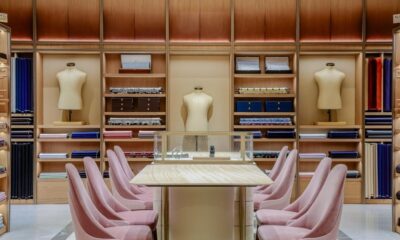
Raymond unveils luxury Chairman’s Collection Store in Mumbai
-

 Sports4 days ago
NCAA men’s gymnastics championship: All-time winners list