

Tech
TAG Heuer’s New Smartwatch Ditches Google’s Wear OS to Be Apple Friendly

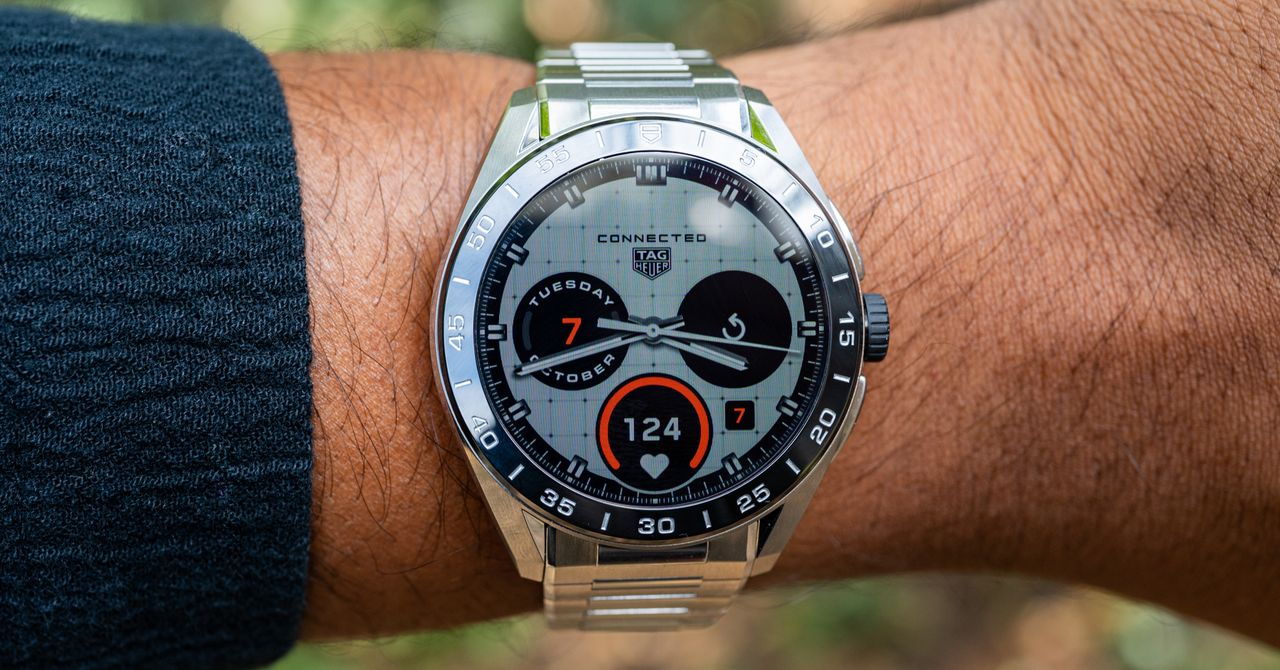
Right as Google’s Wear OS is hitting its stride—now feature-rich with robust smartwatches that can go toe-to-toe with the Apple Watch—luxury watchmaker TAG Heuer has decided to ditch the operating system altogether for its latest Connected Calibre E5 smartwatch. Instead, it runs a proprietary “TAG Heuer OS” (still based on Android). But unlike many of the latest Wear OS smartwatches designed only for Android phones, this one is compatible with iPhones.
That’s likely one of the biggest reasons for the switch-up, as Google seems to have abandoned making its smartwatch platform compatible with Apple’s hardware (Apple never made it easy, though this could change). It also allows the Swiss watchmaker to be less dependent on the whims of Google, but ultimately, it means TAG’s smartwatch will not have access to the wealth of apps found on Google and Apple’s respective platforms.
I spent a few days with the 45-mm Calibre E5 (there’s also a new 40-mm variant), and this fifth-generation smartwatch feels polished, despite the software change. It’s also striking in its design, unlike any other smartwatch, with premium materials like a ceramic bezel, domed sapphire crystal, and snazzy band options. Unsurprisingly, the version I tried will cost you a punchy $2,000 when it goes on sale this month (and goes up to $2,800 for other variations), though the smaller 40-mm Calibre E5 starts at $1,800.
A Luxe Smartwatch
The Calibre E5 has a nice heft to it that helps make it feel luxe enough to match that price point. A stainless steel polished case, black polished ceramic bezel with silver markings, and flat sapphire crystal also furthers the premium pedigree. TAG has, of course, several other variations. You can get a black diamond-like carbon (DLC) grade-2 titanium sandblasted case, white and green indices, or a domed sapphire crystal over the display, exclusive to the new 40-mm case.
The sloped lugs offer a comfortable fit, and the metal bracelet integrates well with the case. It’s interchangeable (there’s a button you press on the underside to release it), though these straps are expressly designed for the E5. Still, I was able to pop on a 22-mm pin buckle strap from one of my other watches without issues.
Despite being weighty, I didn’t mind wearing this smartwatch to sleep, though you may want a more comfortable strap. However, when I woke up the next morning, I spent a few minutes hunting for my sleep results, only to learn they don’t exist. Yet. TAG says it plans to add sleep tracking, likely in December via a software update, which is important considering this is a staple feature on most smartwatches these days.
One of the boons of smartwatches is you can switch between several watch faces, and the E5 is no exception, but nicely many here mimic designs of TAG’s mechanical watches, such as the Carrera or Aquaracer. It’s fairly simple to customize these on the watch itself, too, choosing different accent colors, backgrounds, and complications.









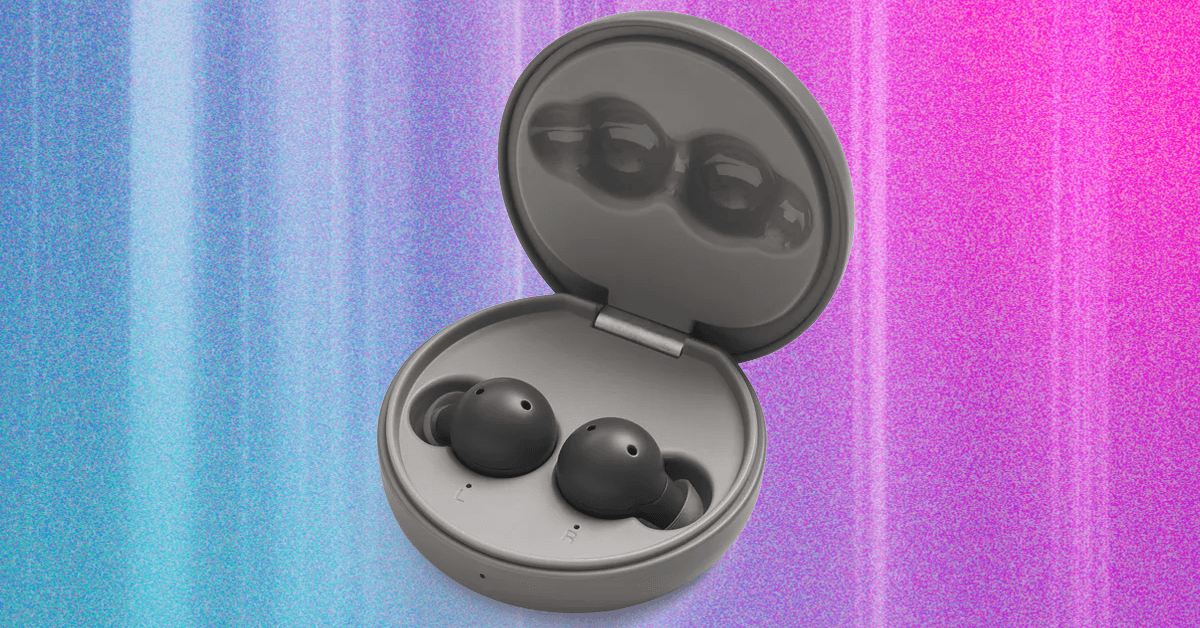
Don’t call them hearing aids. They’re hearpieces, intended as a blurring of the lines between hearing aid and earbuds—or “earpieces” in the parlance of Lizn, a Danish operation.
The company was founded in 2015, and it haltingly developed its launch product through the 2010s, only to scrap it in 2020 when, according to Lizn’s history page, the hearing aid/earbud combo idea didn’t work out. But the company is seemingly nothing if not persistent, and four years later, a new Lizn was born. The revamped Hearpieces finally made it to US shores in the last couple of weeks.
Half Domes
Photograph: Chris Null
Lizn Hearpieces are the company’s only product, and their inspiration from the pro audio world is instantly palpable. Out of the box, these look nothing like any other hearing aids on the market, with a bulbous design that, while self-contained within the ear, is far from unobtrusive—particularly if you opt for the graphite or ruby red color scheme. (I received the relatively innocuous sand-hued devices.)
At 4.58 grams per bud, they’re as heavy as they look; within the in-the-ear space, few other models are more weighty, including the Kingwell Melodia and Apple AirPods Pro 3. The units come with four sets of ear tips in different sizes; the default mediums worked well for me.
The bigger issue isn’t how the tip of the device fits into your ear, though; it’s how the rest of the unit does. Lizn Hearpieces need to be delicately twisted into the ear canal so that one edge of the unit fits snugly behind the tragus, filling the concha. My ears may be tighter than others, but I found this no easy feat, as the device is so large that I really had to work at it to wedge it into place. As you might have guessed, over time, this became rather painful, especially because the unit has no hardware controls. All functions are performed by various combinations of taps on the outside of either of the Hearpieces, and the more I smacked the side of my head, the more uncomfortable things got.

Thinking Machines cofounders Barret Zoph and Luke Metz are leaving the fledgling AI lab and rejoining OpenAI, the ChatGPT-maker announced on Thursday. OpenAI’s CEO of applications, Fidji Simo, shared the news in a memo to staff Thursday afternoon.
The news was first reported on X by technology reporter Kylie Robison, who wrote that Zoph was fired for “unethical conduct.”
A source close to Thinking Machines said that Zoph had shared confidential company information with competitors. WIRED was unable to verify this information with Zoph, who did not immediately respond to WIRED’s request for comment.
Zoph told Thinking Machines CEO Mira Murati on Monday he was considering leaving, then was fired today, according to the memo from Simo. She goes on to write that OpenAI doesn’t share the same concerns about Zoph as Murati.
The personnel shake-up is a major win for OpenAI, which recently lost its VP of research, Jerry Tworek.
Another Thinking Machines Lab staffer, Sam Schoenholz, is also rejoining OpenAI, the source said.
Zoph and Metz left OpenAI in late 2024 to start Thinking Machines with Murati, who had been the ChatGPT-maker’s chief technology officer.
This is a developing story. Please check back for updates.

Since Donald Trump returned to the White House last January, the biggest names in tech have mostly fallen in line with the new regime, attending dinners with officials, heaping praise upon the administration, presenting the president with lavish gifts, and pleading for Trump’s permission to sell their products to China. It’s been mostly business as usual for Silicon Valley over the past year, even as the administration ignored a wide range of constitutional norms and attempted to slap arbitrary fees on everything from chip exports to worker visas for high-skilled immigrants employed by tech firms.
But after an ICE agent shot and killed an unarmed US citizen, Renee Nicole Good, in broad daylight in Minneapolis last week, a number of tech leaders have begun publicly speaking out about the Trump administration’s tactics. This includes prominent researchers at Google and Anthropic, who have denounced the killing as calloused and immoral. The most wealthy and powerful tech CEOs are still staying silent as ICE floods America’s streets, but now some researchers and engineers working for them have chosen to break rank.
More than 150 tech workers have so far signed a petition asking for their company CEOs to call the White House, demand that ICE leave US cities, and speak out publicly against the agency’s recent violence. Anne Diemer, a human resources consultant and former Stripe employee who organized the petition, says that workers at Meta, Google, Amazon, OpenAI, TikTok, Spotify, Salesforce, Linkedin, and Rippling are among those who have signed. The group plans to make the list public once they reach 200 signatories.
“I think so many tech folks have felt like they can’t speak up,” Diemer told WIRED. “I want tech leaders to call the country’s leaders and condemn ICE’s actions, but even if this helps people find their people and take a small part in fighting fascism, then that’s cool, too.”
Nikhil Thorat, an engineer at Anthropic, said in a lengthy post on X that Good’s killing had “stirred something” in him. “A mother was gunned down in the street by ICE, and the government doesn’t even have the decency to perform a scripted condolence,” he wrote. Thorat added that the moral foundation of modern society is “infected, and is festering,” and the country is living through a “cosplay” of Nazi Germany, a time when people also stayed silent out of fear.
Jonathan Frankle, chief AI scientist at Databricks, added a “+1” to Thorat’s post. Shrisha Radhakrishna, chief technology and chief product officer of real estate platform Opendoor, replied that what happened to Good is “not normal. It’s immoral. The speed at which the administration is moving to dehumanize a mother is terrifying.” Other users who identified themselves as employees at OpenAI and Anthropic also responded in support of Thorat.
Shortly after Good was shot, Jeff Dean, an early Google employee and University of Minnesota graduate who is now the chief scientist at Google DeepMind and Google Research, began re-sharing posts with his 400,000 X followers criticizing the Trump administration’s immigration tactics, including one outlining circumstances in which deadly force isn’t justified for police officers interacting with moving vehicles.
He then weighed in himself. “This is completely not okay, and we can’t become numb to repeated instances of illegal and unconstitutional action by government agencies,” Dean wrote in an X post on January 10. “The recent days have been horrific.” He linked to a video of a teenager—identified as a US citizen—being violently arrested at a Target in Richfield, Minnesota.
In response to US Vice President JD Vance’s assertion on X that Good was trying to run over the ICE agent with her vehicle, Aaron Levie, the CEO of the cloud storage company Box, replied, “Why is he shooting after he’s fully out of harm’s way (2nd and 3rd shot)? Why doesn’t he just move away from the vehicle instead of standing in front of it?” He added a screenshot of a Justice Department webpage outlining best practices for law enforcement officers interacting with suspects in moving vehicles.


Asia-Pacific airfreight holds firm in November despite cooling PMI

Budget 2026: Kolkata realtors seek tax relief, revised affordable housing cap; eye demand revival – The Times of India

These Sub-$300 Hearing Aids From Lizn Have a Painful Fit

-

 Politics1 week ago
UK says provided assistance in US-led tanker seizure
-

 Entertainment1 week ago
Does new US food pyramid put too much steak on your plate?
-

 Entertainment1 week ago
Why did Nick Reiner’s lawyer Alan Jackson withdraw from case?
-
 Business1 week ago
Trump moves to ban home purchases by institutional investors
-

 Sports1 week ago
PGA of America CEO steps down after one year to take care of mother and mother-in-law
-

 Sports4 days ago
Clock is ticking for Frank at Spurs, with dwindling evidence he deserves extra time
-
 Business1 week ago
Bulls dominate as KSE-100 breaks past 186,000 mark – SUCH TV
-
 Business1 week ago
Gold prices declined in the local market – SUCH TV