

Sports
Billionaire booster, conference commishes at odds

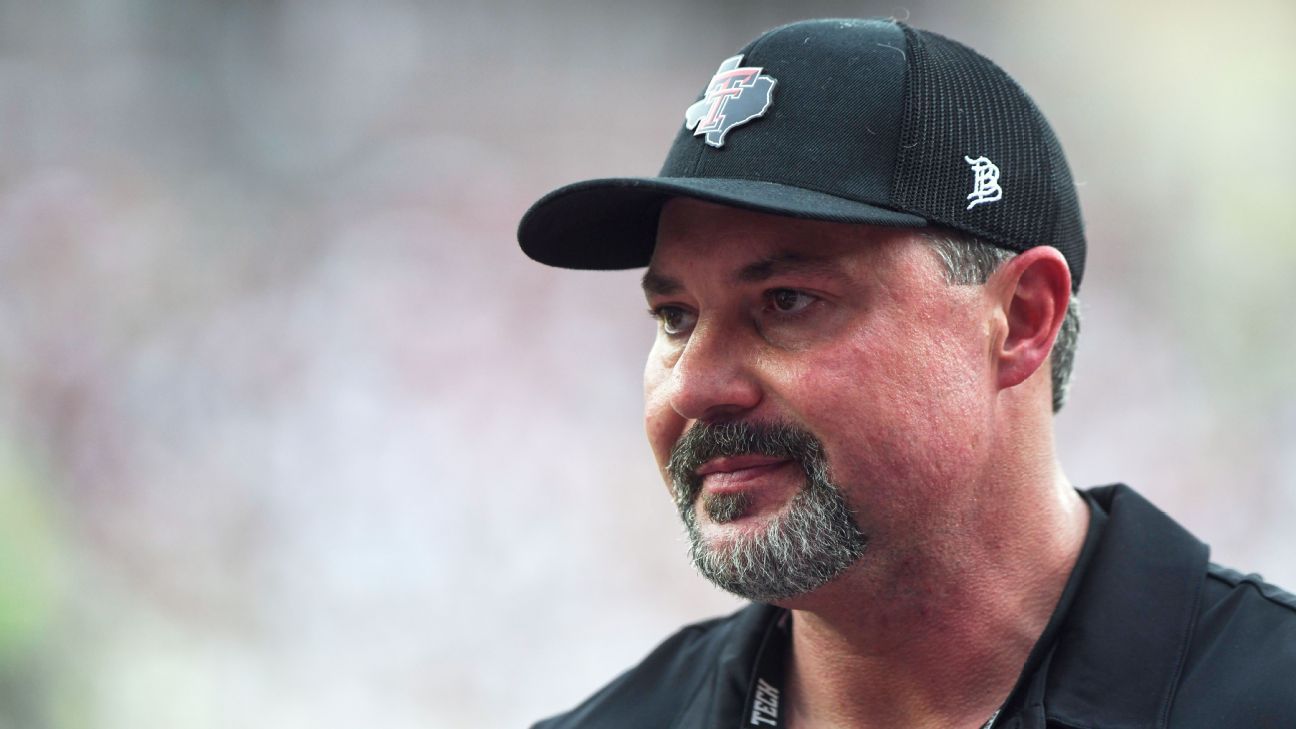
One of the most vocal and potentially powerful boosters in college sports lashed out at conference commissioners for stymieing changes he thinks could save the rapidly changing industry, and then the commissioners countered, with one of them saying the booster’s views “reflect a fundamental misunderstanding of the realities of college athletics.”
The dispute began with an argument Thursday by Cody Campbell, Texas Tech’s billionaire head of regents, about how the proposed pooling of college TV rights could feed additional billions into school coffers, but that progress is being held back because “the conferences are all represented by commissioners who are very, very self-interested.”
“The commissioners don’t really care what happens at the institutional level,” Campbell said at a panel discussion held by the Knight Commission, an oversight group that released a survey in which a majority of college executives who responded said Division I sports was headed in the wrong direction. “All they care about is what happens to them. And I think that is fundamentally the problem.”
Campbell said he supports elements of the recently introduced SAFE Act, a bill co-sponsored by Sen. Maria Cantwell, D-Wash., that features a call for a rewrite of a 1960s law that would lift a restriction on college conferences from combining to sell their TV rights together. Campbell told attendees the move could be worth $7 billion, and said commissioners had said to him “privately” that they know a modification of that law would generate more revenue “but I don’t want to give up control of my own media-rights negotiation.”
Southeastern Conference commissioner Greg Sankey told The Associated Press those conversations with Campbell never occurred.
“I have never stated — publicly or privately — that pooling media rights would increase revenue, nor do I believe that it would,” Sankey said. “His misrepresentation of my position raises serious concerns about the accuracy of his other claims. … His comments reflect a fundamental misunderstanding of the realities of college athletics.”
Big 12 commissioner Brett Yormark also denied making those remarks.
“Cody is entitled to his own opinion, but not his own facts,” Yormark said. “I’ve never said pooling media rights will increase revenue. The only thing I have said is that hope isn’t a strategy. There are unintended consequences to amending the [1961 Sports Broadcasting Act] that Cody and his team need to better understand.”
College sports has come under new financial pressure after the recent $2.8 billion House settlement that allows schools to directly pay players for use of their name, image and likeness (NIL) to the tune of up to $20.5 million per university, starting this season.
Media deals make up the backbone of most schools’ bankrolls. The Power 4 conferences each have different, multibillion-dollar arrangements with varied expiration dates spread across multiple networks. The proceeds for those deals then go to conference offices, which all have their own formulas for divvying it up. The Atlantic Coast Conference, for instance, recently reworked its formula to base a portion of its payouts on viewership numbers for specific schools.
The Big Ten, meanwhile, has made headlines recently for being in late-stage efforts to procure up to $2 billion from private equity, which would create a new entity that would market the league’s media rights and other properties.
“The fact that we’re bringing private equity into something that is, in my view, owned by the American public in college sports, is outlandish,” Campbell said. “We have halfway professionalized this thing. And so we have a professionalized cost model on one side where we pay coaches a lot. We’re now paying players a lot. But we have this amateurish media-rights marketing effort that makes absolutely no sense to anybody.”
The Big Ten did not respond to an AP request for comment. Sankey and Yormark, however, pushed back on the idea that commissioners are out of touch with what’s good for college sports.
“My responsibility lies with the institutions I serve and the student-athletes on our campuses,” Sankey said. “Mr. Campbell’s suggestion that commissioners are indifferent to the institutional level is both irresponsible and damaging to his own credibility.”
“Our decisions are rooted in collaboration, accountability, and a deep understanding of the institutional impact for student-athletes,” Yormark said. “The SCORE Act is the first step in solving the issues facing collegiate athletics.”
The SCORE Act, which has support from the NCAA and the Power 4 conferences, proposes limited antitrust protection for the NCAA, mainly from lawsuits involving eligibility issues, and a prohibition on athletes becoming employees of their schools — a development that NCAA executive Tim Buckley said would be “the budget buster of the century” for college sports.
Campbell portrayed the SCORE Act as too broad a giveaway to the NCAA and the conference commissioners he challenged for wanting to run their own fiefdoms instead of looking out for the good of college sports in general.
“Protecting your position and protecting your importance and your ego, I could not care less about that,” Campbell said. “Because I know that if we don’t change something and bring more revenue in, a lot of sports are going to be cut, a lot of scholarships are going to be cut, and a lot of kids are going to lose opportunity.”
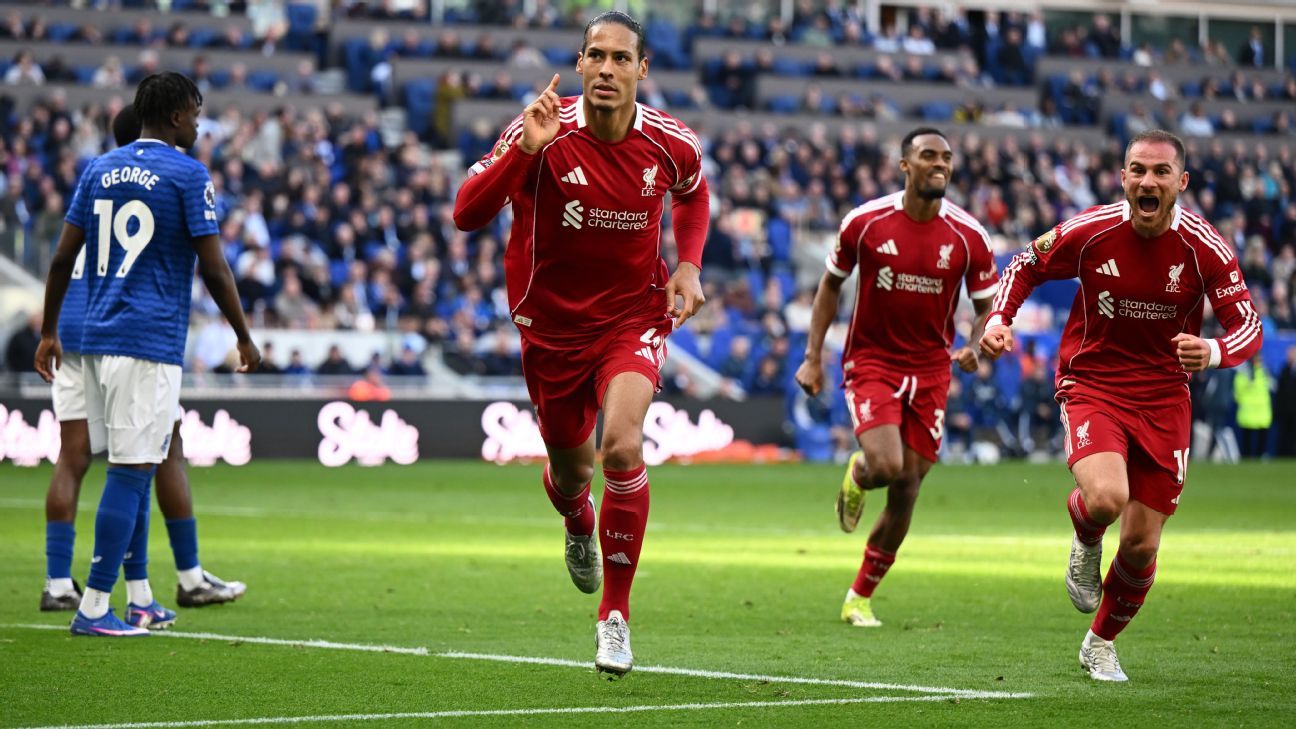
LIVERPOOL, England — Liverpool needed that. After a season of turmoil, Liverpool needed Virgil van Dijk to rise the highest. They needed Mohamed Salah to conjure up just one more magical moment. They needed a reason to believe.
The defense of their Premier League title has largely been a campaign without joy for Arne Slot’s side, with reserves of hope seeming to dwindle by the week. But with Liverpool there is always a chance, and when the chance came against Everton — this time in the 100th minute – — Van Dijk seized it with the fearlessness and fortitude of a player who knew there were more than just three points on the line.
It was fitting that, as Liverpool faced off against Everton in the first Merseyside derby at Hill Dickinson Stadium, Arsenal and Manchester City were preparing to star in this weekend’s main event over at the Etihad. That Liverpool were only the warmup act to this season’s title decider should and will sting for the reigning champions — but a last-gasp 2-1 win at the home of their local rivals will go some way to soothing the pain.
Make no mistake, this was not Liverpool at their ebullient best — far from it. But Slot’s side did, at least, show the grit and character that has evaded it for too much of this torrid campaign and, in doing so, inflicted yet more misery on an Everton team many had regarded as the favorite going into this encounter.
The prematch scenes on Merseyside left little doubt about how much this meant for Everton supporters. They lined the streets with flares and flags to greet the team coach before unfurling an impressive tifo banner as the players readied themselves for action.
The energy in the stands transmitted instantly to the players on the pitch, and Everton hassled and harried their opponents with the fervor of a team smelling blood. Certainly, Liverpool went into Sunday’s game as a wounded beast, having bowed out of the UEFA Champions League with a 4-0 aggregate defeat to Paris Saint-Germain on Tuesday night, in the process of which they also lost striker Hugo Ekitike to a serious Achilles injury.
So when the lively Iliman Ndiaye found the back of the Liverpool net inside 27 minutes, it seemed as if yet another miserable prophecy were set to be fulfilled. Perhaps, though, the fates were smiling on Slot’s side, with a VAR intervention sparing the Reds’ blushes and offering them a platform to show their mettle.
Just 66 seconds later, Liverpool were ahead thanks to the brilliance of Salah, who slotted coolly past Jordan Pickford after a superb pass from Cody Gakpo. All of a sudden, it was as if the blue mist had lifted.
Salah beamed as he stood before the euphoric away end, having just tied Steven Gerrard for the most goals scored by a Liverpool player in Premier League Merseyside derbies (nine). It has not been a vintage Salah season by any stretch of the imagination — and it will be his last — but the sight of the Egypt international being “crowned” by teammate Curtis Jones after carving out another slice of history seemed like a poignant footnote in one of the all-time great Anfield careers.
Liverpool, though, did not have it all their own way. So often this term, they seem to have conspired to make life hard for themselves, and they did so again when some lackadaisical defending allowed the in-form Beto to dispatch a smart Kiernan Dewsbury-Hall delivery early in the second half. It was Beto’s sixth goal involvement in as many games, with his instinctive finish once more lighting the blue touchpaper inside Hill Dickinson Stadium.
Liverpool’s anguish was compounded by the sight of goalkeeper Giorgi Mamardashvili leaving the pitch on a stretcher in the immediate aftermath of the goal, having sustained what Slot later described as a “big wound” to a leg. His replacement, Freddie Woodman, could hardly have asked for a more daunting arena in which to make his Premier League debut for the club, but the former Preston North End man stood firm, and so did his teammates. Liverpool were not electrifying, but they did not need to be.
Instead, they made life difficult for Everton, who never quite managed to wrestle back the momentum they had enjoyed during the early stages of this contest. And when, in the dying minutes of stopping time, Dominik Szoboszlai swung an enticing corner kick into the Everton box, Van Dijk was there to apply the finishing touch.
The Dutchman’s thumping header helped yield a victory that bolsters Liverpool’s hopes of Champions League qualification, with the Reds now seven points clear of sixth-place Chelsea with just five games left to play. More importantly, though, Van Dijk’s goal recaptured something intangible for Liverpool; the feeling that they should never quite be written off.
“It’s a privilege to represent this club and today they showed what it means to the players to represent this club,” Slot said in his postmatch news conference. “And the fans were, as they’ve been throughout the whole season, a big, big, big support for us. And to beat them then in the first game in their new stadium after what I just said, the week we had, is an enormous compliment to everybody involved in Liverpool FC.”
For Slot, the full-time whistle must have felt like a release valve — a rare moment to stop and exhale in a breathlessly bewildering season that has prompted endless speculation over his future. For those in the away end, too, this was an afternoon to savor.
As the home fans filed out of the stadium, the Liverpool supporters launched into a defiant chorus of “Champions, champions.” With the end of the campaign firmly on the horizon, their chances to air that refrain are now few and far between.
On Sunday, though, Liverpool seized their chance. How they needed it.
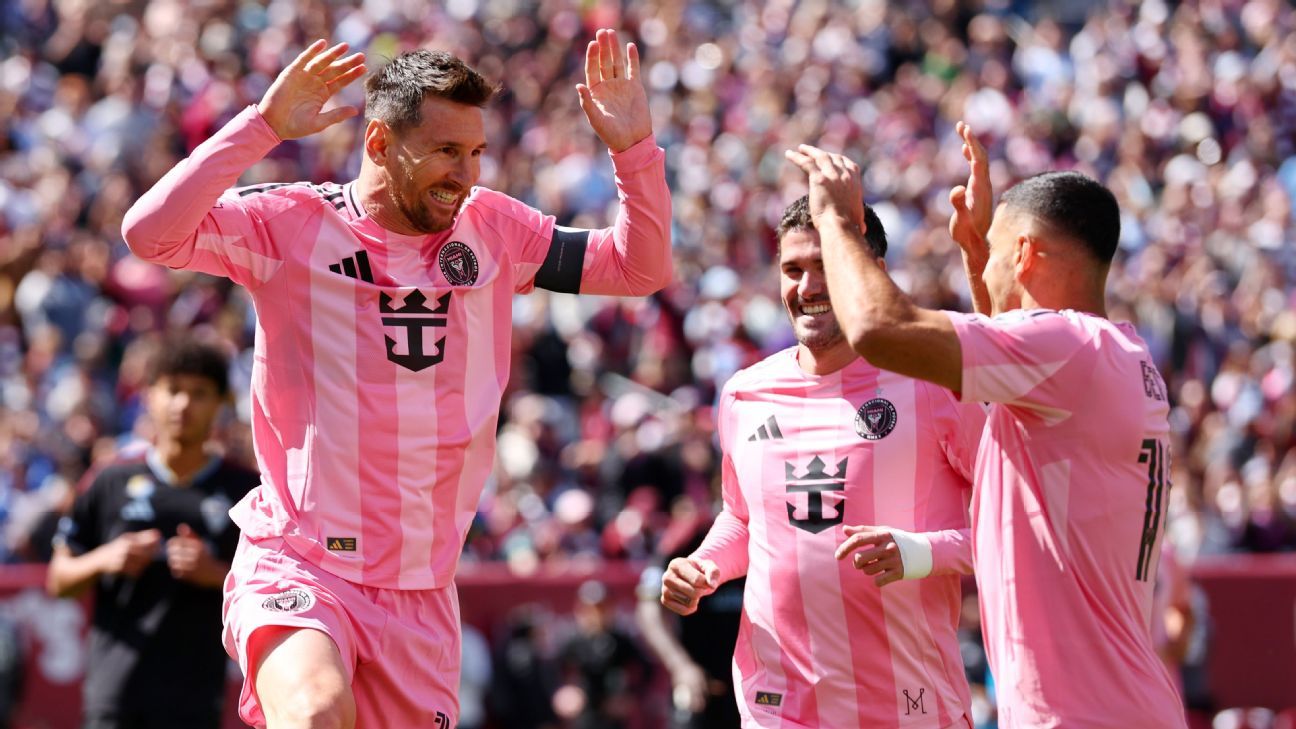
Lionel Messi had two goals, including a stunning 79th-minute winner, to give Inter Miami a victory in new interim coach Guillermo Hoyos’ first match in charge Saturday.
Mexico striker Germán Berterame also scored as Miami beat the Colorado Rapids 3-2 in front of a crowd of 75,824 — the second-highest attendance in MLS history — at Empower Field at Mile High.
It was Miami’s first game since Javier Mascherano stepped down as coach Tuesday, just four months after guiding the club to its first MLS Cup title.
Hoyos, whose relationship with Messi dates back to his time working at Barcelona’s renowned La Masia academy more than 20 years ago, was put in charge of the first team for “the upcoming matches,” moving over from his current role of sporting director.
“It has been a beautiful experience because there are players of immense quality here including the greatest player in history,” Hoyos said in a news conference.
“I was excited on many occasions, because football truly is all about that emotion and passion.”
Messi opened the scoring when he converted a penalty kick in the 13th minute, before his late go-ahead goal. After a Colorado turnover near midfield, Messi cut back near the right corner of the penalty box and struck a rising shot that split a pair of defenders and slipped inside the back post.
Messi has seven goals this season, tied with Sam Surridge and Petar Musa for most in MLS.
Asked how he approaches coaching his fellow Argentine and the record eight-time Ballon d’Or winner, Hoyos responded: “The best coach in the world is actually out there on the pitch. We coaches are merely guides.”
Miami (4-1-3) is now seven games unbeaten and hasn’t lost since a season-opening 3-0 defeat to LAFC.
Miami midfielder Yannick Bright was shown a straight red card in the 87th minute for using “offensive, insulting, abusive language heard by the referee,” the Professional Referee Organization, which oversees MLS referees, confirmed to ESPN. According to the PRO pool report, Bright used the phrase b—- ass n—a.”
“Honestly, I don’t know, and I was certainly surprised, by the sending off,” Hoyos said when asked about the reason for the expulsion.
Bright drew a penalty conceded by Joshua Atencio, and Messi converted from the spot to open the scoring.
Mateo Silvetti, along the right end line, played an arcing cross to the back post, where Berterame slammed home a header to make it 2-0 in the fifth minute of first-half stoppage time.
Berterame scored his first MLS goal last time out in a 2-2 tie with the New York Red Bulls.
Rafael Navarro scored in the 58th minute for the Rapids. The 26-year-old forward scored two goals in last week’s 6-2 win over Houston and has six goals this season.
Darren Yapi subbed on for Hamzat Ojediran and, moments later, scored on the counterattack to make it 2-2 in the 62nd minute.
ESPN’s Lizzy Becherano and The Associated Press contributed to this report.
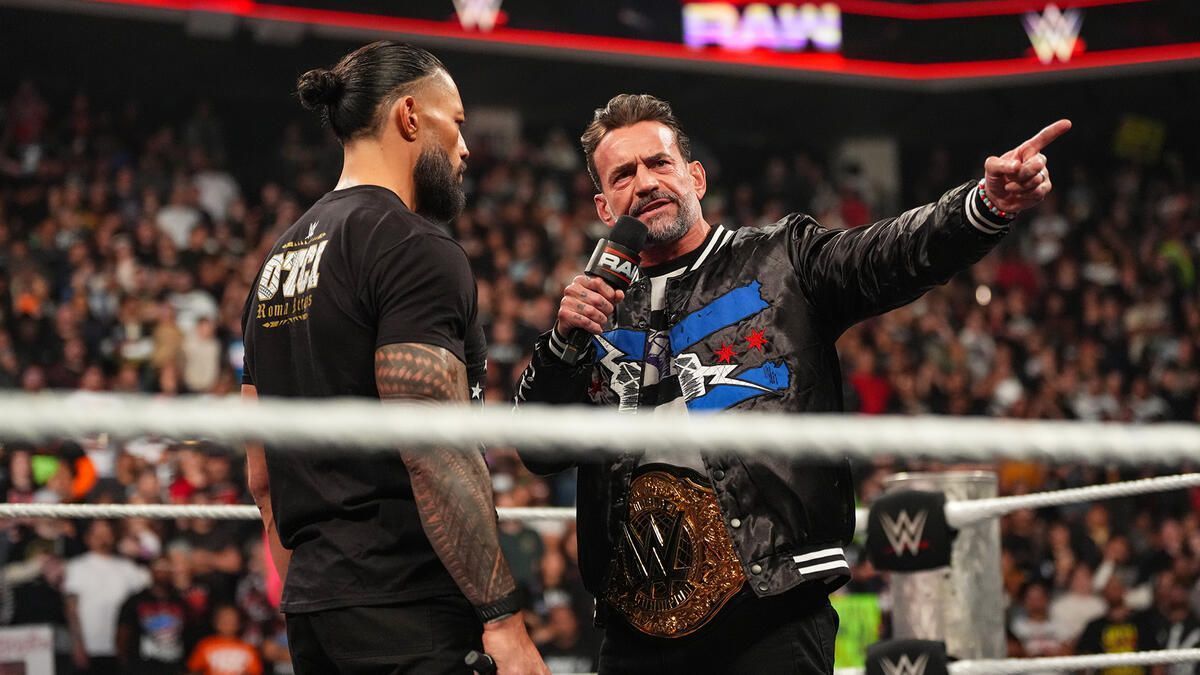
After a massive night of high-flying moments and title changes on Night 1, the WrestleMania 42 action continues on Night 2 at Allegiant Stadium in Las Vegas.
Two of the biggest superstars on the roster, literally, square off in the first match of the night, as “The Ruler” Oba Femi attempts to slay “The Beast” Brock Lesnar. Also on the card is a six-man ladder match for the men’s Intercontinental Championship, and a pair of singles matches for the United States Championship and the WWE Women’s Championship.
In the main event, CM Punk puts the World Heavyweight Championship on the line against Roman Reigns.
Follow along with every moment of WrestleMania Night 2.


Van Dijk hands Liverpool a UCL boost and reason to believe after more late drama

Did ‘Charlie’s Angels’ star Jaclyn Smith say no to Bond girl role?

UK to narrowly avoid recession and jobless rate to surge, Item Club warns

-

 Fashion4 days ago
France’s LVMH Q1 revenue falls 6%, shows resilience amid Iran war
-

 Entertainment7 days ago
Palace left in shock as Prince William cancels grand ceremony
-

 Sports7 days ago
The case for Man United’s Fernandes as Premier League’s best
-
 Business1 week ago
100% road tax waiver for electric cars, new rules for 2, 3 and 4 wheelers – what Delhi govt’s draft EV policy says – The Times of India
-
 Business7 days ago
UK could adopt EU single market rules under new legislation
-

 Entertainment1 week ago
Dua Lipa hits major career high ahead of wedding with Callum Turner
-
 Sports1 week ago
Lamar Jackson hits back at critics with faithful message on social media
-

 Fashion7 days ago
Energy emerges as biggest cost driver in textile margins