

Sports
Billionaire booster, conference commishes at odds

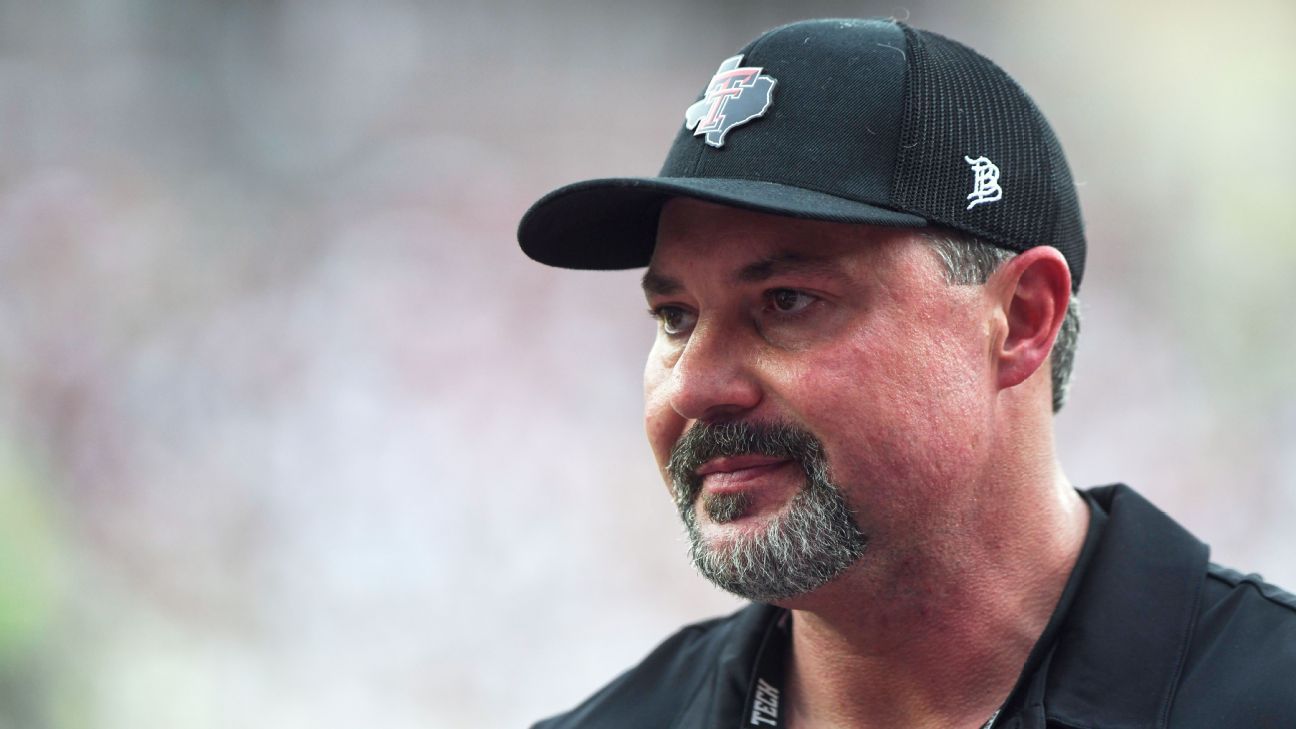
One of the most vocal and potentially powerful boosters in college sports lashed out at conference commissioners for stymieing changes he thinks could save the rapidly changing industry, and then the commissioners countered, with one of them saying the booster’s views “reflect a fundamental misunderstanding of the realities of college athletics.”
The dispute began with an argument Thursday by Cody Campbell, Texas Tech’s billionaire head of regents, about how the proposed pooling of college TV rights could feed additional billions into school coffers, but that progress is being held back because “the conferences are all represented by commissioners who are very, very self-interested.”
“The commissioners don’t really care what happens at the institutional level,” Campbell said at a panel discussion held by the Knight Commission, an oversight group that released a survey in which a majority of college executives who responded said Division I sports was headed in the wrong direction. “All they care about is what happens to them. And I think that is fundamentally the problem.”
Campbell said he supports elements of the recently introduced SAFE Act, a bill co-sponsored by Sen. Maria Cantwell, D-Wash., that features a call for a rewrite of a 1960s law that would lift a restriction on college conferences from combining to sell their TV rights together. Campbell told attendees the move could be worth $7 billion, and said commissioners had said to him “privately” that they know a modification of that law would generate more revenue “but I don’t want to give up control of my own media-rights negotiation.”
Southeastern Conference commissioner Greg Sankey told The Associated Press those conversations with Campbell never occurred.
“I have never stated — publicly or privately — that pooling media rights would increase revenue, nor do I believe that it would,” Sankey said. “His misrepresentation of my position raises serious concerns about the accuracy of his other claims. … His comments reflect a fundamental misunderstanding of the realities of college athletics.”
Big 12 commissioner Brett Yormark also denied making those remarks.
“Cody is entitled to his own opinion, but not his own facts,” Yormark said. “I’ve never said pooling media rights will increase revenue. The only thing I have said is that hope isn’t a strategy. There are unintended consequences to amending the [1961 Sports Broadcasting Act] that Cody and his team need to better understand.”
College sports has come under new financial pressure after the recent $2.8 billion House settlement that allows schools to directly pay players for use of their name, image and likeness (NIL) to the tune of up to $20.5 million per university, starting this season.
Media deals make up the backbone of most schools’ bankrolls. The Power 4 conferences each have different, multibillion-dollar arrangements with varied expiration dates spread across multiple networks. The proceeds for those deals then go to conference offices, which all have their own formulas for divvying it up. The Atlantic Coast Conference, for instance, recently reworked its formula to base a portion of its payouts on viewership numbers for specific schools.
The Big Ten, meanwhile, has made headlines recently for being in late-stage efforts to procure up to $2 billion from private equity, which would create a new entity that would market the league’s media rights and other properties.
“The fact that we’re bringing private equity into something that is, in my view, owned by the American public in college sports, is outlandish,” Campbell said. “We have halfway professionalized this thing. And so we have a professionalized cost model on one side where we pay coaches a lot. We’re now paying players a lot. But we have this amateurish media-rights marketing effort that makes absolutely no sense to anybody.”
The Big Ten did not respond to an AP request for comment. Sankey and Yormark, however, pushed back on the idea that commissioners are out of touch with what’s good for college sports.
“My responsibility lies with the institutions I serve and the student-athletes on our campuses,” Sankey said. “Mr. Campbell’s suggestion that commissioners are indifferent to the institutional level is both irresponsible and damaging to his own credibility.”
“Our decisions are rooted in collaboration, accountability, and a deep understanding of the institutional impact for student-athletes,” Yormark said. “The SCORE Act is the first step in solving the issues facing collegiate athletics.”
The SCORE Act, which has support from the NCAA and the Power 4 conferences, proposes limited antitrust protection for the NCAA, mainly from lawsuits involving eligibility issues, and a prohibition on athletes becoming employees of their schools — a development that NCAA executive Tim Buckley said would be “the budget buster of the century” for college sports.
Campbell portrayed the SCORE Act as too broad a giveaway to the NCAA and the conference commissioners he challenged for wanting to run their own fiefdoms instead of looking out for the good of college sports in general.
“Protecting your position and protecting your importance and your ego, I could not care less about that,” Campbell said. “Because I know that if we don’t change something and bring more revenue in, a lot of sports are going to be cut, a lot of scholarships are going to be cut, and a lot of kids are going to lose opportunity.”
After a massive night of high-flying moments and title changes on Night 1, the WrestleMania 42 action continues on Night 2 at Allegiant Stadium in Las Vegas.
Two of the biggest superstars on the roster, literally, square off in the first match of the night, as “The Ruler” Oba Femi attempts to slay “The Beast” Brock Lesnar. Also on the card is a six-man ladder match for the men’s Intercontinental Championship, and a pair of singles matches for the United States Championship and the WWE Women’s Championship.
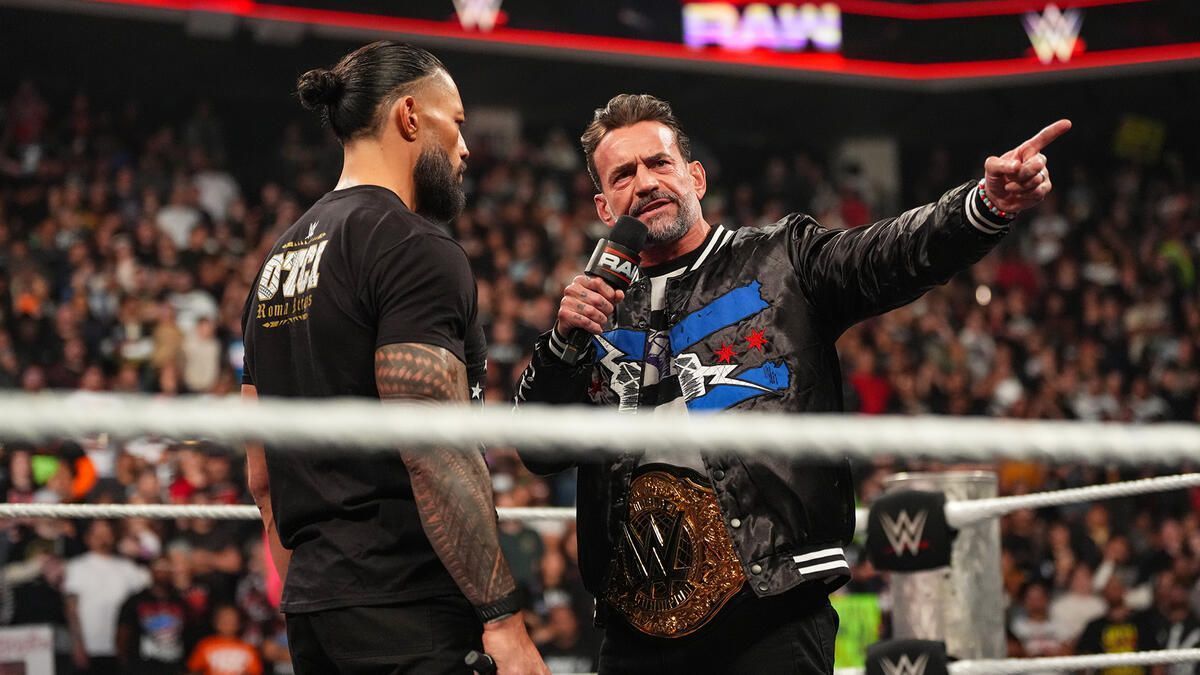
In the main event, CM Punk puts the World Heavyweight Championship on the line against Roman Reigns.
Follow along with every moment of WrestleMania Night 2.
Sports
Chuck Schumer calls on FIFA to cover $150 NJ Transit fares for World Cup fans heading to MetLife Stadium
NEWYou can now listen to Fox News articles!
Sen. Chuck Schumer, D-N.Y., has called for FIFA to cover the full rail cost for New Yorkers attending the World Cup, as NJ Transit train ticket prices are set for $150 to get to MetLife Stadium for matches.
Schumer released a statement on Sunday, calling on FIFA to pay the full fair, which is astronomically higher than the regular cost to travel from Penn Station to the Meadowlands, while understanding that “FIFA is set to rake in approximately $11 billion in revenue off the tournament while New York fans are being hit with $150 NJ Transit round-trip tickets to get to the game.”
MetLife Stadium in East Rutherford, New Jersey, will host eight matches during the World Cup, including the final on July 19. The usual price is $12.90 for the Meadowlands train from Penn Station, but it will rise to $150 beginning June 13 and ending July 19. There will also be shuttles available worth $80.
CLICK HERE FOR MORE SPORTS COVERAGE ON FOXNEWS.COM
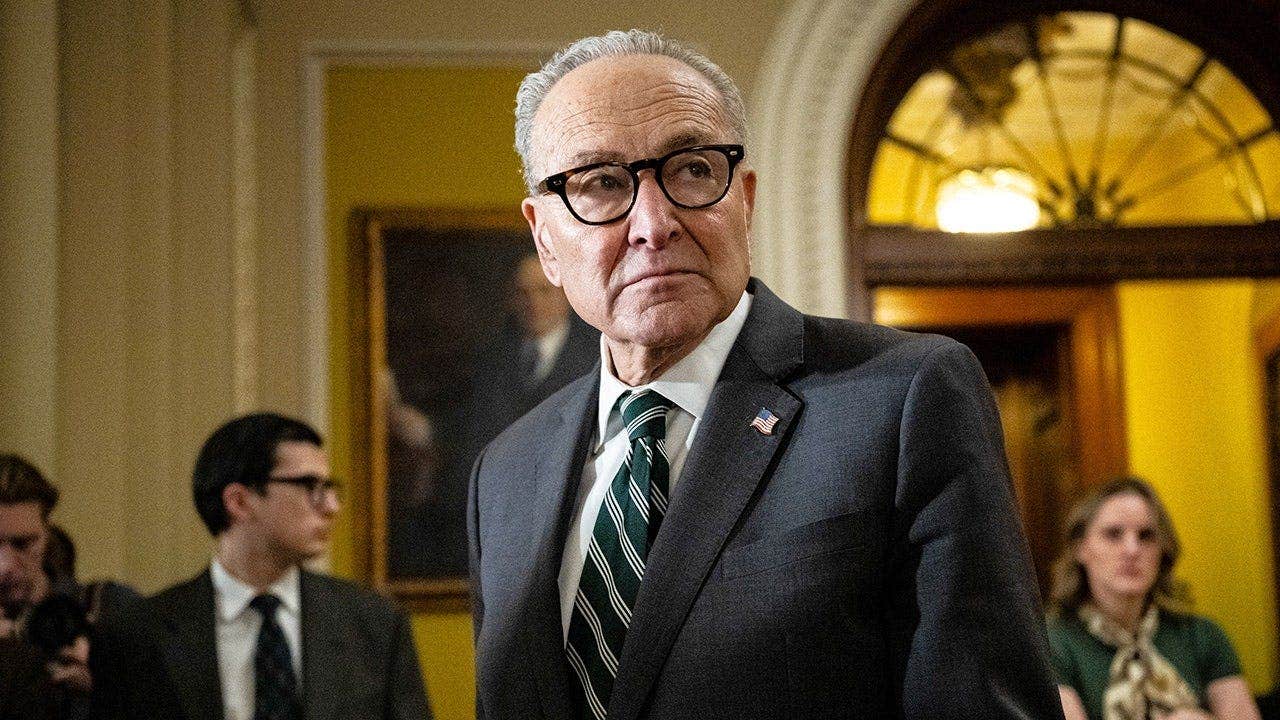
Senate Minority Leader Chuck Schumer, a Democrat from New York, during a news conference following the weekly Senate Democrat policy luncheon at the US Capitol in Washington, DC, US, on Tuesday, March 17, 2026. (Graeme Sloan/Bloomberg via Getty Images)
NJ Transit CEO Kirs Kolluri defended the fare hikes on Friday, saying the ultimate cost to the company shouldn’t burden New Jersey commuters.
“It is an exciting moment for New Jersey to showcase New Jersey’s diversity as well as its economic standing in the country and in the world. Equally important, (Gov. Mikie Sherrill) has said that New Jersey commuters cannot and will not subsidize the movement of fans going to the game, because that would not be fair,” Kolluri said, reiterating that the tournament will cost NJ Transit $48 million.
Penn Station is also scheduled to be partially closed for up to four hours before each World Cup match, which will obviously disrupt regular commuters and travelers eight times during the tournament.
Schumer argues it’s unfair for New Yorkers to have to deal with the price hike, especially considering FIFA is eliminating parking at MetLife Stadium. Also, parking at nearby American Dream mall is approximately $225, while walking access is being prohibited as well.
In turn, mass transit is “effectively the only way in or out of the stadium on match days,” Schumer’s statement read. But Schumer isn’t lambasting NJ Transit — he understands the financials the company has to deal with.
It’s FIFA he’s pointing the finger at for not helping with the cost.
“The total NJ Transit operation to move fans to and from MetLife is projected to cost $62 million, with approximately $11 million dedicated to security alone. The federal government is contributing $10.6 million and the NY/NJ Host Committee is contributing just over $3 million, leaving NJ Transit to foot a $48 million bill with zero financial contribution from FIFA.
“Meanwhile, FIFA has told other host cities they can offer fans mass rail for as little as $2.50 round trip, a fraction of what New York fans are being charged.”
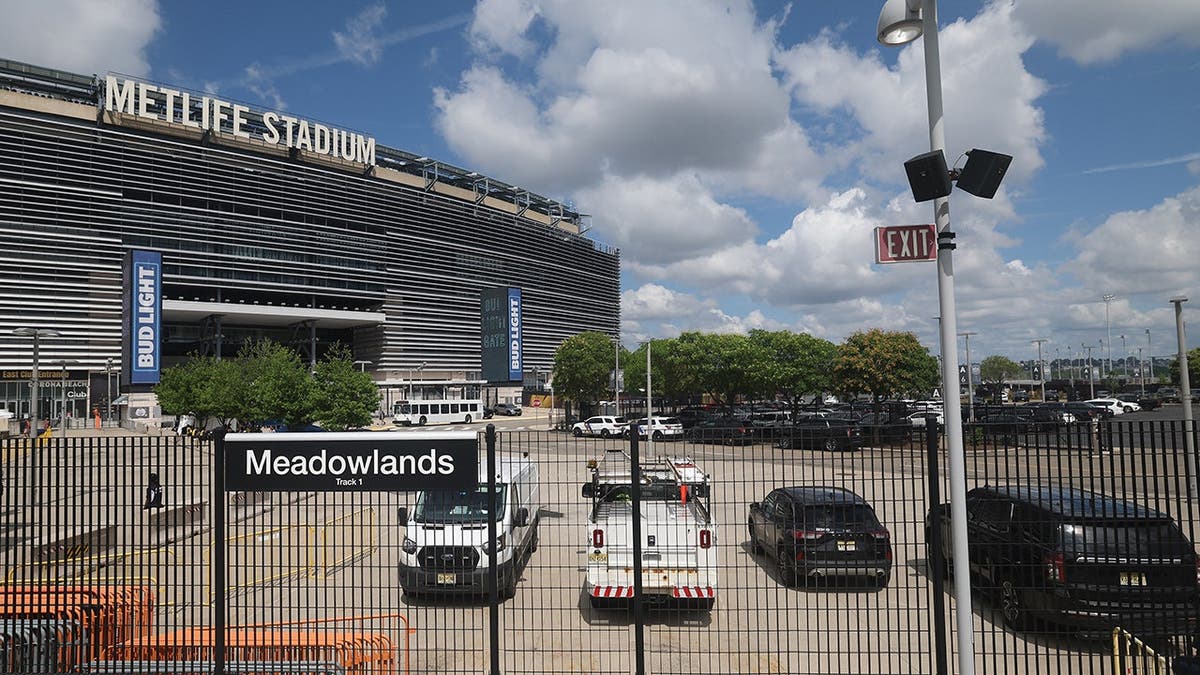
A general view of MetLife Stadium and the Meadowlands Train Station is seen from a NJ Transit train before the FIFA Club World Cup 2025 semi-final match between Paris Saint-Germain and Real Madrid at MetLife Stadium in East Rutherford, New Jersey, on July 9, 2025. (Luke Hales/Getty Images)
Schumer added that, “Charging more than eleven times the normal fare for a train ride is a ripoff, plain and simple.”
FIFA’s budgeted revenue for the 2023 to 2026 cycle is approximately $11 billion, which marks a 71% increase over the previous cycle. It also marks the most lucrative World Cup in the tournament’s history.
Schumer’s statement also pointed out ticket prices for match-goers are around $700 for the group stage, and the final at MetLife Stadium is as high as $10,000 to get into the door under FIFA’s dynamic pricing model.
“We are carrying more fans, more riders, and more disruption than any other region in this tournament,” Schumer added. “FIFA needs to step up accordingly. Past practice does not cut it when you are eliminating parking, shutting down Penn Station, and forcing every fan onto one transit system. FIFA should cover the ride, not stick New York fans with the bill.”
FIFA may not have historically contributed to public transportation costs in previous tournaments, but Schumer argues New York and New Jersey isn’t every other host region. It’s the most densely populated area in the country, and it will be host to eight matches.
Kolluri also noted that, if the regular $12.90 fare were to stay in place, the $48 million bill for NJ Transit would be subsidized for commuters by 92%.
“No one that I have spoken to thinks that’s fair or reasonable. Commuters in New Jersey should not carry the cost years into the future for a wonderful event, no doubt. But the fans going to the games should burden the cost. That’s all we’re trying to say,” Kolluri said.
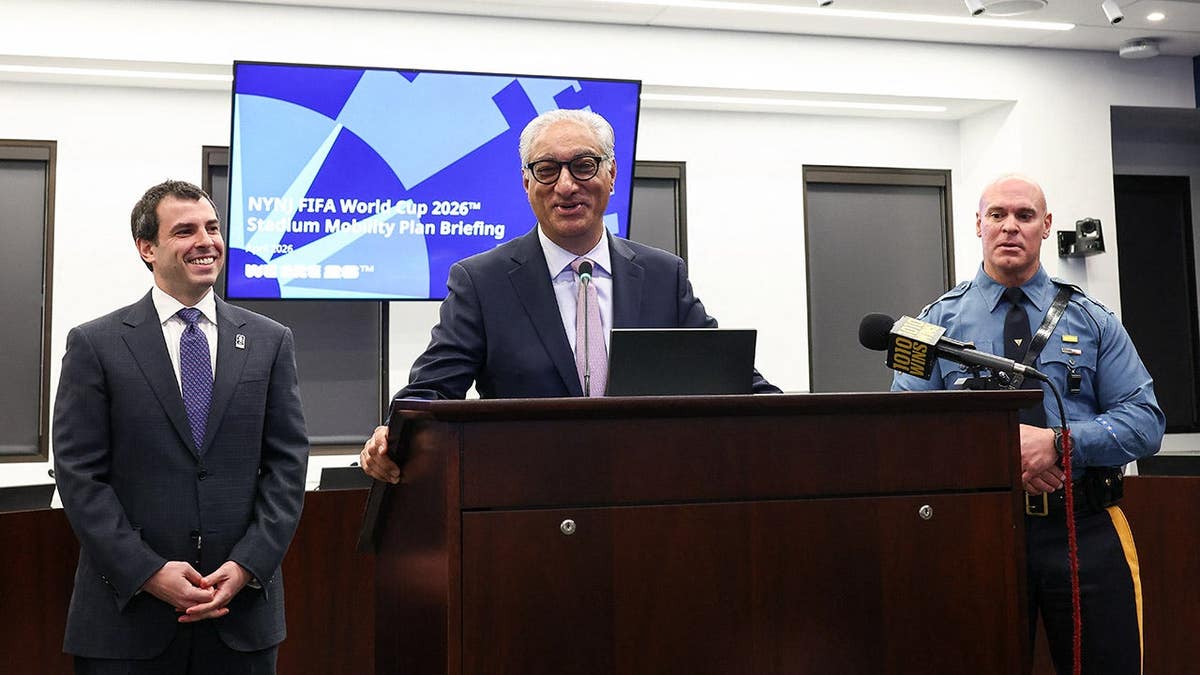
NJ Transit CEO Kris Kolluri and Alex Lasry, CEO of the 2026 FIFA World Cup New York New Jersey Host Committee, speak during a press briefing on the regional mobility plan for the World Cup in Newark, New Jersey, on April 17, 2026. (Charly Triballeau/AFP via Getty Images)
CLICK HERE TO DOWNLOAD THE FOX NEWS APP
With the plan now officially in place, FIFA World Cup COO Heimo Schirgi issued the following statement to Fox News Digital:
“Ever since the host city agreements were signed in 2018, FIFA has worked in collaboration with the Host Committees and their partners to develop a transportation plan that provides efficient and accessible mass transit options for ticketed fans attending the eight matches at NY NJ Stadium. The goal is to minimize congestion, reduce reliance on private vehicles, and ensure the fan experience is positive and memorable, defined by the action on pitch, not delays on the roads.
“The NJ Transit current pricing model will have a chilling effect. Elevated fares inevitably push fans toward alternative transportation options. This increases concerns of congestion, late arrivals, and creates broader ripple effects that ultimately diminish the economic benefit and lasting legacy the entire region stands to gain from hosting the World Cup.”
Fox News’ Ryan Morik contributed to this report.
Follow Fox News Digital’s sports coverage on X and subscribe to the Fox News Sports Huddle newsletter.
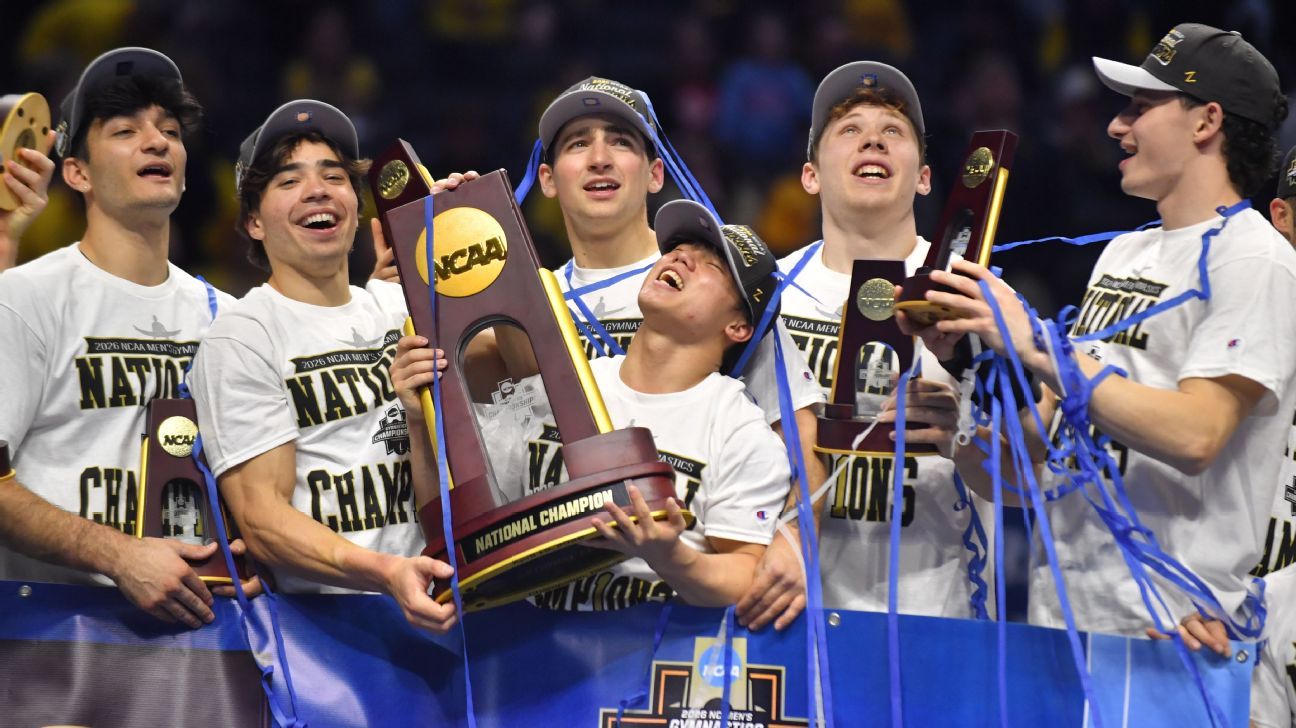
Stanford emerged victorious in the 2026 NCAA men’s gymnastics championships, taking home their tenth program title.
Penn State and Oklahoma share the record for the most NCAA men’s gymnastics championships, with 12 apiece.
Here’s a look at every national champion in NCAA men’s gymnastics:
-
2015: Oklahoma
-
2014: Michigan
-
2013: Michigan
-
2012: Illinois
-
2011: Stanford
-
2010: Michigan
-
2009: Stanford
-
2008: Oklahoma
-
2007: Penn State
-
2006: Oklahoma
-
2005: Oklahoma
-
2004: Penn State
-
2003: Oklahoma
-
2002: Oklahoma
-
2001: Ohio State
-
2000: Penn State
-
1999: Michigan
-
1998: California
-
1997: California
-
1996: Ohio State
-
1995: Stanford
-
1994: Nebraska
-
1993: Stanford
-
1992: Stanford
-
1991: Oklahoma
-
1990: Nebraska
-
1989: Illinois
-
1988: Nebraska
-
1987: UCLA
-
1986: Arizona State
-
1985: Ohio State
-
1984: UCLA
-
1983: Nebraska
-
1982: Nebraska
-
1981: Nebraska
-
1980: Nebraska
-
1979: Nebraska
-
1978: Oklahoma
-
1977: Indiana State/Oklahoma
-
1976: Penn State
-
1975: California
-
1974: Iowa State
-
1973: Iowa State
-
1972: Southern Illinois
-
1971: Iowa State
-
1970: Michigan
-
1969: Iowa
-
1968: California
-
1967: Southern Illinois
-
1966: Southern Illinois
-
1965: Penn State
-
1964: Southern Illinois
-
1963: Michigan
-
1962: Southern California
-
1961: Penn State
-
1960: Penn State
-
1959: Penn State
-
1958: Michigan State/Illinois
-
1957: Penn State
-
1956: Illinois
-
1955: Illinois
-
1954: Penn State
-
1953: Penn State
-
1952: Florida State
-
1951: Florida State
-
1950: Illinois
-
1949: Temple
-
1948: Penn State
-
1942: Illinois
-
1941: Illinois
-
1940: Illinois
-
1939: Illinois
-
1938: Chicago
Check out the ESPN college sports page for the latest news on your favorite NCAA athletes and events.


WWE WrestleMania 42 Night 2: Live match results and analysis

NCAA men’s gymnastics championship: All-time winners list

Ryan Reynolds praises Blake Lively on handling Justin Baldoni lawsuit

-

 Entertainment7 days ago
Palace left in shock as Prince William cancels grand ceremony
-

 Sports7 days ago
The case for Man United’s Fernandes as Premier League’s best
-

 Fashion4 days ago
France’s LVMH Q1 revenue falls 6%, shows resilience amid Iran war
-
 Business1 week ago
100% road tax waiver for electric cars, new rules for 2, 3 and 4 wheelers – what Delhi govt’s draft EV policy says – The Times of India
-
 Business7 days ago
UK could adopt EU single market rules under new legislation
-

 Entertainment1 week ago
Dua Lipa hits major career high ahead of wedding with Callum Turner
-

 Sports1 week ago
Lamar Jackson hits back at critics with faithful message on social media
-

 Fashion7 days ago
Energy emerges as biggest cost driver in textile margins