

Business
IMF talks stall over flood loss dispute | The Express Tribune

ISLAMABAD:
Pakistan and the International Monetary Fund (IMF) were unable to conclude the second review talks within the deadline due to “outstanding issues” concerning the timing of the publication of a Governance and Corruption Diagnostic Assessment report and differences over flood-loss estimates.
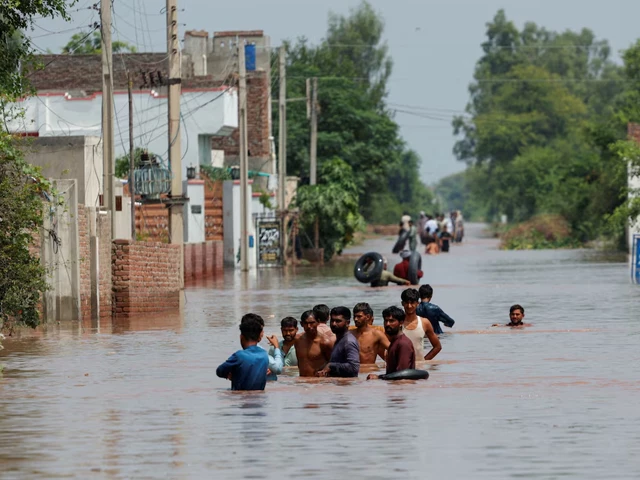
Officials said Pakistan estimated the total economic losses from last year’s floods at Rs744 billion, while the IMF’s assessment stood at around Rs585 billion, with fiscal losses even lower.
According to negotiators, other unresolved matters included the implications of these revised flood estimates for the primary budget surplus target, and the effect of the upward revision in last fiscal year’s GDP growth rate on projected revenues and expenditures.
On the same day the review was due to be finalised, the Planning Ministry convened a meeting of the National Accounts Committee, which approved a revised 3.04% growth rate for the last fiscal year. Officials said the revision would further reduce the tax-to-GDP ratio for that period, meaning the Federal Board of Revenue (FBR) would now require additional efforts to achieve this year’s 11% of GDP revenue target.
The IMF mission returned to Washington on Thursday without announcing a staff-level agreement — a prerequisite for presenting Pakistan’s case to the IMF Executive Board for approval of two loan tranches totaling $1.2 billion under separate programmes.
“The IMF team and the authorities will continue policy discussions with a view to settling any outstanding issues,” Iva Petrova, the IMF mission chief, said in a statement issued by the global lender.
The sources said that due to the absence of a fiscal assessment on the flood damage and Pakistan’s insistence on downward revising the targets, the staff level agreement could not be announced. They said that the IMF was ready to adjust the targets but linked it with the final assessment of these losses.
The planning ministry had presented Rs744 billion economic losses to the IMF.
The IMF indicated during the negotiations that it stood ready to review the targets during the next review of the programme and until then the Pakistani authorities should adhere to the agreed target for July-December period of this fiscal year, the sources added.
The IMF’s statement added that its team, led by Iva Petrova, visited Karachi and Islamabad from September 24 to October 8 to hold discussions on the second review under the Extended Fund Facility (EFF) and the first review under the Resilience and Sustainability Facility (RSF).
“The IMF mission and the Pakistani authorities made significant progress toward reaching a staff level agreement on the second review under the 37-month Extended Arrangement under the Extended Fund Facility and on the first review of 28-month Arrangement under the Resilience and Sustainability Facility, ” said the global lender.
“Programme implementation remains strong and broadly aligned with the authorities’ commitments”, it added.
However, the IMF did not use the word fully aligned, as the government could not uphold its words on not granting new tax concessions and implementing reforms in the state-owned enterprises.
Tax collection remained another weak area and both sides discussed downward revise the target. The IMF also asked to cut the public sector development programme by Rs300 billion to offset the impact of the economic losses and lower collection of taxes.
The IMF statement further underlined that significant progress was made in the discussions in several areas, including sustaining fiscal consolidation to strengthen the public finances while providing needed flood recovery support and ensuring inflation remains durably within the SBP’s target range by maintaining an appropriately tight and data-dependent monetary policy.
However, both Prime Minister Shehbaz Sharif and Finance Minister Muhammad Aurangzeb have been repeatedly asking the central bank to reduce interest rates, according to the statements made by both of them.
The IMF said that restoring the viability of the energy sector by implementing regular tariff adjustments and cost-reducing reforms was also important.
The sources said that one of the issues was the circular debt reduction target for the Power Division, which insisted that Rs505 billion more will be added in the flow of the debt as against the IMF’s desire to limit the losses to Rs200 billion.
The IMF said that progress was made on advancing structural reforms to reduce the footprint of the state, strengthen governance and transparency, foster a more competitive business environment, and liberalize commodity markets.
Productive discussions were also held on the authorities’ reform agenda to strengthen climate resilience, including the completion of reform measures under the RSF, said the global ender.
The IMF team also expressed its sympathy to those affected by the recent floods.
Governance report
The sources said that one of the outstanding issues was the publication of the Governance and the Corruption Diagnosis assessment report. The original deadline to publish the report was at the end of July while its implementation plan had to be published by the end of October.
Both sides were negotiating the mid of November new deadline to publish the report and mid of December to publish the implementation plan, the sources added. If there is a consensus on these dates, the staff level agreement will be announced soon, the sources added.
In its Governance and Corruption Diagnostic report, the IMF had recommended measures to enhance judicial integrity, address conflict of interest, and improve performance and service delivery. The global lender has also advised the federal cabinet, the Supreme Judicial Council and the provincial high courts, through their respective governments, to publish yearly reports.
The reports should list steps taken to strengthen judicial integrity, including statistics on complaints received, the disposition of complaints and actions taken.
To strengthen judicial integrity, the IMF advised Pakistan “strengthen integrity and conflict of interest provisions for all judicial personnel and review and increase transparency around payments and grants to judicial personnel”.
The report has also underlined that identification of politically exposed persons remained uneven and there were insufficient corruption-specific red-flags that could detect misuse of the public office in Pakistan.
The draft report further stated that reporting institutions to the regulators often lacked clarity on corruption-specific typologies and risk indicators. Sources said that the IMF was of the view that despite the specious transaction report guidelines and the red-flag indicators for various sectors and typologies, reporting institutions have limited access to typologies that reflect common methods of laundering corruption proceeds.
GDP growth
The government on Wednesday approved a 5.7% economic growth rate for the last quarter of the previous fiscal year on the back of a 20% increase in output of the industrial sector, which everyone believes is badly suffering because of tight economic conditions.
This has changed many assumptions of the IMF programme and the authorities now need more time to review the implications, the sources added.
NAC approved a 5.7% growth rate for April-June quarter, compared to only 2.8% growth in the preceding quarter, according to figures released by the Pakistan Bureau of Statistics (PBS) after the NAC meeting.







Rising heating oil prices are hitting Northern Ireland harder than the rest of the UK – here’s everything you need to know.
Source link

The logo for the Food and Drug Administration is seen ahead of a news conference at the Health and Human Services Headquarters in Washington, April 22, 2025.
Nathan Posner | Anadolu | Getty Images
A key U.S. Food and Drug Administration official who oversees vaccines and biotech treatments will step down from the agency following multiple decisions that raised concerns within the industry.
Vinay Prasad, director of the Center for Biologics Evaluation and Research, will leave the FDA at the end of April, an agency spokesperson confirmed on Friday. It is his second departure from the position: He briefly left the post in July following backlash over his regulatory decisions, and returned only two weeks later in August.
In a post on X, FDA Commissioner Marty Makary said the FDA will appoint a successor before Prasad returns next month to the University of California San Francisco, where he taught before taking the FDA position last year. Makary said Prasad “got a tremendous amount accomplished” during his tenure at the agency.
Prasad’s decision to step down comes after criticism of the FDA mounted within the biotech and pharmaceutical industry and among former health officials. In the past year, the agency has denied or discouraged the approval applications of at least eight drugs, according to RTW Investments, after taking issue with data the companies used to support their applications. The FDA also initially refused to review Moderna’s flu shot before it later reversed course.
All of those companies accused the FDA of reversing previous guidance about the evidence they could use to back their applications, sparking criticism within the industry that an unreliable regulatory process could stifle development of drugs for hard-to-treat diseases.
A former FDA official who spoke to CNBC on the condition of anonymity to speak freely on the issue called the reversals the worst kind of regulatory uncertainty because companies say they are being told one thing and then experience another.
In a statement earlier Friday, an FDA spokesperson said there was “no regulatory uncertainty,” adding the agency “makes decisions based on the evidence, but does not make assurances about outcomes.” The spokesperson said the FDA is “conducting rigorous, independent reviews and not rubber-stamping approvals.”
The most recent controversy came after the FDA discouraged UniQure from applying for expedited approval of its experimental treatment for Huntington’s disease.
The agency, which underwent staff cuts and an overhaul under Health and Human Services Secretary Robert F. Kennedy Jr., has faced broader backlash for its drug and vaccine approvals process. Critics have worried the agency could stifle the development of new treatments and risk the safety of patients.
The Wall Street Journal earlier reported Prasad’s departure.
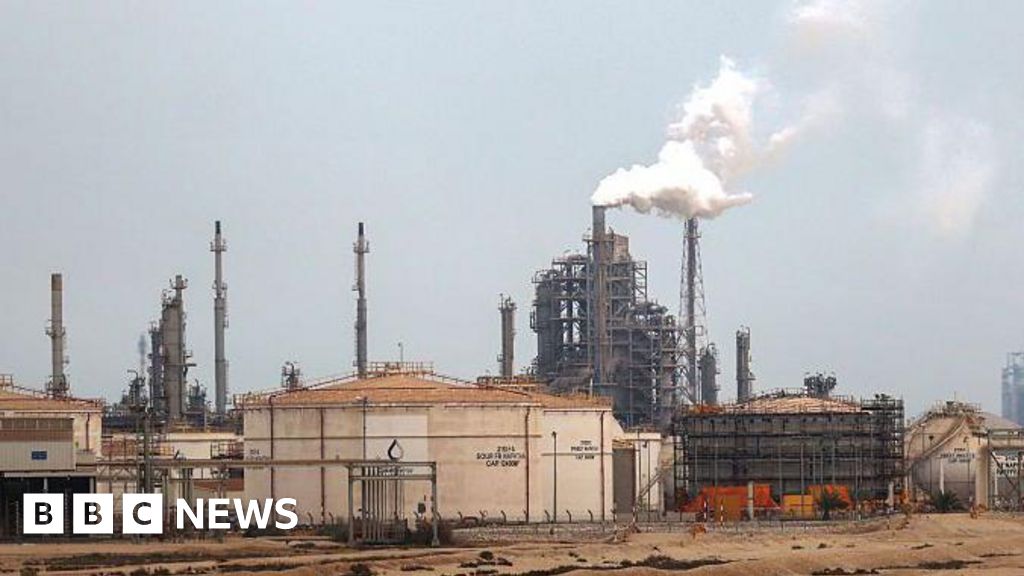
Energy Minister Saad al-Kaabi says oil could hit $150 a barrel if the Iran conflict continues over the coming weeks.
Source link


Winners and losers of the 2026 NHL trade deadline

Ben Stiller condemns use of ‘Tropic Thunder’ clip in political video

Spain, France lead World Cup 2026 Power Rankings, 100 days out

Attock Cement’s acquisition approved | The Express Tribune

US arrests ex-Air Force pilot for ‘training’ Chinese military

India Us Trade Deal: Fresh look at India-US trade deal? May be ‘rebalanced’ if circumstances change, says Piyush Goyal – The Times of India

-
Business1 week ago
Attock Cement’s acquisition approved | The Express Tribune
-
 Politics1 week ago
US arrests ex-Air Force pilot for ‘training’ Chinese military
-
Business1 week ago
India Us Trade Deal: Fresh look at India-US trade deal? May be ‘rebalanced’ if circumstances change, says Piyush Goyal – The Times of India
-

 Fashion1 week ago
Policy easing drives Argentina’s garment import surge in 2025
-

 Politics1 week ago
What are Iran’s ballistic missile capabilities?
-

 Sports1 week ago
Sri Lanka’s Shanaka says constant criticism has affected players’ mental health
-

 Entertainment1 week ago
Bobby J. Brown, “The Wire” and “Law & Order: SUV” actor, dies of smoke inhalation after reported fire
-

 Sports1 week ago
LPGA legend shares her feelings about US women’s Olympic wins: ‘Gets me really emotional’