

Sports
Sources: Big Ten closes in on $2 billion capital deal

The Big Ten is closing in on voting on a capital agreement that will infuse league schools with more than $2 billion, industry sources told ESPN.
There’s been momentum within recent days for the deal to push forward, and the structure of the complicated agreement is coming together. A vote is expected in the near future, per sources.
The framework calls for the formation of a new entity, Big Ten Enterprises, which would hold all leaguewide media rights and sponsorship contracts.
Shares of ownership in Big Ten Enterprises would fall to the league’s 18 schools, the conference office and the capital group — an investment fund that’s tied to the University of California pension system. Yahoo Sports first reported the involvement of the UC investment fund.
The pension fund is not a private equity firm, and the UC fund valuation proved to be higher than other competing bids. This has been attractive to the Big Ten and its schools, according to sources.
A source familiar with the deal said there’s been momentum in recent days, but the league is still working with leadership to make a final decision.
The exact equity amounts per school in Big Ten Enterprises is still being negotiated. There is expected to be a small gap in equity percentage between the biggest brands and others, however it is likely to be less than a percentage point.
ESPN reported last week that a tiered structure is expected in the initial allocation of the $2 billion-plus in capital, with larger brands receiving more money. Each school, however, would receive a payout in at least the nine-figure range, sources said.
The deal would call for an extension of the league’s Grant of Rights through 2046, providing long-term stability and making further expansion and any chance league schools leave for the formation of a so-called “Super League” unlikely.
Traditional conference functions are expected to remain with the conference. Any decision-making within Big Ten Enterprises would be controlled by the conference. The UC pension fund would receive a 10% stake in Big Ten Enterprises and hold typical minority investor rights but no direct control.
The money infusion is acutely needed at a number of Big Ten schools that are struggling with debt service on new construction, rising operational expenses and providing additional scholarships and direct revenue ($20.5 million this year and expected to rise annually) to athletes.
The Big Ten has argued that the deal would alleviate financial strain and help middle- and lower-tier Big Ten schools compete in football against the SEC.
ESPN first reported last week that the league was in detailed conversations about the deal.
Big Ten Enterprises would be tasked with not just handling the league’s valuable media rights (the current seven-year, $7 billion package runs through 2030) but trying to maximize sponsorship and advertising deals leaguewide such as jersey patches or on-field logos.
“Think of it this way — the conference is not selling a piece of the conference,” a league source told ESPN last week. “Traditional conference functions would remain 100 percent with the conference office — scheduling, officiating and championships. The new entity being created would focus on business development, and it would include an outside investor with a small financial stake.”
The deal has not been without detractors, with both Michigan and Ohio State — the league’s two wealthiest athletic programs — expressing skepticism initially, per sources. Each school has been hit with significant lobbying not just from the league office but also other conference members to come to an agreement.
Politicians in a number of states have also voiced opposition, including United States Senator Maria Cantwell (D-WA) who stated Thursday, “You’re going to let someone take and monetize what is really a public resource? …That’s a real problem.”
Cantwell followed up Friday by sending a letter to each Big Ten president warning that any deal involving private equity could invite review, including impacting the schools’ tax-exempt status.
NEWYou can now listen to Fox News articles!
Fernando Mendoza is the biggest name, but not the only big name in the 2026 NFL Draft.
Let’s check out the Over/Under odds (at DraftKings Sportsbook as of April 22) for where some of the biggest names in this year’s draft might land.
This page may contain affiliate links to legal sports betting partners. If you sign up or place a wager, FOX Sports may be compensated. Read more about Sports Betting on FOX Sports.
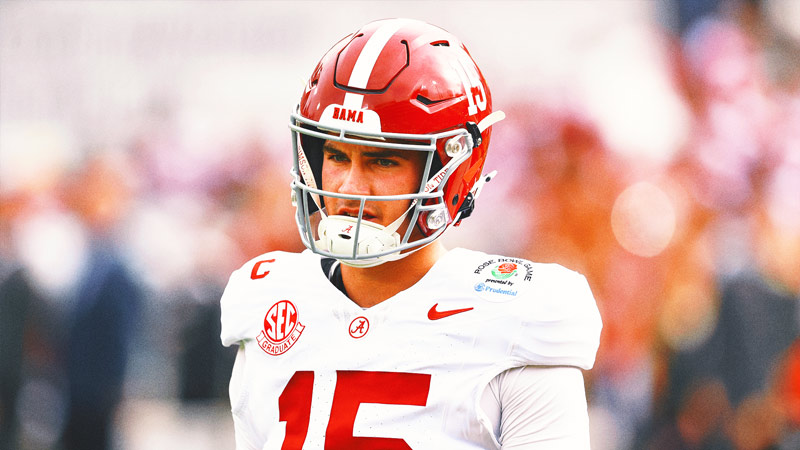
Ty Simpson
Alabama — QB
Over 24.5: -270 (bet $10 to win $13.70 total)
Under 24.5: +195 (bet $10 to win $29.50 total)
What to know: Only two quarterbacks went in the first round last season, after the first three picks of the 2024 NFL Draft were QBs. The last Alabama QB to go in the first round was Bryce Young back in 2023, when he was selected No. 1 by the Panthers. Simpson is heavily favored (-2500) to be the second quarterback off the board in 2026.
Jeremiyah Love
Notre Dame — RB
Over 5.5: +275 (bet $10 to win $37.50 total)
Under 5.5: -400 (bet $10 to win $12.50 total)
What to know: The last time a running back went in the top five was back in 2018, when the Giants selected Saquon Barkley with the second overall pick. Ashton Jeanty went sixth to the Raiders last season.
Sonny Styles
Ohio State — LB
Over 5.5: -150 (bet $10 to win $16.67 total)
Under 5.5: +115 (bet $10 to win $21.50 total)
What to know: The last linebacker to go in the top five just so happens to be the highest-paid non-quarterback in NFL history, Will Anderson Jr. He went to the Texans with the third pick in 2023. Now, Anderson mostly plays edge rusher for Houston.
Sonny Styles of Ohio State (Photo by James Black/Icon Sportswire via Getty Images)
Carnell Tate
Ohio State — WR
Over 7.5: -135 (bet $10 to win $17.41 total)
Under 7.5: +105 (bet $10 to win $20.50 total)
What to know: If you count Travis Hunter as a wide receiver, then two wide receivers went in the top 10 in 2025: Hunter to Jacksonville at No. 2, and Tetairoa McMillan to Carolina at No. 8. Three wideouts went in the top 10 in 2024: Marvin Harrison Jr. to Arizona at No. 4, Malik Nabers to the Giants at No. 6 and Rome Odunze to Chicago at No. 9. Tate is favored (-175) to be the first wide receiver to come off the board in 2026.
Jordyn Tyson
Arizona State — WR
Over 8.5: +140 (bet $10 to win $24.00 total)
Under 8.5: -185 (bet $10 to win $15.41 total)
What to know: Jordyn Tyson’s odds to be a top-10 pick in the NFL Draft opened at +400 in March. They have since surged to -500 for him to go inside the top 10.
Caleb Downs
Ohio State — S
Over 9.5: -115 (bet $10 to win $18.70 total)
Under 9.5: -115 (bet $10 to win $18.70 total)
What to know: No safety has gone top-10 in the NFL Draft since Jamal Adams went sixth to the Jets back in 2017. Minkah Fitzpatrick went 11th to the Dolphins in 2018. Malaki Starks was the first safety selected last season, going 27th to Baltimore.
Rueben Bain Jr.
Miami FL — DL
Over 8.5: -400 (bet $10 to win $12.50 total)
Under 8.5: +270 (bet $10 to win $37 total)
What to know: Defensive linemen always go in the top 10. Since 2013, only twice has the top 10 not featured a defensive lineman — back in 2021 and then again in 2024.
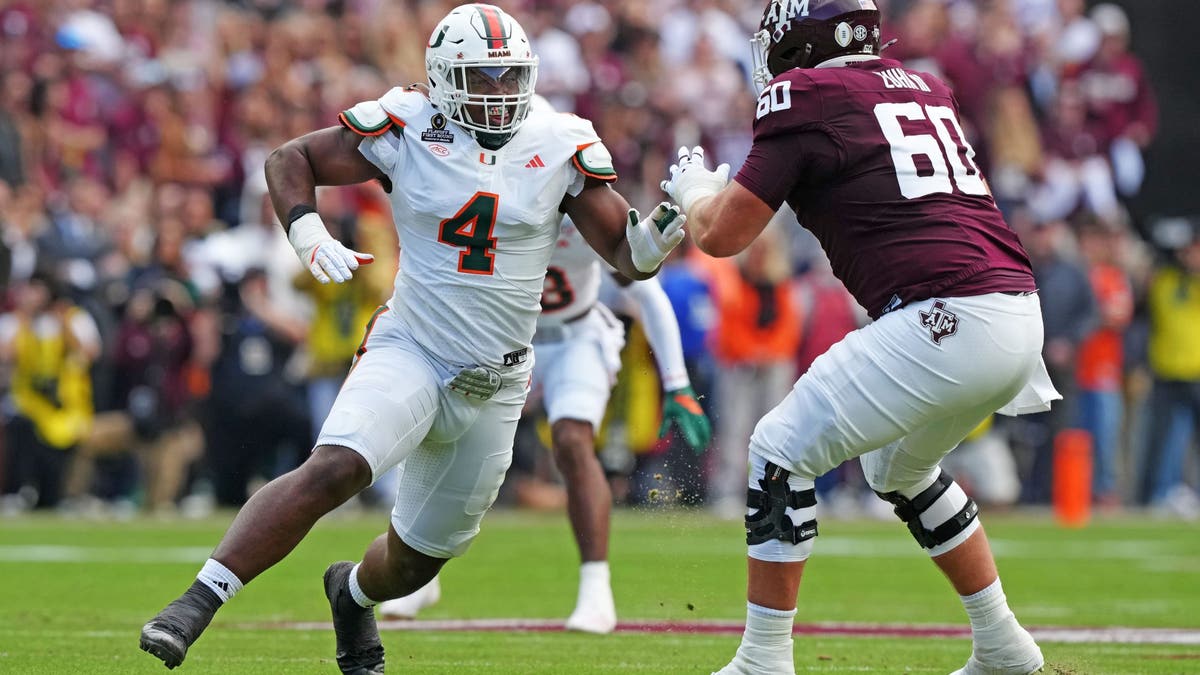
Rueben Bain Jr. of Miami (Photo by CFP/Getty Images)
Spencer Fano
Utah — OL
Over 10.5: +100 (bet $10 to win $20.00 total)
Under 10.5: -130 (bet $10 to win $17.69 total)
What to know: Fano is a close second choice to be the first offensive lineman drafted on Thursday at +110, just behind Francis Mauigoa, who leads the market at -125.
Makai Lemon
USC — WR
Over 14.5: -130 (bet $10 to win $17.69 total)
Under 14.5: +100 (bet $10 to win $20.00 total)
What to know: Lemon is expected to be the third wide receiver off the board, behind Tate and Tyson. He’ll look to follow in the footsteps of recent USC wide receivers Jordan Addison (2023) and Drake London (2022), who were both selected in the first round.
Olaivavega Ioane
Penn State — OL
Over 14.5: +225 (bet $10 to win $32.50 total)
Under 14.5: -310 (bet $10 to win $13.23 total)
What to know: Ioane has the fifth-best odds (+1800) to be the first offensive lineman selected. That said, he is still firmly expected to be a first-round pick.
Kenyon Sadiq
Oregon — TE
Over 15.5: -115 (bet $10 to win $18.70 total)
Under 15.5: -120 (bet $10 to win $18.33 total)
What to know: Colston Loveland (No. 10 to Chicago) and Tyler Warren (No. 14 to Indianapolis) both went in the top 15 last season. Brock Bowers went 13th to Las Vegas in 2024, and Kyle Pitts went fourth to Atlanta in 2021. In other words, the tight end position is on the rise when it comes to the first half of the first round. Sadiq is expected to be the first tight end off the board in 2026.
Kadyn Proctor
Alabama — OL
Over 16.5: +145 (bet $10 to win $24.50 total)
Under 16.5: -195 (bet $10 to win $15.13 total)
What to know: Proctor is the third choice (+950) to be the first offensive lineman drafted, behind Mauigoa (-125) and Fano (+110).
Dillon Thieneman
Oregon — S
Over 17.5: -215 (bet $10 to win $14.65 total)
Under 17.5: +155 (bet $10 to win $25.50 total)
What to know: Thieneman is heavily favored (-400) to be the second safety off the board, behind Downs. In 2025, only one safety was selected in the first round. That likely won’t be the case this year, with Thieneman expected to be selected in the middle of the first round.
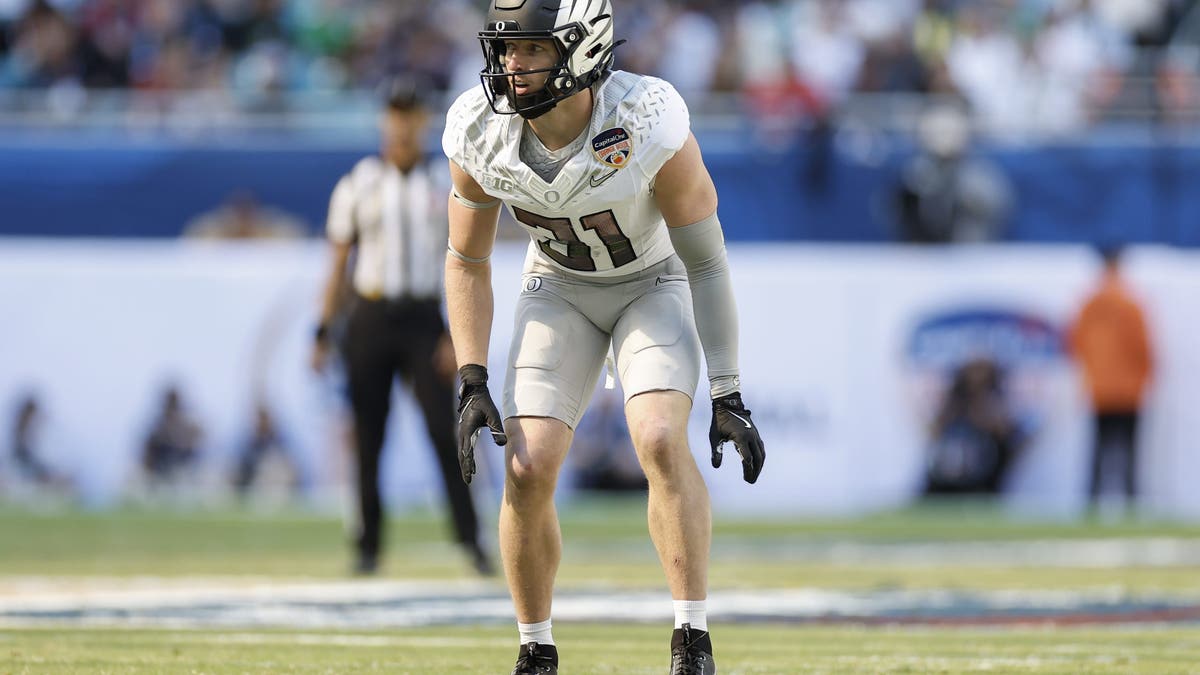
Dillon Thieneman of Oregon (Photo by David Rosenblum/Icon Sportswire via Getty Images)
Monroe Freeling
Georgia — OL
Over 19.5: +185 (bet $10 to win $28.50 total)
Under 19.5: -250 (bet $10 to win $14.00 total)
What to know: In 2025, eight offensive linemen were selected in the first round, and a similar number is expected in 2026, with Freeling projected to be among them.
Omar Cooper Jr.
Indiana — WR
Over 23.5: +120 (bet $10 to win $22.00 total)
Under: 23.5: -160 (bet to win $16.25 total)
What to know: Cooper is projected to be the fourth or fifth wide receiver selected. If he goes in the first round, he would become the first Indiana receiver drafted in the opening round since Thomas Lewis in 1994.
KC Concepcion
Texas A&M — WR
Over 24.5: +100 (bet $10 to win $20 total)
Under: 24.5: -130 (bet to win $17.69 total)
What to know: Counting Travis Hunter as a wide receiver, four total wide receivers were selected in the first round of the 2025 NFL Draft. In 2024, seven wide receivers went in the first round. This year, the line is set at 5.5 wide receivers selected in Round 1, with the over juiced to -165.
Akheem Mesidor
Miami FL — EDGE
Over 25.5: -105 (bet $10 to win $19.52 total)
Under 25.5: -125 (bet $10 to win $18.00 total)
What to know: Mesidor is expected to be the fourth or fifth edge rusher selected, behind Arvell Reese, David Bailey, and his college teammate Rueben Bain Jr. He and Auburn’s Keldric Faulk are likely next in line.
Denzel Boston
Washington — WR
Over 26.5: -125 (bet $10 to win $18.00 total)
Under 26.5: -105 (bet $10 to win $19.52 total)
What to know: Boston will look to follow in the footsteps of former Washington Huskies wide receivers Rome Odunze and John Ross, who were both selected in the first round. He is expected to be among the five or six wide receivers selected in this year’s first round.
Jermod McCoy
Tennessee — CB
Over 28.5: -150 (bet $10 to win $16.67 total)
Under: 28.5: +115 (bet to win $21.50 total)
What to know: After Mansoor Delane (-5000 to be the first cornerback selected), McCoy is tied with Colton Hood and Chris Johnson at +175 to be the second cornerback drafted. In 2025, three cornerbacks were selected in the first round.
Chris Johnson
San Diego State — CB
Over 32.5: +180 (bet $10 to win $28.00 total)
Under 32.5: -250 (bet $10 to win $14.00 total)
What to know: At the beginning of April, Chris Johnson’s odds to be selected in the first round of the NFL Draft opened at +550. He is one of the fastest rising prospects and is now -250 to go in the first.

Roster overhauls are not uncommon in today’s era of men’s college basketball.
This offseason is no different, with around a dozen power-conference schools returning zero or just one player from this past season. It has been a growing trend as the sport has become more reliant on the transfer portal, with salary caps dictating roster construction and teams adding seven to eight players in the spring becoming the new norm.
Last week, we looked at how the Final Four teams — and Duke — have been approaching the offseason. This week, we’re putting the same focus on the three winningest programs in college basketball history: Kansas, Kentucky and North Carolina. None made it out of the first weekend of the NCAA tournament, and each face massive rebuilds heading into next season.
All information as of 9 a.m. ET on April 20
Players leaving: Bill Self faces arguably the biggest rebuild of the three programs featured here.
Potential No. 1 pick Darryn Peterson was gone regardless, but All-Big 12 big man Flory Bidunga‘s decision to enter the portal and head to Louisville was a difficult loss. Starting wings Melvin Council Jr. and Tre White were seniors, and six more players joined Bidunga in the portal. The biggest loss among that group was Bryson Tiller, who started 31 games and looks poised for a breakout season in 2026-27. Making matters worse, Tiller committed to rival Missouri.
Players staying or incoming: The retention list is short. Kohl Rosario, who started the first six games of this past season before seeing his role diminish as the year progressed, is back and still has a high ceiling.
Self has the fifth-best class of incoming freshmen, led by five-star point guard Taylen Kinney. Two more SC Next 100 recruits, Davion Adkins and Trent Perry, and four-star guard Luke Barnett round out the group.
Kansas has also landed two players out of the portal thus far: Utah transfer Keanu Dawes and Toledo transfer Leroy Blyden Jr. Dawes was one of the Big 12’s best rebounders last season, ranking in the top 50 nationally at 8.8 per game. Blyden, a 6-foot-1 point guard, was the MAC Freshman of the Year.
Players in limbo: Freshman big man Paul Mbiya has been an interesting follow. He suddenly played a key role in the NCAA tournament, reports emerged that he planned to enter the portal … and yet, he’s still on the Jayhawks and hasn’t portaled yet.
Work to do: Kansas has a massive amount of work to build a roster that can compete next season. The Jayhawks’ top target is No. 1 recruit Tyran Stokes, who they appeared on track to land until a recent trip to Kentucky cast doubt on their status as the front-runners.
Kansas has hosted a long list of players from the portal, although Terrence Hill Jr. (Tennessee) and DeSean Goode (Miami) have committed elsewhere. Charlotte big man Anton Bonke was on campus last week, as was Utah transfer Terrence Brown, though UNC appears to be the favorite for Brown.
With Blyden committed, Self needs a scorer with size on the wing. Vyctorius Miller (Oklahoma State) is among the players on the Jayhawks’ list for that role. In the frontcourt, Cincinnati transfer Moustapha Thiam — one of the best bigs left in the portal — is among their targets, though he is visiting Michigan this week.
Players leaving: A roller-coaster season that started with the nation’s largest payroll and ended with a second-round loss to Iowa State in the NCAA tournament portended a roster overhaul.
The starting backcourt of Otega Oweh and Denzel Aberdeen is out of eligibility (although Florida is attempting to secure an extra year for Aberdeen), while Jayden Quaintance was expected to declare for the NBA draft. Six more players also entered the transfer portal, including starting guard Collin Chandler and frontcourt mainstays Andrija Jelavic, Mouhamed Dioubate and Brandon Garrison.
Players staying or incoming: Two key contributors are back from last season: starting center Malachi Moreno and rotation wing Kam Williams, who missed most of the second half of the campaign with a broken foot. Moreno has a chance to be one of the best centers in the country next season.
Role player Trent Noah and redshirts Braydon Hawthorne and Reece Potter are also back. And Kentucky’s lone high school commit is four-star guard Mason Williams, son of new assistant coach Mo Williams.
After missing on a few early portal targets such as BYU’s Robert Wright III and Georgia’s Jeremiah Wilkinson, Mark Pope finally landed his 2026-27 backcourt last week with Washington transfer Zoom Diallo and Furman transfer Alex Wilkins. Diallo averaged 15.7 points and 4.5 assists last season for the Huskies, while Wilkins was one of the most electric first-year point guards in the country and boosted his stock with 21 points against UConn in the NCAA tournament.
Players in limbo: Barring a surprise return from Quaintance, Pope isn’t waiting on any stay-or-go decisions.
Work to do: Kentucky still has plenty of targets left on the board, with overall No. 1 recruit Stokes at the top of the list.
Stokes is down to the Wildcats and Jayhawks, with a decision expected to come at any point. Pope could use a statement signing to help the overall vibe in Lexington, and they don’t get much bigger than Stokes. Kansas had the lead entering Stokes’ recent visit to Kentucky; did Pope flip momentum on the trip?
Kentucky needs shooting, and NC State transfer Paul McNeil Jr. is on the short list. Utah transfer Terrence Brown was also a target but visited North Carolina and Kansas and hasn’t rescheduled a visit to Kentucky. Up front, the Wildcats are prioritizing Syracuse transfer Donnie Freeman, one of the best players available. Former USC center Gabe Dynes is expected to visit this week; the 7-foot-5 Dynes would provide interior depth.
Players leaving: With Hubert Davis out and Michael Malone in, extensive roster turnover was inevitable.
Projected top-five pick Caleb Wilson was headed to the NBA regardless, while Seth Trimble is out of eligibility. Still, nine players entered the portal following the coaching change, with Derek Dixon and Luka Bogavac the most notable, although two have since opted to withdraw and return to Chapel Hill to play for Malone.
It’s also worth noting that Carolina had a commitment from top-10 incoming freshman Dylan Mingo until he reopened his recruitment last week.
Players staying or incoming: The lone starter guaranteed to return from last season is Jarin Stevenson, who helped fill Wilson’s shoes after his injury and played well, averaging 10.7 points and 6.4 rebounds over the Tar Heels’ final 10 games. Jaydon Young and Isaiah Denis are returning after initially exploring the portal. And while Mingo opted to decommit, top-25 recruit Maximo Adams kept his commitment to the Tar Heels after the coaching change.
Since the portal opened, Malone added Virginia Tech transfer Neoklis Avdalas. The 6-foot-9 guard was inconsistent for most of his freshman season but generated first-round NBA draft buzz early in the campaign and has an intriguing combination of size and playmaking ability.
Players in limbo: All-ACC big man Henri Veesaar has yet to announce his intentions.
The proven big man could return to Carolina, enter the NBA draft or head into the transfer portal. Veesaar is essentially the linchpin to Malone’s first season who would be in the preseason All-American conversation should he return to college after averaging 17.0 points and 8.7 rebounds last season.
Work to do: There are two priorities for Malone right now.
One, as we just mentioned, is keeping Veesaar. He provides an anchor on the interior and would give the new head coach a player to build around. But given the timing of Veesaar’s pending decision, the lack of legitimate replacements at his position is glaring.
The second focus is a couple of perimeter scorers and playmakers, and the Tar Heels have a few players on their shortlist. Utah transfer Terrence Brown is atop the board; he has visited UNC and Kansas. Wake Forest transfer Juke Harris met with the Carolina staff a couple weekends ago, although he’s also going through the NBA draft process. NC State’s Matt Able and Paul McNeil Jr. have also been linked to the Tar Heels.

Kentucky Gov. Andy Beshear has publicly questioned the decision-making at the University of Kentucky, including the seven-figure gig retiring athletic director Mitch Barnhart was recently given.
Beshear’s chastisement, rare for a sitting governor, comes at a turbulent juncture for Kentucky athletics, which is falling behind its peers on the gridiron and the hardwood.
Barnhart, who will step down on June 30, was recently named executive in residence for the UK Sport and Workforce Initiative by Kentucky president Eli Capilouto. The contract for the gig, which will pay Barnhart $1 million per year beginning July 1, does not provide a concrete job description. That has prompted prominent supporters to ask the school to reverse the offer.
“I am losing confidence and growing increasingly concerned with the management and decision-making at the University of Kentucky,” Beshear said in a statement Tuesday. “My concerns include the creation of a new $1 million job that has no defined duties and the announcement that the new dean of law was the only candidate not recommended by law school faculty.
“I’ve been told that despite previously saying the dean must be approved by UK’s Board of Trustees, the university has shifted and now states approval is not needed. I worry that these actions are related to certain donors pushing partisan and undue outside influence onto the university. I hope students, faculty, trustees and the community attend this week’s board meetings and ask the tough questions that should be answered.”
Beshear’s criticism also follows the recent firing of football coach Mark Stoops in December after four consecutive sub-.500 seasons. He was replaced by Will Stein, who was the offensive coordinator at Oregon.
It’s also a difficult time for Mark Pope and the men’s basketball program, which is the winningest Division I team in NCAA history but hasn’t reached the Final Four since 2015. Last year, Pope made a run to the Sweet 16 in his first season. But that success didn’t last as his second season was filled with injuries and inconsistent efforts, ending with a 19-point loss to Iowa State in the second round of the NCAA tournament in March — only 48 hours after the team needed Otega Oweh‘s half-court heave at the end of regulation to force overtime in a win over Santa Clara.
Pope will enter his third season under a powerful spotlight after missing on major targets in the portal, including BYU guard Robert Wright III and Syracuse transfer Donnie Freeman, who picked St. John’s and Rick Pitino, Pope’s mentor. While Tyran Stokes, the No. 1 recruit in the 2026 class, is still considering Kentucky, the Wildcats have not landed a top-100 prospect in the current recruiting class, according to ESPN.


‘RHOA’ alum and Kim Zolciak’s ex was 68

2026 NFL Draft Odds: Draft Positions for Ty Simpson, Jeremiyah Love, More
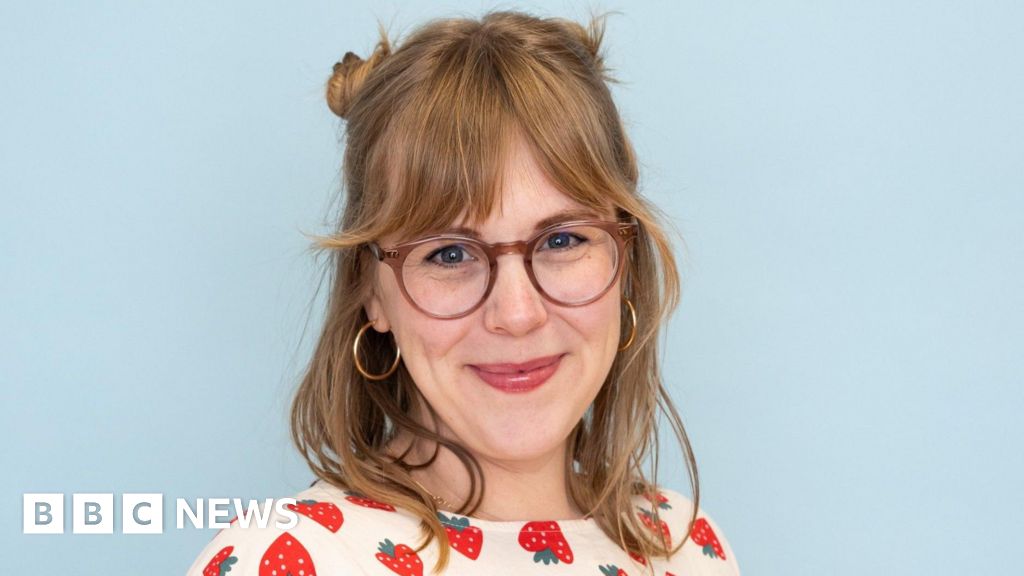
How a pivot to hair accessories led to business success

-

 Fashion7 days ago
France’s LVMH Q1 revenue falls 6%, shows resilience amid Iran war
-

 Entertainment1 week ago
Is Claude down? Here’s why users are seeing errors
-

 Tech1 week ago
The Deepfake Nudes Crisis in Schools Is Much Worse Than You Thought
-

 Tech1 week ago
Bremont Is Sending a Watch to the Moon’s Surface
-

 Sports1 week ago
PSL 11: Peshawar Zalmi win toss, opt to field first against Quetta Gladiators
-

 Tech1 week ago
Human-machine teaming dives underwater
-
 Business1 week ago
BP sees ‘exceptional’ oil trading result as Iran war sends crude costs soaring
-

 Fashion1 week ago
What no one is saying about the 2026 apparel slowdown