

Sports
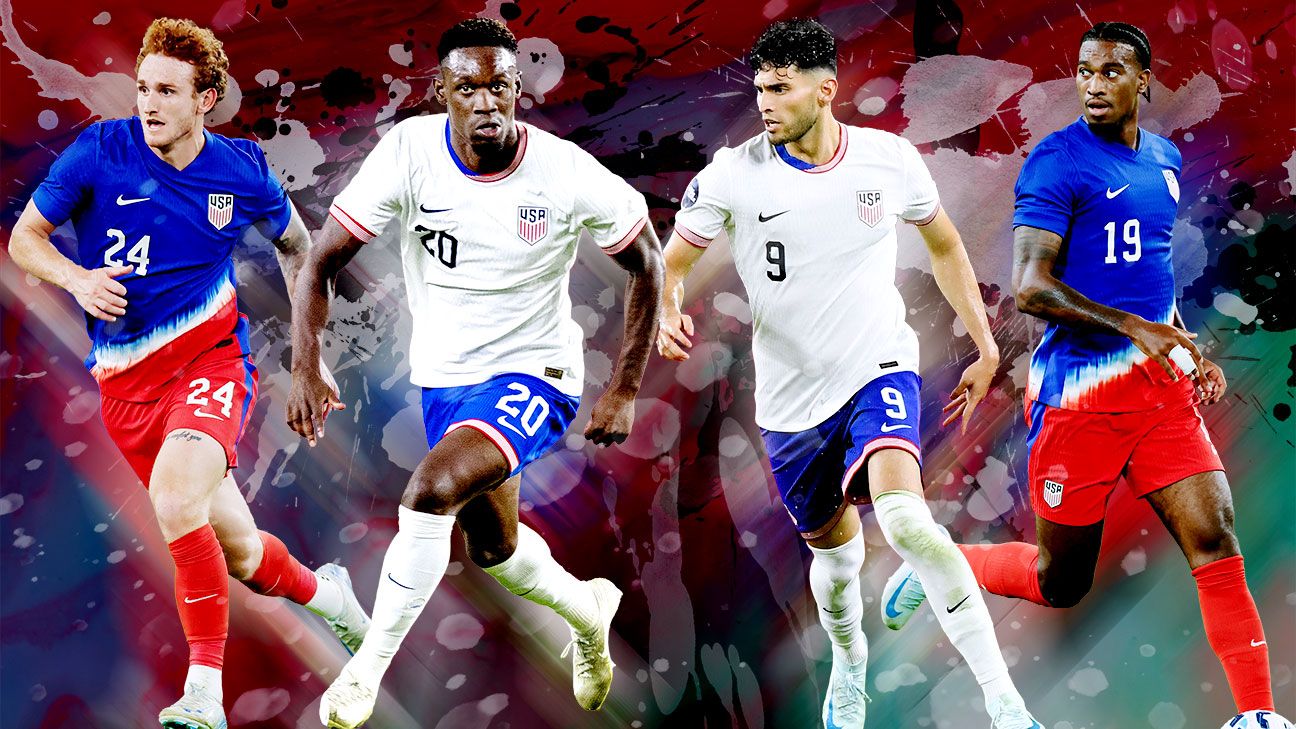
The race to be No. 9: Which strikers will the USMNT take to the World Cup?

-
Jeff Carlisle
-
Bill Connelly
Close
Bill Connelly
ESPN Staff Writer
- Bill Connelly is a writer for ESPN. He covers college football, soccer and tennis. He has been at ESPN since 2019.
For the past two FIFA World Cup cycles, the starting striker spot for the U.S. men’s national team has been a seemingly unsolvable puzzle, with none of the candidates able to grab a firm hold of the spot. It wasn’t always this way.
Eric Wynalda and Brian McBride led the U.S. line during the 1990s and 2000s. Jozy Altidore and Clint Dempsey carried the flag through the 2014 World Cup and slightly beyond, although it’s worth noting that Dempsey spent a significant chunk of his international career in a midfield role. The same was true for Landon Donovan.
Since then, the search for a starting central striker has taken on holy grail-like qualities.
The 2022 World Cup cycle never did reveal a forward who could deliver on a consistent basis. Jesús Ferreira, Jordan Pefok, Ricardo Pepi, Josh Sargent and Gyasi Zardes were all given starts during World Cup qualifying. For a time, it looked like Pepi would emerge, but he faded toward the latter part of the cycle — mostly due to a lack of playing time at club level — and was beaten to the roster selection tape by Haji Wright. An injury to Sargent at the World Cup, combined with ineffectiveness by Ferreira and Wright, meant that the U.S. didn’t get as much out of the position in Qatar as they would have hoped.
This cycle has been even more muddled. Pepi, Sargent and Wright remain in contention, joined by Folarin Balogun and Patrick Agyemang. And while Balogun has gained a bit of daylight between himself and the other potentials thanks to an impressive performance in a recent friendly against Japan, he hasn’t secured the spot just yet.
With the October window featuring friendlies against Ecuador and Australia, here’s where things stand in the race to wear the No. 9 for Mauricio Pochettino’s USMNT at next summer’s World Cup, and a statistical comparable player for the five in contention to start up top come June.

Folarin Balogun | 24 | AS Monaco
When Balogun committed to the USMNT in May of 2023 — he was also eligible to represent England and Nigeria — he was thought to be the USMNT’s long-term answer to the striker position. Initially there was a payoff: he scored in the 2023 Concacaf Nations League final against Canada, and was one of the few players to come out of the 2024 Copa América with any credit. But injuries, including a recurring shoulder ailment that required surgery in December 2024, prevented him from getting a vice-like grip on the position.
Balogun’s mobility allows him to get behind opposition defenses. The problem has been that the U.S. attack hasn’t always proved itself adept at finding him in those positions. But Balogun’s movement has the added benefit of pulling defenders out of position, the better to create space for the likes of Christian Pulisic, Timothy Weah or Alejandro Zendejas.
The Japan game in September showcased the full repertoire of his skills, and he even demonstrated he can play with his back to goal and hold the ball up if asked. Even in the loss to South Korea, the U.S. attack looked a lot more dynamic once Balogun entered the match as a substitute in the 62nd minute.
The only doubts surround his durability, as well as getting consistent playing time at Monaco, where the competition for places has been fierce. He has just one goal and one assist in league play this season, covering 332 minutes.
Statistical comparable: Nicolas Jackson. Balogun has proved to be a willing runner and ball carrier with solid shot and goal creation. In the past three years, he has averaged 0.50 goals from 3.69 shots per 90 minutes. Unfortunately, like Jackson, he has also proved to be a pretty poor finisher — those 0.50 goals per 90 come from shots worth 0.70 xG per 90. — Bill Connelly

Wright is the only U.S. center forward with a World Cup goal to his name. Granted, he didn’t seem to know much about his tally in the round-of-16 defeat to the Netherlands at the 2022 World Cup, but a goal is a goal.
Given the disdain Pochettino has for player reputations, more pertinent to Wright’s cause is the blistering form he has been showing in the English Championship this year, where his eight goals are tops in the league and have propelled Coventry to the top of the table.
Wright has some versatility to his game. His 6-foot-3 frame allows him to be a force in the air, but he’s also quick enough to play on the wing, which he has done on occasion for Coventry and the USMNT. His ability to sniff out chances is impressive as well. His tally from less than 2 yards in last weekend’s 5-0 demolition of Sheffield Wednesday showed his ability to be in the right place at the right time.
What’s holding Wright back? There were times during the last World Cup where he seemed slow to react to attacking opportunities. Perhaps the moment got to him. While that was almost three years ago, it’s an image that will stick in the memory until he delivers on a bigger stage.
Statistical comparable: Randal Kolo Muani. Wright isn’t quite the passer that Kolo Muani can be, but he scores (0.56 goals per 90 minutes), and he really pushes the ball. He has averaged 6.1 progressive carries per 90 in the past three years, drawing 1.42 fouls per 90 in that span. That creates a rare profile and makes Kolo Muani the best comp. — Connelly

During last week’s conference call in which he announced the U.S. roster for the October window, Pochettino said that Agyemang offers a different profile to Balogun and Wright, one derived from his physical presence — he’s 6-foot-4 — and his aerial ability. Those traits were on display in Derby County’s 1-1 draw with Southampton last weekend, when Agyemang towered over a Saints defender to head home the Rams’ only goal of the day.
Agyemang is a raw talent, however, and he struggles at times with his touch and hold-up play. But he seems perfectly suited to score an ugly goal late in a match, if necessary, and his passing has seen him earn two assists already in 307 minutes in the EFL Championship.
Agyemang’s chances of securing a World Cup roster spot are, like so many players, down to health and the numbers game Pochettino will have to play. If Pochettino only opts to bring three forwards, and a player like Pepi is healthy, Agyemang may be one of the final cuts. But his “different profile” may be what gets him in, especially if Pochettino opts for four strikers.
Statistical comparable: Olivier Giroud. Agyemang is excellent in the air (47.5% aerial success rate), and he’s happy to draw lots of contact (2.05 fouls per 90 suffered, 0.92 in the attacking third). That makes him awfully Giroud-like, as does quality finishing — he averages 0.51 goals from shots worth 0.40 xG, and 90% of his shots have come from inside the box — although his shooting totals aren’t huge, and he’s not involved elsewhere on the pitch. — Connelly

Three years ago, Pepi was the odd man out in terms of the U.S. roster that went to Qatar. It proved a mistake, when the U.S. was left starting Ferreira against the Dutch. Now Pepi is aiming to be on the 2026 squad — that is, if his body will let him.
The 2025 calendar year has seen Pepi struggle with his fitness. He sustained a knee injury in the UEFA Champions League game against Liverpool last January that later required surgery, forcing him to miss last summer’s Gold Cup. Pepi’s recovery since then has been stop-start; he was brought along slowly by PSV, and looked to be back after scoring twice against NEC Nijmegen last month, but a recent muscle injury has him back on the shelf. It isn’t thought to be serious, but it prevented him from taking part in this camp.
While Pepi has several impressive attributes, his movement allows him to sniff out opportunities and get on the end of passes that other forwards might miss. Combine this with his link-up play and you have a forward capable of contributing plenty to the U.S. team. But time is running out for Pepi to make a bigger impression.
Statistical comparable: Lautaro Martínez. More than any other forward from this list, Pepi gets himself involved, just as Martínez does. His offensive numbers are inflated by playing in the Eredivisie, but they’re still excellent (0.74 goals and 1.36 chances created per 90 minutes), and he’s proving to be a reliable finisher (those goals came from shots worth 0.52 xG). He also shows up in defense, averaging a stellar-for-a-forward 5.53 defensive interventions per 90. — Connelly
1:14
Should Pochettino be worried about not knowing his best USMNT XI?
Jeff Carlisle looks ahead to the upcoming international window for Mauricio Pochettino and the USMNT.

Rarely has the difference between a player’s club form and his international form been as stark as it is with Sargent. The O’Fallon, Missouri, native has hit double-digit goals in each of his past three full seasons with the Canaries in the Championship, and he’s well on his way this year with five goals in nine league matches. It makes Sargent’s barren spell with the USMNT — he hasn’t scored for the U.S. in his past 17 international appearances, dating back to November 2019 — all the more confounding.
Perhaps his streak is down to the fact that while Sargent does plenty of things well — be it his movement, his link-up play and yes, his finishing, too — there isn’t one aspect of his game that seems elite enough to help him be a difference-maker at a World Cup.
Pochettino seems to have noticed, too. Even with Pepi injured this window, there wasn’t room for Sargent among the forwards on the roster. He does have World Cup experience, and that counts for something, but it may not be enough.
Statistical comparable: Moise Kean. Sargent is the most statistically nondescript of the American forwards on this list, but like Kean, he’s a willing presser (4.09 defensive interventions per 90 minutes since the start of 2024-25) and above-average finisher (0.56 goals per 90 from shots worth 0.48 xG). His shot totals are always lower than you would prefer, though (2.43 shots per 90), and he doesn’t stand out as a passer. — Connelly
Balogun, Pepi, Wright and Agyemang look to be in position to make the World Cup squad, in that order. Four forwards might seem like one too many, but these four all have different profiles that can help the USMNT at various times. Flexibility is vital in a tournament like the World Cup.
In terms of who starts, Balogun has the inside track at the moment, but that situation can change quickly. At this stage, it looks like the only way Sargent makes it back to the World Cup is if others get injured or suffer a significant drop in form.

Ugly scenes marred the end of Tuesday’s AFC Champions League Elite semifinal between Machida Zelvia of Japan and United Arab Emirates’ Shabab Al Ahli — and it was perhaps understandable why the latter were infuriated by the manner in which they had just been eliminated from Asian football’s premier club competition.
Shabab Al Ahli’s hopes of becoming champions of Asia had just come to an end in the penultimate stage of the tournament with a 1-0 loss, but they were adamant that tie should have been headed for extra-time after their 92nd-minute equaliser was disallowed.
The U.A.E side immediately remonstrated with referee Shaun Evans. Then once more at the final whistle, where the Australian official eventually required a police escort off the field as he was surrounded by a mob of seething Shabab Al Ahli players.
Peculiarly, and perhaps for the first time ever, it was a substitution that led to VAR intervention which prompted Evans to overturn his original decision of letting Guilherme Bala‘s brilliant solo effort stand.
So, what exactly caused the controversy?
After Machida had seemingly made their fifth and final substitution of the tie, they immediately started making appeals to Evans the moment Shabab Al Ahli restarted play from a throw-in — although the reason behind those were initially unclear.
Shabab Al Ahli worked the way from one flank to the other, where Bala embarked on a dazzling 40-yard run and proceeded to skip inside two opponents before unleashing an unstoppable effort in the far corner.
It sparked wild scenes of celebration in the Shabab Al Ahli camp but, almost immediately, Machida continued their pleas to Evans.
And when VAR — upon conducting its mandatory check — called Evans to the pitch-side monitor, things became clearer.
As Machida’s Hotaka Nakamura was still on the field of play, briefly exchanging words with the man who was about to replace him in Henry Heroki Mochizuki, Shabab Al Ahli defender Kauan Santos had already thrown the ball back into play.
It then goes down to the minute details. Nakamura was as good as off the field with one foot almost on the touchline. Barely a second later, Mochizuki was charging onto the pitch.
It initially appeared that Evans had not sensed anything was amiss because of such a fine margin. And the rules are the rules.
Machida will defend the decision by arguing they were — quite blatantly — unprepared for the restart, especially considering he was replacing Nakamura at right-wingback — down the exact side where Bala produced his moment of magic.
Still, even if it had been a legal restart, he probably might not have made it to his designated position considering he had the entire width of the field to cover. Indeed, when Bala’s shot hit the back of the net, Mochizuki had only made it as far as the middle of the box — filling in the central role that was vacated by captain Gen Shoji‘s own covering of the aforementioned void down the right.
Obviously, teams are not obliged to wait till their opponents are completely ready — and in their designated positions — after substitutions. In the grand scheme of things, Bala would probably still have scored even if Shabab Al Ahli had waited that extra second before restarting play. The fact of the matter is they didn’t.
But here’s where it gets even more intriguing. Evans’ whistle could be heard being blown, calling for play to be restarted. Whether or not it came before or after Santos’ throw-in is — again — so marginal that it is a difficult to determine in real-time.
This bit is purely conjecture but, at the juncture of the game when teams are often suspected of bringing on players to take time of the clock, and with Machida taking a bit of time to complete their substitution, he may have — in an attempt to force the Japanese team to get on with the game — called for Shabab Al Ahli to continue proceedings.
So, when VAR decided that there was a serious missed incident that warranted an on-field review, it is quite possible that it was one that had actually been instigated by Evans himself. Even then, if he had decided to restart play prematurely because Machida were wasting time, then wouldn’t he have been well within his rights to stick by his original decision?
After all, there is no law in the game that decrees both teams must have 11 players on the pitch for the game to go on. Even discounting the scenario of sending-offs, numerical discrepancies are commonplace when players require medical treatment off the field.
Expectedly, Shabab Al Ahli coach Paulo Sousa — who vacated his dugout for the remainder of the contest after the disallowed goal — was indignant after the game.
“There was a goal that was scored and then it was cancelled — this is a very technical mistake by the referee,” said Sousa. “Unfortunately, this is what is turning football into rubble. It was a big mistake to choose this referee for this match.
“What saddens me is the organisation [the Asian Football Confederation] choosing referees who aren’t up to the quality of this tournament, these players, and the coaches present.”
“We deserved to be in the final and we deserve to play this important game.”
Of course, nothing can now change the outcome of the contest. It is Machida who are moving on to Saturday’s decider — a story in itself considering this is their tournament debut and they were still in the second tier of Japanese football as recently as in 2023.
Nonetheless, Shabab Al Ahli are well within their rights to be aggrieved that they did not at least have extra-time, or even penalties, to pull off a victory of their own.
Not for the first time, VAR has courted controversy. But perhaps for the first time, over a substitution.
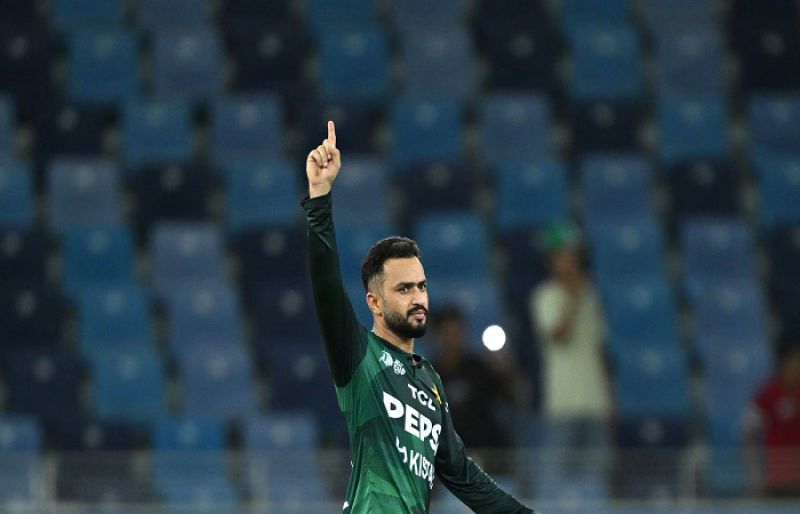
All-rounder Muhammad Nawaz on Wednesday tested positive for recreational drug use. The development has put him under the scanner of the Pakistan Cricket Board (PCB).
The 32-year-old all-rounder, who is currently representing Multan Sultans in the ongoing Pakistan Super League (PSL) 11, was reportedly flagged during testing conducted at the T20 World Cup earlier this year.
A PCB spokesperson confirmed that the matter has been formally taken up after communication from the International Cricket Council (ICC).
“The ICC has informed the Pakistan Cricket Board (PCB) about this matter, and the PCB has begun the due process.
The results of this process will be communicated to the ICC today,” the spokesperson stated.
As a result, he will no longer be able to play for Surrey for England’s T20 Blast.
Nawaz, who has represented Pakistan in 98 T20 internationals, is currently playing for Multan Sultans in the ongoing Pakistan Super League (PSL) season.
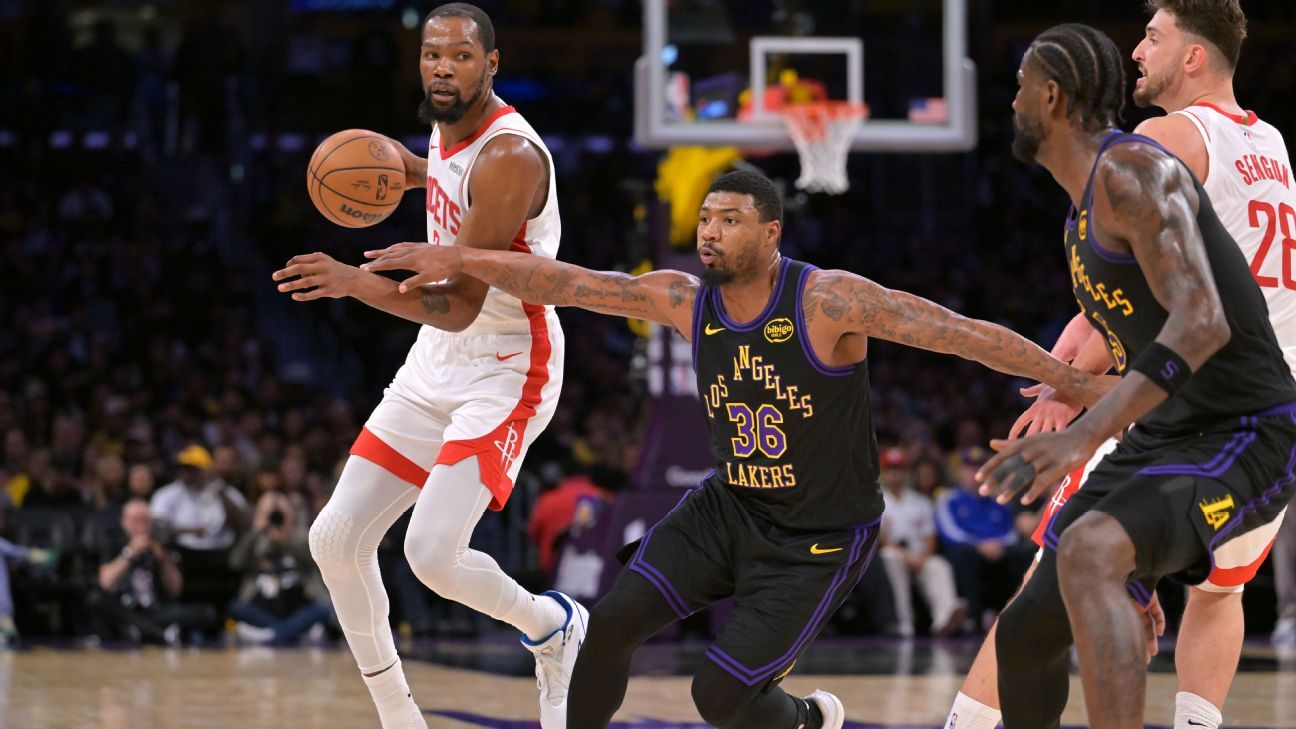
LOS ANGELES — The Houston Rockets had Kevin Durant back for Game 2 of their first-round matchup Tuesday. So the Lakers had Marcus Smart guard him in their 101-94 win to take a 2-0 series lead.
“It was good for them to have KD out there for them,” Smart said, “and it was good for us to be able to do what we did tonight against him.”
Durant returned from a right knee injury that kept him out of Game 1 to score 23 points on 7-for-12 shooting — but shot just 1-for-3 and committed three of his playoff career-worst nine turnovers in the 18 possessions he was defended by Smart, according to ESPN Research.
“He’s not afraid of the moment,” said LeBron James, who led L.A. with 28 points, eight rebounds and seven assists. “He’s always been assigned some of the best players that [have] ever played this game in his career. So, to have someone like that it just brings a lot of composure to our team.
“Especially when we’re missing — I hate to beat a dead horse, but it’s two big horses — with AR [Austin Reaves] and Luka [Doncic] out. So, to have that, it means a lot to our ballclub.”
As effective as Smart was defensively, grabbing five steals, he was equally important on offense, scoring 25 points on 8-for-13 shooting (5-for-7 from 3) with seven assists.
“Smart, he just had a killer game today,” Lakers coach JJ Redick said.
The veteran guard, signed to a two-year, $11 million contract in the offseason after being recruited to L.A. by Doncic, was great from the start of Game 2, scoring 14 of his points in the first quarter.
“He set the tone for us, got us going,” said Luke Kennard, who followed up 27 points in Game 1 with 23 in Game 2. “And we know with those guys out, it could be anybody on any given night right now.”
Houston, which was held below 100 points for the second straight game and shot just 40.4%, cut what was once a 15-point lead by the Lakers to just five with under three minutes remaining.
Which was when Smart, fittingly, hit his fifth 3 of the night to put the Lakers back up by eight with 2:23 to go and give them some breathing room.
“He hit a big one,” Redick said.
While Redick said before the game that Reaves had started his return to play progression, confirming ESPN’s Shams Charania’s report that he began on-court one-on-one workouts as he continues to rehabilitate from a Grade 2 oblique strain that’s kept him out since April 2, the coach did not provide an updated timeline on when Reaves could be back in the lineup.
Redick added that Doncic had yet to begin his return to play progression from the Grade 2 left hamstring strain that’s also sidelined him since April 2 and provided no timetable update on the Slovenian star, either.
In other words, as the series shifts to Houston for Game 3 on Friday, Smart will still be as important as ever.
“I can look at him, and he knows what the hell I’m talking about,” said James, who revealed that his viral meme moment from Game 1 was him making eye contact with none other than Smart to get his attention from across the court. “He can relate to me.”
And Redick said that the team can relate to Smart’s will to win.
“Because he has the voice he has, he can help create the belief and the confidence in our group,” Redick said. “And I think he’s done that.”
For Smart, who was named the Defensive Player of the Year for the 2021-22 season before helping the Boston Celtics make it to the 2022 NBA Finals before two injury-riddled seasons in Memphis and Washington, Game 2 served as a reminder of his capabilities.
“I’m very grateful to be doing this,” Smart said. “I thank God every day, because I could have been out the league, right? Injuries and things like that. So, to be able to be back on this stage again, making the plays that I’m making with these guys, with this team, this organization, I’m just grateful.”

Energy prices ‘could stay high into winter’

‘Benidorm’ actor Elsie Kelly dies aged 89; cause of death revealed

Iran says US naval blockade has minimal impact on food supply

-

 Fashion6 days ago
France’s LVMH Q1 revenue falls 6%, shows resilience amid Iran war
-

 Entertainment7 days ago
Is Claude down? Here’s why users are seeing errors
-
 Business1 week ago
Delta Air Lines unveils first new Delta One suite in premium cabin arms race
-

 Fashion1 week ago
Asia claims largest share of markets on Kearney FDI Confidence Index
-

 Sports7 days ago
PSL 11: Peshawar Zalmi win toss, opt to field first against Quetta Gladiators
-

 Tech1 week ago
The Deepfake Nudes Crisis in Schools Is Much Worse Than You Thought
-

 Tech1 week ago
Bremont Is Sending a Watch to the Moon’s Surface
-

 Tech1 week ago
Human-machine teaming dives underwater