

Business
US kicks off controversial financial rescue plan for Argentina

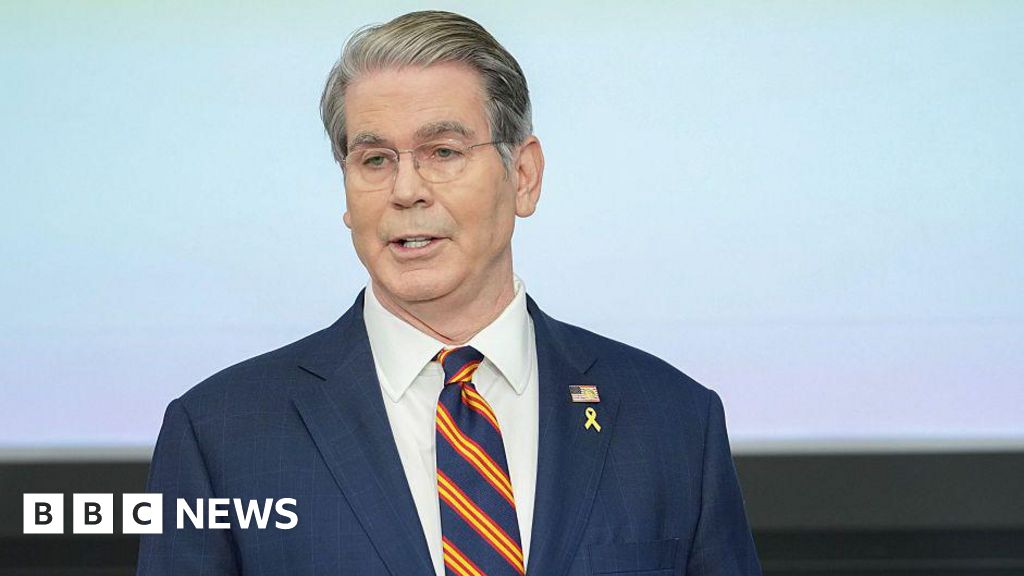
The US has purchased Argentine pesos, taking the next step in a controversial effort to calm a currency crisis hitting the South American country and its president, Trump ally Javier Milei.
Treasury Secretary Scott Bessent announced the purchase on social media, while saying the US had finalised terms of a planned $20bn (£15bn) financial rescue for the country.
“The US Treasury is prepared, immediately, to take whatever exceptional measures are warranted,” he said.
The announcement helped boost the peso and Argentine debt on financial markets but renewed debate in the US, where the decision to extend financial support to Argentina at a time of spending cuts at home has drawn scrutiny.
“Instead of using our dollars to buy Argentine pesos, Donald Trump should help Americans afford health care,” Democratic Senator Elizabeth Warren wrote on social media in response to the announcement, referring to a key issue driving a stand-off over the government shutdown in the US.
Argentina has been facing increasing financial turmoil ahead of national midterm elections set for 26 October, as questions rise about whether voters will continue to back Milei’s cost-cutting, free-market reform agenda after recent losses in a provincial election.
The value of the peso has declined sharply in recent months, while investors have been dumping Argentine stocks and bonds.
Milei’s government has tried to stabilise the situation, but the moves have drained the country’s reserves a few months before billions in debt payments will come due.
Bessent, who made his name as a trader involved in the “Black Wednesday” episode in 1992 that forced the UK to devalue the pound, said in a statement that the success of Argentina’s “reform agenda” was of “systemic importance”.
“A strong, stable Argentina which helps anchor a prosperous Western Hemisphere is in the strategic interest of the United States,” he added. “Their success should be a bipartisan priority.”
The Treasury Department did not respond to questions seeking more detail about the US support, including how much of embattled peso the administration had purchased or the terms of the $20bn currency swap line, which will allow Argentina to exchange pesos for dollars.
Speaking later on Fox News, Bessent said the support was not a bailout for Argentina and that the peso was undervalued.
In a social media post, Milei thanked Trump and Bessent for support.
“Together, as the closest of allies, we will make a hemisphere of economic freedom and prosperity,” he said.
Argentina has defaulted on its debt three times since 2001, including most recently in 2020.
But investors, including some with ties to Bessent such as Robert Citrone, had taken renewed interest in the country in recent years in a bet on Milei’s libertarian financial reforms.
Since he took office in 2023, he has introduced deregulation and sweeping cuts to public spending to curb inflation and achieve a fiscal surplus – where the state spends less than it takes in revenue.
Domestically, the austerity measures have been met with growing backlash, as people’s purchasing power declines and the country faces a likely economic recession.
But those measures have helped to rein in inflation and have been largely welcomed by international investors and the International Monetary Fund, a key lender to Argentina.
With Milei styling himself as a Trump-like figure, complete with “Make Argentina Great Again” rhetoric, they have also won admiration from many conservatives in the US. He has met repeatedly with Trump, with another visit expected next week.
Nonetheless, the decision to extend financial support to Argentina has sparked backlash among American farmers, a key part of Trump’s voter base, who have been concerned as China shifts purchases of soybeans to countries including Argentina.
“Why would USA help bail out Argentina while they take American soybean producers’ biggest market???” Republican Senator Chuck Grassley, who represents Iowa, a key soybean producer, wrote on social media last month, when the US first pledged its support.
Bessent’s announcement followed four days of meetings with Argentina’s economy minister Luis Caputo.
In his announcement, Bessent said the international community was “unified behind Argentina and its prudent fiscal strategy, but only the United States can act swiftly. And act we will.”
He has previously pushed back at suggestions that the support amounted to a bailout for what Warren, in a statement on Thursday, dubbed the administration’s “billionaire buddies”.
“This trope that we’re helping out wealthy Americans with interests down there couldn’t be more false,” Bessent told CNBC earlier this month.
“What we’re doing is maintaining US strategic interest in the Western hemisphere,” he said, warning that inaction risked a “failed state”.
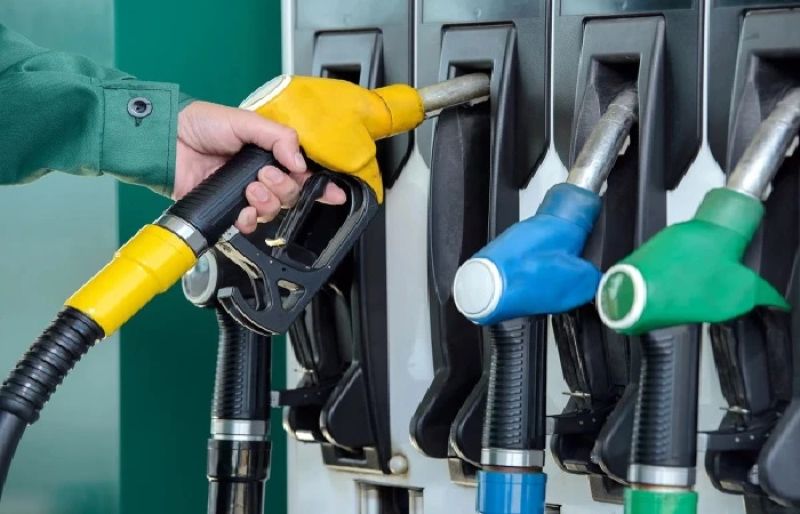
The federal government announced a Rs26.77 per litre hike in the price of petrol and high-speed diesel each on Friday, according to a notification issued by the Petroleum Division.
The new prices will be effective from April 25, 2026 for a week, the notification stated.
Following the increase, the price of HSD has jumped from Rs353.42 to Rs380.19, while the petrol price now stands at Rs393.35.
The government has been reviewing petroleum prices every Friday night following the now-paused US-Israel war on Iran, which began on February 28.
In the previous weekly review, the prime minister announced a reduction of Rs32.12 per litre in the price of high-speed diesel, while the petrol price remained unchanged.
The government jacked up petrol and diesel prices despite oil prices falling globally on Friday after it appeared a second round of Middle East talks was back on, bolstering prospects for an end to a war that has crippled energy shipments from the Gulf.
Oil prices had been climbing earlier as investors worried about a lack of progress in ending the Middle East crisis, with Tehran keeping the Strait of Hormuz closed and the US maintaining a blockade of Iranian ports.
But they dropped on reports that Iran’s Foreign Minister Abbas Araghchi was to arrive in Islamabad on Friday night.
Brent crude, the international benchmark contract, fell back below $100 a barrel.
facebook twitter
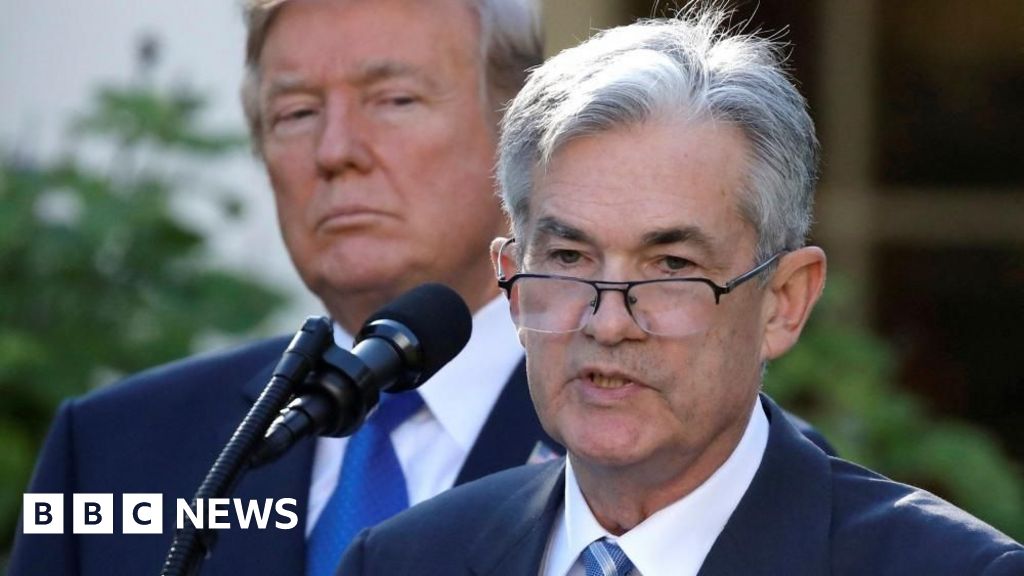
Powell’s term is nearing its end and the US Senate is considering Trump’s nominee for his replacement, Kevin Warsh. A key Republican, Thom Tillis, has withheld his support for Warsh unless the Trump administration would drop its investigation into Powell.
Business
Intel bags big gains! Chipmaker’s shares jump 26% on blockbuster results; how Trump admin benefits – The Times of India
Intel share price soared sharply on Friday after the chipmaker delivered a first-quarter performance that exceeded market expectations. And the win was not just for the chipmaker, but also the whole of US!The stock climbed 26.7% during trading on Friday, marking what could be its strongest single-day gain since 1987. Momentum continued after the closing bell, with shares rising a further 20% in after-hours trading as investors reacted to signs of a sustained turnaround driven by artificial intelligence.Intel reported revenue of $13.58 billion (€11.6bn) for the quarter, ahead of the $12.3 billion (€10.5 bn) forecast and up 7.2% from a year earlier. Adjusted earnings per share came in at $0.29, far exceeding expectations of $0.01.A key contributor to this performance was the company’s Data Centre and AI (DCAI) division, which delivered revenue of $5.05 billion (€4.2bn), up 22.4% year-on-year and well above analyst estimates of $4.41 billion (€3.77bn). The results indicate strong demand for Intel’s Xeon 6 processors and Gaudi 3 AI accelerators, particularly among enterprise clients and cloud service providers.Chief executive Lip-Bu Tan pointed to a broader shift in artificial intelligence usage as a major factor behind the growth. He said, “the next wave of AI will bring intelligence closer to the end user, moving from foundational models to inference to agentic.” He added, “This shift is significantly increasing the need for Intel’s CPUs and wafer and advanced packaging offerings.”The company also issued an upbeat outlook for the second quarter, forecasting revenue in the range of $13.8 billion (€11.8billion) to $14.8 billion (€12.6billion), surpassing investor expectations of $13 billion (€11.1billion).
But how is Washington winning?
The rally has had a direct impact on the US administration’s investment in Intel. In 2025, during a period of severe financial strain for the company, the administration of Donald Trump acquired a 9.9% stake in a move aimed at stabilising the business. The government invested $8.9 billion (€7.8bn) at a share price of $20.47 (€18.01), with $5.7 billion (€5bn) of that amount coming from previously approved but unpaid grants, according to the Euro News.At the time, Intel was facing multi-billion dollar losses and operational challenges, prompting concerns over its viability. As part of the intervention, the company cancelled planned factory projects in Germany and Poland, redirected focus towards US-based manufacturing, and reduced its global workforce by 25%, cutting around 25,000 jobs.Following the latest jump, Intel’s shares are now trading at $81.3 (€71.5), representing an increase of nearly 300% since the government first took its stake. The sharp rise highlights how the company’s improved financial performance has translated into substantial gains for the US administration.


Charlie Sheen updates on relationship with old pal Jon Cryer

Iranian FM Abbas Araghchi lands in Pakistan ahead of renewed US talks
Govt hikes petrol, diesel prices by nearly Rs27 per litre – SUCH TV

-

 Fashion1 week ago
France’s LVMH Q1 revenue falls 6%, shows resilience amid Iran war
-

 Tech1 week ago
CYBERUK ’26: UK lagging on legal protections for cyber pros | Computer Weekly
-

 Sports5 days ago
WWE WrestleMania 42 Night 2: Live match results and analysis
-

 Sports1 week ago
Faheem Ashraf backs Islamabad United’s push, calls league a ‘career-changing platform’
-
 Business1 week ago
PepsiCo earnings beat estimates as North American food business improves
-

 Sports5 days ago
NCAA men’s gymnastics championship: All-time winners list
-

 Tech1 week ago
Anthropic Plots Major London Expansion
-

 Entertainment4 days ago
Lee Anderson, Zarah Sultana kicked out of UK Parliament for calling PM ‘liar’