

Business
US kicks off controversial financial rescue plan for Argentina

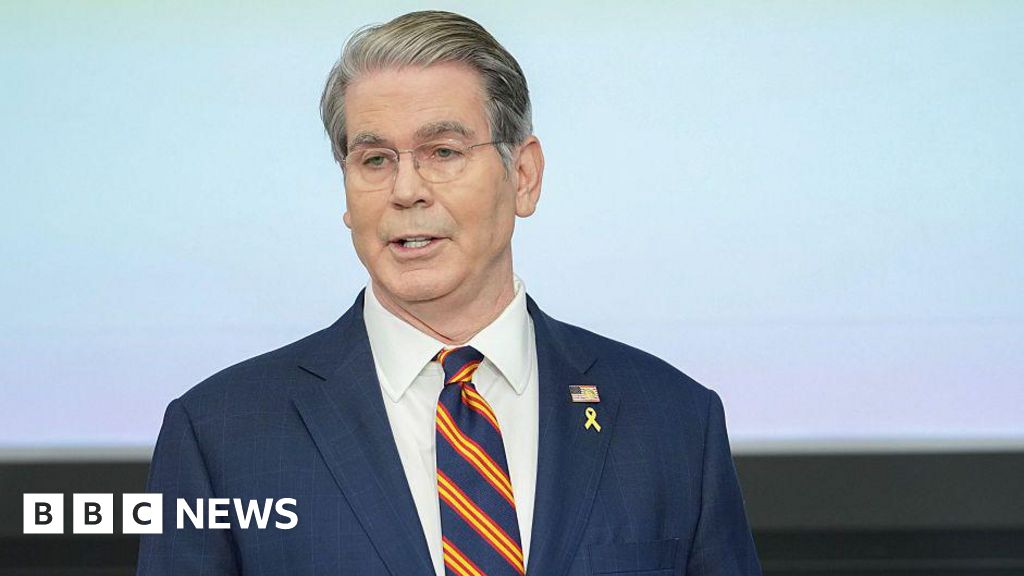
The US has purchased Argentine pesos, taking the next step in a controversial effort to calm a currency crisis hitting the South American country and its president, Trump ally Javier Milei.
Treasury Secretary Scott Bessent announced the purchase on social media, while saying the US had finalised terms of a planned $20bn (£15bn) financial rescue for the country.
“The US Treasury is prepared, immediately, to take whatever exceptional measures are warranted,” he said.
The announcement helped boost the peso and Argentine debt on financial markets but renewed debate in the US, where the decision to extend financial support to Argentina at a time of spending cuts at home has drawn scrutiny.
“Instead of using our dollars to buy Argentine pesos, Donald Trump should help Americans afford health care,” Democratic Senator Elizabeth Warren wrote on social media in response to the announcement, referring to a key issue driving a stand-off over the government shutdown in the US.
Argentina has been facing increasing financial turmoil ahead of national midterm elections set for 26 October, as questions rise about whether voters will continue to back Milei’s cost-cutting, free-market reform agenda after recent losses in a provincial election.
The value of the peso has declined sharply in recent months, while investors have been dumping Argentine stocks and bonds.
Milei’s government has tried to stabilise the situation, but the moves have drained the country’s reserves a few months before billions in debt payments will come due.
Bessent, who made his name as a trader involved in the “Black Wednesday” episode in 1992 that forced the UK to devalue the pound, said in a statement that the success of Argentina’s “reform agenda” was of “systemic importance”.
“A strong, stable Argentina which helps anchor a prosperous Western Hemisphere is in the strategic interest of the United States,” he added. “Their success should be a bipartisan priority.”
The Treasury Department did not respond to questions seeking more detail about the US support, including how much of embattled peso the administration had purchased or the terms of the $20bn currency swap line, which will allow Argentina to exchange pesos for dollars.
Speaking later on Fox News, Bessent said the support was not a bailout for Argentina and that the peso was undervalued.
In a social media post, Milei thanked Trump and Bessent for support.
“Together, as the closest of allies, we will make a hemisphere of economic freedom and prosperity,” he said.
Argentina has defaulted on its debt three times since 2001, including most recently in 2020.
But investors, including some with ties to Bessent such as Robert Citrone, had taken renewed interest in the country in recent years in a bet on Milei’s libertarian financial reforms.
Since he took office in 2023, he has introduced deregulation and sweeping cuts to public spending to curb inflation and achieve a fiscal surplus – where the state spends less than it takes in revenue.
Domestically, the austerity measures have been met with growing backlash, as people’s purchasing power declines and the country faces a likely economic recession.
But those measures have helped to rein in inflation and have been largely welcomed by international investors and the International Monetary Fund, a key lender to Argentina.
With Milei styling himself as a Trump-like figure, complete with “Make Argentina Great Again” rhetoric, they have also won admiration from many conservatives in the US. He has met repeatedly with Trump, with another visit expected next week.
Nonetheless, the decision to extend financial support to Argentina has sparked backlash among American farmers, a key part of Trump’s voter base, who have been concerned as China shifts purchases of soybeans to countries including Argentina.
“Why would USA help bail out Argentina while they take American soybean producers’ biggest market???” Republican Senator Chuck Grassley, who represents Iowa, a key soybean producer, wrote on social media last month, when the US first pledged its support.
Bessent’s announcement followed four days of meetings with Argentina’s economy minister Luis Caputo.
In his announcement, Bessent said the international community was “unified behind Argentina and its prudent fiscal strategy, but only the United States can act swiftly. And act we will.”
He has previously pushed back at suggestions that the support amounted to a bailout for what Warren, in a statement on Thursday, dubbed the administration’s “billionaire buddies”.
“This trope that we’re helping out wealthy Americans with interests down there couldn’t be more false,” Bessent told CNBC earlier this month.
“What we’re doing is maintaining US strategic interest in the Western hemisphere,” he said, warning that inaction risked a “failed state”.
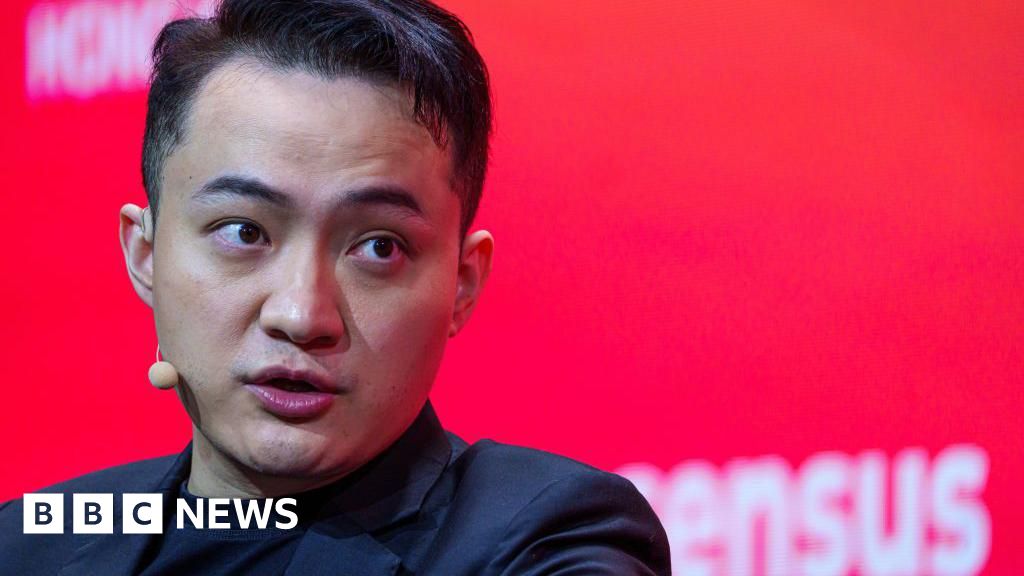
Billionaire investor Justin Sun is suing the family’s World Liberty crypto venture after spending $45m on its tokens.
Source link

Business
Life sciences lab real estate is clawing back from disaster. Here’s what that means for investors



Google debuts ‘workspace intelligence’ to power AI agents across gmail, docs, chat
Trump family crypto firm sued over alleged ‘extortion’

5 AI Models Tried to Scam Me. Some of Them Were Scary Good

-

 Fashion6 days ago
France’s LVMH Q1 revenue falls 6%, shows resilience amid Iran war
-

 Entertainment1 week ago
Is Claude down? Here’s why users are seeing errors
-

 Tech1 week ago
The Deepfake Nudes Crisis in Schools Is Much Worse Than You Thought
-

 Sports1 week ago
PSL 11: Peshawar Zalmi win toss, opt to field first against Quetta Gladiators
-

 Tech1 week ago
Bremont Is Sending a Watch to the Moon’s Surface
-

 Tech1 week ago
Human-machine teaming dives underwater
-
 Business1 week ago
BP sees ‘exceptional’ oil trading result as Iran war sends crude costs soaring
-

 Fashion1 week ago
What no one is saying about the 2026 apparel slowdown