

Fashion
Dutch manufacturing flat in August, up 1.7% from July: CBS

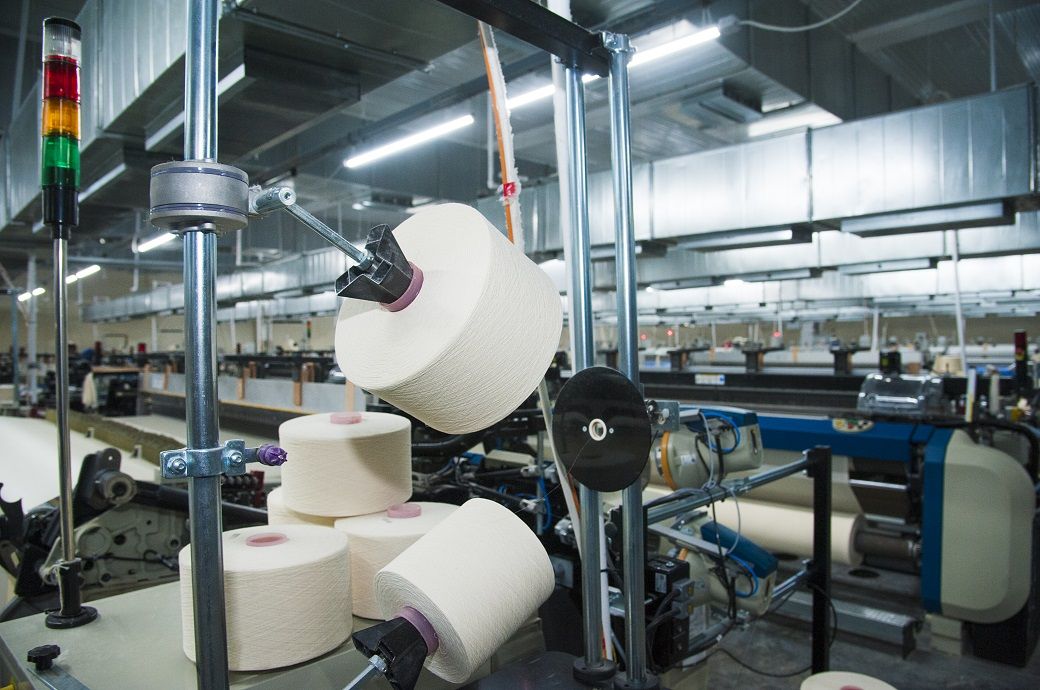
Slightly more than half of the various industrial sectors produced less than they did one year previously. Of the eight largest industrial sectors, output rose the most sharply in the repair and installation of machinery, while it fell the most sharply in the transport equipment industry.
A more accurate picture of changes in short-term output is obtained when the figures are adjusted for seasonal effects and the working-day pattern. After adjustment, manufacturing output rose by 1.7 per cent in August relative to July, CBS said in a press release.
In August 2025, Dutch manufacturing output remained unchanged year-on-year, although output declined in over half of the industrial sectors.
After seasonal adjustment, output rose by 1.7 per cent compared to July.
The strongest growth was seen in the repair and installation of machinery, while transport equipment recorded the sharpest decline.
After adjusting for seasonal and working-day effects, manufacturing output often fluctuates significantly. In the spring of 2020, output declined rapidly, reaching a low point in May 2020. This was followed by an upward trend until May 2022. The trend has reversed since then.
Producer confidence was less negative in September than it was in August. Manufacturers were more positive regarding output for the next three months, in particular.
Germany is an important market for the Dutch manufacturing sector. In September, German manufacturers were more negative than they were in August, as reported by Eurostat. In August, the calendar-adjusted output of the German manufacturing sector was down by 5.1 per cent, year on year. Relative to July, output fell by 5.5 per cent, as reported by Destatis.
Fibre2Fashion News Desk (RR)










Such industrial units can transfer gas load allocated under the captive power category to the industrial category within the same premises and ownership. But gas load from the industrial power category cannot be transferred to captive use.
Bangladesh’s power, energy and mineral resources division has simplified the industrial gas distribution system, allowing factories within the same premises and ownership to transfer unused gas load with approval from the relevant gas company.
The aim is to improve service amid rising demand.
Industrial units can rearrange or replace gas equipment keeping the approved hourly load unchanged.
Industrial units can rearrange or replace gas equipment keeping the approved hourly load unchanged, according to a circular by the division.
Commissioning work must be carried out by contractors enlisted with the relevant gas company, while no permission from the gas distribution company will be required, the circular noted.
The aim is to improve service amid rising demand.
Textile mills lauded the move, saying the reforms would enhance productivity, reduce cost and streamline operations, particularly for energy-intensive textile and garment sectors, according to domestic media reports.
Fibre2Fashion News Desk (DS)
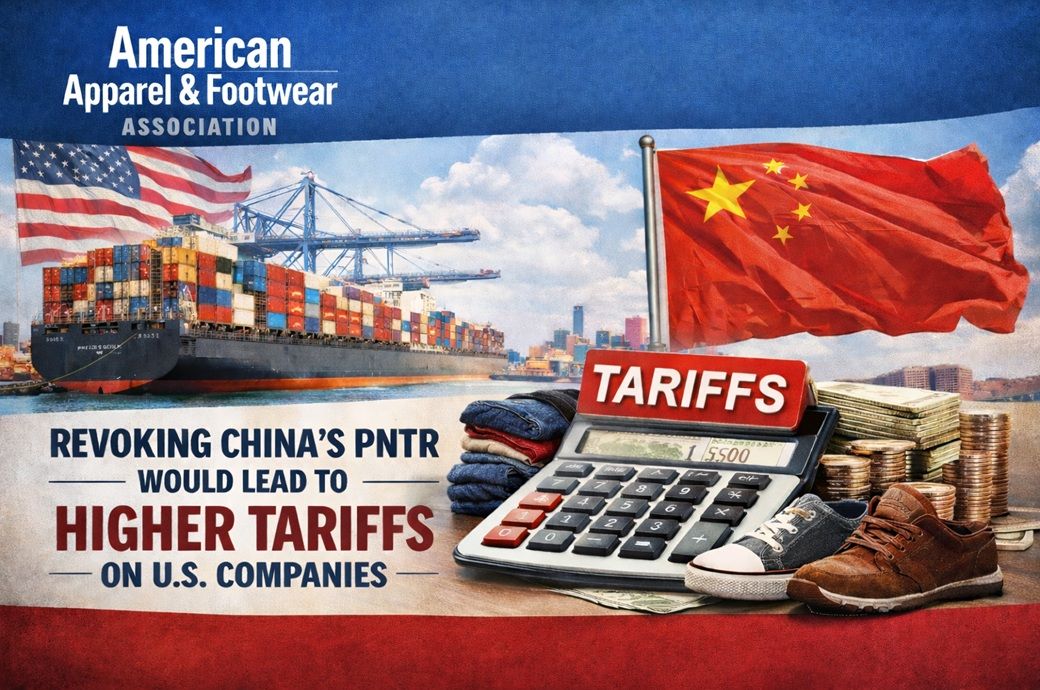
“These significant tariff increases cannot be absorbed by US brands and retailers, as margins are already tight and leave little room to offset such dramatic cost increases. As a result, these added costs would be passed on to consumers, hurting the affordability of clothes and shoes for American families,” Beth Hughes, AAFA vice president for trade and customs policy, wrote in a letter to the ITC.
US trade body AAFA has urged the International Trade Commission not to revoke the permanent normal trade relations (PNTR) status granted to China as that would result in higher tariffs borne by US companies.
Higher tariffs on Chinese imports would constrain US firms’ ability to invest in innovation, expand operations and support US job growth, and would risk closing off commercial opportunities in China.
“At the same time, higher tariffs on Chinese imports would constrain US companies’ ability to invest in innovation, expand operations and support American job growth,’ he noted.
AAFA in its letter said that US manufacturers rely on Chinese raw materials and inputs to produce finished goods under ‘Made in USA’ initiatives. Certain textiles are only available from China at the scale required, with no viable alternatives available now.
China remains the largest supplier for the US apparel, footwear and travel goods industry, accounting for 27.26 per cent of apparel imports, 47.83 per cent of footwear imports and 36.62 per cent of travel goods imports in 2025.
“Revoking China PNTR would result in higher tariffs borne by US companies significantly raising costs, reducing Americans’ ability to purchase affordable clothing, footwear and travel goods, while straining limited US and global manufacturing capacity that cannot readily replace these imports and provoking potential retaliatory measures that could further harm US companies,” the letter read.
Many small businesses and employers may not be in a position to absorb those costs, it observed.
While these additionally costs might ultimately be manageable—by being passed along over time or addressed through other mitigation measures, including alternative sourcing—those measures take time and also involve costs, it said.
An entire class of companies would be eliminated by the existential nature of such high tariff costs.
China’s pattern of retaliation suggests that any US move to revoke PNTR would likely be met with swift and proportional countermeasures, the letter noted.
As China a major market for American goods, the loss of PNTR would not only raise prices and disrupt supply chains, but also risk closing off commercial opportunities in China, it added.
Fibre2Fashion News Desk (DS)
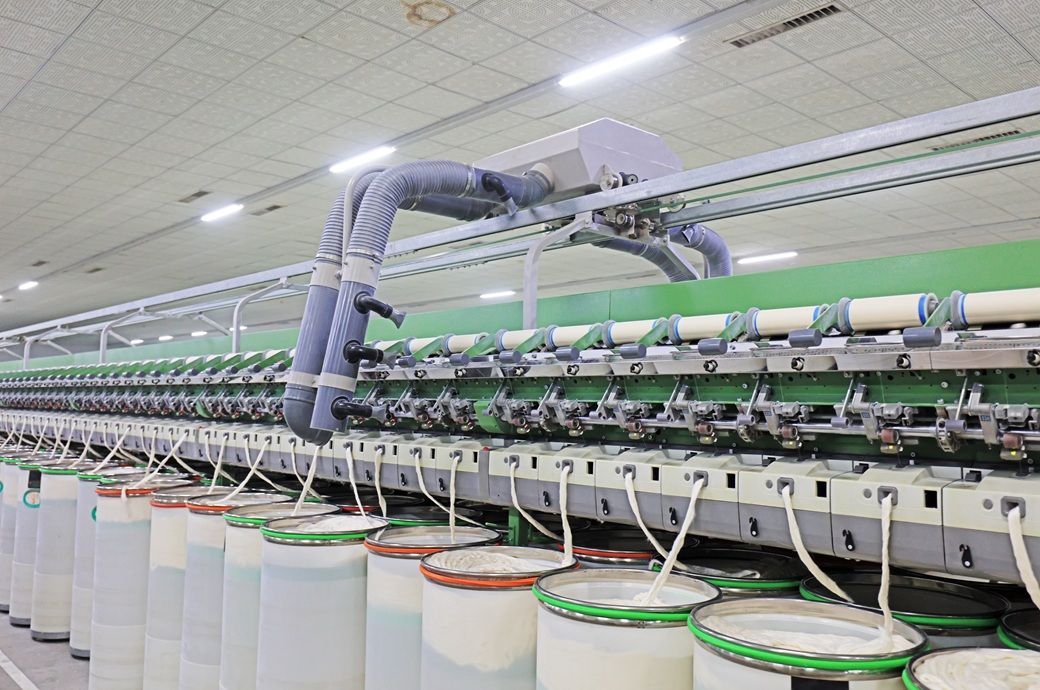
Ready-made garments remained the largest contributor, rising 2.9 per cent from ₹1,35,427.6 crore to ₹1,39,349.6 crore. Cotton yarn, fabrics, made ups and handloom products recorded marginal growth of 0.4 per cent, increasing from ₹1,02,002.8 crore to ₹1,02,399.7 crore. Man-made yarn, fabrics and made ups posted a stronger rise of 3.6 per cent, reaching ₹42,687.8 crore from ₹41,196.0 crore.
India’s textile exports grew 2.1 per cent to ₹3.16 lakh crore in FY26, led by garments and man-made textiles.
Growth across 120+ markets and policy support through export schemes and free trade agreements boosted performance.
Improved market access and diversification are expected to strengthen exports, investment and global value chain integration.
Among value-added segments, handicrafts excluding handmade carpets recorded the highest growth of 6.1 per cent, increasing from ₹14,945.5 crore to ₹15,855.1 crore.
Exports expanded across more than 120 destinations between April 2025 and February 2026, indicating broad-based geographical growth. Notable gains were seen in the United Arab Emirates (22.3 per cent), United Kingdom (7.8 per cent), Germany (9.9 per cent), Spain (15.5 per cent), Japan (20.6 per cent), Egypt (38.3 per cent), Nigeria (21.4 per cent), Senegal (54.4 per cent) and Sudan (205.6 per cent).
Government support through schemes like RoSCTL (Rebate of State and Central Taxes and Levies) and RoDTEP (Remission of Duties and Taxes on Exported Products) also helped exporters.
India’s free trade agreements (FTAs) also progressed significantly during FY 2025-26.
The India-UK Comprehensive Economic and Trade Agreement was signed in July 2025, followed by the India-Trade and Economic Partnership Agreement entering into force on October 1, 2025, the India-Oman Comprehensive Economic Partnership Agreement in December 2025, the India-New Zealand FTA announcement on December 22, 2025, and the India-EU FTA conclusion on January 27, 2026.
These developments are expected to enhance preferential market access, reduce tariff barriers, support supply-chain integration, and create new opportunities for textiles, apparel, handicrafts and technical textiles, strengthening exports, investment, technology partnerships and India’s integration into global value chains.
Fibre2Fashion News Desk (CG)


Mike Vrabel to miss Patriots’ final NFL draft day —here’s why

‘Milestone’ as building starts on LA Olympic cricket stadium

Drap orders countrywide crackdown on unsafe syringes amid HIV surge

-

 Fashion7 days ago
France’s LVMH Q1 revenue falls 6%, shows resilience amid Iran war
-

 Entertainment1 week ago
Is Claude down? Here’s why users are seeing errors
-

 Tech1 week ago
The Deepfake Nudes Crisis in Schools Is Much Worse Than You Thought
-

 Sports1 week ago
PSL 11: Peshawar Zalmi win toss, opt to field first against Quetta Gladiators
-

 Tech1 week ago
Human-machine teaming dives underwater
-
 Business1 week ago
Standard Life buys rival in £2b deal to create savings giant
-
 Business1 week ago
BP sees ‘exceptional’ oil trading result as Iran war sends crude costs soaring
-

 Fashion1 week ago
What no one is saying about the 2026 apparel slowdown