

Business
Oil surges past 4% as Iran keeps Hormuz locked – SUCH TV


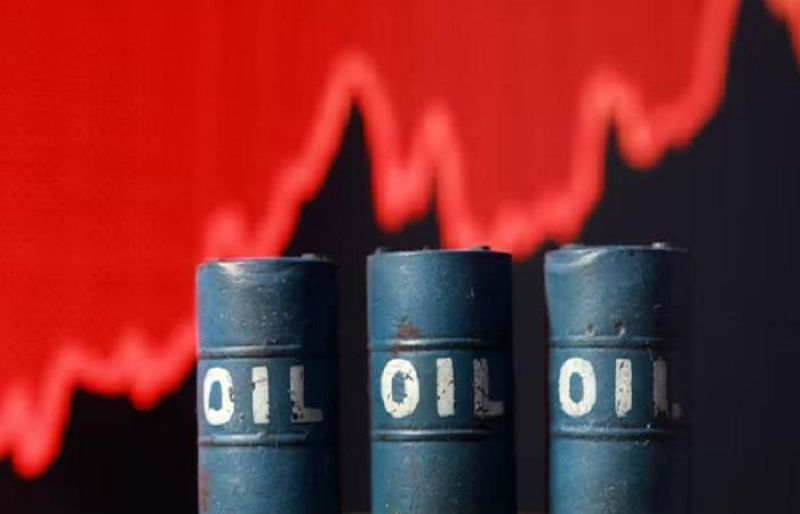
At around 8.25 am, the benchmark US oil contract, West Texas Intermediate (WTI) climbed 4.06% to US$96.73 per barrel.
International oil benchmark Brent North Sea crude rose 3.62% to US$105.63. Both eased back in the following minutes.
Oil prices have soared since Israel and the US attacked Iran on Feb 28, and they have kept inching up due to the uncertainty over whether war will resume.
As the clock ticked for a return to the war that has engulfed the region, US President Donald Trump had said Tuesday he would maintain the truce to allow more time for Pakistani-brokered peace talks.
Iran said it welcomed the efforts by Pakistan but made no other comment on Trump’s announcement.
Wall Street stocks gained ground following President Trump’s unilateral ceasefire extension in the Iran war.
All three major US stock indexes advanced, with tech shares helping to put the Nasdaq out front, while gold advanced and the dollar edged higher.
The S&P 500 and the Nasdaq reached record closing highs.
“Despite the energy shock and headlines that have inundated investors, the macroeconomy, corporate fundamentals, and consumer spending remain strong,” said Bill Merz, head of capital markets research at US Bank Wealth Management in Minneapolis.
“Investors are taking the stance that the Strait of Hormuz will open before too much damage is inflicted on the global economy.”
Iran’s Revolutionary Guards seized two vessels for maritime violations just hours after Trump agreed to extend the ceasefire until negotiations are concluded.
About a fifth of the world’s oil and liquefied natural gas (LNG) supplies normally pass through the strait.
US stocks, initially battered by the war, have since made a full recovery, with the S&P 500 and the Nasdaq having reached all-time closing highs in recent sessions.
But geopolitical uncertainty lingers, and a prolonged period of elevated oil prices remains a threat.
About two-thirds of the S&P 500 companies that have reported quarterly earnings since the beginning of April have voiced concerns about energy prices in their analyst conference calls, according to a Reuters review of transcripts.
“Anytime there’s a global event like the conflict in the Middle East, and it grabs so many headlines and captures attention, it will crop up in earnings commentary,” Merz added. “But we’re not seeing it significantly impact behaviour yet.”
First-quarter earnings season is well underway amid lofty expectations. Analysts currently estimate year-on-year S&P 500 earnings growth of 14.4% for the January-March period, according to the most recent LSEG data.
The Dow Jones Industrial Average rose 341.27 points, or 0.69%, to 49,490.52, the S&P 500 +gained 73.90 points, or 1.05%, to 7,137.91, and the Nasdaq Composite was up 397.60 points, or 1.64%, to 24,657.57.
European shares ended lower for the third straight session as the Middle East strife continued to weigh on markets and investors assessed a raft of corporate earnings.
Dozens of international firms have withdrawn guidance or signalled price hikes since the war began.
MSCI’s gauge of stocks across the globe rose 4.52 points, or 0.42%, to 1,070.98.
The pan-European STOXX 600 index fell 0.35%, while Europe’s broad FTSEurofirst 300 index fell 8.58 points, or 0.35%.
Emerging market stocks fell 9.41 points, or 0.58%, to 1,606.07. MSCI’s broadest index of Asia-Pacific shares outside Japan closed lower by 0.6%, to 822.27, while Japan’s Nikkei .N225 rose 236.69 points, or 0.40%, to 59,585.86.
The dollar rose amid lingering geopolitical worries.
The dollar index, which measures the greenback against a basket of currencies including the yen and the euro, rose 0.26% to 98.63, with the euro down 0.32% at $1.1704.
Against the Japanese yen, the dollar strengthened 0.12% to 159.56.
In cryptocurrencies, Bitcoin gained 4.13% to $78,866.74. Ethereum rose 3.48% to $2,398.37.
US Treasury yields increased, rangebound amid choppy trading.
The yield on benchmark US 10-year notes rose 1.2 basis points to 4.304%, from 4.292% late on Tuesday.
The 30-year bond yield rose 1.1 basis points to 4.9091% from 4.898% late on Tuesday.
The 2-year note yield, which typically moves in step with interest rate expectations for the Federal Reserve, rose 2.1 basis points to 3.8%, from 3.779% late on Tuesday.





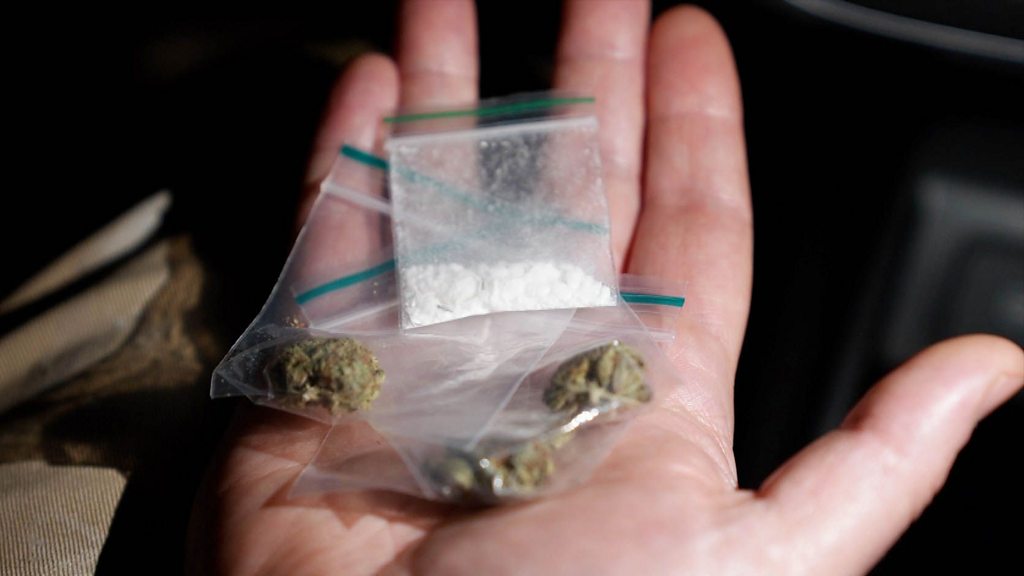
Across the UK, shopfronts are being exploited by criminal gangs pushing illegal drugs, experts say.
Source link

Jenny Lennick’s colourful hair clips are sold across the US and around the world.
Source link

Lululemon store sign in London, March 2, 2026.
Peter Dazeley | Getty Images
Lululemon on Wednesday named Heidi O’Neill as the athleisure company’s new CEO, effective Sept. 8.
The news comes after the company has seen more than a year of disappointing performance and is embroiled in a dramatic proxy battle, with founder Chip Wilson criticizing the business.
Shares of the company sank more than 5% in extended trading.
O’Neill has held multiple roles at Nike, contributing to the sportswear behemoth’s growth. She also held positions at Levi Strauss, Hyatt Hotels and Spotify.
“Heidi is an inspiring leader and proven, consumer-driven brand strategist, with a rare ability to both imagine a new future for a brand and to create the structure and processes to deliver on that vision,” said Marti Morfitt, Lululemon’s executive chair of the board of directors, in a statement. “We selected Heidi because of the breadth of her experience, her demonstrated success delivering breakthrough ideas and initiatives at scale, and her ability to be a knowledgeable change and growth agent.”
O’Neill said in a statement that she plans to focus on building off of the company’s core foundation and unlock growth in global markets. O’Neill will start with a base salary of $1.4 million, according to an 8-K filing.
“I am humbled by the opportunity and energized by what the team is already building,” she said in her statement. “I look forward to joining the company and helping to define and deliver the organization’s next chapter of success.”
Lululemon has been struggling with weak sales and increased competition, as well as mounting costs from tariffs. In its last earnings report, the retailer said it expects tariffs to cost the company $380 million this year.
Wilson, Lululemon’s largest shareholder, has also been placing increased public pressure on the company to make changes to its board of directors. He did not immediately respond to a request to comment on the appointment.
In a statement, GlobalData managing director Neil Saunders said O’Neill has “a very strong pedigree in the activewear and sporting space” and “has an intimate knowledge of how the industry works.”
“There will be some, mostly activist investors, who see O’Neill as something of a safe and traditional choice,” Saunders said. “This argument is partly valid as a lot of cultural change is needed at Lululemon in order to improve performance. However, in our view, O’Neill is her own person who will come with an agenda of change.”
While at Nike, O’Neill played a key role in the company’s doomed direct-to-consumer sales strategy, where the brand pivoted away from wholesale partners in favor of its own website and stores under former CEO John Donahoe. When current CEO Elliott Hill took over as Nike’s next chief executive, he made it a priority to walk back the direct-selling plan.
Prior to leaving Nike, O’Neill also oversaw product and innovation at a time when the brand faced criticism for falling behind on new products and focusing too heavily on the same legacy lifestyle franchises, Dunks, Air Force Ones and Air Jordans. While the franchises briefly led to a surge in sales, fueling Nike’s growth to a $50 billion-plus brand, they ultimately became ubiquitous in the market and viewed as uncool by some consumers.
Now, Hill is still working on unwinding that strategy and clearing inventory from those franchises from the marketplace, which has hit Nike’s margins and led to a decline in sales online.

High street drug dealer sells cannabis to undercover reporter

Clearing Hormuz Strait mines could take six months: report

Mike Vrabel to miss Patriots’ final NFL draft day —here’s why

-

 Fashion7 days ago
France’s LVMH Q1 revenue falls 6%, shows resilience amid Iran war
-

 Entertainment1 week ago
Is Claude down? Here’s why users are seeing errors
-

 Tech1 week ago
The Deepfake Nudes Crisis in Schools Is Much Worse Than You Thought
-

 Sports1 week ago
PSL 11: Peshawar Zalmi win toss, opt to field first against Quetta Gladiators
-

 Tech1 week ago
Human-machine teaming dives underwater
-
 Business1 week ago
Standard Life buys rival in £2b deal to create savings giant
-
 Business1 week ago
BP sees ‘exceptional’ oil trading result as Iran war sends crude costs soaring
-

 Fashion1 week ago
What no one is saying about the 2026 apparel slowdown