

Business
CPEC-II: action, not rhetoric, will deliver | The Express Tribune

ISLAMABAD:
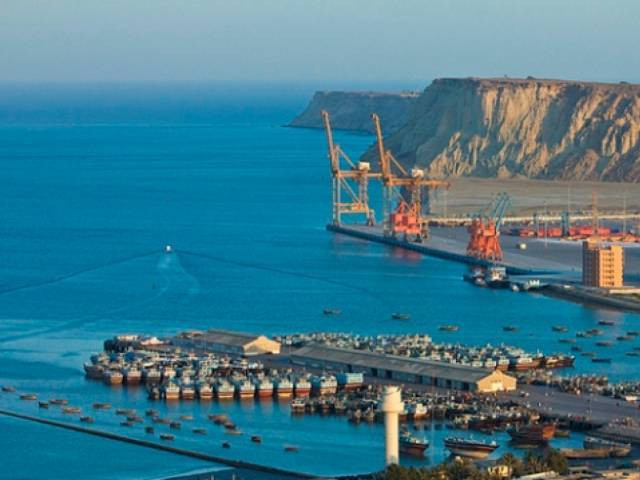
A few days ago, Prime Minister Shehbaz Sharif met with President Xi Jinping, with China-Pakistan Economic Corridor (CPEC) high on the agenda. The leaders agreed that, building on past successes, it was time to give new momentum to CPEC’s implementation.
Both sides decided to accelerate work on the second phase and align CPEC, Pakistan’s economic backbone, with the five corridors and Uraan Pakistan, built around the Five Es – Export, Energy, Equity, Environment, and Education. To guide future actions, an Action Plan was issued after the meeting.
However, before moving to implementation, Pakistan must first “prioritise its priorities.” Based on the Action Plan and related discussions, a few suggestions can guide policymakers and implementers.
The first step is identifying the top priority. While both industry and agriculture are vital, given Pakistan’s current situation, agriculture must come first. It is the most critical sector, deeply linked to all others, and essential for achieving inclusive development.
Agriculture contributes 23.54% to GDP and employs 37% of the labour force. It supplies raw materials to industries such as textiles, food, and leather, and contributes directly to foreign reserves through exports like rice. Yet, it faces serious challenges, including climate change, water scarcity, and low productivity, among others.
Climate change affects water availability and quality, and extreme weather patterns are worsening the situation. Low seed quality and poor inputs reduce productivity and farmer income, deepening poverty in rural areas. This sector, therefore, deserves urgent attention and top priority under CPEC-II.
Collaboration should focus on climate-smart farming, quality seed production, efficient water management, and input manufacturing. The government should create small, effective programmes to attract targeted funding in these areas and speed up the establishment of nine agriculture research centres under CPEC.
Cooperation must balance business-to-business (B2B) corporate farming with government-to-government (G2G) partnerships. Promoting corporate agriculture is necessary, but policies must also protect small farmers, who form the majority.
Around 89-90% of farms are smaller than 12.5 acres. Of these, 1.25 million are less than 1 acre, 2.3 million are under 2.5 acres, and 1.7 million are below 5 acres, together representing 64% of all farms. Poverty levels are highest among them.
Thus, agricultural cooperation should be divided into two categories: growth-focused and development-focused. Growth can be achieved through B2B corporate farming, while development should rely on G2G cooperation. (Further guidance can be found in a concept paper written for the CPEC Authority.) Pakistan must proceed carefully; unchecked corporate farming could prove counterproductive.
Industrial cooperation is another key CPEC pillar that requires careful handling to deliver results. Pakistan should adopt a two-step industrial policy: 1) supply chain inclusion, and 2) joint ventures.
This approach is needed due to the mismatch between Pakistani and Chinese companies. Pakistan’s economy depends heavily on small and medium-sized enterprises (SMEs), most of which cannot immediately engage in joint ventures. However, there are numerous areas where Pakistan can integrate into Chinese supply chains.
For instance, China is now a leading producer of electric vehicles (EVs) and related technologies. Pakistani companies that manufacture quality nuts, bolts, and small parts could be included in these supply chains.
Pakistan can request that China open opportunities for local SMEs to supply components for Chinese EV producers. This would strengthen Pakistan’s SME base, increase foreign reserves, and create jobs. Similar opportunities exist in other sectors as well.
To further strengthen exports, Pakistan must pursue brand development under CPEC-II. The country produces some of the world’s best goods but struggles to build global brands. Pakistan is globally known for high-quality sports goods like FIFA footballs, and for cutlery and surgical instruments.
However, these products often reach international markets through foreign intermediaries, reducing profits and visibility. Many Pakistani sports goods and surgical tools, for instance, are sold in Africa under German labels.
The main reasons are limited financing and technology gaps, which prevent Pakistani firms from competing with established global brands. Combining Pakistani craftsmanship with Chinese capital and technology could produce globally competitive brands, creating jobs and export potential.
In developing joint ventures, Pakistan should leverage its State-Owned Enterprises (SOEs) to address the structural mismatch with Chinese firms. Two options are possible: joint ventures between Pakistani SOEs and Chinese private firms, or between SOEs from both countries.
Ideal Pakistani partners include the Railways, Pakistan International Airlines (PIA), and Steel Mills. These ventures could revive struggling public entities and modernise key industries.
Science and technology are also central to CPEC-II. Pakistan must aim to turn this cooperation into a source of hard power, not merely soft power. That means building the capacity to produce technological products and machinery domestically. Pakistan should focus on developing firms that manufacture ICT equipment and industrial machinery, positioning itself as a regional innovation hub.
To achieve this, Pakistan needs to focus on two priorities. First, create opportunities that enable knowledge generation, the foundation of innovation. Second, build the infrastructure for world-class research and development (R&D), backed by strong financial support.
Pakistan and China can jointly encourage private business groups to invest in R&D. Chinese private companies are now among the world’s largest R&D spenders, offering valuable partnership opportunities. However, all such initiatives must operate strictly on merit.
In conclusion, Pakistan must internalise one lesson from CPEC Phase-I: only performance matters, not promises. Less talk and self-promotion, more work and delivery, should define this phase. Effective policies, detailed work plans, and timely execution will matter far more than rhetoric. Success itself will be the best promotion for all those involved.
THE WRITER IS A POLITICAL ECONOMIST AND VISITING RESEARCH FELLOW AT HEBEI UNIVERSITY, CHINA
Business
Gold, silver price prediction: Will gold head down to Rs 1.40 lakh/10 grams & silver hit Rs 2.20 lakh/kg? – The Times of India

Gold and silver price prediction today: Gold and silver are exhibiting a slightly bearish bias, according to Abhilash Koikkara, Head – Forex & Commodities, Nuvama Professional Clients Group.
MCX Gold Price Outlook
MCX Gold, on the weekly timeframe, has retreated from its recent highs and remained under selling pressure over the past week. From a technical standpoint, prices have faced resistance at a significant trendline, with the daily chart now forming a sequence of lower lows, a classically bearish pattern. A sustained breakout above the trendline, however, could shift sentiment and invite fresh upside. For now, the intermediate trend remains rangebound to negative, reflecting a broader corrective structure, with a firm break below key support potentially accelerating the downside.Looking ahead to the coming week, the region around the weekly low of 140,000 is anticipated to emerge as a pivotal support zone, highlighting its importance from a technical perspective. As the ongoing correction runs its course, prices are expected to test this level making any short-term uptick a potential opportunity for fresh short positions rather than a cause for bullish conviction.Conversely, gold faces a notable resistance wall around the recent peak of 155,500 in the near term. Should prices manage a convincing breakout above this threshold, it would effectively invalidate the current bearish momentum and pave the way for a fresh upside move. A consistent hold above this level, moreover, would offer stronger confirmation that the corrective phase has run its course, and bullish sentiment has reclaimed control.To summarize, gold’s overall bias remains tilted to the downside, supported by a determined negative trend that keeps further losses on the table. The intermediate bearish framework is expected to stay intact so long as prices fail to reclaim the key resistance threshold of 155,500. With momentum indicators reinforcing the bearish case and market sentiment echoing the downside narrative, the metal looks poised to sustain its corrective momentum and press lower in the near term.
MCX Gold Trading Strategy
- CMP: 149,000
- Target: 140,000
- Stoploss: 155,500
MCX Silver Price Outlook
From a weekly standpoint, silver’s price action reflects a sideways to bearish bias, as the silver faces conflict at trendline resistance. The second straight week of negative closes reinforces the case for an intermediate bearish period taking hold. In this setting, we expect traders would be well-served to align their positions with the dominant trend while placing stop-loss levels around the prior weekly highs to effectively manage downside risk.The market opened the week on a weak footing, with prices trading below the 30-day Exponential Moving Average (EMA), a sign that the negative bias remains in force. The bearish outlook is likely to persist as long as prices stay capped under key weekly resistance levels. Immediate support and the near-term target converge around the recent swing lows at 220,000, and a decisive close below this level could further deepen bearish bias. In the interim, any short-term bounce back is expected to be treated as opportunities to sell.To the upside, silver appears poised to challenge the trendline resistance in the area of 255,000 in the coming sessions. If the prices manage a convincing and sustained close above this threshold, it will weaken the ongoing bearish trend, a view currently reinforced by momentum indicators. On balance, the bearish structure is likely to remain dominant as long as 255,000 continues to act as a ceiling, paving the way for additional downside corrections ahead.
MCX Silver Trading Strategy
- CMP: 240,500
- Target: 220,000
- Stoploss: 255,000
(Disclaimer: Recommendations and views on the stock market, other asset classes or personal finance management tips given by experts are their own. These opinions do not represent the views of The Times of India)

The price of Brent crude oil surged past $125 a barrel early Thursday as stalled US–Iran talks raised doubts over the reopening of the Strait of Hormuz and a permanent end to the Iran war.
Brent crude to be delivered in June jumped 6.2 per cent to $125.36 early Wednesday. Brent to be delivered in July rose 3.1 per cent to $113.85.
Before the start of the war in late February, Brent crude was trading around $70 per barrel.
The Iran war, which is in its ninth week, still sees no clear path to an end. The US has continued its blockade of Iranian ports while the Strait of Hormuz, is closed, pushing oil prices higher.
US West Texas Intermediate futures for June were up $2.42, or 2.3 per cent, at $109.30 a barrel, after climbing 7 per cent in the previous session, climbing in eight of nine sessions.
Both benchmarks are on track for their fourth month of gains.
US president Donald Trump is slated to receive a briefing on Thursday on plans for a series of military strikes on Iran in hopes it will return to negotiations on its nuclear programme, according to an Axios report late on Wednesday.
The US and Israel began air strikes on Iran on 28 February and it retaliated by closing off almost all shipping through the Strait of Hormuz, a chokepoint for energy supplies from Middle Eastern producers.
Amid a ceasefire that has paused active combat, the US has imposed a blockade on Iranian ports. Talks to resolve the conflict, which has killed thousands and caused what analysts say is the world’s biggest energy disruption ever, have deadlocked, with the US insisting on discussing Iran’s alleged nuclear weapons programme and Iran demanding some control over the strait and reparations for damage from the war.
“The oil market has moved from over-optimism to the reality of the supply disruption we are seeing in the Persian Gulf,” said ING analysts in a note.
In a sign the conflict and resulting energy supply disruptions are set to continue for longer, Mr Trump spoke on Wednesday with oil companies about how to mitigate the impact of a possible months-long US blockade, a White House official said.
“Prospects for any near-term resolution to the Iran conflict or a reopening of the Strait of Hormuz remain dim,” IG market analyst Tony Sycamore said in a note.
The Opec+ grouping of members of the Organisation of the Petroleum Exporting Countries and its allies is likely to agree a small increase of around 188,000 barrels per day in oil output quotas on Sunday, sources told Reuters.
The meeting comes just after the United Arab Emirates’ withdrawal from Opec, effective 1 May, which is expected to deal a blow to the oil producer group’s ability to control prices. Although the Gulf nation’s exit would allow it to raise production after exports restart, analysts say that is unlikely to affect market fundamentals this year, especially with the Hormuz closure and other production disruptions from the war.”
Gulf countries, including the UAE, will take months to return to pre-war production volumes,” Wood Mackenzie analysts said in a note.
(Additional inputs from Reuters)

Chennai: Indian Overseas Bank’s annual net profit crossed Rs 5,000 crore for the first time, with the public sector lender reporting FY26 profits at Rs 5,209 crore, up 56% from Rs 3,335 crore in FY25, driven by higher income and lower provisions and tax expenses. The bank’s operating profit also crossed Rs 10,000 crore for the first time.


Trützschler to showcase advanced textile tech at ITM 2026 in Istanbul
Gold, silver price prediction: Will gold head down to Rs 1.40 lakh/10 grams & silver hit Rs 2.20 lakh/kg? – The Times of India

US top commander to brief Trump on new military options against Iran, says report

-

 Politics1 week ago
UK’s Starmer seeks to deflect blame over Mandelson appointment
-
 Business1 week ago
Us-India Trade Talks: US–India trade deal: Where do talks stand & what to expect – explained – The Times of India
-

 Fashion1 week ago
Global energy growth slows to 1.3% in 2025: Report
-
 Business1 week ago
UK inflation accelerates after Iran war drives sharp rise in fuel prices
-

 Tech1 week ago
Nation states responsible for ‘nationally significant’ cyber attacks against UK, says NCSC chief | Computer Weekly
-

 Tech1 week ago
Microsoft faces court battle in £2bn Windows Server class action | Computer Weekly
-

 Tech1 week ago
How to Watch the Lyrids Meteor Shower at Its Peak
-

 Sports1 week ago
PSL 11: Hyderabad Kingsmen opt to field after winning toss against Multan Sultans