

Fashion
Luxury stocks’ nascent revival is about to face earnings test

By
Bloomberg
Published
October 14, 2025
The recent rally in the shares of luxury goods makers will be put to the test this earnings season, as valuations are already back at demanding levels.
After a rocky first half of the year, a gauge tracking the sector has jumped 14% over the past two months in a relief rally as damage from the Trump administration’s tariffs prove less severe than feared for exporters. That’s cranking up the pressure on companies to deliver market-pleasing results, even as they battle challenges like China’s uneven economic recovery and the stronger euro.
Earnings and sales growth for luxury companies has been lacking for almost two years amid falling demand from key markets such as China- which for decades had been a key support. Analysts have been cautious about calling a recovery, with data from Deutsche Bank AG showing no substantial acceleration in sales for the sector until the first quarter of 2026, at the earliest, as the industry remains stuck in its post-pandemic slump.
For this season, the sector could see easier year-earlier comparisons as third-quarter numbers begin to roll out- kicking off with LVMH Moët Hennessy Louis Vuitton SE on Tuesday. But the overall picture remains blurry.
“The recent rally does set the bar higher,” said Buenyamin Ak, a research analyst at Flossbach von Storch AG. “I would expect that providing unquantifiable, loose hopes would lead to disappointing price reactions.”
Europe’s flagship sector has grappled with lacklustre demand from the crucial Chinese market. Repeated calls that the sector’s most important source of growth is on the brink of a comeback have failed to prove correct.
Recent Chinese factory activity data showed evidence that sluggishness in the economy persisted through the end of the third quarter. Moreover, the summer ended with two of the weakest months for retail sales this year and the recent Golden Week holiday reflected subdued consumer spending.
To make things worse, the euro has climbed 12% this year against the dollar. That’s a burden on margins for luxury manufacturers, who have their costs based in the common currency but generate most revenue outside of Europe.
For some analysts, these twin external headwinds could provide the nudge companies need to confront problems closer to home.
“Weaker brands blame macroeconomics- tariffs, the China real estate market, geopolitical tensions- when the reality is more down-to-earth,” HSBC Holdings Plc analyst Erwan Rambourg wrote in a note. “Products grew too expensive and there was a lack of innovation/creativity.”
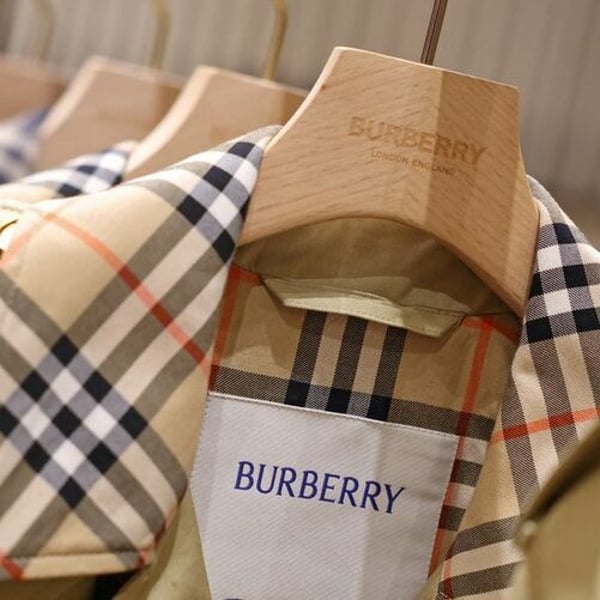
Investors have recently favoured shares in companies with a willingness to tackle internal crises dragging on performance. Take Gucci owner Kering SA and UK fashion brand Burberry Group Plc as examples. Their shares have climbed 27% and 21% this year, respectively.
After years of underperformance, Kering posted its best-ever quarterly stock gain on optimism that new CEO Luca de Meo will revive the Gucci brand. At Burberry, early signs of success from CEO Joshua Schulman on refocusing the brand on its British roots and better promoting its flagship outerwear products have triggered a recovery rally in the shares. However, the revival in sales and profits hasn’t materialised yet.
“There has been some speculative buying in recent weeks, focused on companies with new creative leaders but where we have yet to see any real evidence of an earnings inflection,” said Sam Glover, a fund manager at EFG Asset Management.
After seeing its stock plunging 42% between January and June, LVMH was upgraded to buy last week by analysts at Deutsche Bank and Morgan Stanley. They see the Christian Dior and Louis Vuitton owner as among the potential beneficiaries of less pessimistic sentiment among investors.
LVMH’s management team “has reacted with a number of management and creative designer changes,” said Deutsche Bank’s Adam Cochrane. “With a tough consumer backdrop, an increase in the pace of innovation and exciting customers with new products is paramount.”
But a look at analyst estimates for the company’s profits shows it still trails those of rival Hermes International SCA, while the rebound in the stock since June has sent its valuation back to near 25 times forward earnings.
Over the past month, fashion weeks in Paris and Milan have offered a glimpse of how luxury companies plan to convince shoppers to open their wallets again. Investors, however, may need more time before they share in the enthusiasm elicited by the latest catwalk presentations.
“If you just follow a fashion calendar and sort of a lead time, these collections would most likely come to stores at the very end of the second or third quarter next year,” UBS Group AG analyst Zuzanna Pusz said. “At this stage, that’s the earliest we could see things improve.”









The package establishes a modern framework for both sides, enabling frictionless access to a market of 460 million consumers in key sectors, delivering economic benefits to both parties.
European Commission President Ursula von der Leyen and Swiss President Guy Parmelin yesterday signed a broad package of agreements aimed at deepening and expanding EU-Switzerland ties.
By aligning standards and rules in closely integrated areas, it will provide legal certainty, simplify trade in goods like medical devices and food products, and ease cross-border supply for businesses on both sides.
By aligning standards and rules in closely integrated areas, it will provide legal certainty, simplify trade in goods like medical devices and food products, and ease cross-border supply for businesses on both sides of the border.
Additionally, it will ensure more consistent rules for individuals who live, work or study across the EU-Swiss border. Switzerland will contribute to the development of legislation in the areas covered by the package and will have the opportunity to influence these rules as they are being designed.
“By modernising and deepening our ties across key sectors, from trade and transport to health and energy—we are strengthening legal certainty, fostering innovation and creating new opportunities for our citizens and businesses,” von der Leyen said in a release from the Commission.
The package includes updates to four already existing agreements, which already give Switzerland access to the EU internal market, regarding air transport, land transport, the free movement of persons and mutual recognition of conformity assessment.
New agreements on food safety, electricity, health and Switzerland’s participation in the EU Agency for the Space Programme were signed. A new agreement introduced a permanent and fair financial contribution by Switzerland to economic and social cohesion within the EU.
Apart from a protocol on parliamentary cooperation, the package includes also a joint declaration on the establishment of a high-level dialogue on the broad bilateral package.
Fibre2Fashion News Desk (DS)

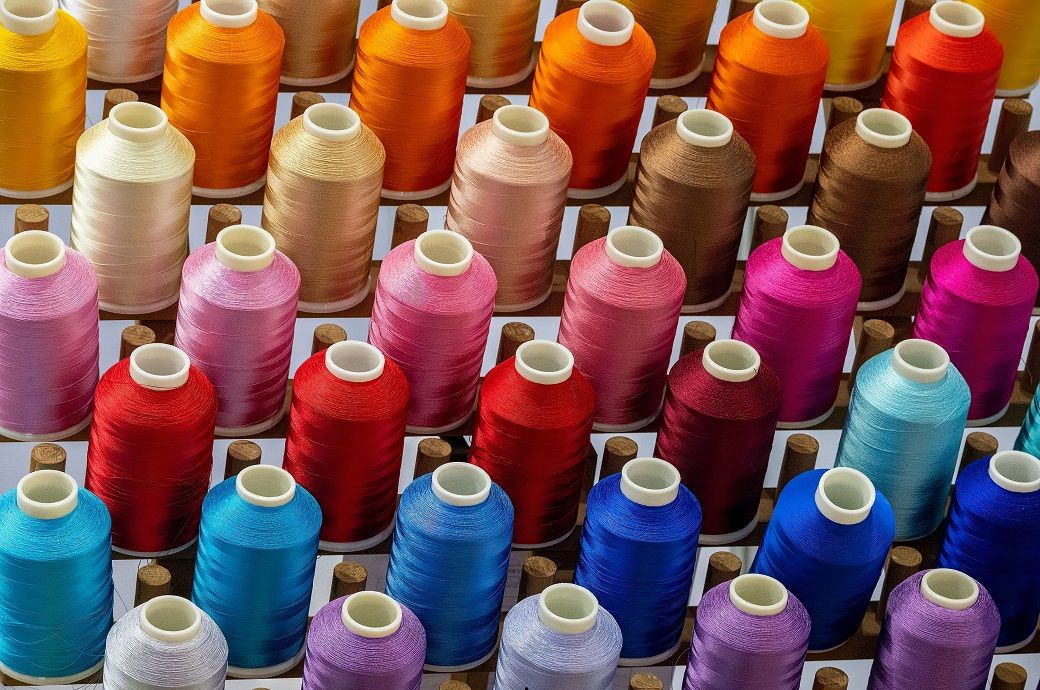
Following earlier increases in purified terephthalic acid (PTA), melt and PSF, Indian producers have now raised PFY prices. POY, FDY and PTY prices have been increased by ****;* per kg across all deniers and lustres with effect from March *, reflecting rapid cost pass-through amid heightened volatility in crude-linked value chains, according to the market sources.
In the previous weekly revision effective February **, ****, PTA was increased by ****;*.** per kg to ****;**.** per kg, while monoethylene glycol (MEG) was retained at ****;**.** per kg. Polyester melt prices were raised by ****;*.** per kg to ****;**.** per kg. Downstream PSF prices were also revised upward by ****;*.** per kg from March *.


These $500 Windows Laptops Show That the MacBook Neo Has Serious Competition

US Senate rejects bid to limit Trump’s Iran war powers

Sydney Leroux teases comeback after missing 2025 NWSL season

India Us Trade Deal: Fresh look at India-US trade deal? May be ‘rebalanced’ if circumstances change, says Piyush Goyal – The Times of India

What are Iran’s ballistic missile capabilities?

Households set for lower energy bills amid price cap shake-up

-
Business6 days ago
India Us Trade Deal: Fresh look at India-US trade deal? May be ‘rebalanced’ if circumstances change, says Piyush Goyal – The Times of India
-
 Politics7 days ago
What are Iran’s ballistic missile capabilities?
-
Business1 week ago
Households set for lower energy bills amid price cap shake-up
-

 Politics7 days ago
US arrests ex-Air Force pilot for ‘training’ Chinese military
-
 Fashion1 week ago
OECD GDP growth slows to 0.3% in Q4 amid mixed trends
-
 Business6 days ago
Attock Cement’s acquisition approved | The Express Tribune
-

 Fashion6 days ago
Policy easing drives Argentina’s garment import surge in 2025
-

 Sports5 days ago
LPGA legend shares her feelings about US women’s Olympic wins: ‘Gets me really emotional’