

Fashion
EU Parl panel clears changes to report sustainability, due diligence


The voting saw 17 votes for the amendment, six against and two abstentions.
The European Parliament’s legal affairs committee has approved its position on a series of changes to sustainability reporting and due diligence requirements for firms.
Fewer companies are required to report on sustainability and comply with due diligence obligations.
No civil liability exists at the EU level, but victims to receive full compensation from companies breaching due diligence obligations.
The European Commission originally proposed cutting the number of companies required to carry out social and environmental reporting by 80 per cent, whereas Parliament members (MEPs) want to reduce the scope further to cover only those companies with over 1,000 employees on an average and a net annual turnover above €450 million. This would also apply to sustainability reporting under taxonomy rules, i.e. a classification of sustainable investments.
For firms no longer covered by the rules, reporting would be voluntary, in line with Commission guidelines. To prevent large companies from shifting their reporting duties onto their smaller business partners, these would not be allowed to request information beyond the voluntary standards.
Sector-specific reporting would also become voluntary and existing sustainability reporting standards would be further simplified with a focus on quantitative information and on reducing the administrative and financial burden, an official release said.
The Commission would also establish a digital portal for companies with free access to templates, guidelines and information on all European Union (EU) reporting requirements complementing the European Single Access Point.
According to MEPs, due diligence rules requiring companies to prevent and limit their adverse impact on human rights and the environment should only apply to large EU businesses with more than 5,000 employees and a net yearly turnover above €1.5 billion, and to foreign businesses with a net turnover in the EU above the same threshold.
Instead of systematically asking for information required for their due diligence assessments from their business partners, MEPs want these companies to adopt a risk-based approach, whereby they only ask for the necessary information where there is a prospect of an adverse impact in their business partners’ activities.
In the case of firms outside the scope of the rules, this would be possible only as a last resort. Companies would still be required to prepare a transition plan aligning their strategy to a sustainable economy and the Paris Agreement.
Businesses should be liable for damages caused by breaches of due diligence obligations under national law, rather than at the EU level. The maximum fine level for offending companies would be at 5 per cent of their global turnover, and the Commission and EU member states should provide guidance for national authorities on these penalties.
Should the Parliament approve the committee mandate at the next plenary session, MEPs and EU governments should start negotiations on the final text of the legislation on 24 October.
The Commission presented its Omnibus I simplification package on 26 February. Besides rules simplifying due diligence requirements and sustainability reporting, it also contained file delaying application of these rules for some companies, which was approved by the European Parliament via urgent procedure in April this year.
Fibre2Fashion News Desk (DS)












Fashion demand in 2026 remains intact but more selective, with consumers spending cautiously and prioritising value, durability and versatility.
Intentional purchasing and promotion sensitivity are reshaping pricing dynamics and margin structures.
Polarised consumer behaviour is pushing brands to rebuild trust, justify full price and align sustainability with longevity.
Source link

Directed and shot by Mert Alas, the new chapter sharpens the focus on denim as the ultimate expression of personal style through icon Jung Kook’s distinctive and influential point of view as he lives in the moment.
Calvin Klein, owned by PVH Corp., has unveiled its Spring 2026 denim campaign fronted by BTS icon Jung Kook.
Directed and photographed by Mert Alas, the cinematic film fuses music, movement and city energy, highlighting 90s Straight, Baggy and reworked Trucker silhouettes.
A special appearance by Rosie Perez amplifies the brand’s signature visual storytelling.
The campaign unfolds across a series of immersive worlds, unified and guided by Jung Kook’s style, attitude and way of living. The high-impact film fuses fashion and entertainment, moving to an instantly recognizable soundtrack and brought to life through the artist’s signature choreography and commanding presence. The interplay of music and movement – complete with a cameo from New York City legend Rosie Perez – captures the impact synonymous with Calvin Klein’s iconic visual storytelling.
Calvin Klein jeans are at the center of the wardrobe with hero silhouettes leading the narrative: the effortless attitude of the 90s Straight; the relaxed and nostalgic proportions of the Baggy; and new interpretations of the iconic Trucker jacket — all reimagined with elevated washes and designed for versatility. Casual logo tees and oversized bombers complete the looks, reinforcing denim as both uniform and statement.
“I love Calvin Klein jeans because they’re designed to be lived in,” said Jung Kook. “The looks I wore for this campaign nod to ‘90s style while feeling completely modern. It was exciting to bring together my love of music, dance and fashion against the energy of the city.”
Note: The headline, insights, and image of this press release may have been refined by the Fibre2Fashion staff; the rest of the content remains unchanged.
Fibre2Fashion News Desk (RM)
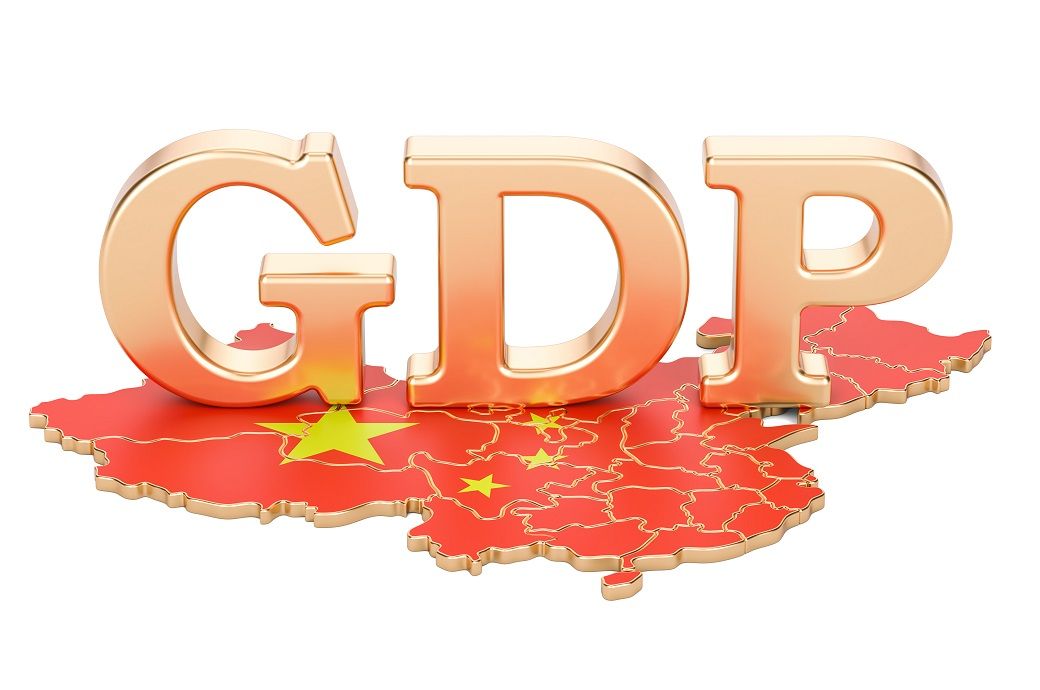
Premier Li Qiang, who delivered the report at the opening of the fourth session of the 14th National People’s Congress in Beijing, said the growth target is “well aligned with the country’s long-range objectives through the year 2035 and is broadly in line with the long-term growth potential of China’s economy, with favorable conditions in place for achieving this target.”
China has set a GDP growth target of 4.5–5 per cent for 2026, alongside goals to stabilise employment, manage inflation, maintain grain output and cut emissions.
The plan also preserves flexibility for structural reforms under the 15th Five-Year Plan, aiming to balance steady economic expansion with long-term, high-quality and sustainable development.
Main development targets for 2026 also include a surveyed urban unemployment rate of around 5.5 per cent, creation of over 12 million new urban jobs, a rise in the consumer price index of around 2 per cent, personal income growth in step with economic growth, a basic equilibrium in the balance of payments, grain output of around 700 million tonnes, and a drop of around 3.8 per cent in carbon dioxide emissions per unit of GDP.
Qiang said the targets took into account the need to leave room for structural adjustments, risk prevention and reform in the opening year of the 15th Five-Year Plan (2026–30) period, to lay a solid foundation for improved performance in the coming years. Government at local level should, taking into account their own conditions, make solid efforts to deliver positive outcomes, he added.
Analysts said the 2026 target reflects a pragmatic approach in recognising structural and cyclical challenges facing the world’s second-largest economy, while pursuing reasonable growth in line with high-quality development.
Fibre2Fashion News Desk (JP)


US mortgage rates rise to 6% after three-week slide as oil-driven bond yields climb – The Times of India

The new economics of fashion: Trust, longevity and price discipline

California school hired a coach, but police say he moonlighted as a pimp

What are Iran’s ballistic missile capabilities?

India Us Trade Deal: Fresh look at India-US trade deal? May be ‘rebalanced’ if circumstances change, says Piyush Goyal – The Times of India

US arrests ex-Air Force pilot for ‘training’ Chinese military

-
 Politics1 week ago
What are Iran’s ballistic missile capabilities?
-
Business6 days ago
India Us Trade Deal: Fresh look at India-US trade deal? May be ‘rebalanced’ if circumstances change, says Piyush Goyal – The Times of India
-
 Politics1 week ago
US arrests ex-Air Force pilot for ‘training’ Chinese military
-
 Business7 days ago
Attock Cement’s acquisition approved | The Express Tribune
-
 Business1 week ago
Households set for lower energy bills amid price cap shake-up
-

 Fashion7 days ago
Policy easing drives Argentina’s garment import surge in 2025
-

 Sports6 days ago
LPGA legend shares her feelings about US women’s Olympic wins: ‘Gets me really emotional’
-
 Fashion7 days ago
Texwin Spinning showcasing premium cotton yarn range at VIATT 2026