

Business
50% US tariffs: Indian refiners look to cut back on Russian crude imports; Trump claims India to stop buying oil from Moscow – The Times of India


India is looking to reduce its Russian oil imports with refiners planning a gradual reduction, according to a Reuters report quoting sources. Russia continues to be India’s largest crude oil supplier. The Donald Trump administration has imposed 50% tariffs on India, 25% of which are for the latter’s crude oil procurement from Russia.On Wednesday, US President Donald Trump claimed that Prime Minister Narendra Modi had given assurance that India would discontinue purchasing oil from Russia.“So I was not happy that India was buying oil, and he (Modi) assured me today that they will not be buying oil from Russia,” Trump informed reporters at a White House gathering on Wednesday.Sources told Reuters that Indian refiners have not received any official directive from the government regarding stopping Russian oil imports.The sources quoted in the report indicated that an immediate halt to Russian oil purchases would be problematic, as transitioning to alternative crude sources would result in increased global oil prices and potentially trigger inflation concerns.During April to September, India’s Russian crude imports averaged 1.75 million barrels per day, representing approximately 36% of total oil imports, down from 40% in the corresponding period last year, according to government statistics.Imports of US crude increased by 6.8% year-on-year to roughly 213,000 bpd, constituting 4.3% of total imports.For the six-month period ending September 2025, Middle Eastern oil’s proportion increased to 45% from 42%, as revealed by the data.Following Trump’s claim, India issued a statement on Thursday emphasising its two primary objectives: maintaining stable energy prices and ensuring supply security.“It has been our consistent priority to safeguard the interests of the Indian consumer in a volatile energy scenario. Our import policies are guided entirely by this objective,” the foreign ministry said in a statement.Indian officials are currently conducting trade negotiations in Washington, whilst the US has increased tariffs on Indian goods by twofold to encourage New Delhi to decrease Russian oil imports. US negotiators have indicated that reducing these purchases would be essential for lowering India’s tariff rate and concluding a trade agreement, the Reuters report said.India and China have emerged as the leading purchasers of Russian seaborne crude exports, benefiting from reduced prices that Russia has had to offer following European buyers’ withdrawal and sanctions imposed by the US and EU after the Russia-Ukraine war that started in February 2022.Meanwhile India has indicated that it is exploring enhanced energy collaboration with the United States.“The current Administration has shown interest in deepening energy cooperation with India. Discussions are ongoing,” said foreign ministry spokesperson Randhir Jaiswal in the statement.







The approval came as Donald Trump is to attend a dinner with billionaire Paramount backers the Ellisons.
Source link
Business
France Ends Airport Transit Visa Requirement for Indian Travellers | Business – The Times of India
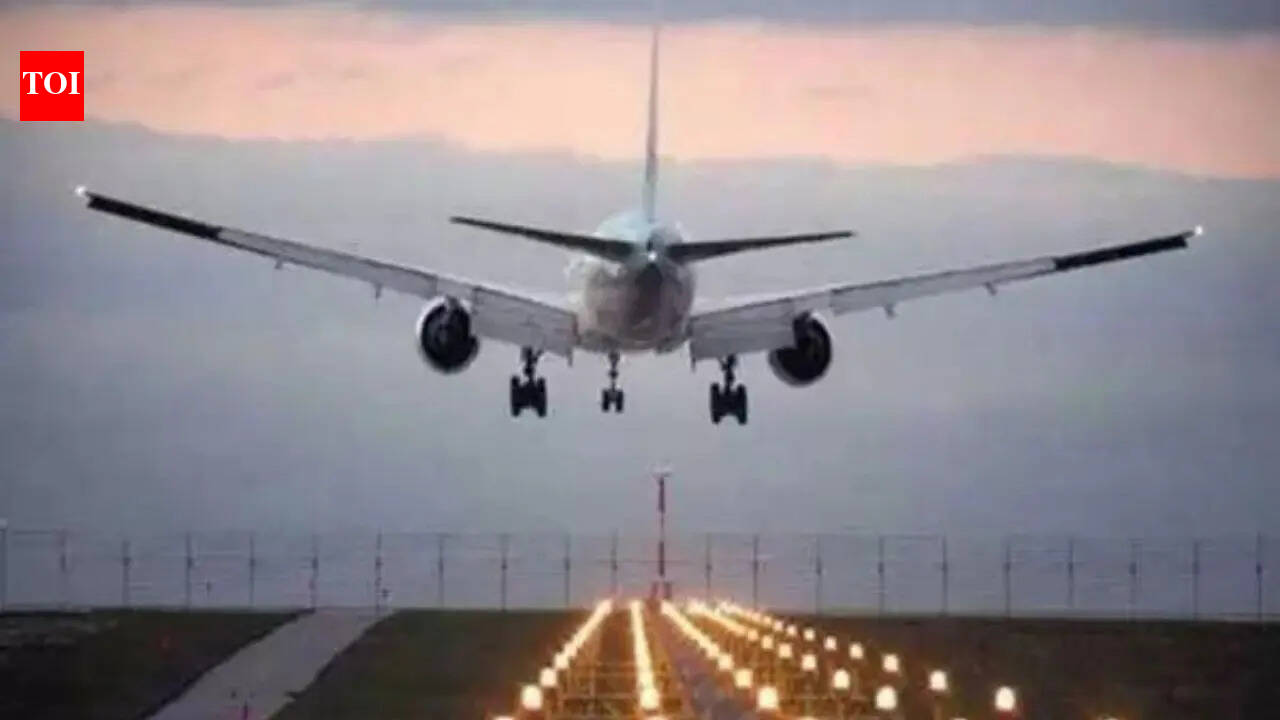
France has lifted the airport transit visa requirement for Indian nationals with effect from April 10, the French Embassy in India announced on Thursday.Indian nationals holding ordinary passports are no longer required to obtain an airport transit visa when passing through the international zone of airports located on French territory during a layover en route to a third country.The change follows a decree amending the 2010 regulations on documents and visas required for the entry of foreigners into French territory. The decree was adopted and published in the French Official Gazette (Journal Officiel) on April 9, 2026.MEA welcomes the moveThe Ministry of External Affairs welcomed the announcement.“We welcome the announcement on the operationalisation of visa-free transit for Indian nationals transiting through French airports,” MEA Spokesperson Randhir Jaiswal said.He recalled that the removal of the transit visa requirement for Indian passport holders was agreed between Prime Minister Narendra Modi and French President Emmanuel Macron during their meeting in Mumbai in February this year.“The government of France has now operationalized this agreement,” Jaiswal added.Who benefitsThe measure applies to Indian nationals transiting through mainland France exclusively by air, remaining in the international airport zone without entering French territory.President Macron had announced during his visit to India in February that measures would be taken to ease travel for Indian nationals via France.
Poll
What do you think is the main advantage of this visa policy change?
The updated procedures have been reflected on the France-Visas platform.

Comcast topped Wall Street’s revenue and earnings estimates for the first quarter on Thursday, lifted by NBC’s sports slate in February and improving broadband customer losses.
The company said it lost 65,000 broadband customers compared with 183,000 losses in the same period last year. Heightened competition from wireless providers like Verizon and T-Mobile has led to quarterly customer losses for Comcast and its cable peers in recent years – which has weighed on these companies’ stocks in particular.
In response, Comcast in the last year has shifted its strategy and introduced more competitive pricing packages in a bid to reduce the broadband losses. The company has also leaned on its mobile business for growth, which added 435,000 new lines during the quarter. In total, Comcast now has 9.7 million mobile customers.
The company also reported 322,000 cable TV customer losses – fewer than the 427,000 in the same period last year.
Revenue for Comcast’s connectivity and platforms unit, which includes its Xfinity-branded broadband, cable TV, and mobile businesses, decreased 2% to $17.32 billion.
The company’s stock climbed as much as 8% in premarket trading.
Here’s how Comcast performed for the period compared with average analyst estimates, according to LSEG:
- Earnings per share: 79 cents adjusted vs. 73 cents expected
- Revenue: $31.46 billion vs. $30.43 billion expected
Comcast’s net income fell nearly 36% to $2.17 billion, or 60 cents per share, compared to $3.38 billion, or 89 cents a share, during the same period last year. Adjusting for one-time items including amortization and investments, Comcast reported earnings per share of $0.79.
Adjusted earnings before interest, taxes, depreciation and amortization were down roughly 17% to $7.93 billion.
Comcast’s overall revenue increased roughly 5% to $31.46 billion for the quarter.
Revenue got a boost from Comcast’s NBCUniversal, which aired a slate of sports – including the Super Bowl, Winter Olympics and NBA All-Star Weekend, during the quarter – that the company coined as “Legendary February.”
The media business, which is made up of NBCUniversal, recorded a nearly 61% increase in revenue to $7.28 billion during the quarter. Excluding the Olympics and Super Bowl – which provided significant boosts to advertising sales – revenue for the unit was up about 13%.
Live sports remains the highest rated programming on traditional TV and streaming, and beckon the most advertising dollars. The Super Bowl, in particular, breaks records annually when it comes to its pricey commercial spots. NBC received an average $8 million per 30-second ad, CNBC reported.
Domestic advertising for the media unit was up 135% to $3.45 billion for the quarter. Excluding the Super Bowl and Winter Olympics, it was up 4.7% to $1.54 billion.
NBC’s sports roster also helped lift streaming service Peacock during the quarter. Peacock subscribers increased 12% year over year to 46 million. Peacock nearly doubled revenue to $2.1 billion compared to the same period last year. The streamer recorded a quarterly loss of $432 million compared to a loss of $215 million in the prior year period.
Adjusted EBITDA for the media segment decreased to a loss of $426 billion due to higher operating expenses related to the costs associated with the Winter Olympics and Super Bowl, as well as the cost of the NBA rights.
NBCUniversal is part of the overall content and experiences segment, which also includes the film studio and theme parks – each of which saw sales climb year-over-year.
Revenue for the film studio was up 21% to $3.43 billion, while Universal theme parks revenue increased 24% to $2.33 billion. The theme parks were boosted by the opening of Epic Universe last May.

Warner Bros shareholders approve Paramount’s $111bn takeover

‘Summer House’ is going to get cancelled? details revealed

UK’s SwitchDye gets investment to scale eco-friendly dyeing

-

 Fashion1 week ago
France’s LVMH Q1 revenue falls 6%, shows resilience amid Iran war
-

 Entertainment1 week ago
Is Claude down? Here’s why users are seeing errors
-

 Sports1 week ago
PSL 11: Peshawar Zalmi win toss, opt to field first against Quetta Gladiators
-

 Tech1 week ago
The Deepfake Nudes Crisis in Schools Is Much Worse Than You Thought
-

 Politics1 week ago
Iran in continuous message exchange with mediator Pakistan after US talks: Report
-
 Business1 week ago
Standard Life buys rival in £2b deal to create savings giant
-

 Tech1 week ago
CYBERUK ’26: UK lagging on legal protections for cyber pros | Computer Weekly
-

 Sports1 week ago
World Cup kit ranking: Which teams will look best in 2026?