

Business
RIL O2C Q2 Results: Revenue Rises 3.2% To Rs 1.60 Lakh Crore, EBITDA Up 21%


Last Updated:
The company’s oil-to-chemicals (O2C) business reported a year-on-year (YoY) increase of 3.2 percent in revenue to Rs 1.60 lakh crore in the Q2FY26

Oil (Representative Image)
Reliance Industries Ltd’s (RIL) oil-to-chemicals (O2C) business reported a year-on-year (YoY) increase of 3.2 percent in revenue to Rs 1.60 lakh crore in the second quarter of the financial year 2025-26, primarily driven by the addition of 236 outlets in the Jio-Bp network.
The segment’s EBITDA (earnings before interest, taxes, depreciation, and amortisation) increased by 20.9 percent YoY to Rs 15,008 crore due to sharp rebound in transportation fuel cracks, favourable polymer margins, the company said.

A team of writers and reporters decodes vast terms of personal finance and making money matters simpler for you. From latest initial public offerings (IPOs) in the market to best investment options, we cover al…Read More
A team of writers and reporters decodes vast terms of personal finance and making money matters simpler for you. From latest initial public offerings (IPOs) in the market to best investment options, we cover al… Read More
October 17, 2025, 20:06 IST
Read More
Business
India reviews US Section 301 investigations on partners; decision to follow detailed assessment: Report – The Times of India
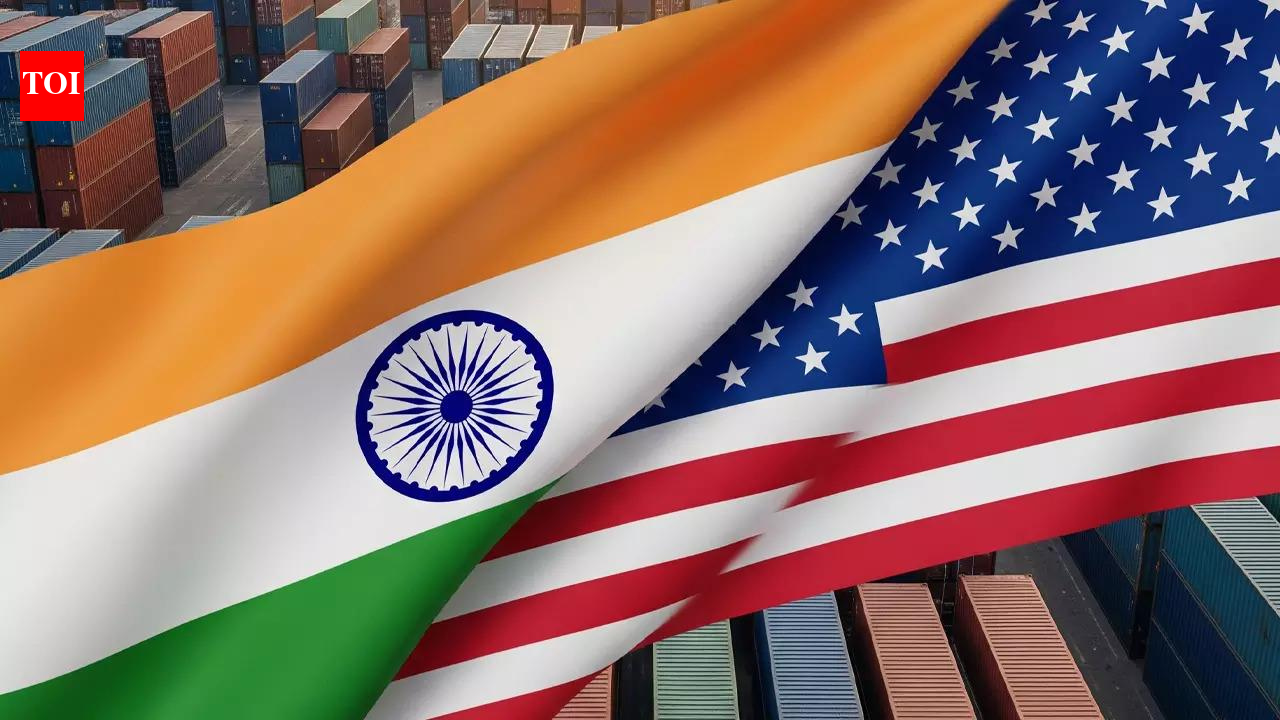
India is examining the United States’ move to initiate Section 301 investigations against a group of 16 trading partners and will take an appropriate position after analysing the legal and economic aspects, PTI reported citing an official on Friday.On March 11, the Office of the United States Trade Representative (USTR) announced probes into countries including India, China, Japan and the European Union to address practices such as forced labour and manufacturing overcapacity that Washington believes are hurting its domestic industry.The investigation spans multiple sectors such as steel, aluminium, automobiles, batteries, electronics, chemicals, machinery, semiconductors and solar modules.The countries and regions under review include China, Singapore, Switzerland, Norway, Indonesia, Malaysia, Cambodia, Thailand, South Korea, Vietnam, Taiwan, Bangladesh, Mexico, Japan, India and the 27-member EU bloc.“We are studying what is there in their note. We are looking at it from all perspectives. Both from the legal perspective as well as the economic angle which is being mentioned there. India is evaluating the documents,” the official said.The development comes after the US Supreme Court ruled against the tariffs imposed earlier during President Donald Trump’s tenure. Following the verdict, Trump had said Washington had other options to reintroduce tariff pressure.In line with that approach, the United States has imposed a 10 per cent tariff on all countries for a period of 150 days from February 24.The Section 301 process will assess whether measures such as industrial subsidies, expansion of state-backed manufacturing, operations of state-owned enterprises, barriers to market access, currency practices or weak domestic demand have contributed to excess global manufacturing capacity affecting US trade.If such practices are established, Washington could consider countermeasures including higher tariffs, quantitative restrictions or other trade curbs.Public consultations on the investigations will begin on March 17, when dockets open for submissions from companies, industry associations and governments.Sources indicated that the probe has a sharper focus on China due to concerns around forced labour and sector-specific overcapacity that could influence global trade flows.

Last Updated:
IndiGo cited a sharp rise in fuel prices caused by the ongoing conflict in West Asia for the implementation of an additional fuel charge on flights.


IndiGo has introduced an additional fuel surcharge for flights. (Representational Image)
The airline said the International Air Transport Association’s (IATA) Jet Fuel Monitor has indicated an increase of more than 85% in fuel prices for the region due to the conflict. “This sudden and steep increase will have a material impact on all airlines’ costs and networks, including IndiGo’s,” it said.
“While offsetting the entire impact of this fuel price surge requires a very substantial adjustment to fares, IndiGo has introduced a relatively smaller amount as a Fuel Charge keeping in mind the consequential burden on customers,” the airline said in the statement.
This came after Air India announced a phased expansion of fuel surcharges across its domestic and international network after a sharp rise in aviation turbine fuel (ATF) prices driven by the ongoing crisis in West Asia.
Changes In Fuel Prices
From March 14, overall prices for all new bookings on IndiGo flights will carry an additional fuel charge per sector, which are as follows:
- Within Domestic India – Rs 425
- Indian Subcontinent – Rs 425
- Middle East – Rs 900
- South East Asia and China – Rs 1,800
- Africa and West Asia – Rs 1,800
- Europe – Rs 2,300
“IndiGo regrets the inconvenience resulting from this additional charge and reiterates that the measure has been driven by a sudden and substantial change in the operating environment. IndiGo will continue to monitor the situation and make relevant adjustments as and when appropriate,” the airline said.
This came as oil prices went up over $100 per barrel after the US-Israeli war against Iran, which resulted in a virtual closure of the Strait of Hormuz that carries 20% of global crude oil and gas supplies. Although oil prices dipped on Friday after an Indian tanker sailed through the strait, they were on track for more disruptions due to the war.
Meanwhile, the US issued a 30-day license for countries to buy Russian oil and petroleum products stranded at sea. US Treasury Secretary Scott Bessent said it was a step to stabilise global energy markets roiled by the ongoing conflict.
March 13, 2026, 20:07 IST
Read More
Business
Energy shock jolts Asian equities as AI-led rally leaves South Korea most exposed – The Times of India
AI-driven surge left valuations stretched
Moody’s said the turbulence followed a strong rally in January and February led by technology-heavy markets such as South Korea and Taiwan, fuelled by optimism around artificial intelligence.Gains were concentrated in sectors linked to semiconductor demand, particularly memory chips where South Korean firms hold dominant global positions. By early 2026, the benchmark index had “nearly tripled relative to early 2025”, leaving valuations stretched and markets vulnerable to sudden risk-off moves.The geopolitical shock proved to be “exactly such a trigger”, the report said, as investors reassessed elevated valuations amid rising macroeconomic uncertainty.
Energy dependence amplifies downside risks
Developed Asian markets remain particularly sensitive to commodity price shocks because of their reliance on imported energy. Moody’s said economies such as South Korea, Japan and Taiwan import most of the oil and gas they consume, making them vulnerable to inflation risks and potential policy tightening if energy costs remain elevated.Foreign investors, aware of this sensitivity, sold South Korean equities, adding downward pressure. The report observed that “with valuations inflated by the AI-driven rally, South Korean equities recorded some of the steepest declines across the region”.Elsewhere in Asia-Pacific, equity declines were more contained. China and India saw pullbacks broadly in line with normal market swings, supported by structural buffers such as lower foreign investor participation and, in China’s case, capital controls.
Volatility set to stay elevated
Moody’s expects market volatility to remain high in the near term. Realised volatility across most Asia-Pacific markets has moved close to the upper end of historical ranges, comparable to levels seen during earlier episodes of global trade tensions.Under its baseline scenario, the report assumes the Middle East conflict will be limited in duration and commodity flows will eventually normalise, allowing oil and gas prices to fall back toward pre-conflict levels.However, it warned of downside risks if tensions persist. Sustained high energy prices could inflict greater economic damage across the region and trigger sharper equity sell-offs, particularly in markets where AI-driven optimism had already pushed valuations to elevated levels.


Carnival Cruise Line cancels 11 cruises amid mounting labour scandal, worker exploitation allegations

Wrexham duo sends TV commentary warning: ‘No idea how this will go’

Italy’s Prada Group revenue rises 9% to $6.64 bn in 2025

-
 Politics6 days ago
India let Iran warship dock the day US sank another off Sri Lanka, say officials
-

 Sports7 days ago
Pakistan set for FIH Pro League debut | The Express Tribune
-
 Business6 days ago
Restaurant group changes name after bid to buys pubs across the UK
-

 Entertainment6 days ago
Harry Styles kicks off new era with ‘One Night Only’ comeback show
-

 Sports7 days ago
Winners and losers of the 2026 NHL trade deadline
-
 Business7 days ago
Home heating oil: ‘Most of my pension has gone on home heating oil’
-

 Tech1 week ago
Google’s Pixel 10a May Not Be Exciting, but It’s Still an Unbeatable Value
-

 Entertainment7 days ago
Kanye ‘Ye’ West trips during trial: ‘Is he asleep?’