

Tech
John Solly Is the DOGE Operative Accused of Planning to Take Social Security Data to His New Job

John Solly, a software engineer and former member of the so-called Department of Government Efficiency (DOGE), is the DOGE operative reportedly accused in a whistleblower complaint of telling colleagues that he stored sensitive Social Security Administration (SSA) data on a thumb drive and wanted to share the information with his new employer, multiple sources tell WIRED.
Since October, according to a copy of his résumé, Solly has worked as the chief technology officer for the health IT division of a government contractor called Leidos, which has already received millions in SSA contracts and could receive up to $1.5 billion in contracts with SSA based on a five-year deal it signed in 2023. Solly’s personal website and LinkedIn have been taken offline as of this week.
Responding to a request for comment, Solly, through his legal counsel, denied engaging in any wrongdoing. A spokesperson for Leidos also said the company found no evidence supporting the whistleblower’s claims against Solly.
Solly was one of 12 DOGE team members at SSA, where, according to the résumé on his personal website, he supported “other DOGE engineers on initiatives including Digital SSN, Death Master File cleanup,” and “SSN verification API (EDEN 2.0).” The “death master file” is an SSA database containing millions of Social Security records of deceased people and is maintained so that their identities can’t be used for fraud. An API, or application programming interface, allows different programs to talk to each other, including pulling data and information from each other. In this case, it could allow Social Security data to be accessed by agencies and institutions outside of SSA.
The allegation was revealed in a complaint filed to SSA’s internal watchdog first reported earlier this week by The Washington Post, which did not name Solly or Leidos. According to the Post, the complaint was filed with the SSA’s Office of the Inspector General earlier this year and alleges that the former DOGE employee told coworkers he took copies of the SSA’s Numerical Identification System, or NUMIDENT, as well as the “death master file.” NUMIDENT is a master SSA database containing all information included in a Social Security number application, including full names, birth dates, race, and more personally identifiable information.
In the complaint, according to the Post, a whistleblower alleges that the former DOGE employee sought help transferring a set of data from a thumb drive to a personal computer so he could “sanitize” it before uploading it for use at a private-sector company. The former DOGE employee allegedly said that he expected to receive a presidential pardon if his actions were unlawful, the complaint reportedly stated.
Solly “did not share, access, or view any personally identifiable information (PII) maintained by SSA, including SSA’s Death Master File (DMF) and Numerical Identification System (Numident). The allegations made by a supposedly anonymous source are patently false and slanderous. Mr. Solly will take all appropriate steps to clear his good name and stellar reputation,” says Seth Waxman, who is representing Solly. “He is certain that any fair review of the facts and circumstances surrounding these spurious allegations will fully exonerate him.”
Leidos is a major contractor for SSA. Between 2010 and 2018, the company brought in millions of dollars in SSA IT contracts. In 2018, Leidos was awarded contracts potentially worth up to $639 million for IT support services and processing disability claims. In 2023, the company announced that it had been awarded an estimated $1.5 billion IT contract with the agency. As part of DOGE’s blitz into the US government in early 2025, Leidos, like many government contractors, saw some of its contracts cut.







A jury was selected on Monday during the first day of trial for Musk v. Altman in a federal court in Oakland, California. Some of the jurors that were ultimately selected voiced concerns over Musk himself, as well as the AI technology at the core of the case, but assured the court they would put these concerns aside for the trial. The kick off also catalyzed an array of shenanigans outside the courtroom.
OpenAI CEO Sam Altman and president Greg Brockman were spotted in the security line inside the courthouse this morning, but Elon Musk was nowhere to be found. A few dozen journalists crammed into an overflow room to listen to an audio stream of the proceedings.
The goal today was to select nine jurors who could be fair and impartial in this case—an especially difficult challenge considering the main characters are some of the most high-profile tech executives in the world. Several potential jurors said they had negative opinions about Musk when questioned by Judge Yvonne Gonzalez Rogers and attorneys. But that didn’t necessarily disqualify them; only one juror was ultimately excused on the basis of their strong negative opinions regarding Musk.
“The reality is that many people don’t like him,” Gonzalez Rogers told the courtroom. She added that she believed Americans with negative feelings about Musk could still have integrity for the judicial process and decide the case fairly. The jury will help establish the core facts regarding whether Sam Altman and other defendants improperly steered OpenAI’s nonprofit venture away from its original mission, potentially violating the law in the process. But their verdict will be advisory—Gonzalez Rogers will have the final call.
The nine jurors that were ultimately selected represent quite a diverse group, including a painter, a former Lockheed Martin employee, and a psychiatrist. Some of them said they had negative opinions about artificial intelligence technology more broadly. In the end, however, all of the people selected assured the court that their outside opinions about Musk and AI shouldn’t interfere with their ability to determine the facts of the case.
OpenAI’s attorney William Savitt said at a press briefing afterward that he was satisfied with the jury the court settled on.
“Mr. Altman, Mr. Brockman, and OpenAI are looking forward to presenting their case to that jury. They’re confident in their position and are looking forward to the facts being known,” Savitt told reporters. “The hurdle we think we need to get over is just to present the truth here. We’ve got a story about what happened that is consistent with the facts, it’s consistent with the documents, and we just want the jury to see that.”
Musk is already trying to win his case in the court of public opinion. On Monday morning, the billionaire used his social media platform X to boost a recent New Yorker investigation into Altman’s alleged deceptive business conduct. The story is weeks old, and the fact that Musk promoted it on the first day of the trial is no coincidence. Earlier this morning, OpenAI’s official newsroom account published a post on X calling Musk’s lawsuit an “attempt to undermine our work to ensure that artificial general intelligence benefits all of humanity.” Meanwhile, demonstrators were outside the court protesting the AI race altogether and calling for a pause on further development.
On Tuesday, lawyers for OpenAI and Elon Musk will deliver opening statements, and the first witness in the case will be called to the stand.
This is an edition of Maxwell Zeff’s Model Behavior newsletter. Read previous newsletters here.

In a time when almost everything is getting more expensive, this deal on the M5 MacBook Air has me hopeful about how laptop pricing will play out the rest of the year. The M5 MacBook Air has dropped back down to $949, which is $150 off its retail price. It’s only been at this price one other time since the product launched in early March and has more consistently sold for $1,049. As someone who’s reviewed every available MacBook and their strongest competitors, I can unequivocally say that this MacBook Air is one of the very best laptop deals right now.
Take the Surface Laptop 7th Edition, for example, which has been one of my favorite alternatives to the MacBook Air through all of 2025. It had been at competitive prices with the M4 MacBook Air all along, with both laptops sometimes dropping to as low as $799 during sales events like Prime Day throughout the year. But now, the Surface Laptop has gotten an official price hike due to the RAM shortage and is currently sitting at $1,200. It’s still a laptop I like quite a lot, but at $350 more than a similarly configured M5 MacBook Air, it’s very difficult to recommend.
Or consider the MacBook Neo, Apple’s new budget laptop that also launched in March. While it’s much cheaper overall, it’s only ever been sold for $10 off its full price. At this reduced price for the M5 MacBook Air of $949, that leaves only a dangerously small $260 gap between the Neo and the Air. It’s almost embarrassing how much better the Air is by comparison—in every way imaginable. If you’re curious how these two laptops stack up, I’ve done a comprehensive comparison between them that’s worth checking out. But to put it simply, despite all the excitement (and controversy) around the much cheaper MacBook Neo, the MacBook Air still has the most price flexibility in terms of deals.
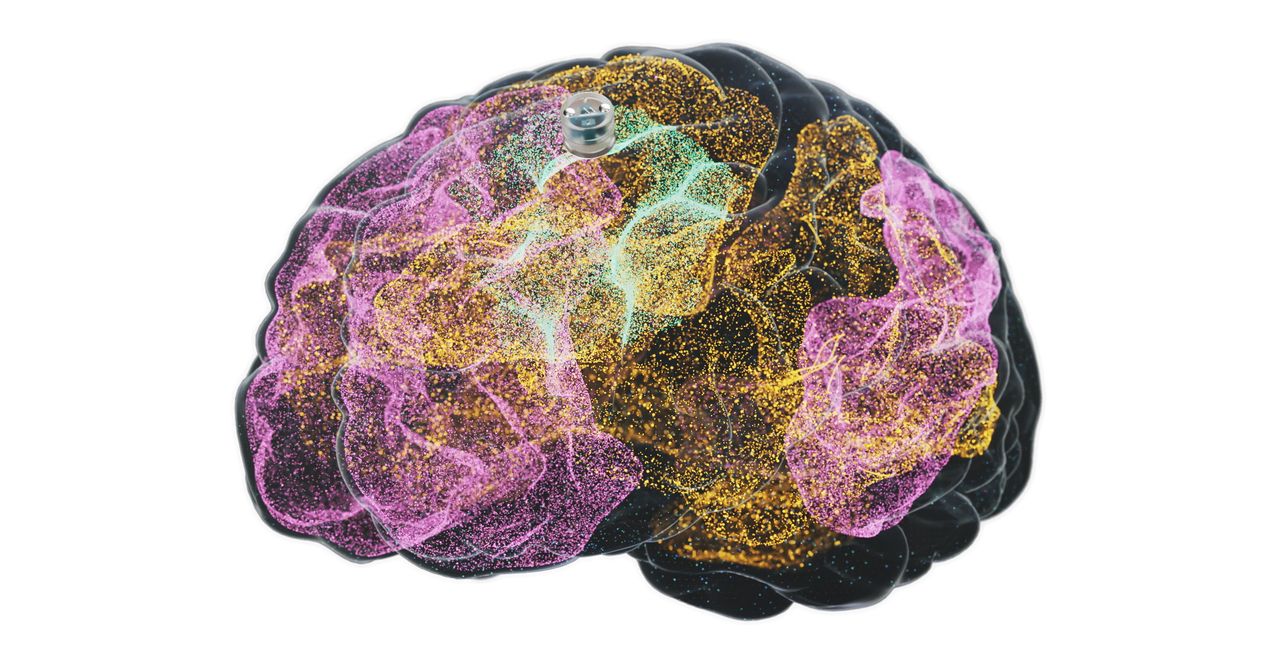
The latest brain-computer interface could help people recover from severe depression. Motif Neurotech announced Monday that the US Food and Drug Administration has approved a human study to trial the company’s blueberry-sized brain implant that sits in the skull and delivers electrical stimulation to treat depression.
The Houston-based startup, founded in 2022, is part of a budding industry pursuing technology to read and interpret brain signals. While other companies exploring similar technology, like Elon Musk’s Neuralink, Paradromics, and Synchron, are developing devices to enable paralyzed people to communicate and use computers, Motif is aiming to ease depression in people who have not benefited from medication.
The company’s device is implanted in the skull just above the dura, the brain’s protective membrane. It targets the central executive network, a part of the brain that is responsible for high-level cognitive functions and is underactive in major depressive disorder. The implant emits specific patterns of stimulation to turn “on” this network.
Motif’s device would allow patients to receive therapeutic brain stimulation at home. “Through frequent electrical stimulation, we think we can drive that neuroplasticity that creates stronger connectivity within the central executive network for patients with depression, so that they can get out of bed in the morning, call their friends, go to the gym,” says Jacob Robinson, Motif’s cofounder and CEO.
Courtesy of Motif
Electrical stimulation has been used for decades to treat depression, and Motif’s approach is just the latest iteration. Electroconvulsive or “shock” therapy began in the 1930s and is still used today in cases where patients don’t benefit from antidepressants. Deep brain stimulation, which involves surgically implanting electrodes into the brain, is occasionally used experimentally but is not FDA approved. A much milder form of stimulation known as transcranial magnetic stimulation, or TMS, was approved in 2008. While it can be highly effective, it typically requires a lengthy treatment regimen of five treatments a week for six weeks.
A study from 2021 found that during a 12-month period in the United States, nearly 9 million adults were undergoing treatment for major depressive disorder, and of those, almost 3 million were considered to have treatment-resistant depression, when symptoms do not improve after at least two, and often more, antidepressant medications.
Motif’s device can be implanted in a 20-minute outpatient procedure without the need for brain surgery. It’s powered by wireless magnetoelectric technology that Robinson developed while at Rice University and is charged with a baseball cap that patients will wear when receiving the stimulation.


World Cup FAQ: How Are Penalties Awarded And What Are The Rules?

Unicef warns Afghanistan could lose up to 25,000 female health workers, teachers

Oil prices edge higher as Trump weighs Iran’s latest proposal to open Hormuz

-

 Sports1 week ago
NCAA men’s gymnastics championship: All-time winners list
-

 Sports1 week ago
WWE WrestleMania 42 Night 2: Live match results and analysis
-

 Fashion1 week ago
UK’s Sosandar returns to profitability amid robust FY26 performance
-

 Politics7 days ago
UK’s Starmer seeks to deflect blame over Mandelson appointment
-

 Entertainment1 week ago
Lee Anderson, Zarah Sultana kicked out of UK Parliament for calling PM ‘liar’
-
 Business1 week ago
How Trump’s psychedelics executive order could unlock stalled cannabis reform
-

 Sports1 week ago
Quetta Gladiators opt to bowl after winning toss against Peshawar Zalmi in PSL 11 clash
-
 Business1 week ago
No fuel shortage: Govt assures 100% domestic LPG, PNG, CNG supply amid Hormuz energy crunch – The Times of India