

Business
Millions stung by scams with online shopping the top trap – Citizens Advice


More than seven million UK adults have been hit by a scam in the past year, with 20% of them significantly affected by the financial loss, Citizens Advice has found.
Another seven million adults knew of at least one other person who had been deceived by a scam, a survey for the charity suggests.
More than a quarter of those personally scammed were targeted while online shopping (26%), most commonly with fake websites and counterfeit or non-existent goods.
The findings prompted Citizens Advice to urge consumers to be cautious when taking advantage of shopping deals ahead of Black Friday and Christmas.
Of the 20% of those caught out by a scam who were significantly impacted by the financial loss they suffered, 12% said they fell into debt or had to borrow money, and 10% said they had to use emergency savings.
Some 20% were unable to carry out their work or caring responsibilities as a result of being scammed.
Almost a quarter (22%) transferred money after being pressured or convinced to, and 42% were contacted through social media.
Citizens Advice said those it had supported with online shopping scams in the past year included consumers who had forked out “hundreds of pounds” for items such as clothes, mobile phones and furniture, only to receive products that were counterfeit, not as advertised, unsafe – or nothing at all.
Many of those scammed reported that the company they bought from either took more money from their bank account, did not respond, or disappeared online altogether.
Other common scams included investment fraud (18%), such as “get rich quick” and cryptocurrency schemes, as well as fake loans.
Some 16% of those scammed fell for a friend or family member tricking them into believing they needed money urgently.
Another 14% were scammed into taking out a new mobile contract or paying for a new handset.
One woman helped by Citizens Advice, an 84-year-old from north-east England, was persuaded to pay around £40,000 in cash to scammers claiming to be from her bank’s fraud department.
She used her life savings, pension money and was pressured into borrowing from a friend.
Part of the cash came from Mary being duped into taking out a five year, monthly-repayable loan for £30,000.
The ordeal left her traumatised and she has since received treatment for depression from her GP.
She said: “The scammers said my identity had been stolen by internal bank staff and the issue had to be dealt with in absolute secrecy. It was pressure right from the beginning. They don’t give you time to think.
“Straight away I had to go to the bank, even though the nearest branch is 30 miles away. I had to send the cash in packets of thousands of pounds to four different addresses, they gave me explicit details on how to pack it up.
“They caught me at the most vulnerable I’d been for a long time. I thought I was doing my bank a favour by trying to unearth a mole in their staff. There was always this promise I would get the money back but the phone calls started easing off and of course the money never came.”
Dame Clare Moriarty, chief executive of Citizens Advice, said: “Anyone can be scammed and the impact can be devastating, leaving people not only out of pocket but in some cases unable to go about their daily lives.
“It’s important to be alert. If you’re not sure about something, get advice. If you think someone might be trying to scam you, act straight away.”
Kate Dearden, minister for workers rights and consumer protections, said: “Too many of us know the devastating consequences of scams. As part of our Plan for Change, we have taken decisive action to improve transparency, including cracking down on subscription traps, and banning fake reviews and hidden fees once and for all.”
National Trading Standards chairman Lord Michael Bichard said: “We urge anyone who has been targeted by a scam to report it, however large or small the financial loss.
“By coming forward, people can receive the support they need and their information will be vital in helping to stop these criminals in their tracks.”
Citizens Advice warned consumers to be alert for scams if:
– Someone you do not know contacts you unexpectedly, or you are asked to transfer money quickly– You are being asked to share personal or security information like passwords, pins or codes– You suspect you are not dealing with a real company – for example there is no postal address– You have been asked to pay in an unusual way – paying by debit or credit card gives you extra protection if things go wrong– The golden rule is if something seems too good to be true or does not feel right it might be a scam, so take a moment and get advice
Citizens Advice offers advice online and a consumer service helpline on 0808 223 1133.
Scams or suspected scams should be reported to Action Fraud.
Savanta surveyed 2,222 UK adults between September 5-7.

new video loaded: Who’s Getting a Tariff Refund?

By Tony Romm, Nour Idriss, Stephanie Swart, Whitney Shefte and Paul Abowd
April 24, 2026
Business
Hair oil, ACs, soaps become costlier: How FMCG companies are dealing with Middle East supply blow – The Times of India

Consumer goods companies in India are facing a sharp rise in input costs due to the ongoing war in the Middle East. Surging raw material prices are forcing firms to track costs on a near-daily basis, review pricing frequently, and focus on short-term decisions instead of long-term planning.As firms are struggling with volatile input costs, company executives have told ET that the sudden spike in inflation has made it harder to manage business, while also raising concerns that higher prices could hurt consumer demand. This comes at a time when consumption had started improving after the government reduced goods and services tax rates on several products last September.Havells India chief executive officer Anil Rai Gupta was cited by the financial agency as saying that the company is taking a cautious approach and reviewing the situation month by month. “I have not seen this kind of price escalation in the recent past or in recent memory. Usually, inflation happens, but it is neither so steep nor spread across all product categories… consumer offtake can get affected if the price hike is too sharp.” Bajaj Consumer Care managing director Naveen Pandey said the company is closely tracking input costs and taking decisions almost daily. Speaking during the company’s earnings call last week, he said costs across the business have gone up between 20% and 60%. He added that the war has created “extreme volatility” in the prices of light liquid paraffin and packaging materials. At the same time, prices of mustard and copra have not fallen as expected and are still at pre-war levels. The company is working on cutting costs across its operations.Industry executives said the war has pushed up commodity prices and crude-linked products, increased freight costs, and made imports more expensive due to the fall in rupee. They added that even after a ceasefire, prices have not come down, and uncertainty remains over whether the conflict could start again.In the past month, companies have already raised prices in several categories, including air-conditioners, refrigerators, soaps, detergents, hair oil, apparel, decorative paints and footwear. Some companies have also reduced pack sizes to deal with higher costs. More price hikes are expected by the end of this month.Parle Products vice president Mayank Shah said the pressure on input costs is very high and the uncertainty is “killing”.Retailers are also seeing more careful spending. Trent Ltd, which runs Westside and Zudio stores, said in an investor presentation that while demand was steady at the start of the January–March quarter, the current situation is affecting consumer behaviour.“Consumers are spending with caution, resulting in moderation of discretionary spending on the back of continuing macro uncertainties and potential increase in cost of living. Structurally the demand levels and the underlying market opportunities remain strong. However, the duration and intensity of disruptions in the Middle East along with its second order effect on supply chain, commodity prices and inflation in general has potential implications for near term demand,” the company said.AWL Agri Business executive deputy chairman Angshu Mallick said the company has already increased edible oil prices by Rs 7–10 per kg to pass on higher freight costs. “Being a staples company, we hike or reduce prices immediately. As we are in basic necessities, the volume impact is usually lower,” he said.Meanwhile, the Middle East conflict is inching closer towards the two month mark. The conflict began back on February 28, when the US and Israel launched joint strikes on Iran. In retaliation, Tehran choked the crucial Strait of Hormuz, a pipeline that carries 20% of global energy supplies, straining flow across the globe.
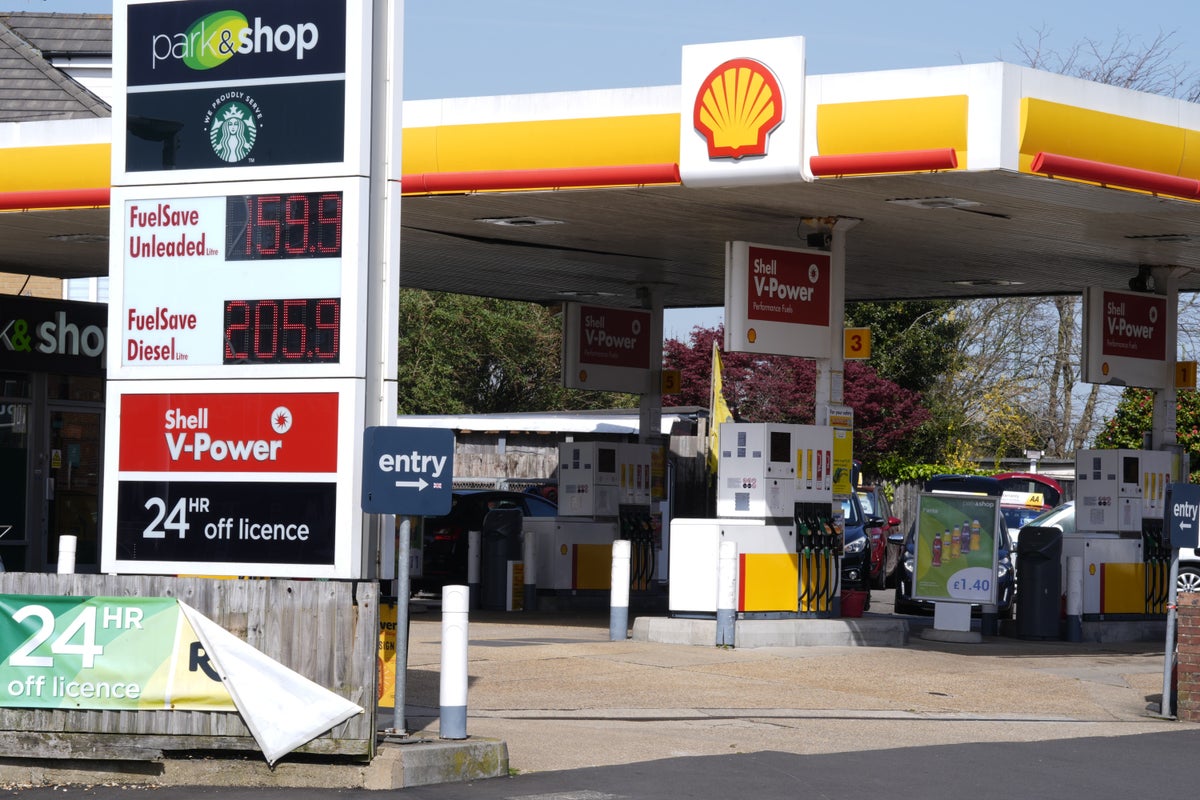
UK retail sales returned to growth last month as they were pushed higher by motorists stocking up on fuel as prices shot higher because of the Iran war, according to official figures.
The Office for National Statistics (ONS) said the total volume of retail sales, which measures the quantity bought, rose by 0.7% in March.
It compared with a 0.6% fall in February, which was revised slightly lower.
The latest reading was also stronger than expected, with economists having predicted a 0.1% dip for the month.
Statisticians said March’s increase was particularly driven by a spike in demand for fuel, which saw sales volumes jump by 6.1% for the month, the highest level since April 2021.
They indicated that this was especially linked to a short period, of less than a week, of particularly elevated sales as unfolding geopolitical events in the Middle East caused a significant rise in prices at the pump.
The value of sales, the amount of money spent, for fuel was up 11.6% amid the jump in petrol and diesel prices.
Recent data from the RAC shows that petrol prices have risen by 18.5% to 157.34 pence per litre, as recorded on Wednesday.
Meanwhile, diesel is up 33.4% to an average of 189.88 pence per litre.
Elsewhere, clothing stores also had a strong month, with sales volumes across the category rising by 1.2% in March amid a boost from better weather conditions.
Technology retailers also saw sales grow after they benefited from new products launches.
However, food sales were weaker, slipping by 0.8% for the month.
The ONS said overall retail sales volumes are up 1.6% for the first three months of 2026, as the industry was also supported by positive growth in January.
ONS senior statistician Hannah Finselbach said: “Retail sales rose in the three months to March, with commercial art galleries doing well earlier in the quarter and sales in beauty products stores rising as retailers reported launching new collections.
“Motor fuel sales were up on the quarter, with retailers commenting that many motorists had been filling up their tanks in March following the start of conflict in the Middle East.”
Elliott Jordan-Doak, senior UK economist at Pantheon Macroeconomics, said: “The first batch of hard data on consumers’ spending since the start of the Iran war was better than expected.
“Granted, stocking up on motor fuels drove headline sales higher, but even excluding petrol retail sales volumes nudged up showing that households largely brushed off the initial shock of higher energy prices.”


Anne Hathaway makes shocking confession about Taylor Swift’s music
Video: Who’s Getting a Tariff Refund?

US soldier allegedly bet on Venezuelan leader Maduro operation using intel

-

 Fashion1 week ago
France’s LVMH Q1 revenue falls 6%, shows resilience amid Iran war
-

 Entertainment1 week ago
Is Claude down? Here’s why users are seeing errors
-

 Sports1 week ago
PSL 11: Peshawar Zalmi win toss, opt to field first against Quetta Gladiators
-

 Tech1 week ago
CYBERUK ’26: UK lagging on legal protections for cyber pros | Computer Weekly
-
 Business1 week ago
PepsiCo earnings beat estimates as North American food business improves
-

 Sports5 days ago
WWE WrestleMania 42 Night 2: Live match results and analysis
-

 Fashion1 week ago
Raymond unveils luxury Chairman’s Collection Store in Mumbai
-

 Sports5 days ago
NCAA men’s gymnastics championship: All-time winners list