

Politics
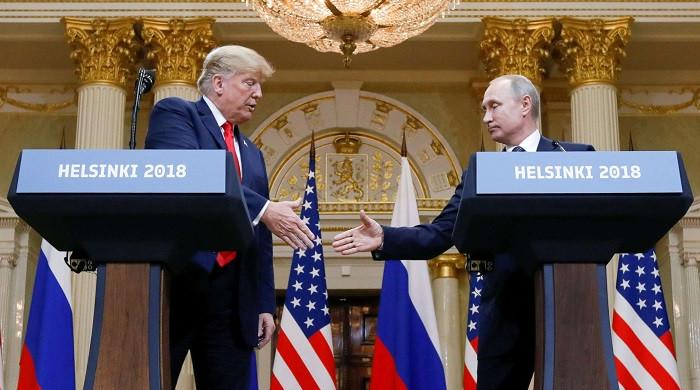
Critical Putin-Trump summit on hold after Russia rejects ceasefire

- Summit preps appear stalled after Rubio-Lavrov meeting postponed.
- ‘I guess the Russians wanted too much’ says European diplomat.
- Neither side has publicly abandoned plans for Budapest meeting.
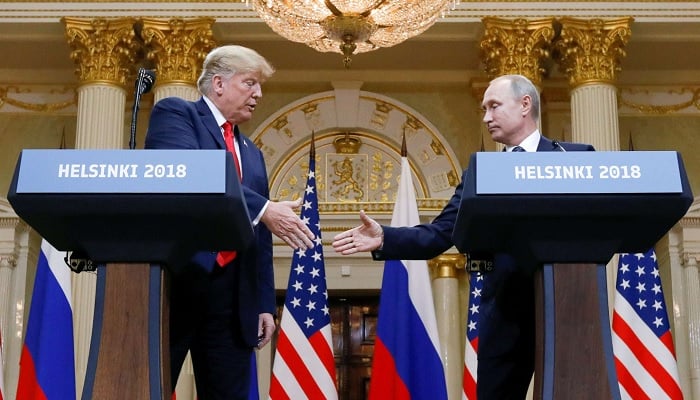
A planned summit between US President Donald Trump and Russian President Vladimir Putin was put on hold on Tuesday, as Moscow’s rejection of an immediate ceasefire in Ukraine cast a cloud over attempts at negotiations.
A senior White House official told Reuters, “There are no plans for President Trump to meet with President Putin in the immediate future” after Secretary of State Marco Rubio and Russian Foreign Minister Sergei Lavrov had a “productive call” but opted against an in-person meeting.
Trump had announced last week that he and Putin would meet soon in Hungary to try to bring an end to the war in Ukraine. But Putin has been unwilling to consider concessions. Moscow has long demanded that Ukraine agree to cede more territory before any ceasefire.
Trump, asked by reporters about the prospect of a summit, said he did not want to have a “wasted meeting” but suggested there could be more developments and that “we’ll be notifying you over the next two days” about them.
Kirill Dmitriev, Putin’s investment envoy, said in a social media post that “preparations continue” for a summit.
Russia reiterated its long-standing terms for a peace deal in a private communique known as a “non-paper” that it sent to the US last weekend, according to two US officials and two people familiar with the situation.
The communique reaffirmed Russia’s demand for full control of the long-contested eastern Donbas region, according to one official, effectively rejecting Trump’s call for a ceasefire to commence with a freeze of the frontlines at their prevailing locations.
Russia controls all of the province of Luhansk and about 75% of neighbouring Donetsk, which together make up the Donbas region.
European leaders called on Washington on Tuesday to hold firm in demanding an immediate ceasefire in Ukraine, with present battle lines to serve as the basis for any future talks.
NATO said Secretary General Mark Rutte travelled to Washington on Tuesday for talks with Trump that two sources familiar with the matter said would take place on Wednesday.
A Western official, speaking on condition of anonymity, said Rutte planned to present to Trump the European views on a ceasefire and any subsequent peace negotiations.
Trump, who last week spoke by phone to Putin and met Ukrainian President Volodymyr Zelenskiy, had hoped for another high-profile session with the Russian leader after their August summit in Alaska failed to advance negotiations.
But the two sides postponed a preparatory meeting between Rubio and Lavrov that had been expected to take place in Budapest on Thursday.
Lavrov and Rubio spoke by phone on Monday. Lavrov said the place and the timing of the next Trump-Putin summit were less important than the substance of implementing the understandings reached in Alaska.
The Kremlin said there was no clear date and that “serious preparation” for a summit was needed, which may take time.
“Listen, we have an understanding of the presidents, but we cannot postpone what has not been finalised,” Kremlin spokesman Dmitry Peskov said. “Neither President Trump nor President Putin gave exact dates.”
Asked if Moscow had an understanding of a possible date for the summit, Peskov said: “No, there is no understanding.”
‘I guess Russians wanted too much’
Neither side has publicly abandoned plans for Trump to meet Putin. Hungary’s foreign minister, Peter Szijjarto, was in Washington on Tuesday, where he posted on Facebook: “We have some serious days ahead”.
But two senior European diplomats said the postponement of the Rubio-Lavrov meeting was a sign the Americans would be reluctant to go ahead with a Trump-Putin summit unless Moscow yields its demands.
“I guess the Russians wanted too much and it became evident for the Americans that there will be no deal for Trump in Budapest,” said one.
The Russians “haven’t at all changed their position, and are not agreeing to ‘stop where they are’,” said the second diplomat. “And I assume Lavrov gave the same spiel, and Rubio was like: ‘See you later’.”
Europeans concerned Trump will get no concessions
Ukraine’s European allies have been concerned that Trump could meet Putin for a second time without getting any serious concessions from the Russian leader.
In a statement on Tuesday, the leaders of European powers, including Britain, France, Germany and the EU, said they “strongly support President Trump’s position that the fighting should stop immediately, and that the current line of contact should be the starting point of negotiations.”
Trump has often changed his emphasis in public when speaking about Ukraine. But last Friday, after he met with Zelenskiy at the White House, he explicitly endorsed the position that a ceasefire should start with forces at their present positions.
Reuters and other news organisations reported that Trump’s meeting with Zelenskiy behind closed doors was contentious, with the US president repeatedly using profanity and pushing Zelenskiy to accept some Russian demands.
But Zelenskiy has painted the meeting as a success because it ended with Trump publicly backing a ceasefire at the present lines, Kyiv’s longstanding position.
European leaders are due to meet this week with Zelenskiy as their guest, first at an EU summit and then at a meeting of the “coalition of the willing” countries discussing a security force to guarantee a post-war settlement in Ukraine. Russia rejects such an international security force.
The choice of Budapest as a venue for a Putin-Trump meeting is contentious within the EU, where Hungary’s Prime Minister Viktor Orban is an outlier as one of the few leaders to maintain warm relations with Russia.
Any trip to Budapest would require Putin to fly through the airspace of other EU countries. Poland said on Tuesday it could force Putin’s plane down and arrest him on an international warrant if he flies over its territory, but Bulgaria said Putin could use its airspace to reach the meeting.
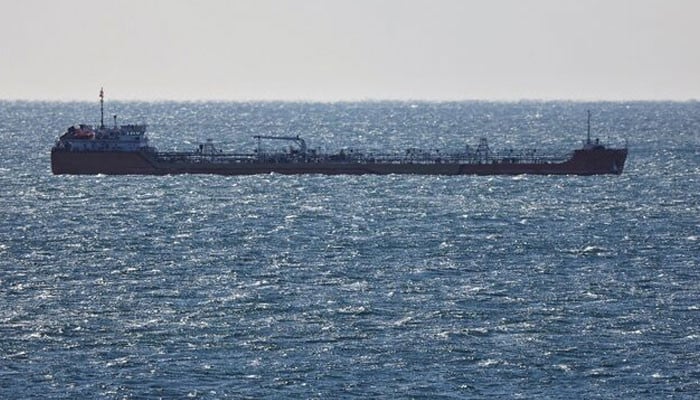
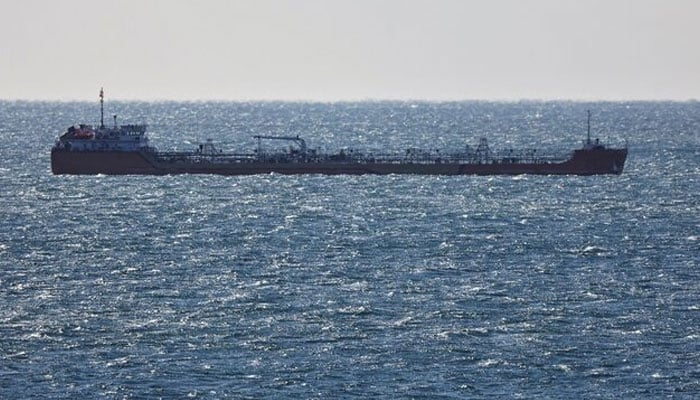
DUBAI: Unidentified attackers hijacked an oil tanker on Saturday off the coast of Yemen in the Gulf of Aden and directed it towards Somalia, the Yemeni coast guard said.
According to the agency, the tanker EUREKA was seized off Yemen’s Shabwa province by a group who “boarded, took control of it, then steered it… in the direction of the Somali coast”.
The coast guard, which is affiliated with Yemen’s internationally recognised government, vowed to investigate the attack.
“The location of the tanker has been determined, and work is under way to monitor it and take the necessary measures in an attempt to recover it and ensure the safety of its crew,” it said, without identifying the crew’s numbers or nationality.
According to the website Marine Traffic, the EUREKA is a Togolese-flagged oil products tanker that was reported to have been in the UAE port of Fujairah in late March.
Piracy was rampant off the coast of Somalia in the 2000s, peaking in 2011 with hundreds of attacks, but was significantly reduced by international naval deployments and new tactics by commercial shipping.
But in recent weeks attacks have increased again, according to a report by the European Union naval mission deployed off the shores of the troubled east African country.
Operation Atalanta, the EU’s naval force for Somalia, monitored three attacks in late April, according to its information service, the Maritime Security Centre Indian Ocean (MSCIO).
Since February 28, shipping in the region has also been disrupted by the US-Israeli war against Iran, but there was no immediate indication that Saturday’s hijacking was linked to the conflict.
Last month, a tanker was captured in the Gulf of Aden by a new group of pirates operating from the port town of Garacad in the Puntland state of northeastern Somalia, a local security official told AFP.
- Contract supports APG-66 and APG-68 radar systems.
- Work to be completed by March 2036.
- Includes multiple allies under foreign military sales plan.
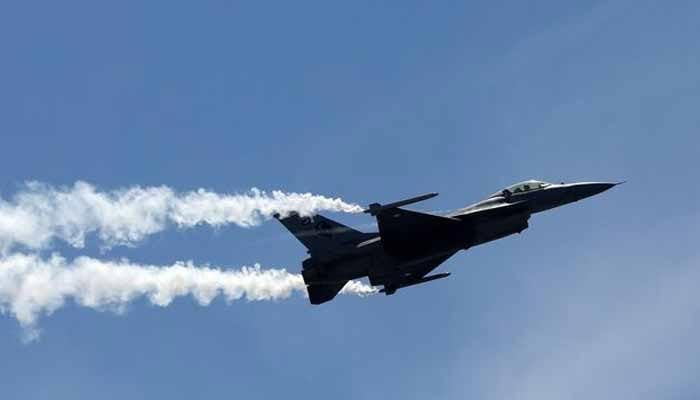
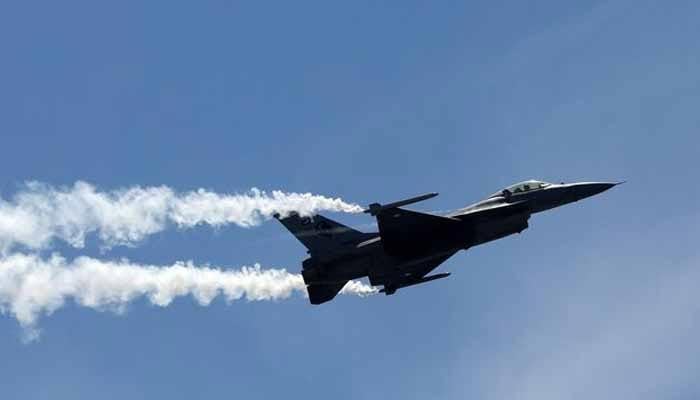
The United States Air Force has contracted Northrop Grumman Systems Corp. in a $488 million deal to provide engineering and technical support for F-16 radar systems under its Foreign Military Sales programme, with Pakistan among the beneficiary countries.
According to an official award notice issued by the US Department of War, the firm-fixed-price, indefinite-delivery/indefinite-quantity contract covers support for F-16 System Programme Office Foreign Military Sales (FMS) as well as Air Force and Navy requirements.
The contract includes engineering and technical support for APG-66 and APG-68 radar systems. The work will be carried out at Linthicum Heights, Maryland, and is expected to be completed by March 31, 2036.
The contract involves foreign military sales to multiple countries, including Bahrain, Belgium, Chile, Denmark, Egypt, Greece, Indonesia, Iraq, Israel, Jordan, Korea, Morocco, the Netherlands, Norway, Oman, Pakistan, Poland, Portugal, Romania, Thailand and Türkiye.
The US Air Force said the contract was awarded on a sole-source basis. Fiscal 2026 non-appropriated, Air Force and Navy funds amounting to $2,644,922 have been obligated at the time of the award.
The Air Force Lifecycle Management Centre at Hill Air Force Base, Utah, is the contracting authority for the agreement, which was awarded on April 27, 2026.
The development comes months after the United States, in December 2025, approved the sale of advanced technology and support services worth $686 million for Pakistan’s F-16 fighter aircraft fleet.
According to a letter from the US Defence Security Cooperation Agency (DSCA) to Congress dated December 8, the package covers Link-16 data link systems, cryptographic gear, avionics upgrades, training, and wide-ranging logistical support.
The DSCA says the decision aligns with Washington’s broader strategic aims, stating the sale “will support the foreign policy and national security objectives of the United States by allowing Pakistan to retain interoperability with US and partner forces in ongoing counterterrorism efforts and in preparation for future contingency operations.”
The letter notes that the upgrades are intended to modernise Pakistan’s Block-52 and Mid-Life Upgrade F-16s and address operational safety requirements. According to the letter, the sale will “maintain Pakistan’s capability to meet current and future threats by updating and refurbishing its Block-52 and Mid Life Upgrade F-16 fleet.”
- US approves of sales to Qatar, UAE, Kuwait and Israel.
- US govt says emergency exists to waive congressional review.
- Washington faces scrutiny for military ties with Kuwait, UAE, Qatar.
US President Donald Trump’s administration has bypassed congressional review to approve military sales totaling over $8.6 billion to Middle Eastern allies Israel, Qatar, Kuwait and the United Arab Emirates.
The State Department announcements on Friday came as the US and Israel’s war against Iran marked nine weeks since its start and more than three weeks since a fragile ceasefire came into effect.
The State Department said US Secretary of State Marco Rubio determined that an emergency existed that required immediate sales to those countries and waived the congressional review requirements for the sales.
The announcements included approving military sales to Qatar of Patriot air and missile defence replenishment services costing $4.01 billion and of Advanced Precision Kill Weapon Systems (APKWS) costing $992.4 million.
The principal contractor in the APKWS sales to Qatar, Israel and the UAE was BAE Systems, the State Department said.
RTX and Lockheed Martin were the principal contractors in the integrated battle command system sale to Kuwait and in the Patriot air and missile defense replenishment sale to Qatar, the State Department added.
Northrop Grumman was also a principal contractor in the Kuwaiti sale.
Over the years, Washington has faced scrutiny for military ties with Kuwait, the UAE and Qatar over those countries’ human rights track records that rights advocates say involve restrictions on and reported abuses of minorities, journalists, voices of dissent, the LGBT community and labourers.
Those nations have denied supporting or engaging in domestic rights abuses.
US support for Israel has also come under scrutiny from rights experts, particularly over Israel’s assault on Gaza that has killed tens of thousands, caused a hunger crisis and led to assessments of genocide from scholars and a UN inquiry.
Israel calls its actions self-defence after Hamas-led fighters killed 1,200 people in an October 2023 attack.
Washington has maintained support for its allies.


5/2: Saturday Morning – CBS News

Raptors star RJ Barrett nails season-saving 3-pointer to force Game 7 against Cavaliers

Oil tanker hijacked off Yemen, diverted towards Somalia: Yemen coast guard

-

 Tech5 days ago
A Brain Implant for Depression Is About to Be Tested in Humans
-

 Tech1 week ago
They Wanted to Join Raya. They’ve Been on the Waiting List for Years
-

 Tech6 days ago
Almost 90% of women leave tech industry within 10 years | Computer Weekly
-

 Tech1 week ago
Why Do I Like Dyson’s PencilVac So Much?
-

 Fashion1 week ago
North India cotton yarn steady despite continued push by spinners
-

 Sports5 days ago
Toulouse fall to first home defeat for a year | The Express Tribune
-

 Entertainment1 week ago
Anne Hathaway makes shocking confession about Taylor Swift’s music
-

 Sports1 week ago
US says Iran can play in Fifa World Cup but IRGC-linked individuals won’t be allowed