

Politics
Trump launches $10b defamation lawsuit against BBC over Jan 6 speech

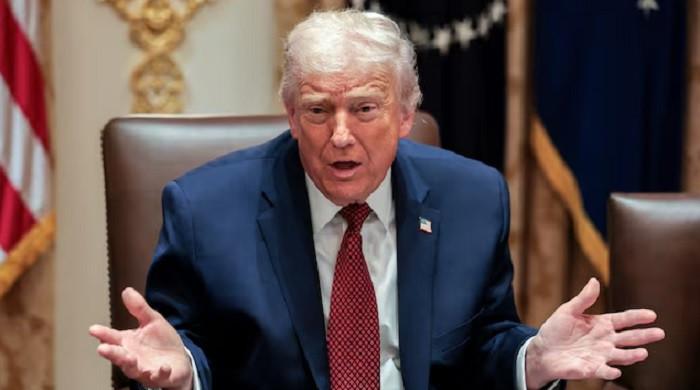
- Trump seeks $5 billion on each of two counts.
- BBC faces crisis, resignations over documentary edit.
- Admits error of judgment but denies legal basis for lawsuit.
President Donald Trump sued the BBC on Monday for defamation over edited clips of a speech that made it appear he directed supporters to storm the US Capitol, opening an international front in his fight against media coverage he deems untrue or unfair.
Trump accused Britain’s publicly owned broadcaster of defaming him by splicing together parts of a January 6, 2021, speech, including one section where he told supporters to march on the Capitol and another where he said “fight like hell”. It omitted a section in which he called for peaceful protest.
Trump’s lawsuit alleges the BBC defamed him and violated a Florida law that bars deceptive and unfair trade practices. He is seeking $5 billion in damages for each of the lawsuit’s two counts.
The BBC has apologised to Trump, admitted an error of judgment and acknowledged that the edit gave the mistaken impression that he had made a direct call for violent action. But the broadcaster has said there is no legal basis to sue.
Trump, in his lawsuit filed Monday in Miami federal court, said the BBC, despite its apology, “has made no showing of actual remorse for its wrongdoing nor meaningful institutional changes to prevent future journalistic abuses.”
The BBC is funded through a mandatory license fee on all TV viewers, which UK lawyers say could make any payout to Trump politically fraught.
A spokesman for Trump’s legal team said in a statement that the BBC “has a long pattern of deceiving its audience in coverage of President Trump, all in service of its own leftist political agenda.”
A BBC spokesperson told Reuters earlier on Monday that it had “no further contact from President Trump’s lawyers at this point. Our position remains the same.” The broadcaster did not immediately respond to a request for comment after the lawsuit was filed.
Crisis led to resignations
Facing one of the biggest crises in its 103-year history, the BBC has said it has no plans to rebroadcast the documentary on any of its platforms.
The dispute over the clip, featured on the BBC’s “Panorama” documentary show shortly before the 2024 presidential election, sparked a public relations crisis for the broadcaster, leading to the resignations of its two most senior officials.
Trump’s lawyers say the BBC caused him overwhelming reputational and financial harm.
The documentary drew scrutiny after the leak of a BBC memo by an external standards adviser that raised concerns about how it was edited, part of a wider investigation of political bias at the publicly funded broadcaster.
The documentary was not broadcast in the United States.
Trump may have sued in the US because defamation claims in Britain must be brought within a year of publication, a window that has closed for the “Panorama” episode.
To overcome the US Constitution’s legal protections for free speech and the press, Trump will need to prove not only that the edit was false and defamatory but also that the BBC knowingly misled viewers or acted recklessly.
The broadcaster could argue that the documentary was substantially true and its editing decisions did not create a false impression, legal experts said. It could also claim the program did not damage Trump’s reputation.
Other media have settled with Trump, including CBS and ABC, when Trump sued them following his comeback win in the November 2024 election.
Trump has filed lawsuits against the New York Times, the Wall Street Journal and a newspaper in Iowa, all three of which have denied wrongdoing.
The attack on the US Capitol in January 2021 was aimed at blocking Congress from certifying Joe Biden’s presidential win over Trump in the 2020 US election.
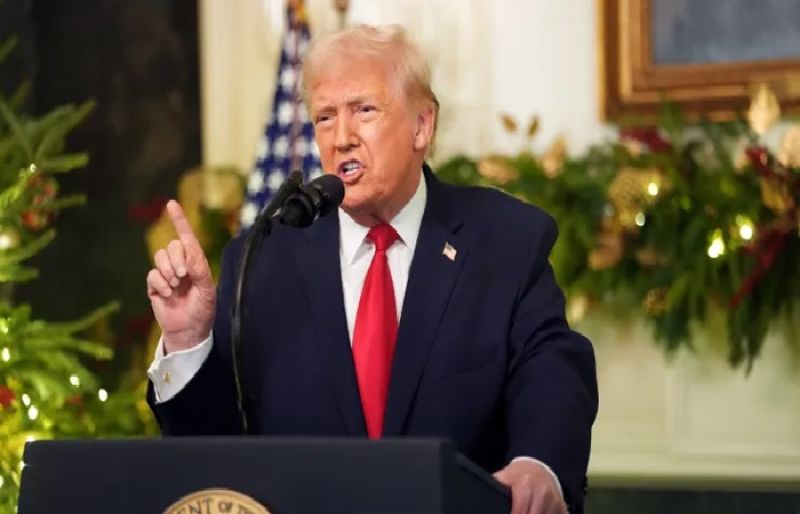
US President Donald Trump said Saturday he will review a new Iranian peace proposal, but cast doubt over its prospects as he left open the possibility of future attacks on Iran.
Negotiations between the two countries have been deadlocked since a ceasefire came into effect on April 8, with one round of peace talks to end the more than two-month war having failed in Pakistan.
The dour outlook came after Iran’s Tasnim and Fars news agencies reported Tehran submitted a 14-point proposal to mediator Islamabad. Details included ending the conflict on all fronts and enacting a new framework for the crucial Strait of Hormuz, Tasnim said.
“I will soon be reviewing the plan that Iran has just sent to us, but can’t imagine that it would be acceptable, in that they have not yet paid a big enough price for what they have done to Humanity and the World, over the last 47 years,” Trump said on his Truth Social platform.
In a brief interview with reporters in West Palm Beach, Florida, he declined to specify what could trigger new military action against the Islamic republic.
“If they misbehave, if they do something bad, but right now, we´ll see,” he said. “But it’s a possibility that could happen, certainly.”
On Saturday, Mohammad Jafar Asadi, a senior figure in the Iranian military’s central command, said “a renewed conflict between Iran and the United States is likely.”
“Evidence has shown that the United States is not committed to any promises or agreements,” he added, according to Fars news agency.
Deputy foreign minister Kazem Gharibabadi told diplomats in Tehran “the ball is in the United States’ court to choose the path of diplomacy or the continuation of a confrontational approach.”
Iran, he said, was “prepared for both paths.”
‘Hypocritical’
US news site Axios reported earlier in the week that Trump’s envoy Steve Witkoff had asked for Tehran’s nuclear program to be put back on the negotiating table.
Iran’s mission to the UN pointed to the massive US nuclear arsenal, accusing Washington on Saturday of “hypocritical behavior” towards Iran’s own atomic ambitions.
There was no legal “restriction on the level of uranium enrichment, so long as it is conducted under the IAEA’s supervision, as was the case with Iran,” it said, using the abbreviation for the UN nuclear watchdog.
Iran has maintained a stranglehold on the Strait of Hormuz since the war began, choking off major flows of oil, gas and fertiliser to the world economy, while the United States has imposed a counter-blockade on Iranian ports.
Oil prices are about 50 percent above pre-war levels.
The vice speaker of Iran’s parliament, Ali Nikzad, said that under draft legislation being considered for managing the waterway, 30 percent of tolls collected would go towards military infrastructure, with the rest earmarked for “economic development.”
“Managing the Strait of Hormuz is more important than acquiring nuclear weapons,” he said.
Fighting meanwhile continued Saturday in Lebanon, where Israel has carried out deadly strikes despite a separate truce with the Iran-backed armed group Hezbollah.
The Israeli military said it had struck dozens of Hezbollah targets across southern Lebanon following evacuation warnings for nine villages.
Lebanon’s state-run National News Agency reported three deaths in the attacks.
Hezbollah, for its part, claimed several attacks targeting Israeli troops.
The Israeli strikes included one in the village of Yaroun on what its military called a “religious building,” which was damaged.
The French Catholic charity L’Oeuvre d’Orient said the troops had “destroyed” a convent belonging to the Salvatorian Sisters, a Greek-Catholic religious order with which the charity is affiliated.
Iran’s economic toll
In Washington, lawmakers were wrestling over whether Trump had breached a deadline to seek congressional approval for the war.
Administration officials argue the ceasefire paused a 60-day clock, after which congressional authorisation would be required — a claim disputed by opposition Democrats.
In Iran, the war’s economic toll is deepening, with oil exports crimped and inflation surging past 50 percent.
“Everyone is trying to endure it, but… they are falling apart,” 40-year-old Amir, a Tehran resident, told an AFP reporter based outside the country.
“We still have not seen much of the economic effects because everyone had a bit of savings. They had some gold and dollars for a rainy day. When they run out, things will change.”
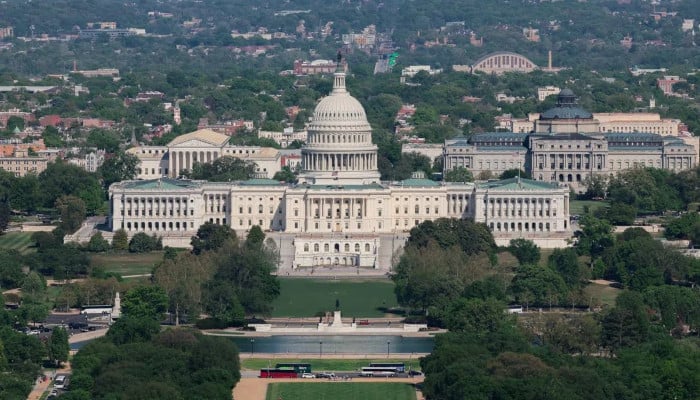
WASHINGTON: The battle for control of the US Congress entered its final six months on Sunday, with midterm elections in November that could reshape President Donald Trump’s second term and redefine the balance of power in Washington.
As ever, the midterms will be a referendum on the president, with Democrats hoping to capitalise on economic discontent and Trump’s sliding approval ratings to retake the House of Representatives and Senate — while Republicans fight to defy political headwinds.
At stake is not just legislative control but the trajectory of Trump´s agenda, with a Democratic-run Congress able to launch investigations, block nominees and generally complicate the remainder of his presidency.
Early indicators point to a challenging environment for Republicans, with Trump’s approval rating around 40% and economic dissatisfaction — particularly inflation and Iran war-related costs — eroding confidence.
Polling shows Democrats with a narrow edge on the generic ballot, while some surveys suggest voters now trust them more on the economy.
A Republican-aligned group, AFP Action, warned the party’s Senate majority was “at risk,” citing “structural headwinds” and disengaged voters.
In midterm elections, Americans vote to fill all 435 House seats, about one-third of the 100-member Senate and most governorships. Democrats need to flip three House seats and four in the Senate to take control.
“The Senate is on the table here,” Molly Murphy, of pollster Impact Research, told cable network MS NOW, pointing to Trump’s waning popularity and strong Democratic turnout in recent elections.
“When the president’s approval rating is at or below 40%, that is when you start to see these deeper pickups in much more Republican-heavy terrain.”
Still, the landscape remains fluid, with structural challenges for both parties.
‘Always tough’
Republicans benefit from a favourable Senate map, with Democrats needing to win in states Trump carried.
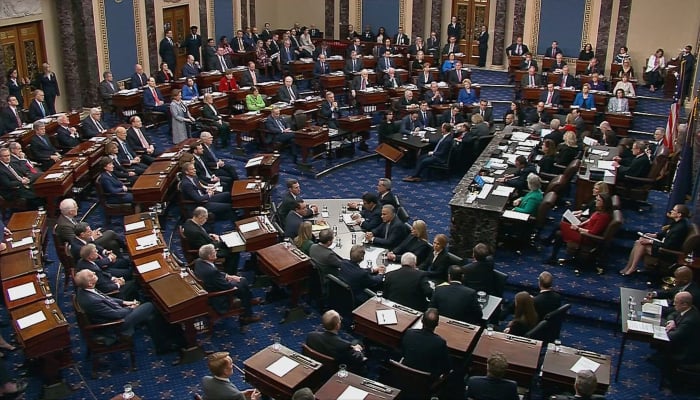
And heavily gerrymandered districts — as well as a shrinking number of competitive seats — limit how far a national swing can translate into House gains.
The campaign has been further complicated by a fierce redistricting battle, with states including Texas, California, North Carolina, Ohio, Florida, Missouri, Utah and Virginia pursuing new mid-decade voting maps.
The overall impact of the changes — alongside a Supreme Court ruling limiting race-based redistricting — remains unclear.
Republicans are banking on financial advantages and voter concerns over immigration and national security, while Democrats are focusing on cost-of-living pressures and framing the election as a defence of democratic norms.
Ahead of the six-month mark, Senate Democratic leader Chuck Schumer accused Republicans of undermining voting rights through pushes for over-zealous election security and immigration enforcement initiatives.
“Let’s call it what it is: an effort to rig the system,” he said.
For Republicans, the central challenge remains the president himself. Midterms typically punish the party in power, and Trump’s weak approval ratings have heightened concerns.
At the same time, even some of his supporters say his focus on foreign policy, particularly the war with Iran, has drawn attention away from domestic economic concerns that typically dominate midterm campaigns.
Even so, Republicans insist the race is far from settled, noting that political conditions can shift rapidly ahead of an election.
House Majority Leader Steve Scalise told CNBC that Republican prospects would depend on turnout and voters appreciating his party “delivering what we’ve delivered to finally start turning this mess around that we inherited a year and a half ago.”
“Midterms are always tough for the incumbent party, but this is not your father’s Democrat Party,” Scalise said.
- Iran submits 14-point proposal via Pakistan to end conflict.
- Dispute continues over Iran’s nuclear programme, enrichment rights.
- US hints at possible military action if Iran “misbehaves” again.
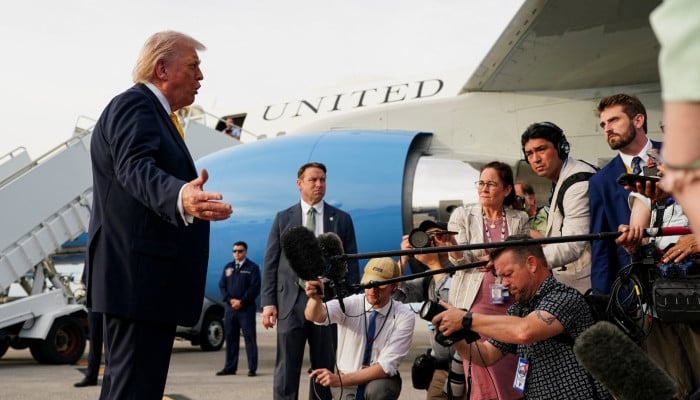
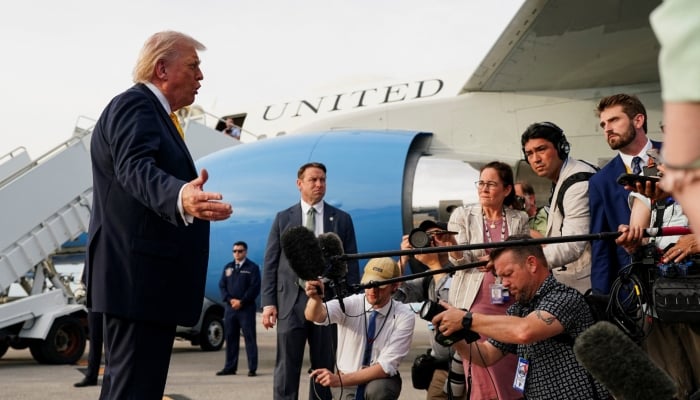
US President Donald Trump said Saturday he will review a new Iranian peace proposal, but cast doubt over its prospects as he left open the possibility of future attacks on Iran.
Negotiations between the two countries have been deadlocked since a ceasefire came into effect on April 8, with one round of peace talks to end the more than two-month war having failed in Pakistan.
The dour outlook came after Iran’s Tasnim and Fars news agencies reported Tehran submitted a 14-point proposal to mediator Islamabad. Details included ending the conflict on all fronts and enacting a new framework for the crucial Strait of Hormuz, Tasnim said.
“I will soon be reviewing the plan that Iran has just sent to us, but can’t imagine that it would be acceptable, in that they have not yet paid a big enough price for what they have done to Humanity and the World, over the last 47 years,” Trump said on his Truth Social platform.
In a brief interview with reporters in West Palm Beach, Florida, he declined to specify what could trigger new military action against the Islamic republic.
“If they misbehave, if they do something bad, but right now, we´ll see,” he said. “But it’s a possibility that could happen, certainly.”
On Saturday, Mohammad Jafar Asadi, a senior figure in the Iranian military’s central command, said “a renewed conflict between Iran and the United States is likely.”
“Evidence has shown that the United States is not committed to any promises or agreements,” he added, according to Fars news agency.
Deputy foreign minister Kazem Gharibabadi told diplomats in Tehran “the ball is in the United States’ court to choose the path of diplomacy or the continuation of a confrontational approach.”
Iran, he said, was “prepared for both paths.”
‘Hypocritical’
US news site Axios reported earlier in the week that Trump’s envoy Steve Witkoff had asked for Tehran’s nuclear program to be put back on the negotiating table.
Iran’s mission to the UN pointed to the massive US nuclear arsenal, accusing Washington on Saturday of “hypocritical behavior” towards Iran’s own atomic ambitions.
There was no legal “restriction on the level of uranium enrichment, so long as it is conducted under the IAEA’s supervision, as was the case with Iran,” it said, using the abbreviation for the UN nuclear watchdog.
Iran has maintained a stranglehold on the Strait of Hormuz since the war began, choking off major flows of oil, gas and fertiliser to the world economy, while the United States has imposed a counter-blockade on Iranian ports.
Oil prices are about 50 percent above pre-war levels.
The vice speaker of Iran’s parliament, Ali Nikzad, said that under draft legislation being considered for managing the waterway, 30 percent of tolls collected would go towards military infrastructure, with the rest earmarked for “economic development.”
“Managing the Strait of Hormuz is more important than acquiring nuclear weapons,” he said.
Fighting meanwhile continued Saturday in Lebanon, where Israel has carried out deadly strikes despite a separate truce with the Iran-backed armed group Hezbollah.
The Israeli military said it had struck dozens of Hezbollah targets across southern Lebanon following evacuation warnings for nine villages.
Lebanon’s state-run National News Agency reported three deaths in the attacks.
Hezbollah, for its part, claimed several attacks targeting Israeli troops.
The Israeli strikes included one in the village of Yaroun on what its military called a “religious building,” which was damaged.
The French Catholic charity L’Oeuvre d’Orient said the troops had “destroyed” a convent belonging to the Salvatorian Sisters, a Greek-Catholic religious order with which the charity is affiliated.
Iran’s economic toll
In Washington, lawmakers were wrestling over whether Trump had breached a deadline to seek congressional approval for the war.
Administration officials argue the ceasefire paused a 60-day clock, after which congressional authorisation would be required — a claim disputed by opposition Democrats.
In Iran, the war’s economic toll is deepening, with oil exports crimped and inflation surging past 50 percent.
“Everyone is trying to endure it, but… they are falling apart,” 40-year-old Amir, a Tehran resident, told an AFP reporter based outside the country.
“We still have not seen much of the economic effects because everyone had a bit of savings. They had some gold and dollars for a rainy day. When they run out, things will change.”


I Lugged the Best Travel Totes on Work Trips, Weekends, and More

Trump says US not likely to accept new Iran peace proposal

President, PM pay tribute media workers on World Press Freedom Day

-

 Tech6 days ago
A Brain Implant for Depression Is About to Be Tested in Humans
-
 Business5 days ago
‘I had £20,000 stolen and had to fight a 13-month fraud reporting rule to get it back’
-

 Tech1 week ago
They Wanted to Join Raya. They’ve Been on the Waiting List for Years
-

 Tech1 week ago
Why Do I Like Dyson’s PencilVac So Much?
-

 Tech6 days ago
Almost 90% of women leave tech industry within 10 years | Computer Weekly
-

 Tech5 days ago
This Ambitious Laptop Doesn’t Leave Much Room for Your Hands
-
 Business7 days ago
Pakistan’s oil market is fuelling the crisis | The Express Tribune
-

 Entertainment6 days ago
Melania Trump says ABC should ‘take a stand’ on late-night host Kimmel