

Politics
US pulls out of trade talks with India over escalating tariff tensions

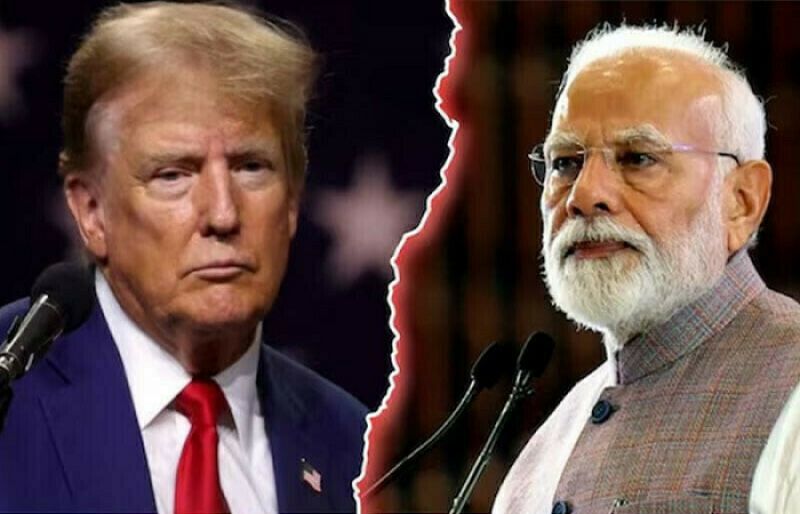

Trade tensions between the United States and India have escalated further after Washington abruptly cancelled the planned trade talks that were scheduled for the final week of this month.
According to Indian media, a high-level US trade delegation had been expected to visit New Delhi from August 25 to 29, but the visit has now been called off.
The cancellation follows an intensifying tariff dispute between the two countries.
Washington had earlier cautioned New Delhi that if talks between US President Donald Trump and Russian President Vladimir Putin failed, additional tariffs could be imposed on Indian goods.
Reports suggest that the US decision may push overall tariffs on Indian exports beyond 50% a move analysts warn could deliver a serious blow to bilateral trade ties.
Meanwhile, Prime Minister Narendra Modi, in his annual Independence Day address from the historic Red Fort in New Delhi, emphasized India’s push for energy self-reliance and the development of robust defence systems.
He vowed to protect the country’s interests “like a wall,” even as India faces mounting US pressure and the looming threat of new tariffs.
“Self-reliance is the foundation of developed India,” Modi said after a flypast of military helicopters scattered flower petals above an invited crowd of thousands.
“Freedom becomes meaningless if someone becomes too dependent on others”.
Ties between New Delhi and Washington have been strained by Trump’s ultimatum that India end its purchases of Russian oil, a key source of revenue for Moscow as it wages its military offensive in Ukraine.
India has said it “stands ready” to support efforts to end the Ukraine war and endorses a summit to be held between Trump and Russian President Vladimir Putin in Alaska on Friday.
But the United States says it will double new import tariffs on India from 25 percent to 50 percent by August 27 if New Delhi does not switch crude suppliers.
“We know that we remain dependent on many countries to meet our energy needs”, said Modi, leader of the world’s most populous nation and fifth-biggest economy.
“But to build a truly self-reliant India, we must achieve energy independence.”
US Secretary of State Marco Rubio, in a statement congratulating India’s Independence Day, said the relations between the two nations were “consequential and far-reaching”, and wanted to “ensure a brighter future for both”.
Blood and water
Modi urged scientists and engineers to focus on building key sectors and technologies including fighter jet engines, semiconductor chips and military hardware systems.
“We will have India-made semiconductor chips in the market by the year’s end,” Modi said.
He added that the country was also working towards building a space station and would have a “defence shield” in the next decade, without giving further details.
Modi also honoured the Indian armed forces, which took part in a four-day conflict with arch-rival Pakistan that ended in a ceasefire on May 10.
“India will give a befitting reply to any other misadventure by the enemy,” he added, and referred to New Delhi’s suspension of its cross-border water sharing treaty with Pakistan.
“India has decided that blood and water will not flow together”, he added.
Modi did not speak directly about Trump, but said he would “stand like a wall” against any policy that hurts the interests of farmers.
Agriculture employs vast numbers of people in India and has been a key sticking point in trade negotiations.
“When economic selfishness is rising day by day… we must not just sit and worry about the crisis but instead focus on our strengths,” Modi said.
- Suspected gunman shot dead by police after car chase.
- Shooting appears to incident of domestic violence: police.
- Official says crime scene spanning between two residences.
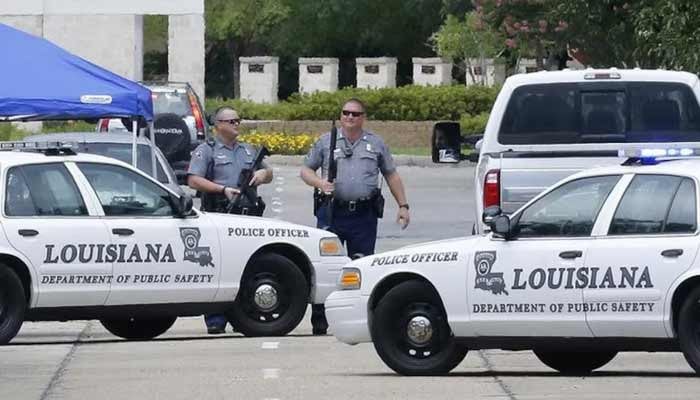
Eight children were killed in a shooting spree early Sunday in the southern US state of Louisiana, in what police said appears to have been an incident of domestic violence.
The gunman, who was not immediately identified, was fatally shot by police after a car chase, officials said.
The incident took place in the city of Shreveport, in northwestern Louisiana.
“This is a rather extensive crime scene spanning between two residences,” police Corporal Chris Bordelon told a press conference, adding that a third residence was also part of the scene being combed by investigators.
The victims ranged in age from one to 14, Bordelon said.
“Some of the children inside were his descendants,” he added.
Two other people were struck by gunfire, but their conditions were not immediately known.
The suspect carjacked a vehicle and led police on a chase before officers opened fire and the assailant was killed.
“We do believe him to be the only individual that fired gunshots at these locations,” Bordelon said, calling the incident a “domestic disturbance.”
The United States, where firearms are readily available, is a frequent scene of gun violence, with thousands of people killed every year.
“It’s a terrible morning in Shreveport and we all mourn with the victims,” Mayor Tom Arceneaux said at the press conference.
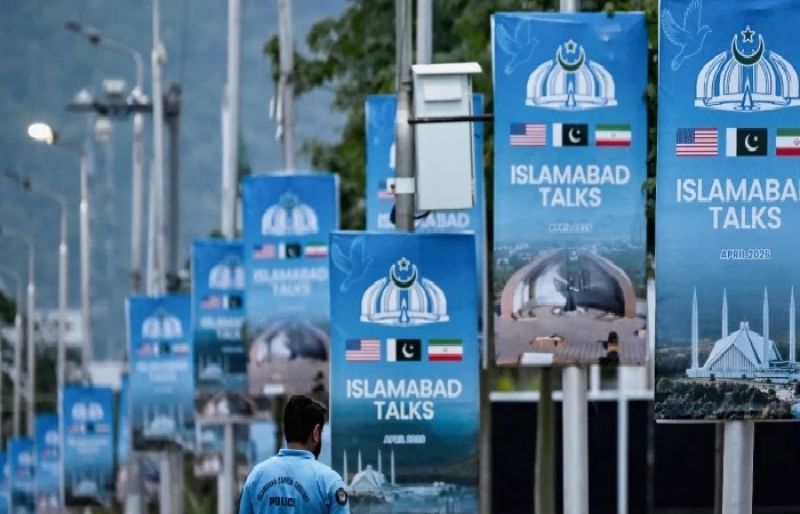
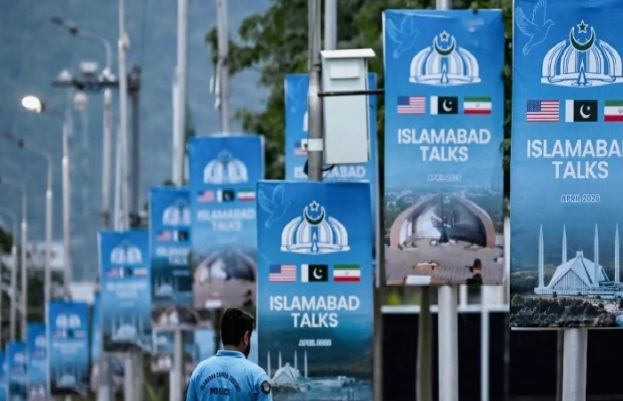
An advance team from the United States has arrived in Islamabad as Pakistan prepares to host the second round of talks between the Washington and Iran, sources said on Sunday.
Advance teams from foreign delegations have begun arriving in the country ahead of the much-anticipated talks, sources said.
Authorities in Islamabad and Rawalpindi heightened security in the federal capital, sealing off the Red Zone to traffic as Pakistan prepares to host visiting foreign delegations.
The measures follow reports about the second round of talks between delegations from the United States and Iran, reportedly scheduled next week.
In a statement, Islamabad police said that the Red Zone and Extended Red Zone will remain completely closed for all kinds of traffic until further notice due to the arrival of foreign delegations.
They advised citizens to use alternate routes and cooperate with traffic police to ensure smooth flow and security.
Further, the district administrations of Islamabad and Rawalpindi announced an immediate suspension of public and goods transport in the twin cities.
The Islamabad deputy commissioner suspended heavy transport and public transport services until further notice, without citing any reason.
“Heavy transport and public transport in the city are being suspended until further orders. Citizens are earnestly requested to cooperate with the security agencies,” the Islamabad DC posted on X.
Similarly, all private, public, and goods transport has been suspended with immediate effect in Rawalpindi. The official confirmed that further updates will be issued later.
“All private, public and goods transport in Rawalpindi is hereby suspended with immediate effect. Further updates will be shared,” the Rawalpindi DC said in his X post.
Security measures
A day earlier, the Rawalpindi police were put on high alert on the directives of City Police Officer (CPO) Syed Khalid Mahmood Hamdani.
“Rawalpindi Police have placed the city on high security alert and implemented extraordinary arrangements to ensure foolproof security in view of the movement of foreign delegations,” state-run news agency, APP, reported.
More than 10,000 police officers and personnel were deployed across the city to perform security duties, while over 600 special pickets were established with strict monitoring of all entry and exit points being done.
Special teams of Elite Commandos and trained snipers had been assigned security responsibilities, while the Elite Force, Dolphin Force, police station mobiles, and other quick response units conducted patrolling throughout the city.
Search, sweep, combing, and intelligence-based operations had also been intensified, with close monitoring and checking of suspicious individuals continuing across Rawalpindi.
Security around sensitive installations, key public and private locations and residential places of importance has been further tightened, while Safe City surveillance, CCTV cameras and modern monitoring systems are being used for round-the-clock observation.
Authorities in the twin cities had announced a two-day holiday on April 10 and 11, as Pakistan hosted the high-stakes talks between the US and Iran.
Prime Minister Shehbaz Sharif invited delegations from Washington and Tehran for peace talks after brokering a two-week ceasefire between the two sides on April 8.
The Middle East conflict began on February 28, following joint strikes by the US and Israel against. The scope of the conflict quickly spread as Tehran effectively blocked the Strait of Hormuz and launched retaliatory attacks against Israel and US bases across the Gulf region.
After agreeing to the PM Shehbaz-facilitated ceasefire, the two sides held negotiations in Islamabad on a wide range of disputes. However, the talks could result in an agreement for a permanent end to the conflict.
However, Pakistan continued its marathon efforts to help resolve longstanding disputes between the two sides, including COAS-CDF Field Marshal Asim Munir’s visit to Tehran, where he met Iran’s top political and military leadership.
A day after CDF Munir’s visit, Iran declared the Strait of Hormuz open, citing the agreement of a ceasefire between Israel and Lebanon.
However, the country blocked the waterway again, citing Washington’s naval blockade of Iranian ports as the reason.
Despite lingering issues, Iranian Parliament Speaker Mohammad Bagher Ghalibaf said talks with Washington have seen “progress,” but “many gaps and some fundamental points remain.”
“We are still far from the final discussion,” said Ghalibaf in a televised address earlier today.
US President Donald Trump has also said that “very good conversations” were going on with Iran, but warned Tehran against trying to “blackmail” Washington.
- Chris Wright believes gas prices have peaked in US.
- Rising gas prices create political headwinds for Trump.
- US officials heading to Pakistan for Iran talks: Trump.
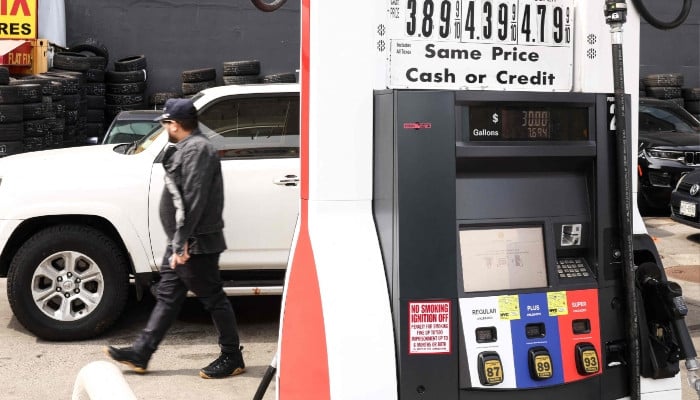
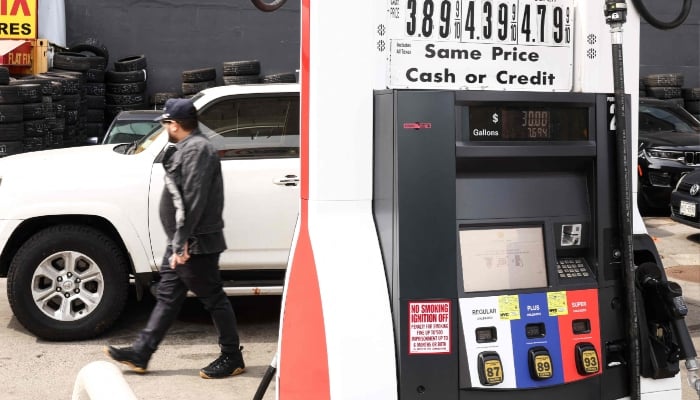
US Energy Secretary Chris Wright on Sunday said he believes gas prices have peaked but predicted that they may stay above $3 per gallon until next year.
Gas prices have risen during the US and Israeli war on Iran and Iranian attacks on US bases in the Gulf region, creating political headwinds for President Donald Trump ahead of the November midterm elections, where his Republican Party will defend slim majorities in the Senate and House of Representatives.
Gas below $3 a gallon “could happen later this year, that might not happen until next year. But prices have likely peaked, and they’ll start going down,” he told CNN’s “State of the Union” programme. “Certainly, with the resolution of this conflict, you’ll see prices go down.”
Trump administration officials have offered differing views on how gas prices may shift. Treasury Secretary Scott Bessent last week predicted gas prices would fall to the $3 per gallon range this summer, while Wright on Sunday laid out a lengthier likely timeline to reach that price.
Trump himself has said that gas prices may remain elevated until November.
All of them have said gasoline will eventually get cheaper once the Iran war ends. “Under $3 a gallon is pretty tremendous in inflation-adjusted terms,” Wright said. “We’ll get back there for sure.”
The average price for a gallon of regular gas on Sunday was $4.05, according to an estimate by AAA, compared to $3.16 a year ago.
The US and Iran on April 8 agreed to a 10-day ceasefire, but Trump on Sunday accused Iran of violating it with attacks on ships in the Strait of Hormuz this weekend. US officials will arrive in Pakistan for further negotiations on Monday, Trump wrote in a social media post.
“We’re offering a very fair and reasonable deal, and I hope they take it because, if they don’t, the United States is going to knock out every single Power Plant, and every single Bridge, in Iran,” he posted, revisiting a threat he had made prior to the ceasefire.


Daniel Radcliffe compares ‘Harry Potter’ movies: ‘Which one was better’?

Van Dijk hands Liverpool a UCL boost and reason to believe after more late drama

Did ‘Charlie’s Angels’ star Jaclyn Smith say no to Bond girl role?

-

 Fashion4 days ago
France’s LVMH Q1 revenue falls 6%, shows resilience amid Iran war
-

 Entertainment7 days ago
Palace left in shock as Prince William cancels grand ceremony
-

 Sports7 days ago
The case for Man United’s Fernandes as Premier League’s best
-
 Business1 week ago
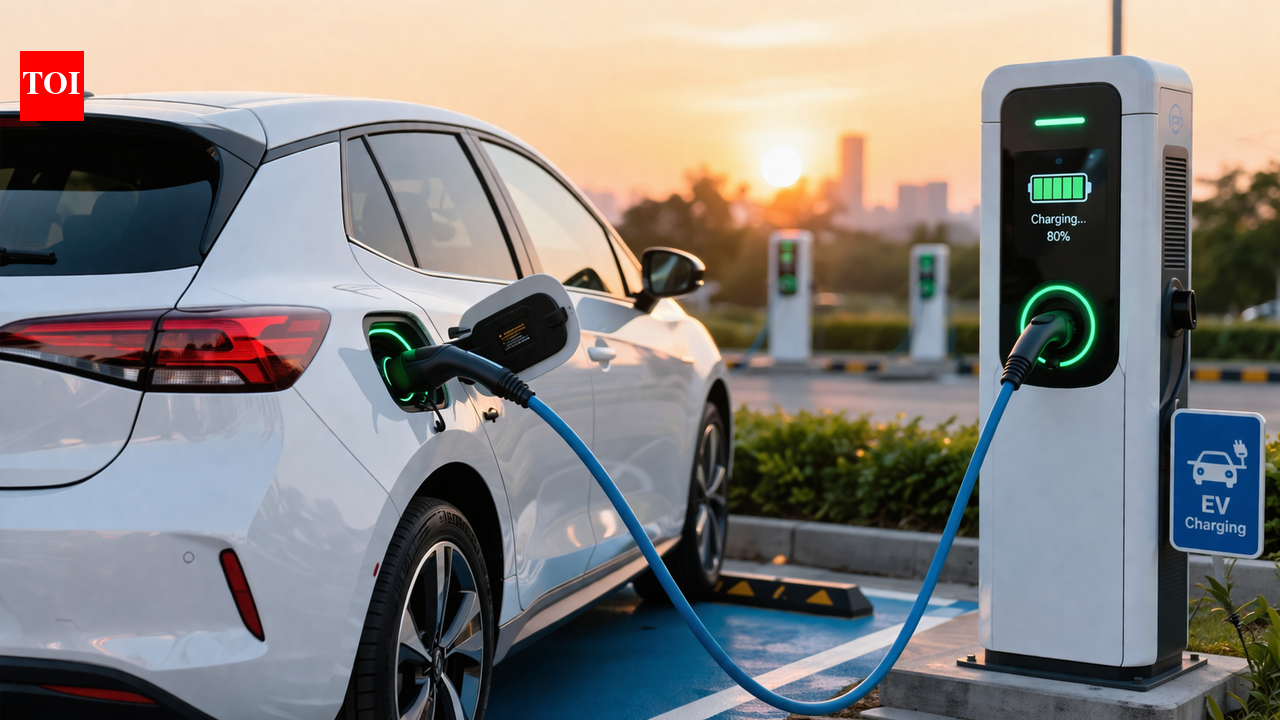
100% road tax waiver for electric cars, new rules for 2, 3 and 4 wheelers – what Delhi govt’s draft EV policy says – The Times of India
-
 Business7 days ago
UK could adopt EU single market rules under new legislation
-

 Entertainment1 week ago
Dua Lipa hits major career high ahead of wedding with Callum Turner
-

 Sports1 week ago
Lamar Jackson hits back at critics with faithful message on social media
-

 Fashion7 days ago
Energy emerges as biggest cost driver in textile margins