

Politics
US pulls out of trade talks with India over escalating tariff tensions

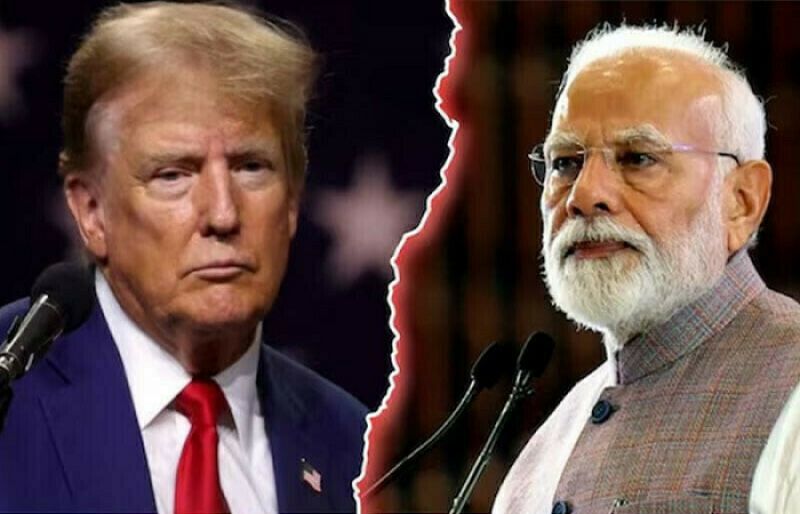

Trade tensions between the United States and India have escalated further after Washington abruptly cancelled the planned trade talks that were scheduled for the final week of this month.
According to Indian media, a high-level US trade delegation had been expected to visit New Delhi from August 25 to 29, but the visit has now been called off.
The cancellation follows an intensifying tariff dispute between the two countries.
Washington had earlier cautioned New Delhi that if talks between US President Donald Trump and Russian President Vladimir Putin failed, additional tariffs could be imposed on Indian goods.
Reports suggest that the US decision may push overall tariffs on Indian exports beyond 50% a move analysts warn could deliver a serious blow to bilateral trade ties.
Meanwhile, Prime Minister Narendra Modi, in his annual Independence Day address from the historic Red Fort in New Delhi, emphasized India’s push for energy self-reliance and the development of robust defence systems.
He vowed to protect the country’s interests “like a wall,” even as India faces mounting US pressure and the looming threat of new tariffs.
“Self-reliance is the foundation of developed India,” Modi said after a flypast of military helicopters scattered flower petals above an invited crowd of thousands.
“Freedom becomes meaningless if someone becomes too dependent on others”.
Ties between New Delhi and Washington have been strained by Trump’s ultimatum that India end its purchases of Russian oil, a key source of revenue for Moscow as it wages its military offensive in Ukraine.
India has said it “stands ready” to support efforts to end the Ukraine war and endorses a summit to be held between Trump and Russian President Vladimir Putin in Alaska on Friday.
But the United States says it will double new import tariffs on India from 25 percent to 50 percent by August 27 if New Delhi does not switch crude suppliers.
“We know that we remain dependent on many countries to meet our energy needs”, said Modi, leader of the world’s most populous nation and fifth-biggest economy.
“But to build a truly self-reliant India, we must achieve energy independence.”
US Secretary of State Marco Rubio, in a statement congratulating India’s Independence Day, said the relations between the two nations were “consequential and far-reaching”, and wanted to “ensure a brighter future for both”.
Blood and water
Modi urged scientists and engineers to focus on building key sectors and technologies including fighter jet engines, semiconductor chips and military hardware systems.
“We will have India-made semiconductor chips in the market by the year’s end,” Modi said.
He added that the country was also working towards building a space station and would have a “defence shield” in the next decade, without giving further details.
Modi also honoured the Indian armed forces, which took part in a four-day conflict with arch-rival Pakistan that ended in a ceasefire on May 10.
“India will give a befitting reply to any other misadventure by the enemy,” he added, and referred to New Delhi’s suspension of its cross-border water sharing treaty with Pakistan.
“India has decided that blood and water will not flow together”, he added.
Modi did not speak directly about Trump, but said he would “stand like a wall” against any policy that hurts the interests of farmers.
Agriculture employs vast numbers of people in India and has been a key sticking point in trade negotiations.
“When economic selfishness is rising day by day… we must not just sit and worry about the crisis but instead focus on our strengths,” Modi said.
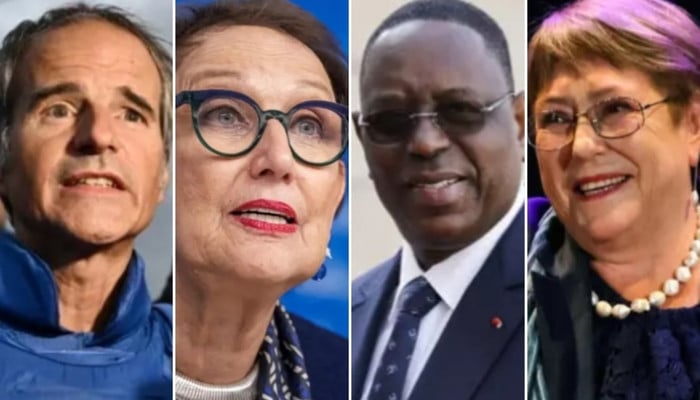
Four contenders are squaring up to succeed Antonio Guterres as leader of the United Nations, which faces unprecedented global instability, wars and its own crushing budget crisis.
Chile’s Michelle Bachelet, Argentina’s Rafael Grossi, Costa Rican Rebeca Grynspan, and Senegal’s Macky Sall will each face grillings by 193 member states and NGOs for three hours on Tuesday and Wednesday.
It is only the second time the UN has held a public Q&A, a format created in 2016 to boost transparency.
Ultimately the five permanent members of the UN’s top body, the Security Council, hold the power, wielding vetoes over who leads the global organisation as its secretary-general.
US President Donald Trump’s envoy to the Manhattan-based UN, Mike Waltz, has warned the next chief must align with “American values and interests” and that Washington would back the best candidate — not necessarily a Latin American woman, as some countries are demanding.
All four candidates to take over the embattled UN when Guterres departs on December 31, 2026 pledge to grow trust in the bitterly divided organisation that faces financial Armageddon because of Washington’s refusal to pay its bills.
Here is a look at the contenders:
Michelle Bachelet
A Chilean socialist brutally tortured by the regime of Augusto Pinochet, Bachelet became her country’s first woman president in 2006.
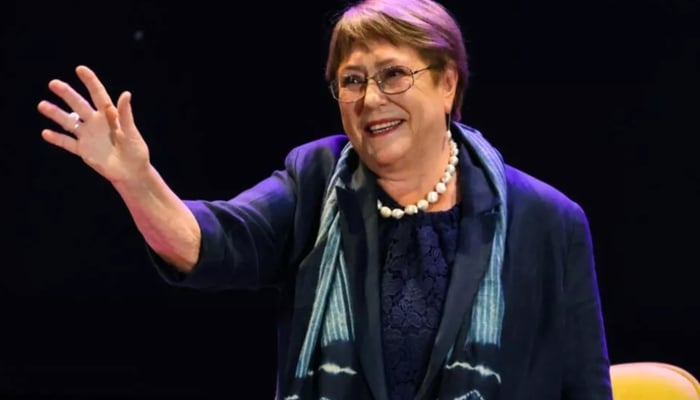
She went on to be the UN rights chief, a sensitive role in which she alienated some countries, especially China, which mauled her for reporting on alleged abuses of the Uyghur people.
Bachelet, 74, has said that she is “convinced” she has the experience “to confront a moment” marked by unprecedented crises and conflicts.
She is backed by Mexico and Brazil — but Chile withdrew its backing after far-right President Jose Antonio Kast took office.
Rafael Grossi
The 65-year-old Grossi, a career diplomat, has led the International Atomic Energy Agency since 2019, propelling him into the middle of the battle over Iran’s nuclear programme as well as the Russian occupation of Ukraine’s Zaporizhzhia nuclear plant.
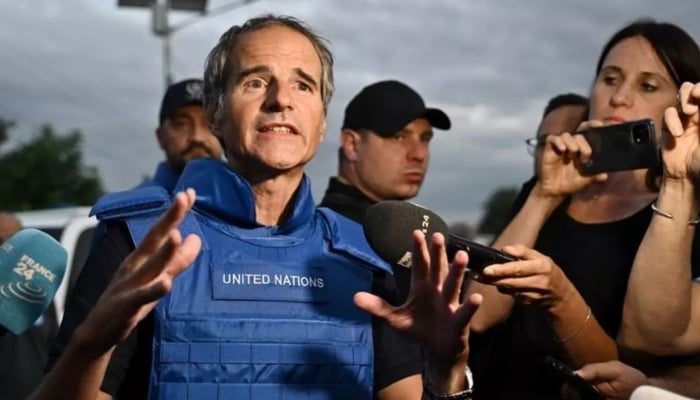
His handling of the two situations has drawn close scrutiny from the United States and Russia, which both have veto power on the Security Council.
Grossi has called for the UN to “return to its founding promise — to save humanity from the scourge of war.”
Rebeca Grynspan
Less well-known than her opponents, Grynspan — Costa Rica’s former vice president — leads the UN trade and development body UNCTAD, pulling off a diplomatic feat by brokering the Black Sea Grain Initiative between Moscow and Kyiv to allow grain exports following Russia’s invasion.
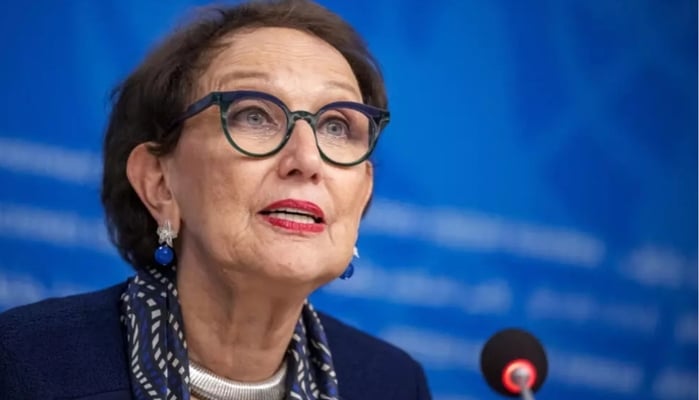
In her pitch to world leaders, the 70-year-old plays up her personal story as the daughter of Jewish parents.
She said they “barely survived” the Holocaust before emigrating to Costa Rica, stressing her attachment to the UN Charter, calling the document signed as World War II came to an end a “standing warning against the perils of dehumanisation, distrust and fragmentation.”
Macky Sall
Macky Sall, 64, is the only candidate who does not come from Latin America, from where the next UN boss should come, according to convention.
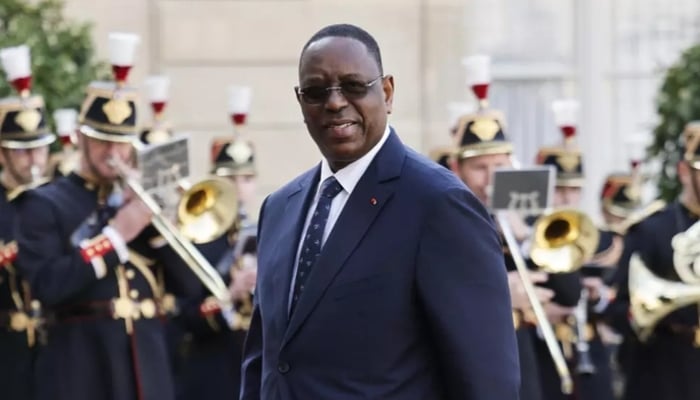
The former Senegalese president has stressed the link between peace and development in his pitch to lead the UN.
He said peace can never be “sustainable” if development is undermined “by poverty, inequality, exclusion and climate vulnerability.”
Proposed by Burundi, the current chair of the African Union, Sall is supported neither by the regional African bloc — 20 of its 55 members oppose him — nor by his own country.
Senegalese authorities accuse him of bloodily repressing violent political demonstrations that left dozens dead between 2021 and 2024.
- Iran says it will respond to “armed piracy”.
- IRNA says Iran rejects talks, citing US blockade.
- Islamabad prepares for second round of negotiations.
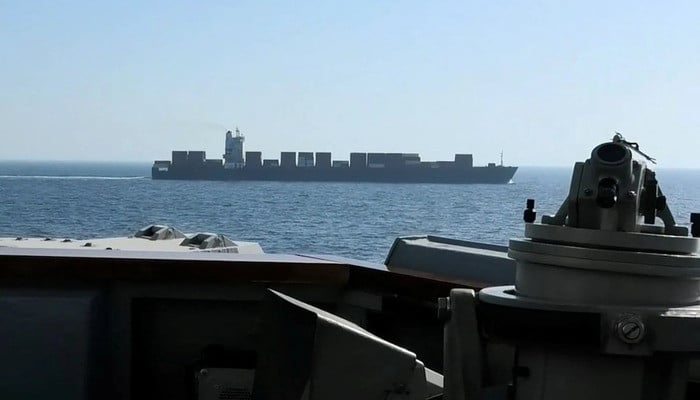
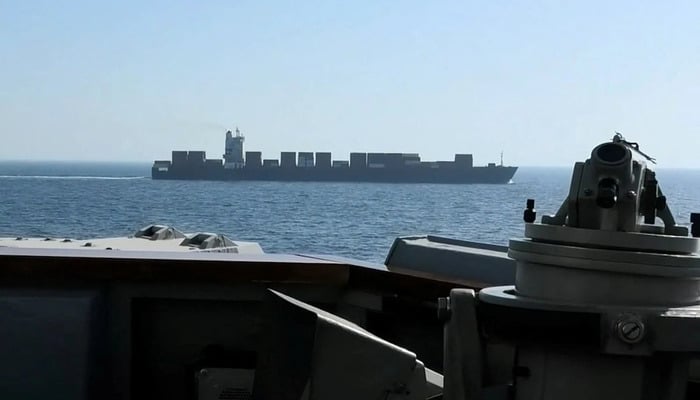
Concerns grew on Monday that the ceasefire between the United States and Iran might not hold after the US said it had seized an Iranian cargo ship that tried to run its blockade and Iran vowed to retaliate.
Efforts to build a more lasting peace in the region likewise appeared to be on shaky ground, as Iran said it would not participate in a second round of negotiations that the US had hoped to kick off before the ceasefire expires on Tuesday.
The US has maintained a blockade of Iranian ports, while Iran has lifted and then reimposed its own blockade on marine traffic passing through the Strait of Hormuz, which typically handles roughly one-fifth of the world’s oil supply.
The US military said Sunday it fired on an Iranian-flagged cargo ship as the vessel sailed toward Iran’s Bandar Abbas port. “We have full custody of their ship, and are seeing what’s on board!” President Trump wrote on social media.
Iran’s military said the ship had been travelling from China. “We warn that the armed forces of the Islamic Republic of Iran will soon respond and retaliate against this armed piracy by the US military,” a military spokesperson said, according to state media.
Oil prices jumped and stock markets wobbled, as traders pondered the prospect that traffic in and out of the Gulf would remain at a bare minimum.
Iran rejects peace talks
Iranian state media reported that Tehran had rejected new peace talks, citing the ongoing blockade, threatening rhetoric, and Washington’s shifting positions and “excessive demands.”
“One cannot restrict Iran’s oil exports while expecting free security for others,” Iran’s First Vice President Mohammadreza Aref wrote on social media. “The choice is clear: either a free oil market for all, or the risk of significant costs for everyone.”
Trump earlier warned Iran that the US would destroy every bridge and power plant in Iran if Tehran rejected his terms, continuing a recent pattern of such threats.
Iran has said that if the United States were to attack its civilian infrastructure, it would hit power stations and desalination plants of Gulf Arab neighbours.
Preparing for talks that might not happen
Trump said his envoys would arrive in Islamabad on Monday evening, one day before a two-week ceasefire ends.
A White House official told Reuters the US delegation would be headed by Vice President JD Vance, who led the war’s first peace talks a week ago, and also include Trump’s envoy Steve Witkoff and son-in-law Jared Kushner. But Trump told ABC News and MS Now that Vance would not go.
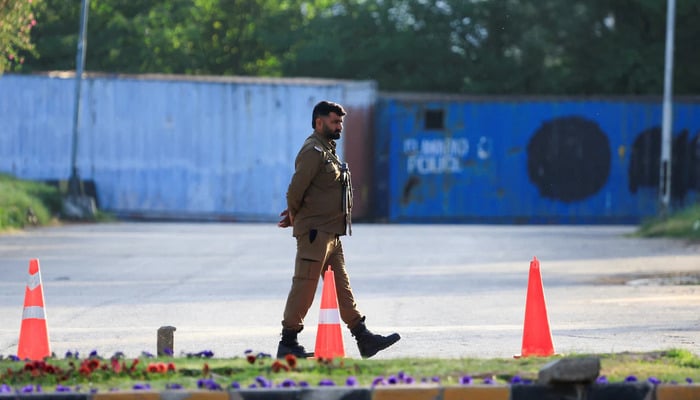
Pakistan, which has served as the main mediator, appeared to be preparing for the talks. Two giant US C-17 cargo planes landed at an air base on Sunday afternoon, carrying security equipment and vehicles in preparation for the US delegation’s arrival, two Pakistani security sources said.
Municipal authorities in the Pakistani capital of Islamabad halted public transport and heavy-goods traffic through the city. Barbed wire was rolled out near the Serena Hotel, where last week’s talks were held. The hotel told all guests to leave.
Now in its eighth week, the war has created the most severe shock to global energy supplies in history, sending oil prices surging because of the de facto closure of the strait.
Thousands of people have been killed by US-Israeli strikes on Iran and in an Israeli invasion of Lebanon conducted in parallel since the war began on February 28. Iran responded to the attacks with missiles and drones against Israeli and nearby Arab countries that host US bases.
Iran’s parliament speaker, Mohammad Baqer Qalibaf, who has led Iran’s side in the talks, had earlier said the two sides had made progress but were still far apart on nuclear issues and the Strait.
European allies, repeatedly criticised by Trump for not aiding his war effort, worry that Washington’s negotiating team is pushing for a swift, superficial deal that would require months or years of technically complex follow‑on talks.
- Suspected gunman shot dead by police after car chase.
- Shooting appears to incident of domestic violence: police.
- Official says crime scene spanning between two residences.
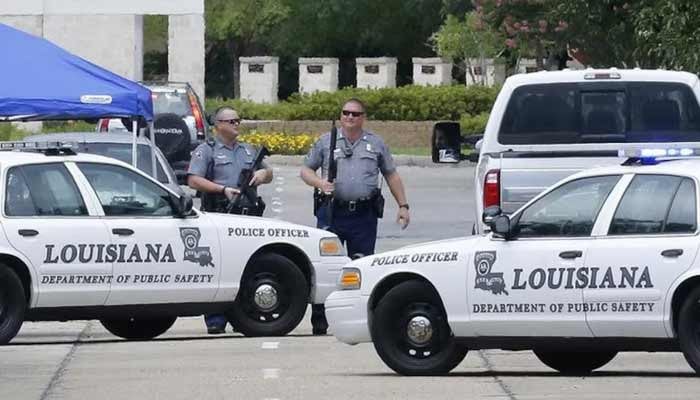
Eight children were killed in a shooting spree early Sunday in the southern US state of Louisiana, in what police said appears to have been an incident of domestic violence.
The gunman, who was not immediately identified, was fatally shot by police after a car chase, officials said.
The incident took place in the city of Shreveport, in northwestern Louisiana.
“This is a rather extensive crime scene spanning between two residences,” police Corporal Chris Bordelon told a press conference, adding that a third residence was also part of the scene being combed by investigators.
The victims ranged in age from one to 14, Bordelon said.
“Some of the children inside were his descendants,” he added.
Two other people were struck by gunfire, but their conditions were not immediately known.
The suspect carjacked a vehicle and led police on a chase before officers opened fire and the assailant was killed.
“We do believe him to be the only individual that fired gunshots at these locations,” Bordelon said, calling the incident a “domestic disturbance.”
The United States, where firearms are readily available, is a frequent scene of gun violence, with thousands of people killed every year.
“It’s a terrible morning in Shreveport and we all mourn with the victims,” Mayor Tom Arceneaux said at the press conference.


Notre Dame, Villanova to start men’s, women’s hoops season in Rome

2026 NBA playoffs: Western Conference first-round takeaways

Sarah Ferguson speaks out over Beatrice, Eugenie troubles: ‘Difficult’

-

 Fashion4 days ago
France’s LVMH Q1 revenue falls 6%, shows resilience amid Iran war
-

 Entertainment1 week ago
Palace left in shock as Prince William cancels grand ceremony
-

 Sports7 days ago
The case for Man United’s Fernandes as Premier League’s best
-
 Business7 days ago
UK could adopt EU single market rules under new legislation
-

 Sports1 week ago
Lamar Jackson hits back at critics with faithful message on social media
-

 Entertainment5 days ago
Is Claude down? Here’s why users are seeing errors
-

 Fashion7 days ago
Energy emerges as biggest cost driver in textile margins
-
 Business1 week ago
Road accidents: a massive economic challenge | The Express Tribune