

Business
Carney: Canada is ready to pick up trade talks when US is ready

Osmond Chia,Business reporter, and
Maia Davies
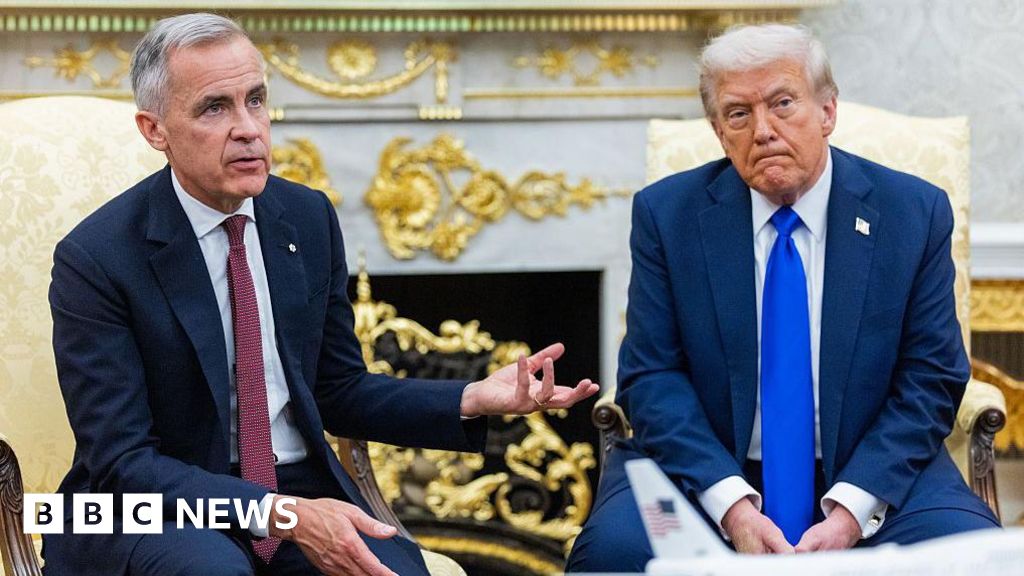
Canadian Prime Minister Mark Carney said his country is prepared to resume trade talks with the US “when the Americans are ready.”
His remarks come after US President Donald Trump announced an immediate end to all trade negotiations with Canada over an advert critical of the tariffs he has imposed on the nation.
The advert, sponsored by the Canadian province of Ontario, quotes former US President Ronald Reagan, a Republican and icon of US conservatism, saying tariffs “hurt every American”.
Trump wrote on social media that the advert was “FAKE” and “egregious”, adding that trade talks were “HEREBY TERMINATED”.
 Getty Images
The Trump administration has imposed a 35% levy on many Canadian imports, as well as individual tariffs targeting particular industries like car and steel manufacturing. Ontario has been particularly hard-hit by these.
Trump has allowed exemptions for goods that fall under a free trade agreement with Mexico and Canada, negotiated during his first term.
But since his election earlier this year, Canada’s Carney has attempted to strike a deal that would ease the tariffs. Three-quarters of Canadian exports are sold to the US, making its economy particularly vulnerable.
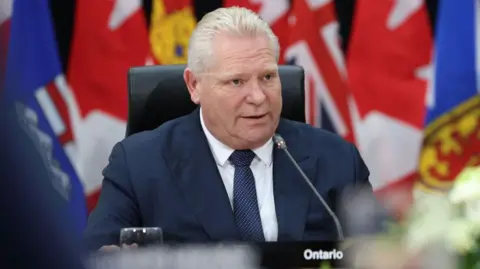
This effort has been complicated by Ontario Premier Doug Ford, who is one of the most vocal critics of the taxes levied on US firms buying Canadian products.
In the minute-long advert published last week, Reagan’s voice can be heard narrating over images that include the New York Stock Exchange and cranes adorned with both US and Canadian flags.
The video excerpts from a 1987 national radio address by Reagan that focuses on foreign trade.
“When someone says, ‘let’s impose tariffs on foreign imports’, it looks like they’re doing the patriotic thing by protecting American products and jobs. And sometimes, for a short while, it works – but only for a short time,” Reagan says in the advert.
“Over the long run, such trade barriers hurt every American, worker and consumer.
“High tariffs inevitably lead to retaliation by foreign countries and the triggering of fierce trade wars… Markets shrink and collapse, businesses and industries shut down and millions of people lose their jobs.”
The Ronald Reagan Foundation – which is charged with preserving his legacy – released a statement on Thursday saying the advert had used “selective” audio and video of the former president’s remarks.
It said the advert “misrepresents” the former president’s address, without specifying why, and accused the Ontario government of not seeking permission to use and edit the remarks.
The foundation said it was “reviewing its legal options”.
Trump referenced this statement, and said the video was designed to “interfere with” the US Supreme Court’s upcoming decision in November on whether Washington’s sweeping tariffs on many nations’ products are legal.
The court’s decision represents the biggest test of Trump’s presidential authority and signature economic policy, potentially forcing the US to refund billions collected in tariffs.
Prime Minister Carney did not address the advertisement in his remarks early on Friday. He said that Canada has made “a lot of progress” in trade talks with the US, but is also focused on “developing new partnerships” with other countries, including Asia.
He spoke as he was departing Canada for the ASEAN summit in Kuala Lumpur. Trump is also expected to attend.
Ford, meanwhile, posted the full Reagan speech on X and wrote: “Canada and the United States are friends, neighbours and allies. President Ronald Reagan knew that we are stronger together.”
While it only includes excerpts from the original, five-minute-long address, it does not alter Reagan’s words.
The order in which he makes the comments has been changed. The advert’s penultimate sentence is taken from near the beginning of his speech, and a phrase that features about halfway through the advert is likewise taken from an earlier point in the address.
The original address – titled Address to the Nation on Free and Fair Trade – is regarding a specific set of tariffs the Reagan administration had at the time imposed on some Japanese goods.
Reagan seeks to use the speech to explain why he introduced the tariffs in this “special case” despite his belief that “imposing such tariffs or trade barriers and restrictions of any kind are steps that I am loath to take”.
He makes clear that he wants to lift them as soon as possible “to promote the prosperity and economic development that only free trade can bring” – a position he stresses throughout the speech.
Trump later doubled down on his criticism of the advert, writing that “Ronald Reagan did not like Tariffs, when actually he LOVED TARIFFS FOR OUR COUNTRY, AND ITS NATIONAL SECURITY”.
Speaking to White House reporters on Friday morning, US National Economic Council Director Kevin Hassett said that “frustration has built up over time” with Canada.
“The Canadians have been very difficult,” he said.
A few minutes earlier, he told Fox Business that “sometimes when you’re frustrated, a time-out is the right call.”
“It’s probably a good time to take a break.”

 Getty Images
The advert was run as part of a campaign worth $75m Canadian dollars (£40m; $54m) on mainstream TV channels in the US.
In a post accompanying the advert last week, Ford wrote that “we’ll never stop making the case against American tariffs on Canada”.
China’s embassy in Washington also used a similar Reagan clip in a post on X to cast doubt on Trump’s global tariffs earlier this year.
Ontario is Canada’s most populous province and its largest regional economy, and has suffered the most as a result of the US tariffs.
Ford hit back at Trump’s earlier tariff threat against Canada by saying he was willing to cut off power supply to the US.
He had also described Washington’s trade policies against Canada as having pulled a knife and “yanked it into us“, and called on US lawmakers to put pressure on Trump.
Trump’s sector-specific levies on Canadian goods include a 50% levy on metals and 25% on automobiles.
The White House’s global tariffs – particularly on steel, aluminium and cars – have hit Canada hard, forcing job losses and putting pressure on businesses.
It is the second time Trump has said he was ceasing trade talks with Canada, after Ottawa announced it would impose a digital services tax on US technology firms earlier this year.
When Canada rescinded the tax, the White House said Carney had “caved” to pressure from Trump.
Business
US consumer price inflation hits 3.8% in April, highest in nearly 3 years as Iran war fuels energy costs – The Times of India
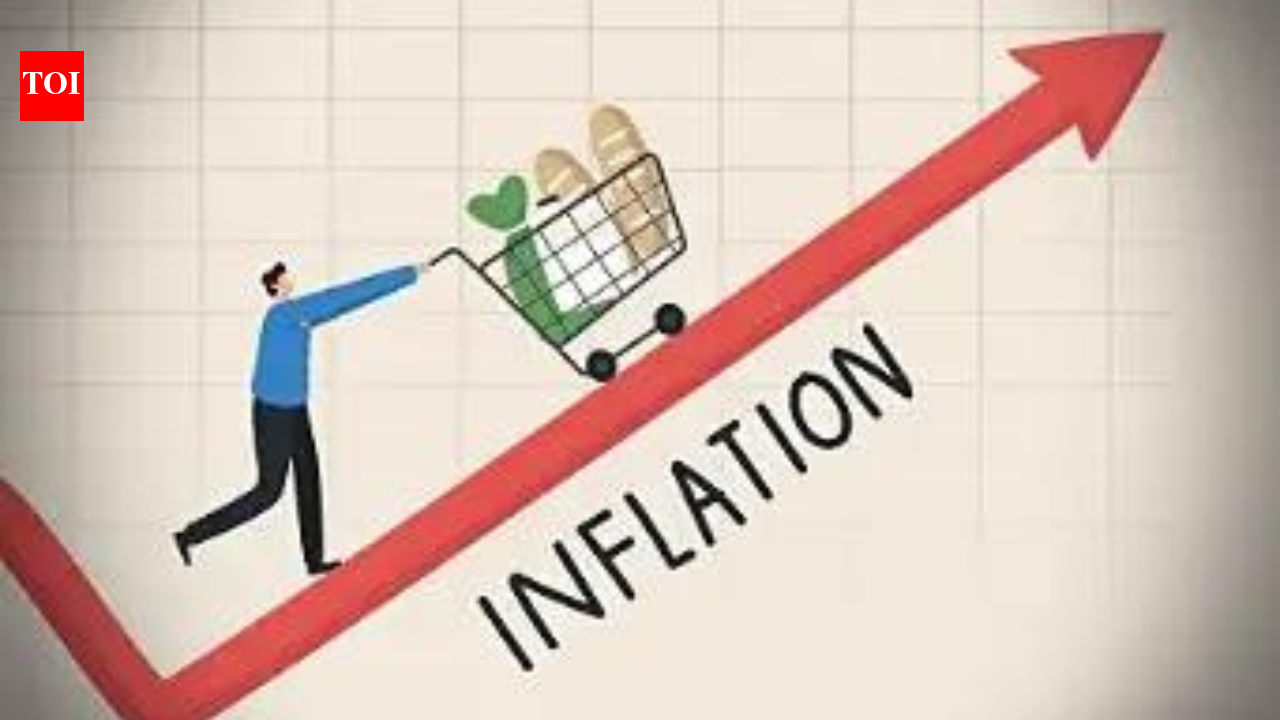
US inflation rose in April to 3.8 per cent as surging fuel costs amid the ongoing Iran-US conflict drove up consumer prices, hitting a three-year high complicating the Federal Reserve’s path on interest rates.Data released by the Labor Department on Tuesday showed the Consumer Price Index (CPI) increased 0.6 per cent in April after a 0.9 per cent jump in March, the biggest monthly rise since June 2022. On an annual basis, inflation accelerated to 3.8 per cent, marking the highest year-on-year increase, since May 2023.Petrol prices in the US are now more than 28 per cent higher than a year ago, according to official data. AAA estimates show average gasoline prices have crossed $4.50 per gallon, roughly 44 per cent above year-ago levels, squeezing household budgets and raising concerns about broader economic fallout.The spike in energy prices follows the escalation of hostilities between the US, Israel and Iran earlier this year. Markets were rattled after Tehran blocked access through the Strait of Hormuz — a critical global energy route that handles nearly one-fifth of the world’s oil and liquefied natural gas supplies.Core inflation, which excludes food and energy prices, remained relatively contained. Core CPI rose 0.4 per cent month-on-month and 2.8 per cent annually, suggesting that higher fuel costs have not yet fully spread across the wider economy.Food prices also edged higher in April. Grocery costs rose 0.7 per cent from March, led by increases in meat prices after a slight decline in the previous month.The latest inflation reading adds to uncertainty for the Federal Reserve, which had earlier been expected to begin cutting interest rates in 2026. Policymakers are now signalling caution amid fears that prolonged geopolitical tensions and elevated oil prices could trigger another wave of inflation.US President Donald Trump has repeatedly criticised the Fed for not lowering borrowing costs faster to support economic growth. Attention is now turning to Kevin Warsh, Trump’s nominee to succeed outgoing Federal Reserve Chair Jerome Powell, whose Senate confirmation is expected this week.Higher fuel costs are also beginning to weigh on corporate America. Appliance maker Whirlpool Corporation said last week that quarterly revenue fell nearly 10 per cent, warning that the war-driven economic slowdown had severely dented consumer confidence.

EBay has turned down a 56 billion US dollar (£41.4 billion) takeover move from GameStop, labelling the proposal as “neither credible or attractive”.
GameStop boss Ryan Cohen launched an unsolicited offer of 125 dollars (£92.40) per share – half in cash and half in GameStop stock – to eBay shareholders last week.
However, the online marketplace’s board confirmed on Tuesday that it had now rejected the move.
In a letter, eBay chairman Paul Pressler said it reviewed the offer but believes that eBay is a “strong, resilient business”.
He added: “We have sharpened our strategic focus, strengthened execution, enhanced our marketplace and seller experience, and consistently returned capital to shareholders.
“With its differentiated global marketplace and a clear strategy, eBay’s board is confident that the company, under its current management team, is well-positioned to continue to drive sustainable growth, execute with discipline, and deliver long-term value for our shareholders.”
GameStop, which runs around 1,600 shops around the US, said it started accumulating eBay shares earlier this year and currently has a 5% stake.
Mr Cohen had previously indicated he would take his proposal directly to eBay shareholders if the company’s board rejected the deal.
Business
India’s retail inflation jumps to over one-year high at 3.48 per cent in April – The Times of India
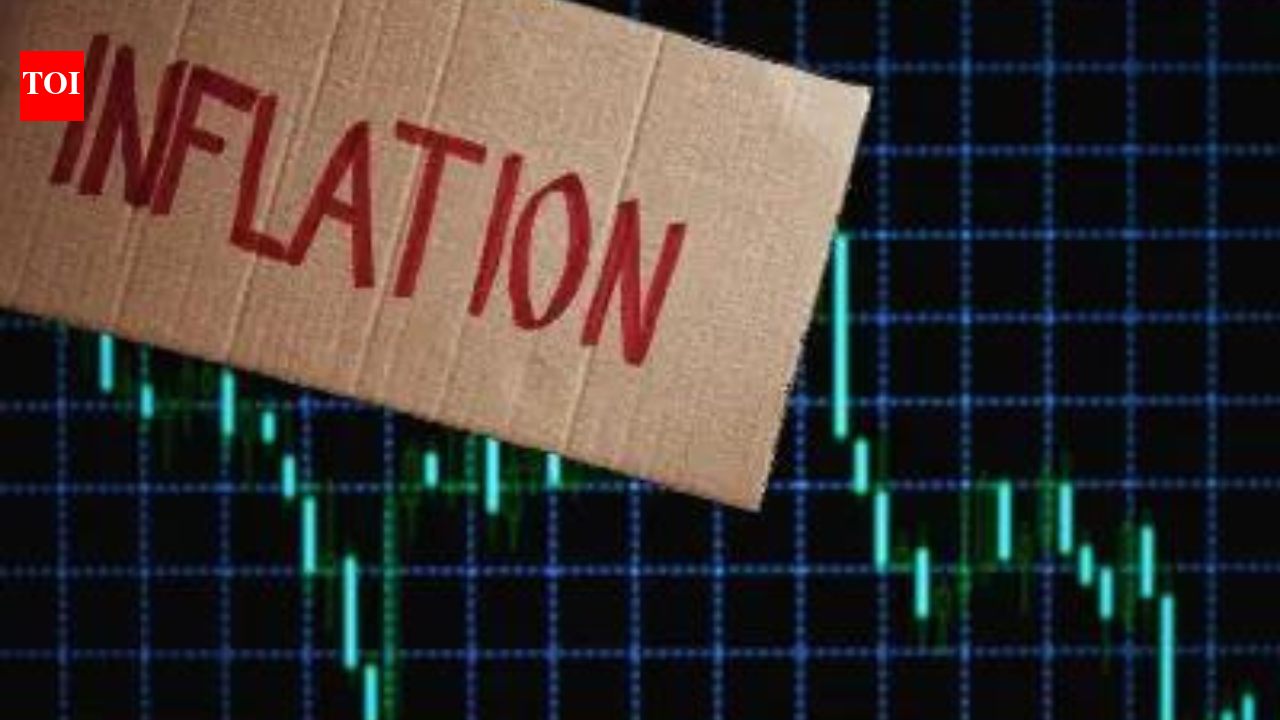
India’s retail inflation rose to a more than one-year high of 3.48 per cent in April from 3.40 per cent in March, driven mainly by higher food prices, according to data released by ministry of statistics & programme implementation on Monday. Food inflation, measured by the Consumer Food Price Index (CFPI), also accelerated to 4.20 per cent in April from 3.87 per cent last month, indicating broader price pressures across household essentials. Meanwhile, inflation in rural areas stood at 3.74 per cent, higher than the 3.16 per cent recorded in urban India.Among key items, silver jewellery recorded the sharpest inflation at 144.34 per cent in April, though slightly lower than 148.42 per cent in March. Gold, diamond and platinum jewellery inflation also remained elevated at 40.72 per cent. Among key food items, tomato prices surged 35.28 per cent year-on-year in April, while potato and onion prices remained in deflation at minus 23.69 per cent and minus 17.67 per cent, respectively. The personal care and miscellaneous goods category recorded the sharpest inflation at 17.66 per cent, while transport inflation remained largely flat at minus 0.01 per cent. India’s retail inflation has now risen for the second consecutive month, inching closer to the Reserve Bank of India’s 4 per cent medium-term target. The RBI last month projected CPI inflation for 2026-27 at 4.6 per cent and warned that elevated global energy prices due to the Middle East conflict, along with possible El Niño conditions affecting the monsoon, could pose upside risks to inflation.


Stars of "Dutton Ranch" on reprising their "Yellowstone" roles for the spinoff

2025-26 NBA Title Odds: Thunder, Spurs Favored; Knicks Rising
US consumer price inflation hits 3.8% in April, highest in nearly 3 years as Iran war fuels energy costs – The Times of India

-

 Politics1 week ago
Iran weighs US reply delivered via Pakistan as Trump signals opposition to deal terms
-

 Tech1 week ago
DHS Demanded Google Surrender Data on Canadian’s Activity, Location Over Anti-ICE Posts
-
 Business1 week ago
Heineken to invest £44.5m in hundreds of pubs creating 850 jobs
-

 Entertainment1 week ago
Jelly Roll reacts to daughter Bailee Ann’s major life milestone
-
 Business1 week ago
Heineken plans huge investment in hundreds of UK pubs ahead of World Cup
-

 Tech4 days ago
A new frontier: Identity stack evolves for agentic systems | Computer Weekly
-

 Tech4 days ago
‘Orbs,’ ‘Saucers,’ and ‘Flashes’ on the Moon: Pentagon Drops New UFO Files
-

 Tech5 days ago
What Microsoft Executives Really Thought About OpenAI in 2018