

Business
FTSE 100 hits record high after optimistic UK economic reports


The FTSE 100 hit another record peak on Friday fuelled by weaker-than-expected US inflation data, optimistic UK economic reports and strong results from NatWest.
The FTSE 100 index closed up 67.05 points, 0.7%, at 9,645.62, a new record close.
The FTSE 250 ended 167.61 points higher, 0.8%, at 22,529.02 and the AIM All-Share advanced 1.77 points, 0.2%, at 777.06.
For the week, the FTSE 100 rose 3.1%, the FTSE 250 advanced 3.4% and the AIM All-Share went up 0.7%.
In Europe on Friday, the CAC 40 in Paris ended flat, while the DAX 40 in Frankfurt closed up 0.1%.
Stocks in New York were sharply higher at the time of the London close. The Dow Jones Industrial Average was up 1.2%, the S&P 500 was 1.0% higher, and the Nasdaq Composite advanced 1.3%.
The yield on the US 10-year Treasury was quoted at 4.00%, unchanged from Thursday. The yield on the US 30-year Treasury stood at 4.58%, also flat from Thursday.
After a sluggish start, blue chips in London pushed ahead after US consumer price inflation accelerated at a slower pace than expected in September.
The delayed numbers from the Bureau of Labour Statistics showed the annual consumer price inflation rate was 3.0% in September, picking up speed from 2.9% in August.
But the reading was short of the FXStreet-cited consensus of 3.1%.
Core CPI, which excludes more volatile food and energy costs, rose 0.2% month-on-month, and 3.0% year-on-year. It had been expected to hold steady at August’s 3.1% level.
The figures were seen as giving the green light for the US Federal Reserve to lower rates at next week’s Federal Open Market Committee (FOMC) meeting. A quarter point cut is expected.
Analysts at Wells Fargo said: “Today’s softer-than-expected CPI data should lock the FOMC into a 25 (basis points) rate cut at its meeting next week. That said, today’s data were not so soft that the committee can sound the all clear on inflation.”
Economists think US inflation could remain “sticky” in 2026 due to the ongoing impact of tariffs and that this could have implications for future interest rate decisions.
Felix Schmidt, at Berenberg, thinks elevated inflation will make it difficult for the Fed to lower the key interest rate again beyond its October meeting.
In the UK, there was a welcome surprise from retail sales data which rose 0.5% in September, defying forecasts for a 0.2% fall.
Danni Hewson, AJ Bell head of financial analysis, said the figures should bring “cautious optimism” ahead of the sector’s most important shopping period, with Black Friday and Christmas looming.
Adding to the positive tone, flash PMI data showed business activity in the UK expanded at a faster pace in October, led by a rebound in manufacturing. The S&P Global flash composite output index climbed to 51.1 points, exceeding both the 50 no-change threshold and expectations for 50.6.
September’s reading had slipped to 50.1 points. The latest data showed the slowest pace of job cuts since May and the weakest input price inflation since November 2024.
In addition, consumer confidence increased marginally in October as shoppers look to Black Friday, despite nervousness around the upcoming Budget, figures showed.
GfK’s long-running consumer confidence index increased by two points, although it still languishes at minus 17.
The increase was largely driven by a four-point rise in the index’s major purchase marker, an indicator of confidence in buying big-ticket items, to minus 12, a nine-point improvement on last October.
The pound was quoted lower at 1.3301 dollars at the time of the London equity market close on Friday, compared to 1.3323 on Thursday.
The euro stood at 1.1631 dollars , up compared to 1.1609.
On the FTSE 100, it was nip-and-tuck between NatWest and London Stock Exchange Group for top billing, with the two swapping places as the trading day progressed.
Lender NatWest eventually won out, rising 4.9%, and hitting a 15-year high as the bank lifted its annual guidance and said profit in its third quarter jumped by around a third.
The Edinburgh-based lender reported third quarter pretax profit of £2.18 billion, a rise of 30% from £1.67 billion a year prior. Total income improved 16% to £4.33 billion from £3.74 billion.
London Stock Exchange Group took the silver medal, advancing 4.8%, after Thursday’s well-received trading update.
Elsewhere, the retail sales surprise and an upgrade helped do-it-yourself retailer Kingfisher, which rose 1.9%.
RBC Capital Markets raised the B&Q owner to “outperform” from “sector perform” on hopes that growth opportunities for Kingfisher in the UK and Poland, would provide upside to longer-term sales forecasts.
On the FTSE 250, WH Smith rose 4.2% as Peel Hunt upgraded to “buy” from “hold”, after being downgraded by Barclays on Thursday.
Next month, the Swindon-based company is expected to disclose findings into an investigation of its US business following an understatement of profit.
But Peel Hunt thinks even in a scenario that the US is worth “literally nothing”, the “shares are still worth owning” for its other divisions.
Brent oil traded at 66.56 dollars a barrel, up from 65.75 late Thursday. Gold traded at 4,125.47 dollars an ounce on Friday, down from 4,146.49 on Thursday.
The biggest risers on the FTSE 100 were NatWest Group, up 26.8 pence at 572.4p, London Stock Exchange Group, up 450.0p at 9,799.0p, Tesco, up 9.8p at 455.4p, Next, up 280.0p at 13,435.0p and Polar Capital Technology Trust, up 8.5p at 450.0p.
The biggest fallers on the FTSE 100 were GSK, down 26.5p at 1,620.0p, Airtel Africa, down 2.4p at 228.0p, Hikma Pharmaceuticals, down 17.0p at 1,753.0p, Diageo, down 15.0p at 1,811.0p and LondonMetric Property, down 1.6p at 196.9p.
Contributed by Alliance News

A key survey indicates growing doubt among shoppers over prospects for the UK economy in the next year.
Source link

Food delivery giant Just Eat, funeral firm Dignity and motor platform Autotrader are among five firms under investigation by the UK’s competition watchdog as part of its crackdown on fake and misleading online reviews.
The Competition and Markets Authority (CMA) said it had launched probes against the companies – also including customer review and feedback firm Feefo and Pasta Evangelists – to see whether consumer laws have been broken.
Since April last year, companies have been banned from certain tactics around online reviews under law, such as fake posts, paid-for reviews that are not clearly marked as incentivised, as well as for hiding negative feedback.
Sarah Cardell, chief executive of the CMA, said: “Fake reviews strike at the heart of consumer trust – with many of us worrying about misleading content when looking at reviews online.
“With household budgets under pressure, people need to know they’re getting genuine information – not reviews or star ratings that have been manipulated to push them towards the wrong choice.
“We’ve given businesses the time to get things right. Now we’re deploying our new powers to tackle some of the most harmful practices head on.”
The CMA said it was looking into whether Just Eat’s ratings system had inflated some restaurant and grocer star ratings, giving a misleading picture of quality.
For Autotrader and Feefo, the CMA is investigating whether a number of one-star reviews – moderated by Feefo, which handles reviews for the new and used car site – were hidden on the platform and did not count towards the star ratings.
Dignity is under investigation by the CMA into whether it asked staff to write positive reviews about the firm’s crematoria services.
And artisan fresh pasta chain Pasta Evangelists is being probed over allegations it offered customers discounts for leaving five-star reviews on delivery apps without this being disclosed.
If the CMA finds the firms have broken the law, it can order them to change their practices and fine them up to 10% of their annual global sales.
An Autotrader spokesperson said: “We endeavour always to operate as a responsible and compliant business and will co-operate fully with the CMA’s investigation.”
It comes after the CMA recently secured commitments from Google and Amazon to beef up their systems to identify and remove fake reviews.
Amazon last June agreed to put in place “robust processes” to quickly detect and remove fake reviews alongside sanctions for rogue sellers and businesses after an investigation by the CMA to curb the customer hazard.
The tech giant said it would sanction businesses that boost their star ratings via bogus reviews or catalogue abuse, including bans from selling on the website, while users could also be banned for posting fake reviews.
Consumer group Which? welcomed the investigations and said the CMA must “get tough” on firms found to be breaking the law with reviews.
Sue Davies, head of consumer rights policy at Which?, said: “Investigations are a welcome first step, but enforcement will be key – the regulator must be prepared to get tough, use its powers and issue serious fines if these companies aren’t playing by the rules.”
The CMA said it swept more than 100 review publishers as part of the clampdown and sent advisory letters to 54 firms to improve their compliance with the law, with 90% having made changes in response and 75% telling the watchdog they better understood the rules.
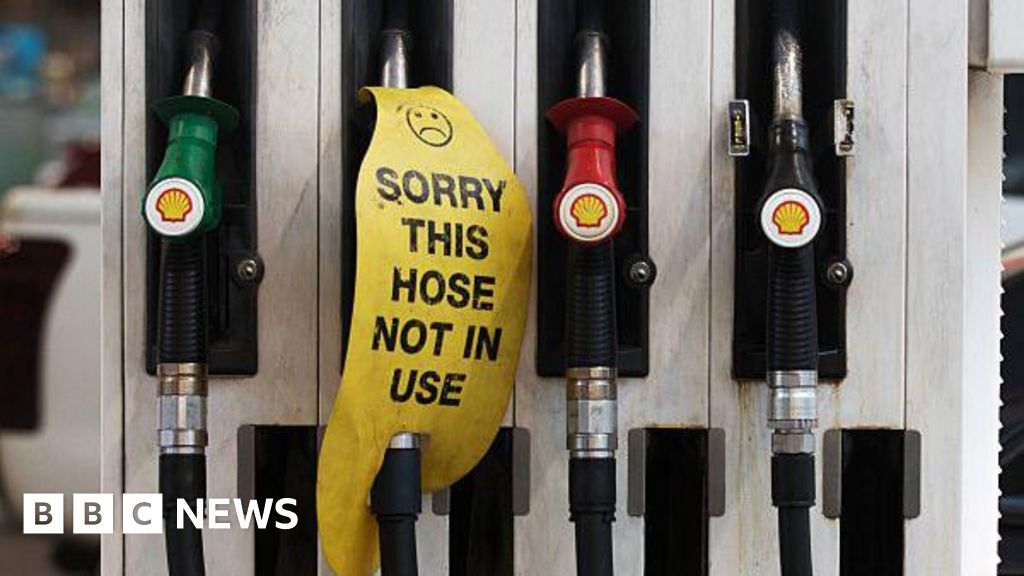
Anthony Albanese says nation’s supply remains “secure” amid reports of panic buying and shortages.
Source link

Consumer confidence hit by ‘ripple of fear’ over Iran war

Transfer rumors, news: Could Foden leave Man City this summer?

Germany’s ifo index drops to 86.4 in March as uncertainty weighs on

-

 Fashion1 week ago
Sales at US apparel, clothing accessories stores up 4% YoY in Jan 2026
-

 Entertainment1 week ago
Val Kilmer revived 1 year after death through AI
-
 Fashion1 week ago
US’ G-III Apparel’s FY26 sales fall 7% to $2.96 bn
-

 Sports1 week ago
March Madness 2026 – How to watch in SA, start time, schedule, TV channel for NCAA championship basketball tournament
-
 Business1 week ago
Brits cashing in jewellery as gold price hits record high
-

 Fashion6 days ago
China’s textile & apparel exports surge 17% to $50 bn in Jan-Feb 2026
-
 Business6 days ago
Flipkart group CFO to leave co amid IPO plans – The Times of India
-
 Business1 week ago
Video: The Effects of High Oil Prices