

Business
FTSE 100 hits record high after optimistic UK economic reports

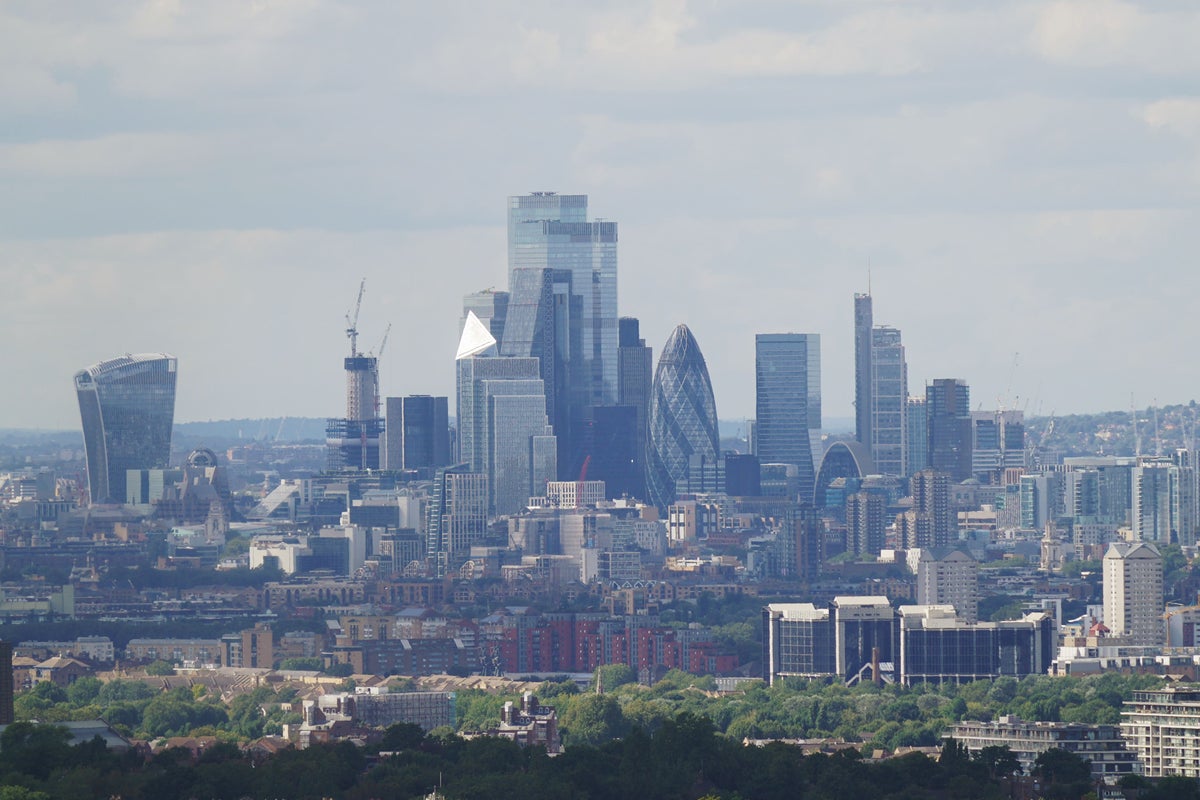
The FTSE 100 hit another record peak on Friday fuelled by weaker-than-expected US inflation data, optimistic UK economic reports and strong results from NatWest.
The FTSE 100 index closed up 67.05 points, 0.7%, at 9,645.62, a new record close.
The FTSE 250 ended 167.61 points higher, 0.8%, at 22,529.02 and the AIM All-Share advanced 1.77 points, 0.2%, at 777.06.
For the week, the FTSE 100 rose 3.1%, the FTSE 250 advanced 3.4% and the AIM All-Share went up 0.7%.
In Europe on Friday, the CAC 40 in Paris ended flat, while the DAX 40 in Frankfurt closed up 0.1%.
Stocks in New York were sharply higher at the time of the London close. The Dow Jones Industrial Average was up 1.2%, the S&P 500 was 1.0% higher, and the Nasdaq Composite advanced 1.3%.
The yield on the US 10-year Treasury was quoted at 4.00%, unchanged from Thursday. The yield on the US 30-year Treasury stood at 4.58%, also flat from Thursday.
After a sluggish start, blue chips in London pushed ahead after US consumer price inflation accelerated at a slower pace than expected in September.
The delayed numbers from the Bureau of Labour Statistics showed the annual consumer price inflation rate was 3.0% in September, picking up speed from 2.9% in August.
But the reading was short of the FXStreet-cited consensus of 3.1%.
Core CPI, which excludes more volatile food and energy costs, rose 0.2% month-on-month, and 3.0% year-on-year. It had been expected to hold steady at August’s 3.1% level.
The figures were seen as giving the green light for the US Federal Reserve to lower rates at next week’s Federal Open Market Committee (FOMC) meeting. A quarter point cut is expected.
Analysts at Wells Fargo said: “Today’s softer-than-expected CPI data should lock the FOMC into a 25 (basis points) rate cut at its meeting next week. That said, today’s data were not so soft that the committee can sound the all clear on inflation.”
Economists think US inflation could remain “sticky” in 2026 due to the ongoing impact of tariffs and that this could have implications for future interest rate decisions.
Felix Schmidt, at Berenberg, thinks elevated inflation will make it difficult for the Fed to lower the key interest rate again beyond its October meeting.
In the UK, there was a welcome surprise from retail sales data which rose 0.5% in September, defying forecasts for a 0.2% fall.
Danni Hewson, AJ Bell head of financial analysis, said the figures should bring “cautious optimism” ahead of the sector’s most important shopping period, with Black Friday and Christmas looming.
Adding to the positive tone, flash PMI data showed business activity in the UK expanded at a faster pace in October, led by a rebound in manufacturing. The S&P Global flash composite output index climbed to 51.1 points, exceeding both the 50 no-change threshold and expectations for 50.6.
September’s reading had slipped to 50.1 points. The latest data showed the slowest pace of job cuts since May and the weakest input price inflation since November 2024.
In addition, consumer confidence increased marginally in October as shoppers look to Black Friday, despite nervousness around the upcoming Budget, figures showed.
GfK’s long-running consumer confidence index increased by two points, although it still languishes at minus 17.
The increase was largely driven by a four-point rise in the index’s major purchase marker, an indicator of confidence in buying big-ticket items, to minus 12, a nine-point improvement on last October.
The pound was quoted lower at 1.3301 dollars at the time of the London equity market close on Friday, compared to 1.3323 on Thursday.
The euro stood at 1.1631 dollars , up compared to 1.1609.
On the FTSE 100, it was nip-and-tuck between NatWest and London Stock Exchange Group for top billing, with the two swapping places as the trading day progressed.
Lender NatWest eventually won out, rising 4.9%, and hitting a 15-year high as the bank lifted its annual guidance and said profit in its third quarter jumped by around a third.
The Edinburgh-based lender reported third quarter pretax profit of £2.18 billion, a rise of 30% from £1.67 billion a year prior. Total income improved 16% to £4.33 billion from £3.74 billion.
London Stock Exchange Group took the silver medal, advancing 4.8%, after Thursday’s well-received trading update.
Elsewhere, the retail sales surprise and an upgrade helped do-it-yourself retailer Kingfisher, which rose 1.9%.
RBC Capital Markets raised the B&Q owner to “outperform” from “sector perform” on hopes that growth opportunities for Kingfisher in the UK and Poland, would provide upside to longer-term sales forecasts.
On the FTSE 250, WH Smith rose 4.2% as Peel Hunt upgraded to “buy” from “hold”, after being downgraded by Barclays on Thursday.
Next month, the Swindon-based company is expected to disclose findings into an investigation of its US business following an understatement of profit.
But Peel Hunt thinks even in a scenario that the US is worth “literally nothing”, the “shares are still worth owning” for its other divisions.
Brent oil traded at 66.56 dollars a barrel, up from 65.75 late Thursday. Gold traded at 4,125.47 dollars an ounce on Friday, down from 4,146.49 on Thursday.
The biggest risers on the FTSE 100 were NatWest Group, up 26.8 pence at 572.4p, London Stock Exchange Group, up 450.0p at 9,799.0p, Tesco, up 9.8p at 455.4p, Next, up 280.0p at 13,435.0p and Polar Capital Technology Trust, up 8.5p at 450.0p.
The biggest fallers on the FTSE 100 were GSK, down 26.5p at 1,620.0p, Airtel Africa, down 2.4p at 228.0p, Hikma Pharmaceuticals, down 17.0p at 1,753.0p, Diageo, down 15.0p at 1,811.0p and LondonMetric Property, down 1.6p at 196.9p.
Contributed by Alliance News
Business
Saudi Arabia pumps 7 million bpd via east-west pipeline amid Hormuz disruption – The Times of India

Saudi Arabia has brought its East-West pipeline into full operation, pushing 7 million barrels of oil a day through the route as it works to maintain supplies following the effective shutdown of the Strait of Hormuz, a person familiar with the matter said. The pipeline, which runs across the kingdom to the Red Sea, has become central to efforts to keep exports moving. Oil shipments are now being rerouted to Yanbu, where tankers are loading crude for international markets, offering a crucial alternative at a time when the main passage has been disrupted, Bloomberg reported. According to the person cited by the agency, crude shipments from Yanbu have reached about 5 million barrels a day. In addition, between 700,000 and 900,000 barrels a day of refined products are being exported. Of the total volume transported via the pipeline, around 2 million barrels a day is directed to domestic refineries.Though, even at full capacity, the route does not fully replace the volumes previously shipped through Hormuz, which handled roughly 15 million barrels a day before the war, the availability of this alternative has helped limit the extent of price increases compared to earlier supply disruptions. Market concerns are now shifting towards the Red Sea after Yemen’s Houthis said they are entering the war. While there has been no indication of plans to target vessels passing through the Red Sea or the Bab El-Mandeb strait, the group has in the past threatened shipping in the region using drones and missiles. Saudi Arabia had long prepared for a scenario in which Hormuz could be shut. Its contingency plan was put into action within hours of the first US and Israeli strikes on Iran, with flows along the east-west pipeline increasing steadily since then. The pipeline stretches more than 1,000 kilometres (620 miles) from oil-producing regions in the east of the country to Yanbu on the Red Sea coast. It was originally developed in response to risks highlighted during the 1980s Iran-Iraq war, when tanker attacks disrupted movement through the Strait, though the current situation has led to a near-closure on a scale not seen before.
Business
From office desks to dark streets: How the oil crunch is reshaping daily life in different nations – The Times of India
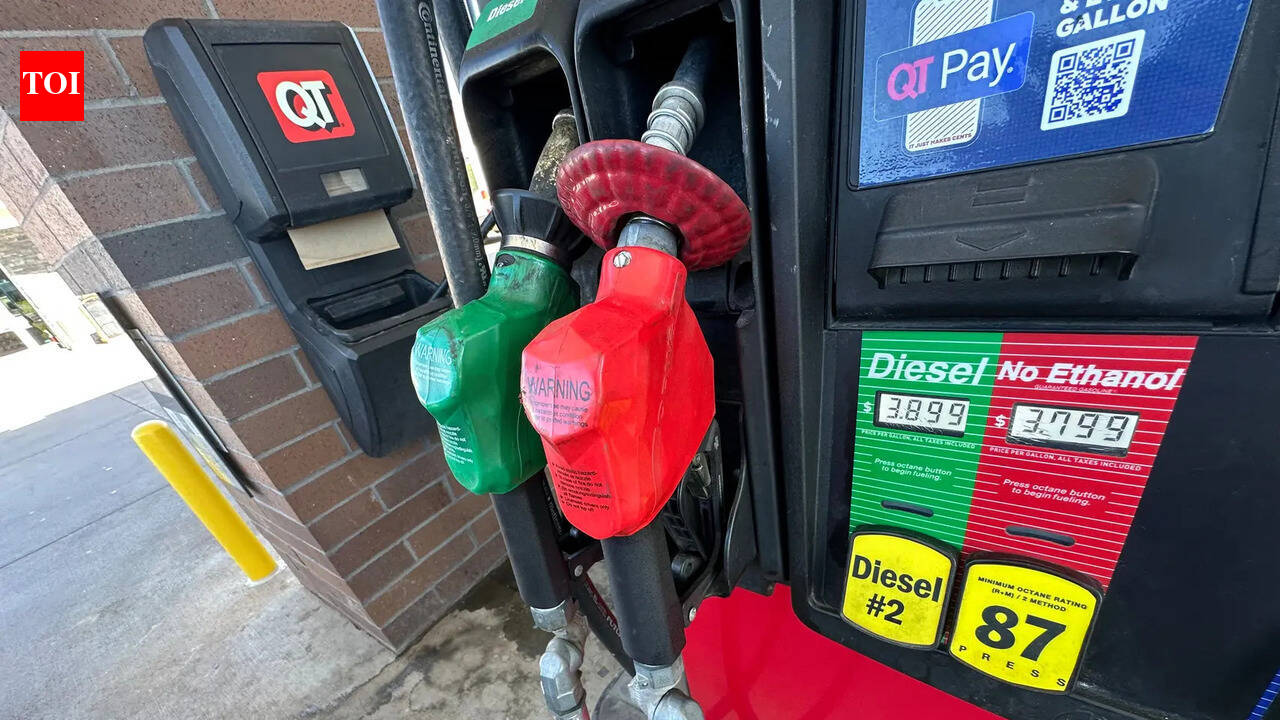
A month into the Middle East conflict, its ripple effects are felt across economies worldwide. The crisis was triggered on February 28, when the United States and Israel launched joint strikes on Iran, setting off a chain of events that has tightened Tehran’s grip over the strategically vital Strait of Hormuz. This narrow sea passage, linking the Persian Gulf with the Gulf of Oman and the Arabian Sea, remains one of the world’s most critical energy routes. At its narrowest, it spans just 29 nautical miles, with limited navigable channels for shipping.Carrying around 20 million barrels of oil daily, nearly a quarter of global seaborne trade, any disruption here has far-reaching consequences. As supplies come under strain, countries are scrambling to manage the fallout while cushioning consumers through a mix of policy responses. While some have raised fuel prices, others restructured taxes to protect consumers.
Vietnam
Vietnam consumers have breathed a sigh of relief as the country has lowered fuel prices. Faced with a sharp spike in fuel costs, Vietnam rolled out emergency measures to bring costs under control. Authorities have suspended environmental protection taxes on petrol, diesel and aviation fuel until mid-April, in a bid to steady the domestic market. The trade ministry described the step as “an urgent and effective solution to stabilize the petroleum market and ensure national energy security amidst the escalating conflict in the Strait of Hormuz, which is creating the ‘biggest energy bottleneck ever’.” The move has led to a steep fall in prices, with petrol dropping by roughly 26% and diesel by more than 15% after earlier surges.
Venezuela
In Venezuela, prolonged high temperatures have intensified pressure on an already strained power system, prompting the government to scale back activity. Interim president Delcy Rodriguez announced a week-long suspension of work across the public sector, including education, as part of an electricity-saving drive. “During this Holy Week, I want to announce that I have decreed days off on Monday, Tuesday, Wednesday, Thursday and Friday for the entire education sector,” she said, adding that the country had endured “45 days of high temperatures.” While essential services will remain operational, the step reflects ongoing challenges in managing electricity demand.
India
In India, the government has taken a range of steps to cushion consumers and companies from the ongoing energy supply crisis. With refining costs climbing sharply, the government reduced excise duty on petrol and diesel by Rs 10 per litre each, despite the impact on state revenues. At the same time, export duties were introduced on diesel and aviation turbine fuel to manage supply pressures. Officials insisted there is no shortage of petrol, diesel or LPG, dismissing claims of disruption as a “coordinated misinformation campaign.” Domestic LPG availability remains stable, with production increased and states asked to expand commercial distribution.
Pakistan
Pakistan is facing mounting pressure from rising fuel costs, with the government adjusting prices selectively while trying to shield consumers. Kerosene prices have been increased by PKR 4.66 per litre to PKR 433.40, effective March 28, even as petrol and diesel rates remain unchanged at PKR 321.17 and PKR 335.86 per litre. Authorities said the decision aims to protect consumers from global price swings, with the state absorbing part of the burden through payments of PKR 95.59 per litre on petrol and PKR 203.88 per litre on diesel to oil marketing companies.At the same time, aviation fuel prices have surged sharply, rising for the fifth time in 28 days. A latest increase of PKR 5 per litre has pushed jet fuel to a record PKR 476.97 per litre, up from PKR 188 at the start of March — a jump of PKR 288. Airlines have already raised fares, with domestic one-way tickets on routes such as Karachi-Islamabad and Karachi-Lahore reaching up to PKR 40,000, while “chance seat” fares have surged by as much as 150%. Amid these pressures, work patterns are also adjusting in response to the energy strain, with measures aimed at reducing overall fuel consumption forming part of the wider response.
Egypt
Egypt has introduced a series of temporary restrictions to reduce energy consumption as fuel costs climb. Retail outlets, restaurants and cafes are now required to shut by 21:00 each night, alongside measures such as reduced street lighting and limited remote working. The government termed these “exceptional measures” in response to mounting pressure on energy supplies. Egyptian PM Mostafa Madbouly said that the country’s petrol expenditure had more than doubled in recent months. Although tourism-related businesses are exempt, the wider economy is feeling the strain, particularly due to reliance on imported fuel.
Sri Lanka
Sri Lanka is tightening energy use as supply disruptions continue to strain the country’s fuel system. With around 60 percent of its energy imported and limited reserves covering barely a month, authorities have reintroduced a QR-based rationing system. Weekly limits have been set, including eight litres for motorbikes, 20 for tuk-tuks, 25 for cars, 100 litres of diesel for buses and 200 for lorries. Fuel prices have also risen by about 33 percent since the start of the war, adding pressure on households.To curb consumption, the government has introduced a no-work-on-Wednesday policy, shutting offices and schools on that day. Alongside fuel shortages, Sri Lankan citizens are also struggling with disrupted fertiliser supplies which could push food prices higher, with estimates pointing to a potential 15% increase, further compounding the cost-of-living strain.
Business
India opposes China-led IFD pact’s inclusion; flags risks to WTO framework and core principles – The Times of India

India on Saturday said it has strongly opposed the China-led Investment Facilitation for Development (IFD) Agreement being incorporated into the World Trade Organisation (WTO) framework, flagging concerns over its systemic implications, PTI reported.The issue was raised at the ongoing 14th ministerial conference (MC14) of the WTO in Yaounde, Cameroon, where Commerce and Industry Minister Piyush Goyal said such a move could weaken the institution’s foundational structure.“Incorporation of the IFD agreement risks eroding the functional limits of the WTO and undermining its foundational principles,” Goyal said in a social media post.“At #WTOMC14, drawing inspiration from Mahatma Gandhi ji’s philosophy of Truth prevailing over conformity, India showed the courage to stand alone on the contentious issue of the IFD Agreement and did not agree to its incorporation into the WTO framework as an Annex 4 Agreement,” he said.Annex 4 of the WTO Agreement contains Plurilateral Trade Agreements that are binding only on members that have accepted them, unlike multilateral agreements which apply to all members.Goyal said that as part of WTO reform discussions, members are deliberating on guardrails and legal safeguards for plurilateral agreements before integrating any such outcomes into the framework.“In view of the systemic issue at hand, India showed openness to have good faith, comprehensive discussions and constructive engagement under the WTO Reform Agenda,” he added.India had also opposed the pact during the WTO’s 13th ministerial conference (MC13) in Abu Dhabi.The Investment Facilitation for Development proposal was first mooted in 2017 by China and a group of countries that rely significantly on Chinese investments, including those with sovereign wealth funds. The agreement, if adopted, would be binding only on signatory members.


Venezuela’s Maduro thanks supporters in first online post from US prison

Global ‘No Kings’ protests target Trump and war on Iran

Arizona beats Purdue to make first Final Four since 2001

-
 Business1 week ago
Flipkart group CFO to leave co amid IPO plans – The Times of India
-

 Sports1 week ago
Rating Adidas’ 2026 World Cup away shirts: Argentina, Spain, Mexico and more
-

 Fashion1 week ago
China’s textile & apparel exports surge 17% to $50 bn in Jan-Feb 2026
-

 Sports1 week ago
American Conference Commissioner Tim Pernetti thanks Trump for Army-Navy game executive order
-
Tech1 week ago
The Corsair 4000D RS PC Case Keeps Your System Cool
-

 Tech1 week ago
Gamers Hate Nvidia’s DLSS 5. Developers Aren’t Crazy About It, Either
-

 Sports1 week ago
How to watch 2026 NCAA swimming and diving championships
-
 Business5 days ago
Property Play: Home flippers see smallest profits since the Great Recession, real estate data firm says