

Politics
States, world leaders must act to end impunity for crimes against journalists: IPI

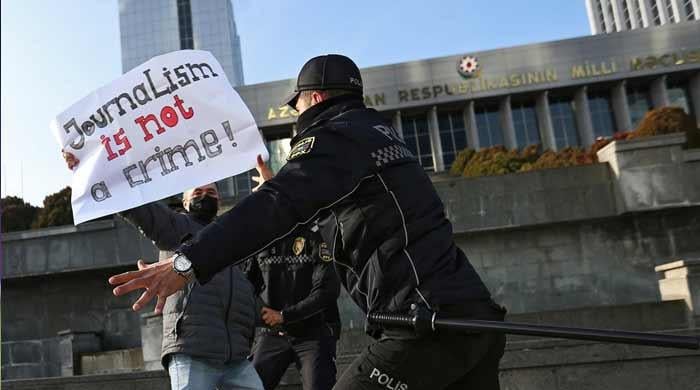
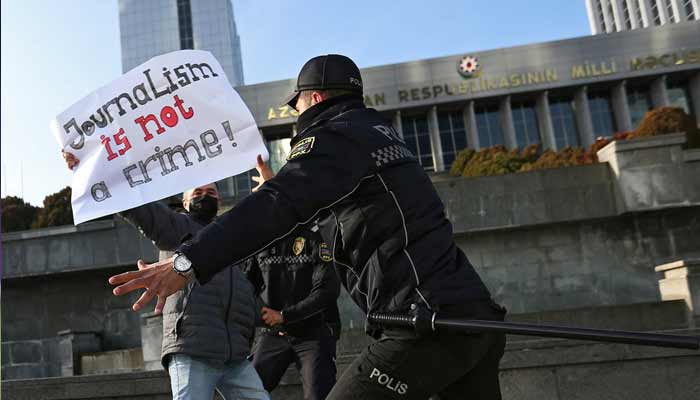
The International Press Institute (IPI) has urged states and world leaders to demonstrate political will to address the global crisis of impunity for crimes against journalists, warning that the lack of accountability has emboldened attacks on the press worldwide.
According to a press release, the IPI members unanimously adopted the resolution on October 15, 2025, during its 74th annual General Assembly, later presenting it at the IPI World Congress held on October 25 in Vienna, Austria.
“Around the world, journalists are threatened, attacked, and killed — and in nearly all cases, these crimes go unpunished. This impunity prevails despite international commitments by states to ensure accountability for attacks on the press,” the press release stated.
The resolution noted that the situation is most evident in Gaza, where at least 235 journalists have been killed by Israeli forces since the start of the war two years ago — without a single credible or independent investigation.
It added that beyond Gaza, journalists in Haiti, Sudan, Somalia, and Mexico face killings, intimidation, and kidnappings with near-total impunity, representing a “global breakdown” of laws and norms protecting press freedom.
“These cases highlight the global nature of the crisis of impunity and accountability in which blatant violations of laws and norms by the powerful have become routine, and perpetrators face little or no risk of justice,” it added.
The IPI stressed that the entrenched impunity for crimes against journalists is eroding the rule of law, empowering authoritarianism, and weakening democratic freedoms, calling on states to uphold their legal obligation to investigate and prosecute such violations.
‘Human-made journalism must be prioritised’
The institute also adopted another resolution, reaffirming the value of human-made journalism as a cornerstone of democratic societies and a guarantor of truth in the public interest in the age of artificial intelligence (AI).
It urged policymakers, technology companies, and global stakeholders to safeguard the future of human-made journalism amid the rapid rise of AI, emphasising that responsible innovation must not replace the essential human role in news production.
The IPI warned that AI-driven algorithms, controlled by a few technology companies, increasingly dictate what people read and share, prioritising divisive content over material of genuine public value.
It also voiced concern over the misuse of AI to spread disinformation, create deepfakes, and harass journalists — trends that, it said, “undermine public trust and corrode democratic debate.”
Reaffirming its commitment to human-centred reporting, the IPI said such journalism remains indispensable in an era where “fact and fabrication are increasingly difficult to distinguish.”
‘Independent media cornerstone of free societies’
The global network of media professionals also called on states and world leaders to reaffirm their commitment to independent media as a cornerstone of free societies and a safeguard against authoritarianism.
In a resolution adopted by its General Assembly, the IPI underscored that the media — alongside the judiciary, academia, and civil society — plays a vital role in holding power to account and protecting public rights and freedoms.
The institute warned that journalists and media outlets worldwide face escalating threats, including legal harassment, censorship, surveillance, and smear campaigns aimed at discrediting professional journalism.
The IPI urged political leaders to defend independent journalism and uphold the right of journalists to report freely on matters of public interest, describing it as “a bedrock of free society and a free world.”


US President Donald Trump described Pakistan’s Chief of Army Staff (COAS) and Chief of Defence Forces (CDF) Field Marshal Syed Asim Munir as a “highly respected general” while reiterating claims that he helped prevent a war between Pakistan and India.
“We stopped a potential nuclear war between Pakistan and India,” reiterated Trump while responding to a question during an event in Florida alongside Secretary of Defence Pete Hegseth and Secretary of the Navy John Phelan on Monday.
He went on to say that “highly respected general […] he is a field marshal” and also the prime minister of Pakistan credited him with saving 10 million lives by stopping the war.
“You know, eight planes were shot down [during the Pakistan-India war]. That war was going to rage,” Trump said.
The US president claimed that he has stopped eight wars so far.
He made these remarks while addressing a press conference in Florida to unveil his plans for a new “Trump class” of battleships, marking the start of an expanded naval buildup.
Trump has repeatedly claimed credit for easing tensions between the nuclear-armed rivals, which have fought three wars since independence and remain locked in a dispute over Indian Illegally Occupied Jammu and Kashmir (IIOJK).
In May, Pakistan and India engaged in a military showdown, the worst between the old foes in decades, which was sparked by a terrorist attack on tourists in IIOJK’s Pahalgam area, which New Delhi said was backed by Pakistan.
Islamabad denied involvement in the Kashmir attack, which killed 26 men and was the worst assault on civilians in India since the Mumbai attacks in 2008.
After the incident, India killed several innocent civilians in unprovoked attacks on Pakistan for three days before the Pakistan Armed Forces retaliated in defence with the successful Operation Bunyanum Marsoos.
Pakistan downed seven IAF fighter jets, including three Rafale, and dozens of drones. After at least 87 hours, the war between the two nuclear-armed nations ended on May 10 with a ceasefire agreement brokered by the US.
US-Pakistan ties have warmed under Trump after Washington had for years viewed Pakistan’s rival India as a counter to China’s influence in Asia.
Following the brief conflict between Pakistan and India, the US president held a rare one-on-one meeting with Field Marshal Munir over lunch at the White House Cabinet Room in June, where he thanked the army chief to thank him for ending the war with India.
In September, Trump met Prime Minister Shehbaz Sharif and COAS Munir at the Oval Office.
Ahead of the Oval meeting, which lasted for more than an hour, the US president, while speaking to the media, called PM Shehbaz and Field Marshal Munir “great” people.
Later, Trump showered praises on the Pakistani army chief once again, calling him a “great fighter” while speaking at a luncheon during the Asia-Pacific Economic Cooperation (APEC) summit in Gyeongju, South Korea, in October.
Trump commended PM Shehbaz and COAS Munir’s efforts in promoting regional stability.
“I’m doing a trade deal with India, and I have great respect and love for Prime Minister Modi. We have a great relationship,” he said.
“Likewise, the Prime Minister of Pakistan is a great guy. They have a Field Marshal. You know why he’s a Field Marshal? He’s a great fighter. And so I know them all.
“I’m reading that seven planes were shot down. These are two nuclear nations. And they’re really going at it,” he added.
The Pakistan-India conflict eventually ended via a US-brokered ceasefire for which Islamabad has credited President Trump, while also nominating him for the Nobel Peace Prize.
Since then, Islamabad and Washington have been engaged with each other in high-level interactions between both civil and military leadership and have also finalised a much-hyped trade deal, reflecting improving relations between the two countries.
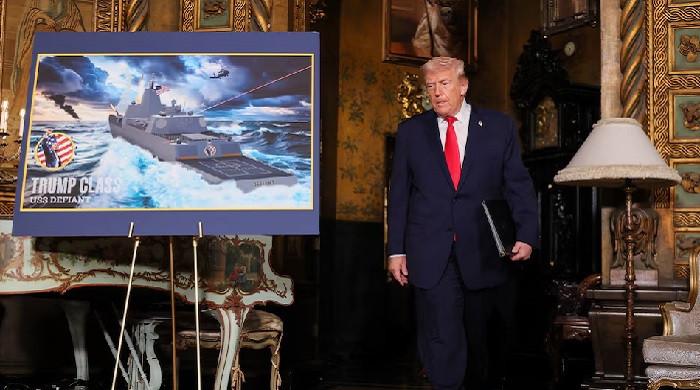
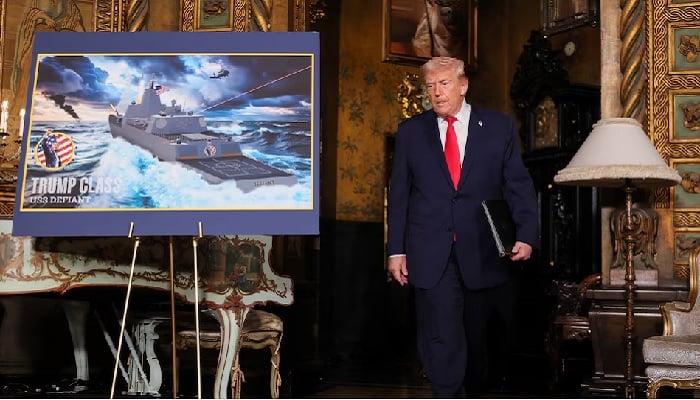
President Trump on Monday announced plans for a new “Trump class” of battleships, marking the start of an expanded naval buildup and signalling increased scrutiny of defence contractors over production delays and cost overruns.
The announcement represents the latest example of the president rebranding an aspect of the federal government in his image. Trump – who has previously criticised the appearance of US warships – will be personally involved in the designs.
He said the ships will weigh more than 30,000 tons, larger than current destroyers, and be equipped with the latest technology, including artificial intelligence and directed energy lasers.
“We haven’t built a battleship since 1994. These cutting-edge vessels will be some of the most lethal surface warfare ships… other than our submarines,” Trump said.
Some US officials have warned that a failure to build new battleships in recent years has handed an advantage to economic and military rival China. Trump downplayed China’s influence on the decision, saying the expansion was “a counter to everybody.”
He said the naval expansion would also be paired with renewed pressure on defence contractors to speed up production and rein in costs. He said he will meet with major defence firms next week to address delays and overruns, and to examine whether executive compensation, stock buybacks and dividends are contributing to missed production targets.
“We don’t want to have executives making $50 million a year, issuing big dividends to everybody, and also doing buybacks” while production of F-35s and other jets languishes, Trump said.
Reuters reported last week that the administration was planning an executive order to limit dividends, buybacks and executive pay for defence contractors whose projects are over-budget and delayed.
Trump and the Pentagon have been complaining about the expensive, slow-moving and entrenched nature of the defence industry, promising dramatic changes that would make the production of war equipment more nimble.
- Moscow, Caracas condemn US actions as int’l law violations.
- UNSC to discuss rising US-Venezuela tensions on Tuesday.
- Washington accuses Venezuela of funding criminal activities.
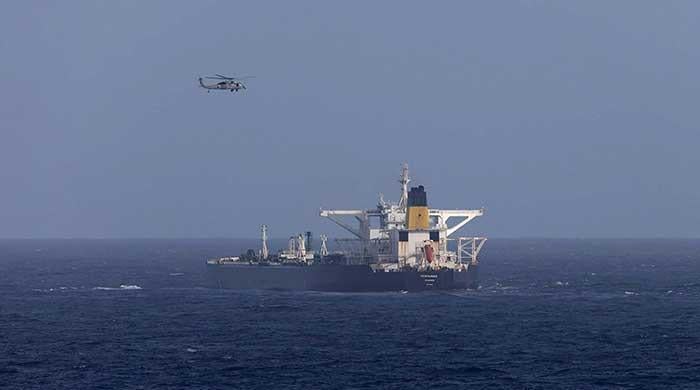
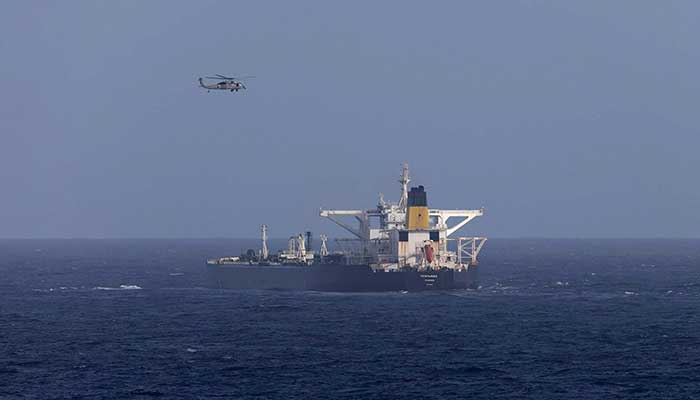
Russia on Monday expressed “full support” for Venezuela as the South American country confronts a blockade of sanctioned oil tankers by US forces deployed in the Caribbean.
The pledge from Moscow, itself embroiled in the war in Ukraine, came on the eve of a UN Security Council (UNSC) meeting on Tuesday to discuss the mounting crisis between Caracas and Washington.
In a phone call, the foreign ministers of the allied nations blasted the US actions, which have included strikes on alleged drug-trafficking boats and more recently, the seizure of two oil tankers.
A third ship was being pursued, a US official told AFP on Sunday.
“The ministers expressed their deep concern over the escalation of Washington’s actions in the Caribbean Sea, which could have serious consequences for the region and threaten international shipping,” the Russian foreign ministry said of the call between Sergei Lavrov and Venezuelan counterpart Yvan Gil.
“The Russian side reaffirmed its full support for and solidarity with the Venezuelan leadership and people in the current context,” it added in a statement.
US forces have since September launched strikes on boats that Washington claims, without providing evidence, were trafficking drugs in the Caribbean and eastern Pacific Ocean.
More than 100 people have been killed — some of them fishermen, according to their families and governments.
US President Donald Trump on December 16 also announced a blockade of “sanctioned oil vessels” sailing to and from Venezuela.
Trump claims Caracas under President Nicolas Maduro is using oil money to finance “drug terrorism, human trafficking, murder and kidnapping.”
He has also accused Venezuela of taking “all of our oil” — in an apparent reference to the country’s nationalisation of the petroleum sector, and said: “we want it back.”
Caracas, in turn, fears Washington is seeking regime change, and has accused Washington of “international piracy.”
Moscow’s statement said Lavrov and Gil agreed in their call to “coordinate their actions on the international stage, particularly at the UN, in order to ensure respect for state sovereignty and non-interference in internal affairs.”
Russia and China, another Venezuela ally, backed Caracas’s request for a UNSC meeting to discuss what it called “the ongoing US aggression.”
Russia’s ‘hands full’
On Telegram, Venezuela’s Gil said he and Lavrov had discussed “the aggressions and flagrant violations of international law being perpetrated in the Caribbean: attacks on vessels, extrajudicial executions, and illicit acts of piracy carried out by the United States government.”
Gil said Lavrov had affirmed Moscow’s “full support in the face of hostilities against our country.”
Last week, US Secretary of State Marco Rubio brushed aside Moscow’s stated support for Caracas.
Washington, he said, was “not concerned about an escalation with Russia with regards to Venezuela” as “they have their hands full in Ukraine.”
US-Russia relations have soured in recent weeks as Trump has voiced frustration with Moscow over the lack of a resolution to the Ukraine war.
Gil on Monday also read a letter on state TV, signed by Maduro and addressed to UN member nations, warning the US blockade “will affect the supply of oil and energy” globally.


Egypt stepping up efforts to modernise textile, spinning sector: PM

“Call of Duty” co-creator Vince Zampella dies after crash on Los Angeles highway

‘Highly respected general’: Trump again acknowledges Field Marshal

-
 Business1 week ago
Studying Abroad Is Costly, But Not Impossible: Experts On Smarter Financial Planning
-

 Fashion5 days ago
Indonesia’s thrift surge fuels waste and textile industry woes
-
 Business1 week ago
KSE-100 index gains 876 points amid cut in policy rate | The Express Tribune
-
 Business5 days ago
BP names new boss as current CEO leaves after less than two years
-

 Sports1 week ago
Jets defensive lineman rips NFL officials after ejection vs Jaguars
-

 Tech1 week ago
For the First Time, AI Analyzes Language as Well as a Human Expert
-

 Tech5 days ago
T-Mobile Business Internet and Phone Deals
-

 Entertainment1 week ago
Prince Harry, Meghan Markle’s 2025 Christmas card: A shift in strategy