

Business
Wegovy pill approved by US FDA for weight loss

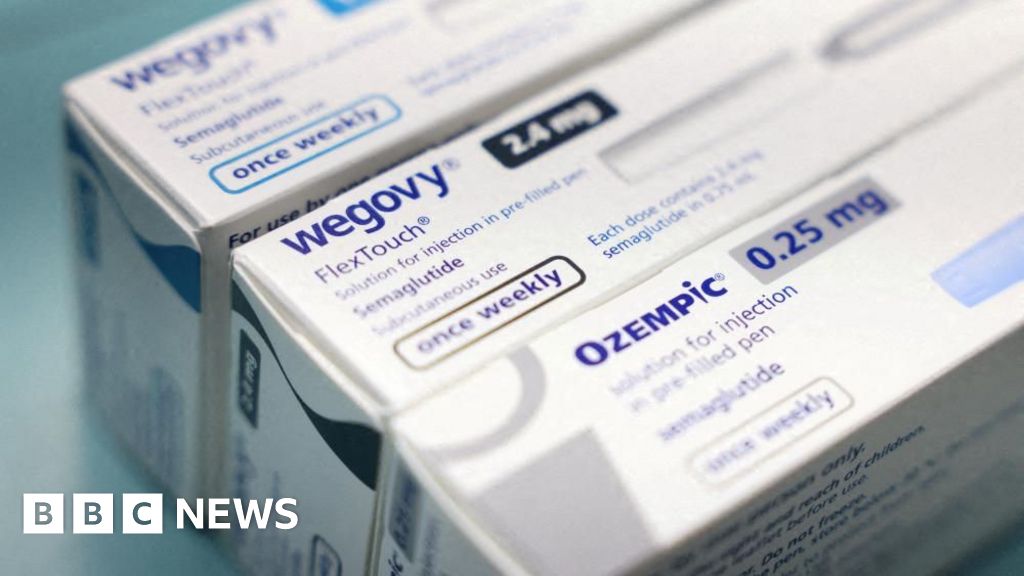
The US Food and Drug Administration (FDA) has approved a pill version of the weight-loss drug Wegovy, according to pharmaceutical giant Novo Nordisk.
It is the first pill of its kind to receive approval from the regulator, marking a new era for weight-loss drugs.
Wegovy’s Danish makers Novo Nordisk said the once-daily pill was a “convenient option” to the injectable and would provide the same weight loss as the shot. It comes after Wegovy was approved by the FDA specifically for weight loss.
Others like Ozempic, which has similar weight-loss effects, were primarily approved for the treatment of Type 2 diabetes.
The BBC has contacted the FDA for comment.
The Wegovy pill showed an average weight loss of 16.6% during Novo Nordisk’s trials, the firm said on Monday.
A third of around 1,300 participants experienced 20% or greater weight loss in the same trial, it added.
The pill is expected to be launched in the US in early January 2026.
“Patients will have a convenient, once-daily pill that can help them lose as much weight as the original Wegovy injection,” said Mike Doustdar, the firm’s chief executive.
The pill version of Wegovy could give Novo Nordisk’s sales a boost after a challenging year which saw its shares slide as it warned over its profits.
The company has faced intense competition in the weight-loss market from rival drugmakers like Eli Lilly.
Novo Nordisk’s shares rose by almost 10% in after-hours trade in New York after the announcement.
Business
Versant stock jumps 10% after company’s Q1 report shows bright spots in licensing, platforms

Versant Media Group on Thursday unveiled results for its most recent quarter — its first as a stand-alone company after separating from Comcast’s NBCUniversal and beginning to trade on the Nasdaq earlier this year.
The report revealed continued pressure in the traditional pay TV bundle but highlighted growth in digital platform and licensing businesses.
Versant stock rose roughly 10% in early trading.
Linear distribution revenue for its pay TV networks — which include CNBC, MS NOW and the Golf Channel as well as USA, E!, Syfy and Oxygen — was down roughly 7% during the period to $1.01 billion. The company said that was due to subscriber declines and partially offset by rate increases.
Advertising revenue for the first quarter fell 5% to $368 million, which was considered an improvement from the same period last year when it posted a 12% decline.
Revenue from content licensing, however, rose 113.5% to $121 million, due largely to the licensing of the longtime reality TV series hit “Keeping Up With the Kardashians” and other related content to Disney’s Hulu.
Revenue from Versant’s platforms business, which includes Fandango, GolfNow and some of the already launched direct-to-consumer units, was up 9.5% to $192 million.
CEO Mark Lazarus said on Thursday’s earnings call with investors that the company aims to “build scale and expand our audiences” in direct-to-consumer.
“Yes, we hope that comes with a large base of subscribers, and we’ll gauge ourselves as [to] how do revenues look across all of our various forms of distributing content,” he said.
Lazarus added that the company is working to make sure it grows “revenue diversification within each of our verticals.”
More than 80% of Versant’s revenue comes from the pay TV business. However, executives have told Wall Street that it aims to eventually rebalance its revenue mix so that 50% is derived from its digital, platform, subscription, ad-supported and transactional businesses.
Overall revenue for the period ended March 31 was down about 1% compared with the same quarter last year to $1.69 billion. Wall Street analysts polled by LSEG had expected revenue of $1.62 billion.
Net income attributable to Versant decreased 22% to $286 million, or $1.99 per share, for the quarter, which the company said was due to lower revenue, higher public company costs and interest expense following the spinout from Comcast. This was partially offset by lower taxes during the quarter, it said.
Adjusted earnings before interest, taxes, depreciation and amortization fell 7% from the same period last year to $704 million.
When compared with stand-alone adjusted EBITDA, a metric to more directly compare performance of the pre-spin portfolio companies to current results, adjusted EBITDA was up about 5%, Versant said. That was due to lower entertainment programming expenses and reduced selling, general and administrative costs, which offset revenue declines.
Growth avenues
Versant has consistently touted its strength in sports and news. On Thursday the company highlighted viewership increases for CNBC and MS NOW as well as continued momentum for the Golf Channel and other live sports and events on its networks.
The company has been exploring growth through mergers and acquisitions, and obtaining more sports rights. On Thursday, Lazarus said Versant has been “looking in a variety of areas” when it comes to potential deals.
CFO and COO Anand Kini added during Thursday’s call that while exploring M&A remains a part of Versant’s strategy, the company is also looking to maintain a healthy balance sheet and is focused on organic growth within its businesses.
“Our platforms revenue growth this quarter demonstrates that was really organic growth in GolfNow and Fandango,” Kini said. “So we’re going to look when there’s opportunities that are inorganic, [but] they have a very high threshold even as they fit within those markets and those strategies.”
The company also continued on its earlier pledge of returning capital to its shareholders, mainly due to its light debt load.
The company on Thursday declared a quarterly cash dividend for the second quarter in a row, each time at 37.5 cents per share. The new dividend is payable on July 22 to shareholders of record as of the close of business on July 1.
Versant also announced that it expects to enter into a $100 million accelerated share repurchase agreement, beginning Friday, which it anticipates completing during the second quarter. Versant repurchased nearly 2.7 million shares of Class A common stock during the first quarter, with a remaining authorization of roughly $900 million as of March 31, it said.
Disclosure: Versant is the parent company of CNBC.

Sweetener and ingredients firm Tate & Lyle has revealed talks over a possible £2.7 billion takeover by US rival Ingredion Incorporated in the latest swoop on a UK company.
London-listed Tate & Lyle said it had received an approach from Illinois-based Ingredion worth 615p per share in cash, which follows a number of earlier proposals.
Tate and Ingredion are now in discussions, but Tate stressed there was no certainty an offer will be made.
Ingredion has until 5pm on June 11 to make a firm offer or walk away under Takeover Panel rules.
It comes amid a spate of approaches for British firms by overseas suitors, with laboratory testing company Intertek earlier this week giving its backing to a £9.4 billion proposal from Swedish firm EQT.
Shares in Tate & Lyle soared by over 50% in afternoon trading on Thursday.
But the takeover tilt comes after shares have come under pressure over the past year, with Tate warning over full-year profits last October and revealing a 10% drop in first half profits in November.
Tate & Lyle last year bought food and drink ingredients business CP Kelco in a deal worth around £1.4 billion.
.jpeg?width=1200&height=800&crop=1200:800 "UK household wealth tumbles, as taxes, food bills and rent costs bite")
The economy might have been growing at a decent rate – at least until the war in Iran began – but households feel poorer which bodes badly for future consumer spending, new statistics reveal.
On Thursday, official figures showed the UK economy grew at 0.6 per cent in the first three months of this year.
But the fear is that political infighting in Westminster is affecting not just bond markets but consumer confidence.
St James’s Place annual Financial Health report finds that average UK household wealth fell 17.5 per cent to £104,329 in 2026, down from £126,482.
London has the highest household wealth at £171,455, Yorkshire and the Humber the lowest at £73,488.
Alexandra Loydon, group advice director at St. James’s Place, said: “Many households are feeling worse off, with living costs and heightened global uncertainty weighing on confidence and, understandably, affecting how people feel about their finances and the future.”
That suggests the latest economic figures could be a high point, with consumers cutting spending from here.
Household wealth includes savings, investments and physical possessions – everything apart from property and pensions.

Get a free fractional share worth up to £100.
Capital at risk.
Terms and conditions apply.
ADVERTISEMENT
Get a free fractional share worth up to £100.
Capital at risk.
Terms and conditions apply.
ADVERTISEMENT
Paul Donovan, chief economist at UBS, said: “UK first quarter GDP was stronger than expected, led by the consumer. As elsewhere, consumers have reduced savings rates to afford higher oil prices.”
The survey shows that more than twice as many people say their financial situation has worsened than improved in the last twelve months (34 per cent vs 17 per cent).
Everyday financial confidence is also slipping. Just 37 per cent now describe themselves as financially comfortable, down from 42 per cent last year, while one in five (21 per cent) say they are struggling financially, up from 16 per cent.
Joe Nellis, economic adviser to accountants MHA, says: “A near 18 per cent decline in average household wealth over a single year is a major warning sign for the UK economy. Behind the numbers lies a growing sense of insecurity as rising food prices, higher bills, weak wage growth, and global instability continue to erode living standards.
“More than twice as many people say their finances have deteriorated over the past year as have improved. That is not the mood of a confident economy.”
Higher costs of living is the main reason for the negative report, with higher taxes, rent and food bills all part of the somewhat gloomy picture.
Ian Futcher, financial planner at Quilter, said: “There is a growing divide between those who are actively making decisions about their money and those who are drifting. Given the current tax environment that has become much less forgiving. Frozen thresholds mean people can gradually creep into paying more tax, or lose valuable allowances, without feeling any better off in their day-to-day lives.
“Making proper use of pension contributions and salary sacrifice can help mitigate some of that pressure, particularly for those moving close to key tax thresholds but this needs to be planned for.”
Ms Loydon adds: “At a time when so much feels outside of our control, it becomes even more important to focus on the things we can influence. Having a clear plan for your money, and taking small, consistent steps to manage it, can make a meaningful difference – helping people feel more in control and better prepared for whatever comes next.”


Spoiler alert! “Survivor” contestants talk being voted off after another double elimination

US’ Macy’s expands On 34th line with Molly Rogers collaboration
Versant stock jumps 10% after company’s Q1 report shows bright spots in licensing, platforms

-

 Tech6 days ago
A new frontier: Identity stack evolves for agentic systems | Computer Weekly
-

 Tech6 days ago
‘Orbs,’ ‘Saucers,’ and ‘Flashes’ on the Moon: Pentagon Drops New UFO Files
-

 Fashion6 days ago
New orders in German manufacturing up 5% MoM in Mar 2026: Destatis
-

 Tech6 days ago
Nick Bostrom Has a Plan for Humanity’s ‘Big Retirement’
-

 Sports6 days ago
Shaheen Afridi achieves landmark feat during opening Test against Bangladesh
-

 Entertainment6 days ago
Rihanna embraces new tattoo given by children
-

 Tech7 days ago
What Microsoft Executives Really Thought About OpenAI in 2018
-

 Tech6 days ago
The Canvas Hack Is a New Kind of Ransomware Debacle