

Politics
Hurricane Melissa begins lashing Jamaica as ‘catastrophic’ Category 5 storm

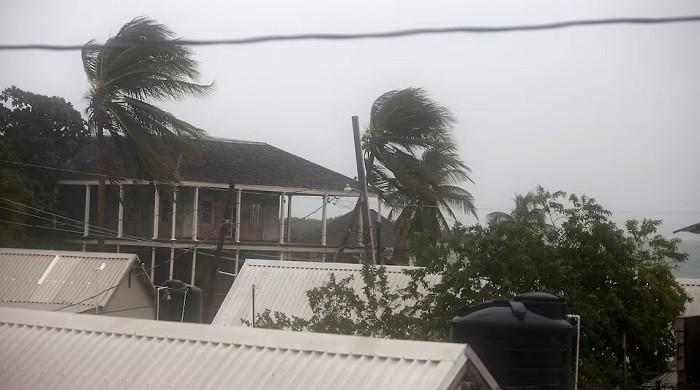
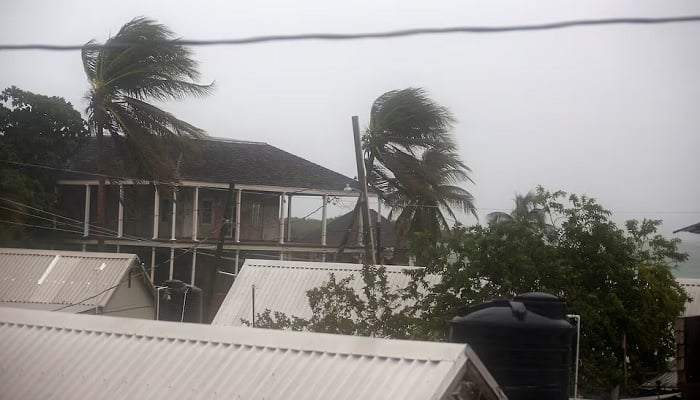
- Jamaicans, Cubans, brace for direct impact.
- Across Caribbean, hundreds of thousands evacuate.
- Four deaths reported in Haiti and Dominican Republic.
Hurricane Melissa was packing sustained winds of up to 175 mph (282 kph) on Monday afternoon, as the slow-moving Category 5 storm was on course to barrel into Jamaica, in what could be the largest on record for the Caribbean island.
As of 2pm (1800 GMT), Melissa was a “catastrophic” storm, the strongest possible on the Saffir-Simpson scale, according to the US National Hurricane Centre. The NHC expects Melissa to move over Jamaica late Monday or in the early hours of Tuesday, cross eastern Cuba the following night and move over the Bahamas and Turks and Caicos by Wednesday.
The storm’s slow movement over unusually tepid Caribbean water had contributed to its ballooning size and strength, NHC forecasters said, threatening Jamaica with days of never-before-seen catastrophic winds and as much as 3 feet of rain.
Melissa’s wind span is currently larger than the length of Jamaica, an island roughly the size of Connecticut and whose main airports sit very close to sea level.
Hours after ordering mandatory evacuations for parts of southern Jamaica, including the historic town of Port Royal, Prime Minister Andrew Holness called on foreign support and warned of damage to farmlands, homes and infrastructure such as bridges, roads, ports and airports.
Despite warnings, some residents told Reuters they were reluctant to leave their homes for fear of looting, and authorities said buses were waiting to be filled up and transport some 28,000 affected by mandatory evacuation orders.
“There is no infrastructure in the region that can withstand a Category 5,” he said.
Holness said his government was as prepared as can be, with an emergency response budget of $33 million and insurance and credit provisions for damage a little larger than those sustained from last year’s devastating Hurricane Beryl.
Beryl was the earliest and fastest Atlantic hurricane on record to reach Category 5, but scientists warn that storms are becoming stronger and faster as a result of climate change, warming ocean waters, and piling up fuel for seasonal storms.
“Tens of thousands of families are facing hours of extreme wind gusts above 100 mph and days of relentless, torrential rainfall,” said AccuWeather Chief Meteorologist Jonathan Porter, adding that infrastructure damage could hamper the arrival of aid.
“Slow-moving major hurricanes often go down in history as some of the deadliest and most destructive storms on record,” he added. “This is a dire situation unfolding in slow motion.”
Jamaica has seen many large hurricanes in the past, including Category 4 Hurricane Gilbert in 1988, but a direct hit from a Category 5 would be unprecedented, said Evan Thompson, of Jamaica’s Meteorological Service.
Melissa is moving much slower than Gilbert, Jamaica’s last major direct hit, Porter added, warning people should prepare to hunker down for days, and some communities could be cut off for weeks.
‘We can’t move’
Damian Anderson, a teacher from Hagley Gap, a town nestled in Jamaica’s soaring Blue Mountains, said impassable roads had already cut off his community.
“We can’t move,” Anderson, 47, said. “We’re scared. We’ve never seen a multi-day event like this before.”
Nearby Haiti and the Dominican Republic have already faced days of torrential downpours leading to at least four deaths, authorities in those island nations said.
In Haiti, impoverished by years of gang violence, more than 3,650 residents in the southern parts of the country moved into temporary shelters, authorities said, as they suspended flights to and from the southern peninsula and banned sailing.
Bahamian Prime Minister Philip Davis also ordered evacuations for people in the southern and eastern parts of the archipelago, while much of eastern Cuba battened down ahead of Melissa’s expected landfall.
Cuban authorities said they had evacuated upwards of 500,000 people living in coastal and mountainous areas vulnerable to heavy winds and flooding, and cancelled schools and transport across eastern Cuba.
More than 250,000 people were brought to shelters around Santiago de Cuba, the island’s second-largest city, which lies squarely in the crosshairs of the hurricane’s predicted path.
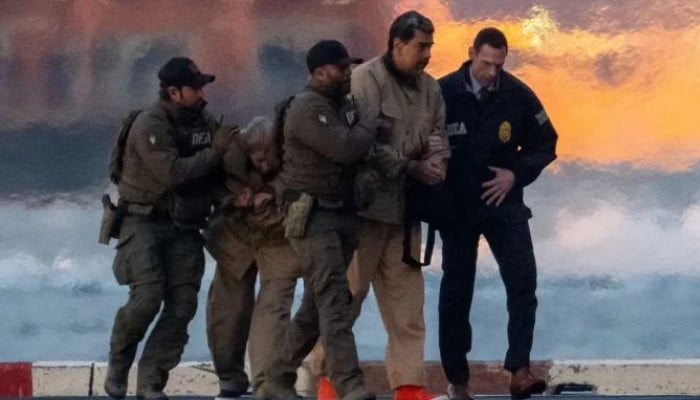
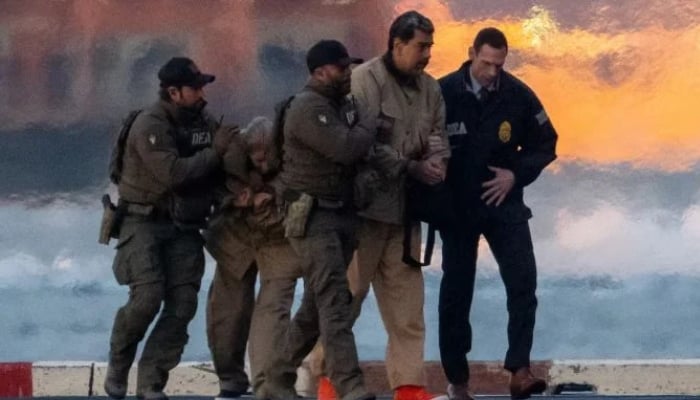
A US soldier faces charges for using classified information to bet on online prediction markets related to the US operation to capture former Venezuelan president Nicolas Maduro, the Department of Justice said on Thursday.
US Army soldier Gannon Ken Van Dyke, 38, of Fayetteville, North Carolina, allegedly made over $400,000 by using the online platform Polymarket to bet on outcomes related to US forces arriving in Venezuela’s capital Caracas and deposing Maduro — an operation he helped plan and execute, according to justice officials.
The US military launched strikes on Caracas on January 3, arresting Maduro and his wife Cilia Flores and whisking them to New York to face drug trafficking charges.
“Our men and women in uniform are trusted with classified information in order to accomplish their mission…and are prohibited from using this highly sensitive information for personal financial gain,” Acting US Attorney General Todd Blanche said in a statement.
The online platform said in a statement that it had flagged the user who made the bets to the Department of Justice and cooperated with their investigation.
“Insider trading has no place on the [platform],” the statement said. “Today’s arrest is proof the system works.”
Van Dyke faces one count of wire fraud, one count of an unlawful monetary transaction and three counts of violating the Commodity Exchange Act, according to the indictment.
The indictment marks the latest instance of insider information being used to bet on the actions of the second Trump administration.
Earlier in the year, six accounts on the online platform made $1.2 million after betting that the United States would attack Iran on February 28, the day the war in the Middle East began.
No arrests have been made in connection with those bets, and so far, there is no evidence that US President Donald Trump or White House officials are linked to the transactions.
“The whole world, unfortunately, has become somewhat of a casino…in Europe and every place, they’re doing these betting things,” Trump told reporters on Thursday, adding: “I was never much in favour of it.”
Conflicts of interest
Democratic lawmakers and other critics have accused Trump and his family of having conflicts of interest since the beginning of his second term.
“The Trump family has made $4 billion off the presidency,” leftist senator Bernie Sanders wrote on Thursday in a post on X with a list of alleged income sources, calling it “unprecedented kleptocracy.”
In March, Trump posted on his Truth Social platform about “very productive” talks with Iran, sending oil prices downward and stocks surging — and people who placed the flurry of futures trades beforehand likely pocketed tens of millions of dollars, according to calculations by a market operator for AFP.
Members of the Trump family have also made hundreds of millions of dollars in profits from cryptocurrencies, a market he has sought to deregulate.
If Van Dyke, who used the online platform to wager, is convicted on all counts, he faces a maximum sentence of 50 years in prison.
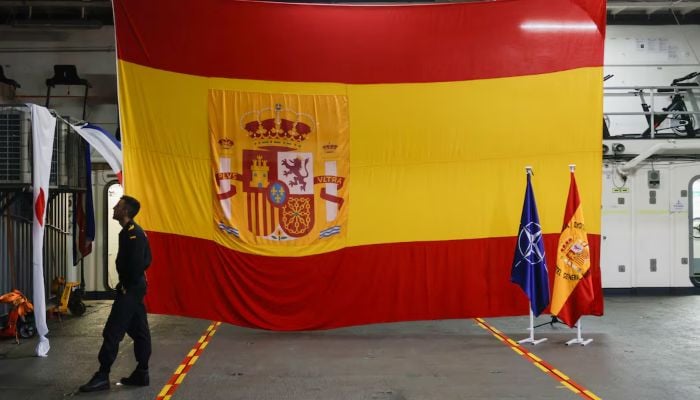
- Options include suspending Spain from Nato.
- Proposals to decrease European ‘sense of entitlement’.
- Trump has threatened to pull US out of 76-year-old alliance.
WASHINGTON: An internal Pentagon email outlines options for the United States to punish Nato allies it believes failed to support US operations in the war with Iran, including suspending Spain from the alliance and reviewing the US position on Britain’s claim to the Falkland Islands, a US official told Reuters.
The policy options are detailed in a note expressing frustration at some allies’ perceived reluctance or refusal to grant the United States access, basing and overflight rights – known as ABO – for the Iran war, said the official, who spoke on condition of anonymity to describe the email.
The email stated that ABO is “just the absolute baseline for Nato,” according to the official, who added that the options were circulating at high levels in the Pentagon.
One option in the email envisions suspending “difficult” countries from important or prestigious positions at Nato, the official said.
President Donald Trump has harshly criticised Nato allies for not sending their navies to help open the Strait of Hormuz, which was closed to global shipping following the start of the air war on February 28.
He has also declared he is considering withdrawing from the alliance.
“Wouldn’t you if you were me?” Trump asked Reuters in an April 1 interview, in response to a question about whether the US pulling out of Nato was a possibility.
But the email does not suggest that the United States do so, the official said. It also does not propose closing bases in Europe.
The official declined to say whether the options included a widely expected US drawdown of some forces from Europe, however.
Asked for comment on the email, Pentagon Press Secretary Kingsley Wilson responded: “As President Trump has said, despite everything that the United States has done for our Nato allies, they were not there for us.
“The War Department will ensure that the President has credible options to ensure that our allies are no longer a paper tiger and instead do their part. We have no further comment on any internal deliberations to that effect,” Wilson said.
Trump administration sees European ‘sense of entitlement’
The US-Israeli war with Iran has raised serious questions about the future of the 76-year-old bloc and provoked unprecedented concern that the US might not come to the aid of European allies should they be attacked, analysts and diplomats say.
Britain, France and others say that joining the US naval blockade would amount to entering the war, but that they would be willing to help keep the Strait open once there was a lasting ceasefire or the conflict ended.
But Trump administration officials have stressed that Nato cannot be a one-way street.
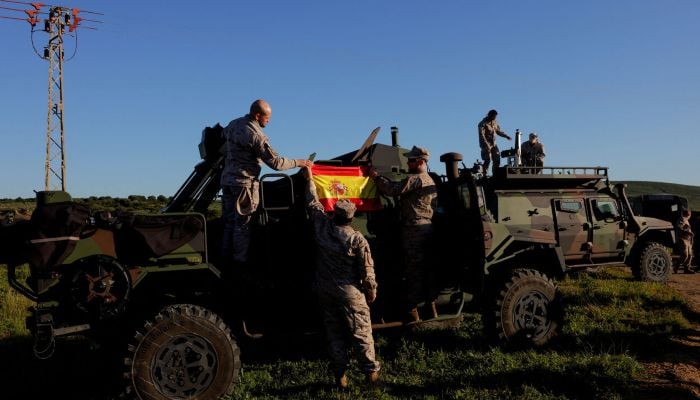
They have expressed frustration with Spain, where the Socialist leadership said it would not allow its bases or airspace to be used to attack Iran. The United States has two important military bases in Spain: Naval Station Rota and Moron Air Base.
The policy options outlined in the email would be intended to send a strong signal to Nato allies with the goal of “decreasing the sense of entitlement on the part of the Europeans,” the official said, summarising the email.
The option to suspend Spain from the alliance would have a limited effect on US military operations but a significant symbolic impact, the email argues.
The official did not disclose how the United States might pursue suspending Spain from the alliance, and Reuters could not immediately determine whether there was an existing mechanism at NATO to do so.
The memo also includes an option to consider reassessing US diplomatic support for longstanding European “imperial possessions,” such as the Falkland Islands near Argentina.
The State Department’s website states that the islands are administered by the United Kingdom but are still claimed by Argentina, whose Libertarian President Javier Milei is a Trump ally.
Britain and Argentina fought a brief war in 1982 over the islands after Argentina made a failed bid to take them. Some 650 Argentine soldiers and 255 British troops died before Argentina surrendered.
Trump has repeatedly insulted British Prime Minister Keir Starmer, calling him cowardly because of his unwillingness to join the US war with Iran, saying he was “No Winston Churchill” and describing Britain’s aircraft carriers as “toys.”
Britain initially did not grant a request from the US to allow its aircraft to attack Iran from two British bases, but later agreed to allow defensive missions aimed at protecting residents of the region, including British citizens, amid Iranian retaliation.
Addressing reporters at the Pentagon earlier this month, Defence Secretary Pete Hegseth said “a lot has been laid bare” by the war with Iran, noting that Iran’s longer-range missiles cannot hit the United States but can reach Europe.
“We get questions, or roadblocks, or hesitations … You don’t have much of an alliance if you have countries that are not willing to stand with you when you need them,” Hegseth said.
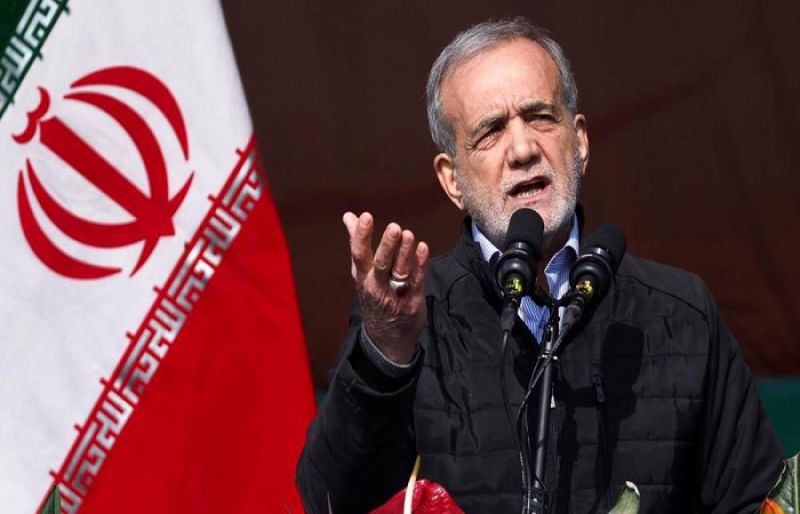
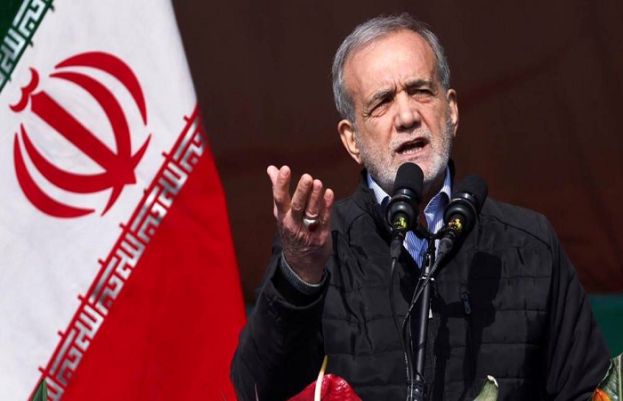
The Islamic Republic of Iran has invariably welcomed dialogue and agreement, but Washington’s constant breach of commitments, naval blockade and military threats remain the main obstacles to genuine negotiations, President Masoud Pezeshkian said on Wednesday.
In a post on X, the president reiterated Tehran’s openness to diplomacy while calling out Washington’s contradictory behavior.
“The Islamic Republic of Iran has welcomed dialogue and agreement and continues to do so,” Pezeshkian wrote.
“Breach of commitments, blockade and threats are the main obstacles to genuine negotiations. The world sees your endless hypocritical rhetoric and contradiction between claims and actions,” he added.
The United States and Israel launched their illegal, unprovoked war of aggression against Iran on February 28, assassinating Leader of the Islamic Revolution Ayatollah Seyyed Ali Khamenei and striking military installations and civilian infrastructure, including schools, hospitals and bridges.
Since then, Iran has demonstrated its responsible approach by agreeing to a two-week ceasefire brokered by Pakistan, despite having the upper hand on the battlefield after 100 waves of decisive retaliatory strikes under Operation True Promise 4.
Despite the ceasefire, Washington keeps highlighting a naval blockade of Iranian ports. Tehran considers it illegal under international law and a clear violation of the truce.
The United States has also threatened further military action, while its officials have issued contradictory statements about their commitment to diplomacy.
Iranian officials have said no decision has been made yet on whether to take part in a second round of negotiations in Islamabad, citing US violations of the ceasefire, including the naval blockade.


Anne Hathaway makes shocking confession about Taylor Swift’s music

Video: Who’s Getting a Tariff Refund?

US soldier allegedly bet on Venezuelan leader Maduro operation using intel

-

 Fashion1 week ago
France’s LVMH Q1 revenue falls 6%, shows resilience amid Iran war
-

 Entertainment1 week ago
Is Claude down? Here’s why users are seeing errors
-

 Sports1 week ago
PSL 11: Peshawar Zalmi win toss, opt to field first against Quetta Gladiators
-

 Tech1 week ago
CYBERUK ’26: UK lagging on legal protections for cyber pros | Computer Weekly
-
 Business1 week ago
PepsiCo earnings beat estimates as North American food business improves
-

 Sports5 days ago
WWE WrestleMania 42 Night 2: Live match results and analysis
-

 Fashion1 week ago
Raymond unveils luxury Chairman’s Collection Store in Mumbai
-

 Sports5 days ago
NCAA men’s gymnastics championship: All-time winners list