

Business
Teachers to be balloted on industrial action over class contact time

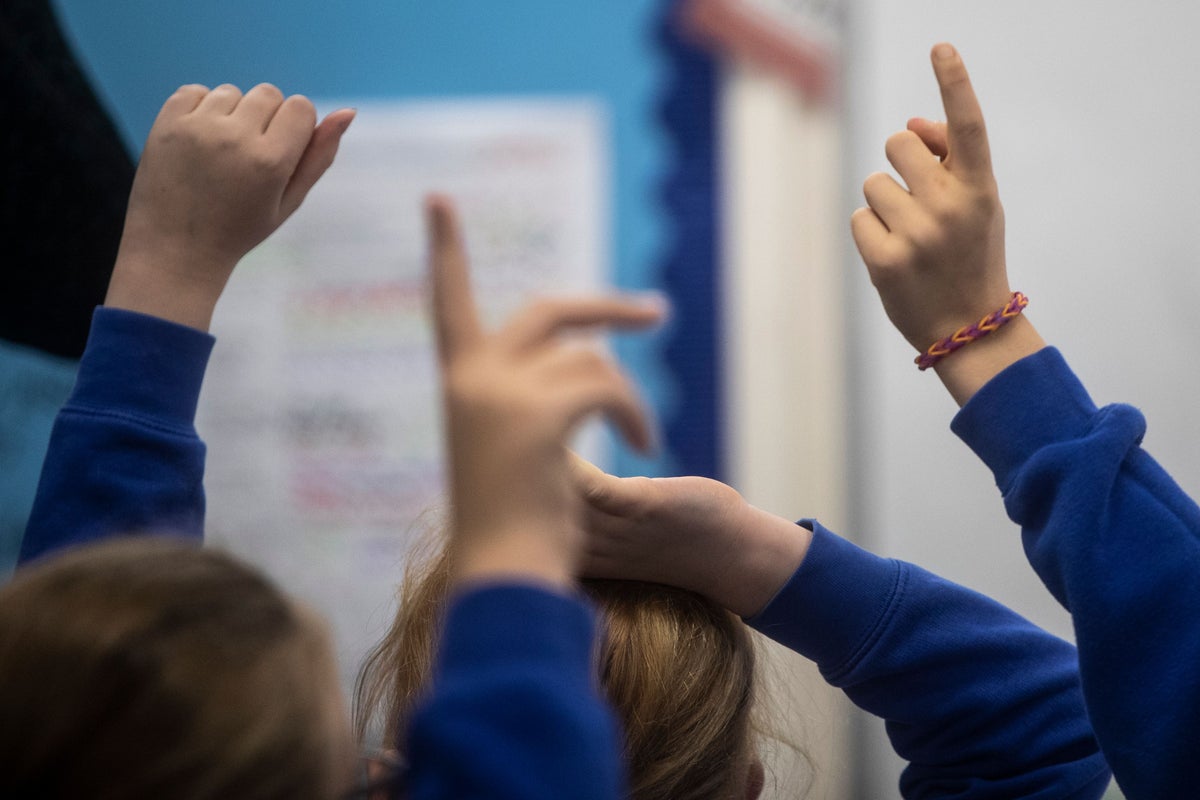
Members of the NASUWT union are set to be balloted on industrial action over class contact time.
The union accused the Scottish Government of failing to meet the SNP manifesto commitment ahead of the 2021 election of reducing contact time by one-and-a-half hours per week.
Announcing the move, NASUWT national official for Scotland Mike Corbett said teachers are “arguably worse off in terms of workload” than before the last election.
“The commitment on class contact time was a recognition by the Scottish Government that additional time away from the classroom was necessary to give teachers sufficient time and space to plan, prepare and assess pupils’ work in order to help students achieve their best and raise attainment.
“Since 2024 we’ve had agreements to work ‘at pace’ and the establishment of working groups by the Scottish Government and Cosla to make meaningful progress on class contact time reduction.
“But the reality is that teachers today are arguably worse off in terms of their workloads and working hours than they were in 2021 when this commitment was first made.
“A reduction in class contact time is as needed now, if not more so, than in 2021.
“It is regrettable that we have been forced to declare a trade dispute and move to a ballot in order to try to force the Government to give teachers the working conditions it itself acknowledges they require to do the job effectively.”
The union’s general secretary Matt Wrack said it had “exhausted all avenues” to reduce contact time, adding: “Where ministers and employers continue to fail our teachers, we will stand up for their right to working conditions which would enable them to deliver the highest quality of learning for our children and young people.”
A Scottish Government spokesperson said: “Ministers have been clear that reducing class contact will help support the time and space necessary for teachers, to allow them to drive improvement and reform in our schools and improve outcomes for their pupils.
“We are committed to working with teaching unions and Cosla to agree our approach to delivering a reduction in class contact time at pace.
“That is why we are providing local authorities with increased funding of £186.5 million to restore teacher numbers – this additional funding was agreed to by local government on the understanding that they make ‘meaningful progress’ with reducing class contact.
“Ministers respect union members’ right to withdraw their labour, but are disappointed that the NASUWT has taken this action while these constructive discussions are ongoing.”

Sam Altman said Elon Musk tried many times for total control of OpenAI, which he’s now suing.
Source link

A United Airlines plane approaches the runway at Denver International Airport on March 23, 2026.
Al Drago | Getty Images
United Airlines flight attendants approved a new five-year labor contract with 31% average raises to base pay by August and other improvements, marking the last of the major carriers with unionized flight crews to reach a deal post-Covid.
The labor deal would give United’s roughly 30,000 flight attendants their first raises in close to six years. The company and the flight attendants’ union reached a preliminary deal in March. Crews had rejected a contract last year.
The union said the contract won 82% approval from the flight attendants, with close to 90% of them voting.
“The contract will immediately change the lives of United Flight Attendants, especially our thousands of new hires who have been hired since the pandemic,” said Ken Diaz, president of the United chapter of the Association of Flight Attendants.
The contract also includes boarding pay, or pay for when the aircraft’s door is open and travelers are getting on. Airlines had for years started flight attendants’ pay clock once the boarding door was closed.
The contract comes with a roughly 7% to 8% increase in compensation and $741 million in back pay, as well as quality-of-life improvements like restrictions on red-eye flights and “sit pay” during disruptions of more than 2½ hours.
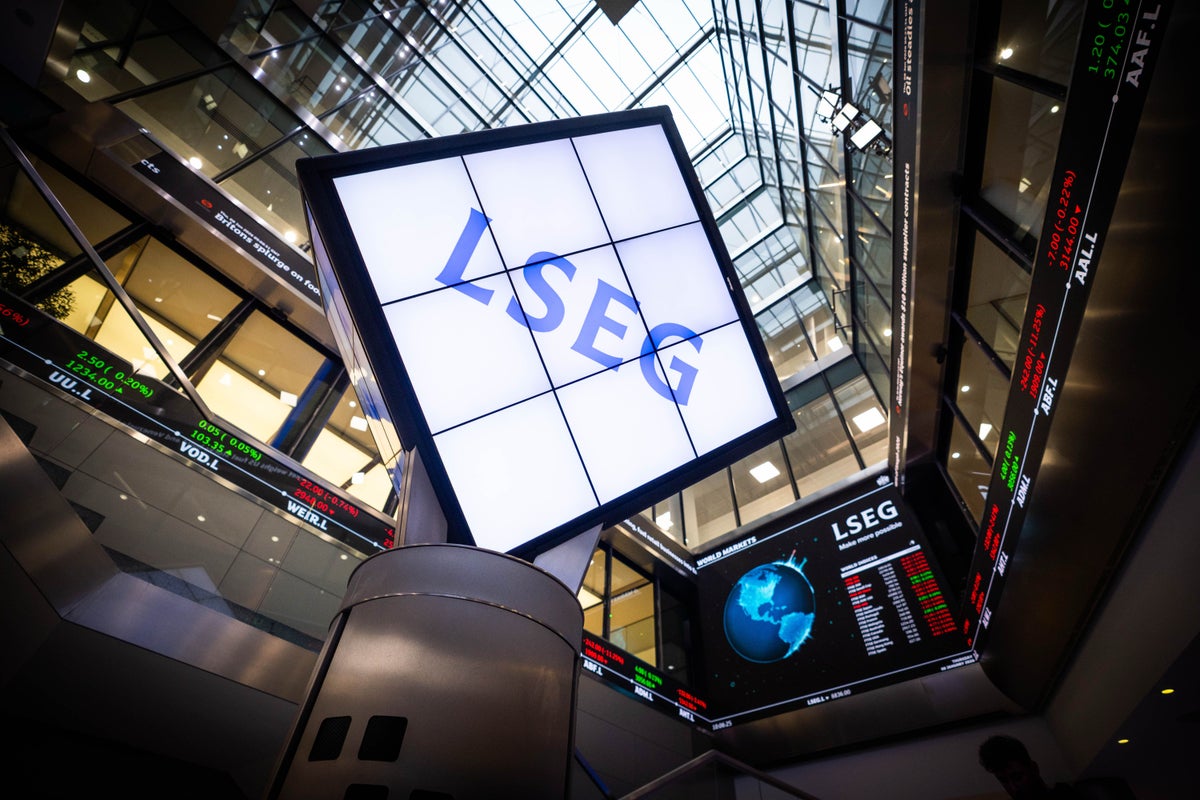
Stocks struggled on Tuesday, although blue chips proved resilient, amid a triple whammy of domestic political strife, surging US inflation and a lack of progress in the Middle East.
The FTSE 100 closed down just 4.11 points at 10,265.32. The FTSE 250 ended down 341.66 points, 1.5%, at 22,466.20, and the AIM All-Share fell 11.75 points, 1.4%, at 810.66.
The pound fell to 1.3505 dollars on Tuesday afternoon from 1.3651 dollars on Monday. Against the euro, sterling was lower at 1.1517 euros from 1.1584 euros on Monday.
The yield on UK 10-year gilts traded at 5.10%, up from 5.01% the day before.
Prime Minister Sir Keir Starmer defied calls for him to quit, despite a growing number of Labour MPs demanding that he steps aside.
“The Labour Party has a process for challenging a leader and that has not been triggered,” Sir Keir told ministers during crunch talks over his future, as no one person has stepped forward to challenge him yet.
“The country expects us to get on with governing. That is what I am doing and what we must do as a Cabinet,” he added.
More than 80 of Labour’s 403 MPs have now called for Sir Keir to quit immediately, or to set out a timetable for his resignation, including some ministers.
Banks sold off, amid reports of a possible windfall tax on the sector should there be a change at the top of the Government.
“Banks narrowly avoided a higher tax rate at the last budget, but our base case now assumes the UK banking surcharge to increase from 3% to 5%,” said the banking team at JPMorgan.
NatWest fell 3.2%, Lloyds Banking Group dipped 4.4% and Barclays declined 3.6%.
Meanwhile, the surging bond yields weighed on interest rate-sensitive housebuilders, with Barratt Redrow down 4.1% and Taylor Wimpey 2.4% lower.
Adding to the uncertain mood was another spike in the oil price as the impasse in the Middle East carried on.
Iran’s chief negotiator said on Tuesday that Washington must accept Tehran’s latest peace plan or face failure, after US President Donald Trump warned a truce was on the brink of collapse.
“Relations between Washington and Tehran appear to be more strained than at any time since the original ceasefire was announced just over a month ago,” observed David Morrison at Trade Nation, suggesting that hostilities could “resume at any time”.
Brent crude for July delivery was trading at 108.07 dollars a barrel on Tuesday, up compared with 103.70 dollars at the time of the equities close in London on Monday.
In Europe on Tuesday, the CAC 40 in Paris ended down 1.0%, and the DAX 40 in Frankfurt declined 1.6%.
In New York, the Dow Jones Industrial Average was down 0.5%, the S&P 500 fell 1.0% while the Nasdaq Composite was 1.7% lower.
The yield on the US 10-year Treasury widened to 4.46% on Tuesday from 4.39% on Friday. The yield on the US 30-year Treasury stretched to 5.02% from 4.97%.
The impact of the Iran war was reflected in soaring US inflation figures for April.
Annual CPI inflation sped up to 3.8% in April from 3.3% in March, above FXStreet-cited expectations of a 3.7% rise.
Monthly, energy costs were up 5.6% in April after a 21.3% jump in March.
Excluding food and energy costs, core CPI was up 2.8% year-on-year in April, up from 2.6% in March and higher than an expected 2.7%.
Analysts explained that much of the upside in core inflation came from a spike in shelter costs.
TD Economics said the numbers reinforce why the Fed needs to remain “patient”.
“Even assuming a ‘more normal’ reading on shelter prices last month, core inflation would’ve still firmed relative to March. With secondary price effects from higher energy prices likely to intensify in the months ahead, we’re likely to see core measures of inflation drift a bit higher and hover around 3% through year-end,” the broker said.
While Bank of America said the latest increase means inflation is getting “very uncomfortable” for the Fed.
Following the data, Fed futures now place a 60% probability of a rate hike by March next year.
The euro traded slightly lower against the greenback, at 1.1729 dollars on Tuesday from 1.1782 dollars on Monday. Against the yen, the dollar was trading at 157.73 yen, higher than 157.01 yen.
Back in London, Vodafone fell back 7.0% after mixed full-year results with adjusted earnings short of hopes but adjusted cash flow ahead.
“In the stock market it’s often said that it’s better to travel than arrive, hence why shares in Vodafone dipped on robust-looking full-year results after a strong rally in the past 12 months,” said Dan Coatsworth, head of markets at AJ Bell.
Vodafone shares have risen 60% in the last 12 months.
Intertek led the risers, up 6.4%, as it said it was “reviewing” the latest takeover proposal from suitor EQT Fund Management Sarl.
Intertek has turned down three previous approaches from EQT.
On the FTSE 250, Greggs rose 8.0% after reporting higher sales in the opening weeks of 2026 and maintaining full-year expectations.
But Wickes plunged 12% after reporting mixed trading as wet weather weighed on retail demand at the start of 2026.
Gold traded lower at 4,663.87 dollars an ounce on Tuesday, from 4,733.27 dollars on Monday.
The biggest risers on the FTSE 100 were Intertek, up 320.00p at 5,300.00p, British American Tobacco, up 255.00p at 4,634.00p, Compass Group, up 1.74p at 31.93p, Imperial Brands, up 104.00p at 2,832.00p and London Stock Exchange Group, up 328.00p at 9,348.00p.
The biggest fallers on the FTSE 100 were Vodafone Group, down 8.45p at 111.95p, 3i Group, down 116.00p at 2,400.00p, St James’s Place, down 52.50p at 1,154.50p, Lloyds Banking Group, down 4.28p at 94.06p and Marks & Spencer, down 13.60p at 308.90p.
Wednesday’s global economic calendar has eurozone industrial production and GDP data, the King’s Speech in the UK and US PPI figures.
Wednesday’s local corporate calendar has a trading statement from Spirax Group.
Contributed by Alliance News


Kim Kardashian faces legal trouble by ‘innocent’ man

President to undergo medical examination amid serious concerns

Taylor Swift spends quality time with family in New York City

-

 Tech1 week ago
DHS Demanded Google Surrender Data on Canadian’s Activity, Location Over Anti-ICE Posts
-
 Business1 week ago
Heineken plans huge investment in hundreds of UK pubs ahead of World Cup
-

 Tech5 days ago
A new frontier: Identity stack evolves for agentic systems | Computer Weekly
-

 Tech4 days ago
‘Orbs,’ ‘Saucers,’ and ‘Flashes’ on the Moon: Pentagon Drops New UFO Files
-
 Business1 week ago
India among most resilient large EMs, better placed for future global shocks; policy reforms & strong buffers help: Moody’s – The Times of India
-

 Fashion5 days ago
New orders in German manufacturing up 5% MoM in Mar 2026: Destatis
-

 Tech5 days ago
What Microsoft Executives Really Thought About OpenAI in 2018
-
 Business1 week ago
US denies Iranian report warship was struck by missiles