

Fashion
US’ Nike unveils Aero-FIT cooling tech for hotter, wetter play

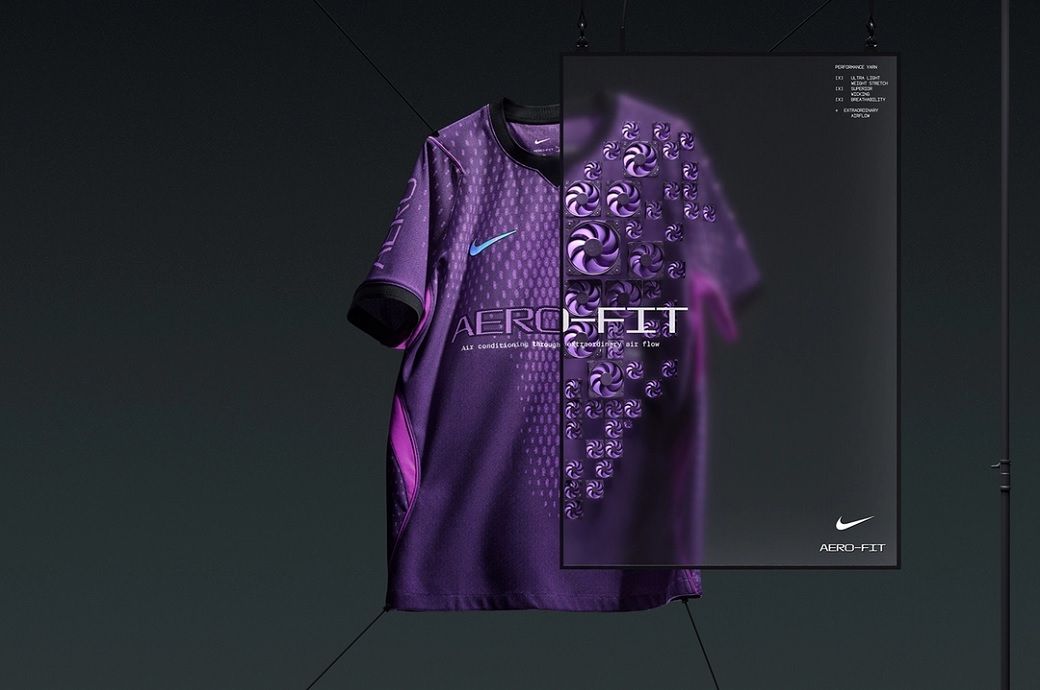
More than performance apparel, Aero-FIT is Nike’s pinnacle expression of cooling innovation, capable of channeling more than double the airflow of legacy Nike materials to peak performance in extreme conditions, helping athletes thrive in their new reality of rising heat and humidity.
Nike has launched Aero-FIT, a breakthrough cooling technology that channels over twice the airflow of previous materials, helping athletes perform in rising heat and humidity.
Debuting in 2026 football kits, Aero-FIT enhances sweating efficiency and comfort while reflecting Nike’s broader commitment to athlete-led, sustainable, and climate-conscious innovation.
This pioneering technology will make its global debut in the football kits Nike federations will wear during the biggest sport moment of 2026 before extending across Nike’s sport-led product strategy, bringing airflow-first innovation to more athletes and disciplines around the world.
What’s more, Aero-FIT is one of four major technological advances Nike is unveiling this month, joining innovations across Therma-FIT apparel, mind science and powered footwear in demonstrating the depth, breadth and impact of the brand’s commitment to athlete-centered innovation.
“Nike exists to make athletes better, and our breakthrough Aero-FIT technology delivers the future of our industry-defining apparel innovation in both elite performance and sustainability at scale,” says Janett Nichol, VP, Apparel & Advanced Digital Creation Studio Innovation.
Designed to move more air between skin and fabric, Aero-FIT supports sweating efficiency while helping athletes stay dry when the game heats up.
Elliptical mesh zones offer a unique visual signature, with lighter mesh providing even greater airflow in high-heat areas. Beyond aesthetics, these zones are functional airflow channels tuned for performance on the pitch and other fields of play — built from the ground up to help manage heat.
Hundreds of athletes wear-tested Aero-FIT across a wide range of conditions. Their feedback and perception helped validate the innovation’s cooling performance, comfort and freedom of movement in real-world scenarios.
“We obsessed the data, unpacking how air moves around the body, and mapped that airflow with sport-specific designs,” says Nichol.
Aero-FIT is born from Nike’s decades-long commitment to intentional climate-conscious design and contemporary breakthroughs in thermoregulation and circularity — proving that athlete-led, science-backed and sustainability-driven innovation is a movement, not a moment.
To that end, Aero-FIT is Nike’s first elite performance apparel made from 100 percent textile waste: a feat made possible through advanced chemical recycling, a circular process that results in recycled polyester yarn that’s as good as virgin material.
In addition to this sustainability breakthrough, Aero-FIT is a product of Nike’s integrated innovation system, where sport science, computational design and advanced manufacturing converge. Nike designers also used heat mapping and motion data to inform every aspect of Aero-FIT’s development, from yarn tuning to mesh placement.
Further, they leveraged digital blueprints to translate athlete physiology and biomechanics into the airflow-first garments — all created with stitch-level precision and validated in motion against the brand’s highest technical standards.
“We’re incredibly proud that our jerseys worn next summer will feel light, unrestrictive and comfortable for an entire match,” says Nichol. “That’s the kind of comfort that helps an athlete stay completely focused on the competition for 90-plus minutes.”
Note: The headline, insights, and image of this press release may have been refined by the Fibre2Fashion staff; the rest of the content remains unchanged.
Fibre2Fashion News Desk (RM)










Current account excluding gold and energy indicated net deficit of $3.9 billion, while goods saw a deficit of $9.5 billion.
Turkiye recorded a current account deficit (CAD) of $9.6 billion in March, the country’s central bank said.
Treasury and Finance Minister Mehmet Simsek said the CAD is expected to widen this year, due to high energy and non-energy commodity prices.
Simsek said the deterioration is likely to remain temporary and manageable, thanks to stronger macroeconomic fundamentals and policy gains.
According to annualised data, current account deficit recorded as $39.7 billion (2.6 per cent of gross domestic product) in March, while the goods deficit recorded as $77.8 billion.
Simsek said the deterioration is likely to remain temporary and manageable thanks to stronger macroeconomic fundamentals and policy gains, domestic media outlets reported.
Turkiye is heavily reliant on imported energy, whose prices spiralled due to the Middle East conflict.
Simsek said elevated global commodity prices would put pressure on the external balance, but emphasised that the government’s economic programme had improved resilience against such shocks.
He said foreign direct investment (FDI) inflows totalled $1 billion in March, bringing annualised foreign direct investment to $12.6 billion.
The new investment incentive package under discussion in parliament now is expected to strengthen the country’s financing structure and support long-term capital inflows, he added.
Fibre2Fashion News Desk (DS)
During the first quarter of ****, the UK’s imports of textile fabrics eased down *.** to £*,*** million (~$*,*** million), against £*,*** million in January-March **** but slightly higher from £*,*** million in the fourth quarter of ****. Its imports of fibre were noted at £** million (~$***.** million) steady as £** million in Q*, **** but slightly lower than £** million in Q*, ****.
During the third month of this year, the country’s clothing imports declined *.** per cent to £*.*** billion (~$*.*** billion), compared with £*.*** billion in March ****. But the inbound shipment was slightly higher month on month compared with £*.*** billion in February ****.
Higher rents, utility bills and fuel prices are eating away at already thin profit margins, it found.
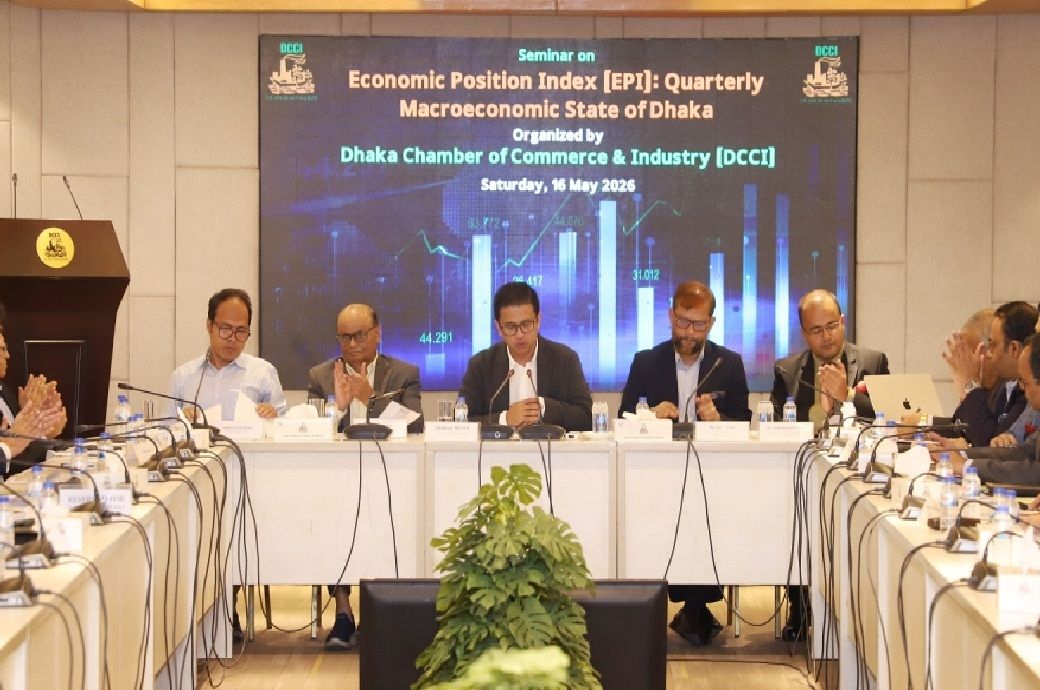
High inflation is cutting deep into Bangladesh consumer spending, with weak demand turning one of the biggest concerns for businesses, DCCI said.
Higher rents, utility bills and fuel prices are eating away at already thin profit margins.
DCCI’s economic position index revealed that consumers have sharply reduced spending as the cost of living continues to rise.
SMEs are feeling the pressure the most.
The chamber’s economic position index (EPI) revealed that consumers have sharply reduced spending as the cost of living continues to rise, putting pressure on retailers, transport operators and other service providers.
Small and medium enterprises (SMEs) are feeling the pressure the most as they struggle to manage higher operating costs without losing customers.
Businesses also cited difficulties in obtaining bank loans, while delays in licensing and other regulatory procedures are adding to costs.
The DCCI report identified a shortage of skilled workers, particularly in technical and customer service roles, as another challenge for the sector.
The country’s inflation rose to 9.04 per cent in April from 8.71 per cent in March, according to official statistics.
Fibre2Fashion News Desk (DS)


Turkiye’s current account deficit expected to widen in 2026: Minister

UK’s clothing imports fall 3% in Q1, sharply lower than Q4 2025

RBI sees no signs of excess credit risk, keeps countercyclical capital buffer inactive

-

 Entertainment6 days ago
Conan O’Brien hat tricks as Oscar host
-

 Tech1 week ago
Could Contact-Tracing Apps Help With the Hantavirus? Not Really
-

 Fashion5 days ago
Italy’s Zegna Group’s Q1 growth boosted by strong organic performance
-

 Sports1 week ago
Bobby Cox, legendary Atlanta Braves manager who led 1995 World Series champions, dead at 84
-

 Entertainment1 week ago
Martin Short: Facing tragedy with joy
-

 Entertainment1 week ago
Tom Brady gets back at Kevin Hart during Netflix roast
-

 Sports1 week ago
Jacob Fatu unleashes vicious assault on Roman Reigns after World Heavyweight Championship loss at WWE Backlash
-

 Entertainment1 week ago
Martha Stewart: How to make an omelet