

Fashion
Bangladesh BGMEA, Germany’s GIZ sign MoU for green RMG transformation

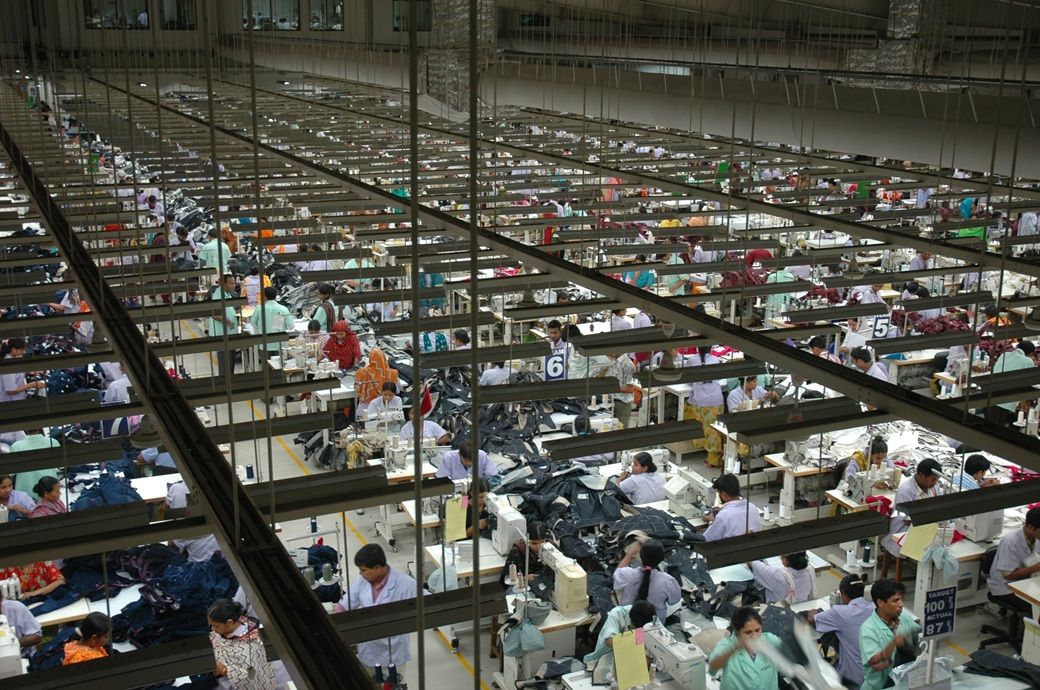
The MoU will remain effective from May 2026 to February 2028 and establishes a broad framework for technical cooperation focused on green industrial transformation.
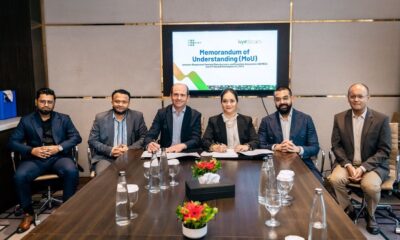
Bangladesh trade body BGMEA and Germany’s GIZ recently signed an MoU to strengthen sustainability, energy efficiency and circularity in Bangladesh’s RMG industry.
The MoU will remain effective from May 2026 to February 2028.
The cooperation is designed to align industrial growth with international sustainability benchmarks and climate commitments.
A major focus is energy transition of the sector.
Both sides will jointly implement a range of technical initiatives in coordination with Bangladesh’s Ministry of Commerce, the Export Promotion Bureau and the Department of Environment. The cooperation is designed to align industrial growth with international sustainability benchmarks and climate commitments, according to the Bangladesh’s media outlets.
A major focus of the collaboration is energy transition of the apparel sector. Initiatives including energy efficiency for development (EE4DEV), technical and vocational education and training for renewable energy (TVET4RE) and project development programme (PDP) will support renewable energy adoption and energy efficiency improvements in garment factories.
These projects will be complemented by the Skills for Sustainable Employment (SKILLs4SE) programme, aimed at upgrading workforce capabilities to meet emerging industrial demands.
The MoU also prioritises circular economy practices, compliance and worker welfare through projects such as Sustainability in the Textile and Leather Industries (STILE II), Skills for self-Monitoring and Compliance with Clean and Fair Production in the Textile Industry (SCAIP), Social Protection for Workers in the Textile and Leather Sector (SOSI) and the CIRCLE initiative.
These are expected to strengthen environmental accountability, improve social protection mechanisms, and enhance textile waste management systems.
The agreement outlines several strategic areas of cooperation, including preparation for evolving European Union market requirements related to supply chain due diligence, traceability, and decarbonisation.
The Responsible Business Helpdesk (RBH) will also receive institutional support to improve compliance readiness among manufacturers.
Additional areas of collaboration include advanced environmental and chemical management, regular energy audits, technical workforce training, digitalisation of worker protection systems, transparent textile waste marketplaces and greater adoption of international technologies for sustainable manufacturing.
Gender inclusion has also been identified as a key pillar of the partnership.
Fibre2Fashion News Desk (DS)






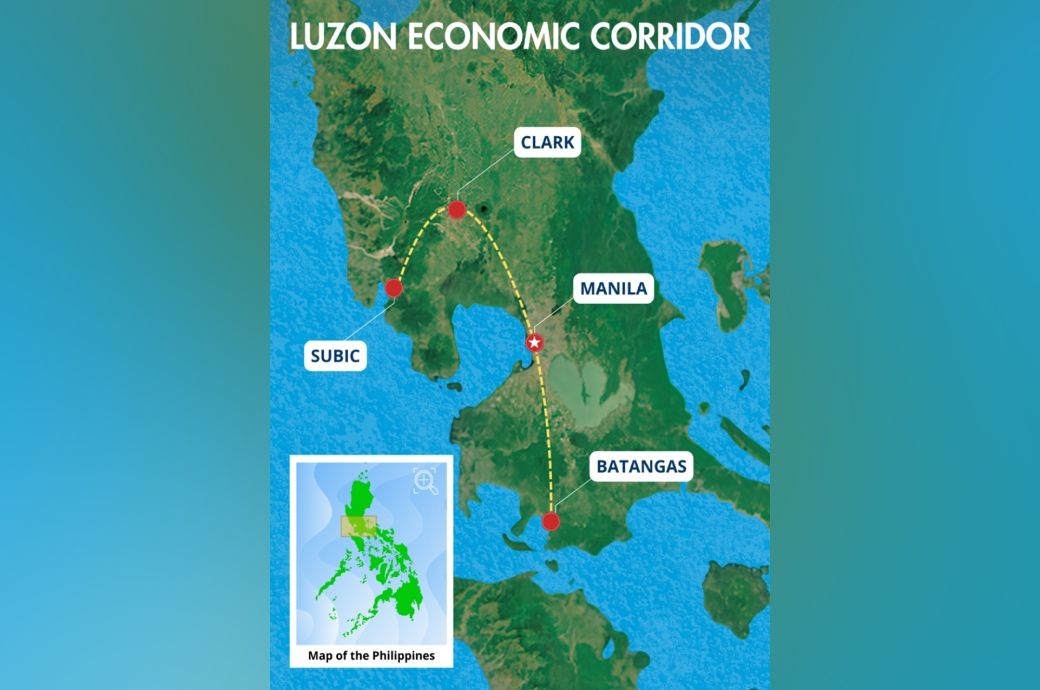
The Luzon Economic Corridor, announced in April 2024 as the first Partnership for Global Infrastructure and Investment (PGI) corridor in the Indo-Pacific, enhances connectivity between Subic Bay, Clark, Manila and Batangas.
Through coordinated investments in transport infrastructure, energy systems, digital connectivity and advanced manufacturing supply chains, the LEC will create thousands of high-quality jobs and transform Luzon into a more prosperous and interconnected region, a release from the US embassy in the Philippines said.
The US, the Philippines and Japan have announced the expansion of the Luzon Economic Corridor partnership to include Australia, Denmark, France, Italy, South Korea, Sweden and the UK.
Through coordinated investments in transport infrastructure, energy systems, digital connectivity and advanced manufacturing supply chains, the corridor will transform Luzon into a more prosperous and interconnected region.
“The expansion of the LEC partnership demonstrates the power of collaboration among likeminded nations committed to transparency and shared prosperity,” said Philippine secretary of finance Frederick D. Go, co-chair of the LEC steering committee.
“Together, we are building infrastructure that will improve daily life for millions of Filipinos and create new opportunities for businesses, industries, and communities in our partner countries and across the region,” he said.
LEC partners share a commitment to a free and open Indo-Pacific and pledge to promote fair and transparent economic development. Partners will contribute through technical assistance, financing, and facilitation of private sector investments, while actively participating in working groups focused on transport, energy and digital infrastructure.
Australia is mobilising investment in the LEC through Australia’s Manila Deal Team, reinforced by technical assistance under the Partnerships for Infrastructure programme and a new $32.6-million partnership with the Philippines on inclusive economic growth.
Denmark is contributing to the LEC by revitalising Philippine shipbuilding, advancing green maritime innovation and fostering investments, jobs and sustainable industrial development. Working with the government and the private sector, Denmark’s shipbuilding initiative aims at creating 10,000 jobs.
France is strengthening connectivity in the LEC by financing 100 bridges through official development assistance, and industrial capacity building through a foreign direct investment project in the aeronautics sector.
Italy is contributing to the development of quality, resilient and sustainable infrastructure by increasing its public financial support to facilitate private sector investment from Italian companies in the transport, semiconductors and manufacturing sectors.
South Korea is contributing to enhanced transport and digital connectivity, and sustained economic growth along the LEC, through official development assistance and public-private partnership initiatives, including a $25.6-million grant to establish the National Cyber Security Centre and the Ninoy Aquino International Airport modernisation PPP project.
Sweden is contributing to Luzon’s Subic-Clark-Manila-Batangas freight railway through a $1.2-million grant to fund a feasibility study on signalling systems and operational models.
The United Kingdom is deploying its full Growth and Investment Partnerships (GIP+) toolkit in the LEC, providing technical assistance, $6.8 billion in export finance and mobilising capital towards infrastructure and energy projects.
Fibre2Fashion News Desk (DS)
Rural consumption remains strong, driven by positive signals from farm and non-farm activity. Supported by fiscal stimulus, urban consumption shows a consistent uptick since the last festive season, the newsletter noted.
Overall, it expects Q4 FY26 real gross domestic product (GDP) growth of closer to 7.2 per cent and nowcasts full year FY27 GDP growth rate of 6.6 per cent. FY26 GDP growth is likely to be at 7.5 per cent.
Despite global headwinds, India has maintained strong growth momentum, an SBI newsletter said.
Rural consumption remains strong and urban consumption shows a consistent uptick since the last festive season.
It expects Q4 FY26 real GDP growth of closer to 7.2 per cent and nowcasts FY27 GDP growth rate of 6.6 per cent.
FY26 GDP growth is likely to be at 7.5 per cent.
It is high time for the country to rededicate towards artificial intelligence-led productivity gains, competitiveness and global value chain integration, the newsletter mentioned.
With a consumption boost by the government through goods and services tax, credit continued to grow in the second half (H2) of FY26. The same trend is continuing now, and credit grew by 16 per cent as of April 30, 2026.
However, the credit growth is expected to remain robust during the H1 FY27 and will decline in H2 with high base effect. The full year, credit growth is expected at 13-14 per cent, as per the newsletter.
Domestic consumption is expected to hold GDP growth upwards, despite external crisis, especially the Middle East crisis.
Fibre2Fashion News Desk (DS)
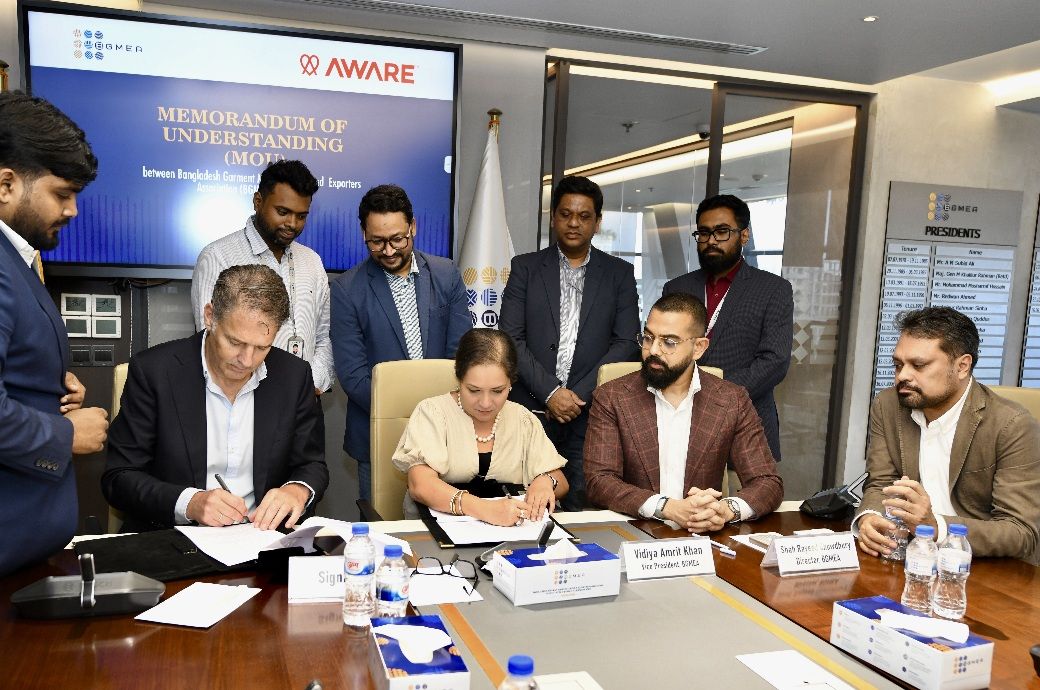
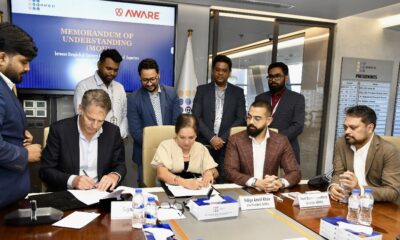
The initiative aims to help Bangladesh’s garment exporters comply with the European Union’s mandatory DPP regulation, which will come into force in 2027. The agreement was signed in Dhaka by BGMEA Vice President Vidiya Amrit Khan and AWARE Founder and Managing Director Feico van der Veen.
Bangladesh’s readymade garment (RMG) sector is set to adopt blockchain-based transparency and Digital Product Passport (DPP) systems ahead of the European Union’s 2027 regulations.
BGMEA and Dutch traceability platform AWARE signed an MoU to enable end-to-end traceability of fibres, yarns, and garments through blockchain-backed digital records, helping exporters strengthen compliance.
Under the partnership, BGMEA member factories will be able to generate blockchain-anchored digital records tracing garments from fibre origin to finished products. The system will provide verified information on raw material sourcing, production processes, and environmental footprint through QR-code-enabled Digital Product Passports.
The move is significant for Bangladesh’s garment industry, which depends heavily on imported fibres and yarns from countries such as China and India. Through blockchain-backed data tokens created at the fibre and yarn production stage, traceable information will move across borders along with physical shipments, enabling end-to-end supply chain visibility.
According to BGMEA, the adoption of blockchain-based traceability will help garment manufacturers improve transparency, strengthen compliance, and position Bangladesh as a reliable sourcing destination for European brands facing stricter sustainability and traceability requirements under the EU’s Ecodesign for Sustainable Products Regulation (ESPR).
The agreement also ensures that factories retain ownership and control over all production data generated through the platform. Pilot projects involving selected spinners and garment manufacturers are expected to begin immediately to develop cross-border fibre-to-garment DPP supply chains connecting Bangladesh with European buyers.
Fibre2Fashion News Desk (CG)


Luzon Economic Corridor expands partnership to include 7 more nations

Build a Radio Wave Detector With Balls of Aluminum Foil!

Bangladesh BGMEA, Germany’s GIZ sign MoU for green RMG transformation

-

 Tech1 week ago
A new frontier: Identity stack evolves for agentic systems | Computer Weekly
-

 Tech7 days ago
‘Orbs,’ ‘Saucers,’ and ‘Flashes’ on the Moon: Pentagon Drops New UFO Files
-
 Fashion1 week ago
New orders in German manufacturing up 5% MoM in Mar 2026: Destatis
-

 Tech7 days ago
Nick Bostrom Has a Plan for Humanity’s ‘Big Retirement’
-

 Tech1 week ago
What Microsoft Executives Really Thought About OpenAI in 2018
-

 Sports7 days ago
Shaheen Afridi achieves landmark feat during opening Test against Bangladesh
-

 Fashion7 days ago
US’ Carter’s taps retail veteran Sharon Price John as new CEO
-

 Entertainment7 days ago
Rihanna embraces new tattoo given by children