

Fashion
Two bidders come forward for Claire’s France, with plans to take on 460 of its 829 staff


By
AFP
Published
October 30, 2025
On Thursday, two companies submitted proposals to the Paris Economic Activities Court to take over the Claire’s brand in France, which was placed in receivership at the end of July, and to retain 460 of the 829 employees of the budget jewellery chain in France, according to lawyers for the employee representatives speaking to AFP.
The companies in question are fashion jewellery retailer June, which has already obtained authorisation to operate the Claire’s brand and plans to take on 426 employees, and Spanish phone-case retailer La Casa de las Carcasas, which intends to take on 34 employees.
June would also take over 139 shops out of Claire’s roughly 240 existing points of sale, and La Casa de las Carcasas three shops, where it would sell its phone accessories.
These “complementary offers”, which are very likely to be approved by the court on 14 November, “are sound and sustainable and could save nearly 50% of jobs,” said attorney Eve Ouanson.
A job protection plan (PSE) has already been initiated for employees who are not included in the takeover; for most of them, this is expected to result in redundancy. “The trade unions have signed the agreement on this PSE in a responsible manner to try to limit the damage in terms of jobs,” emphasised attorney Khaled Meziani.
At the end of July, the courts opened receivership proceedings for Claire’s France, a brand best known for its small pieces of jewellery, piercings and other accessories for teenagers.
The company said this was due to the continued decline in in-store sales over the past several years, exacerbated by US tariffs on Chinese products, on which Claire’s relies heavily.
However, according to the latest published accounts, Claire’s France generated a net profit of €1.3 million between late 2023 and late 2024, and €0.8 million in the previous financial year.
A third takeover bid was at one point presented to the court-appointed administrator before ultimately being rejected.
Claire’s difficulties are not limited to France: its US parent company declared bankruptcy in August before being taken over by an investment fund.
Claire’s Spanish subsidiary also declared insolvency in September.
In early September, employee representatives reported to the courts what they described as “serious irregularities in the management of the company”, accusing the US parent company of having “emptied the coffers” via “financial flows” between the group’s numerous subsidiaries.
Paris, 30 Oct 2025 (AFP)
This article is an automatic translation.
Click here to read the original article.
Copyright © 2025 AFP. All rights reserved. All information displayed in this section (dispatches, photographs, logos) are protected by intellectual property rights owned by Agence France-Presse. As a consequence you may not copy, reproduce, modify, transmit, publish, display or in any way commercially exploit any of the contents of this section without the prior written consent of Agence France-Presses.












The Indian PET resin market witnessed significant week-on-week fluctuations during March-May ****. During the first week of March, Asia domestic India PET bottle flakes prices were assessed near $*.** per kg and remained largely stable on a weekly basis. However, during the second week of March, prices sharply increased to around $*.** per kg, reflecting a week-on-week rise of nearly ** per cent amid tight domestic supply conditions and reduced producer operating rates. In the third and fourth weeks of March, prices increased further to nearly $*.** per kg, marking an additional weekly gain of around * per cent. The bullish momentum continued into the first week of April, when prices touched nearly $*.** per kg, reflecting another week-on-week increase of approximately * per cent.
From mid-April onward, the market entered a correction phase as downstream polyester demand remained weak, and buyers shifted towards cautious procurement activity. During the second and third weeks of April, prices eased gradually towards $*.** per kg, indicating a weekly decline of around *–* per cent. The softer trend continued through late April and early May, with prices declining towards $*.** per kg and later $*.** per kg due to subdued polyester operating rates and sufficient domestic availability. By May **, ****, Asia domestic India PET bottle flakes prices were assessed around $*.*** per kg, reflecting an overall decline of nearly * per cent from the April peak, while Asia FOB India PET Bottle Flakes prices were reported near $*.*** per kg during the same period.
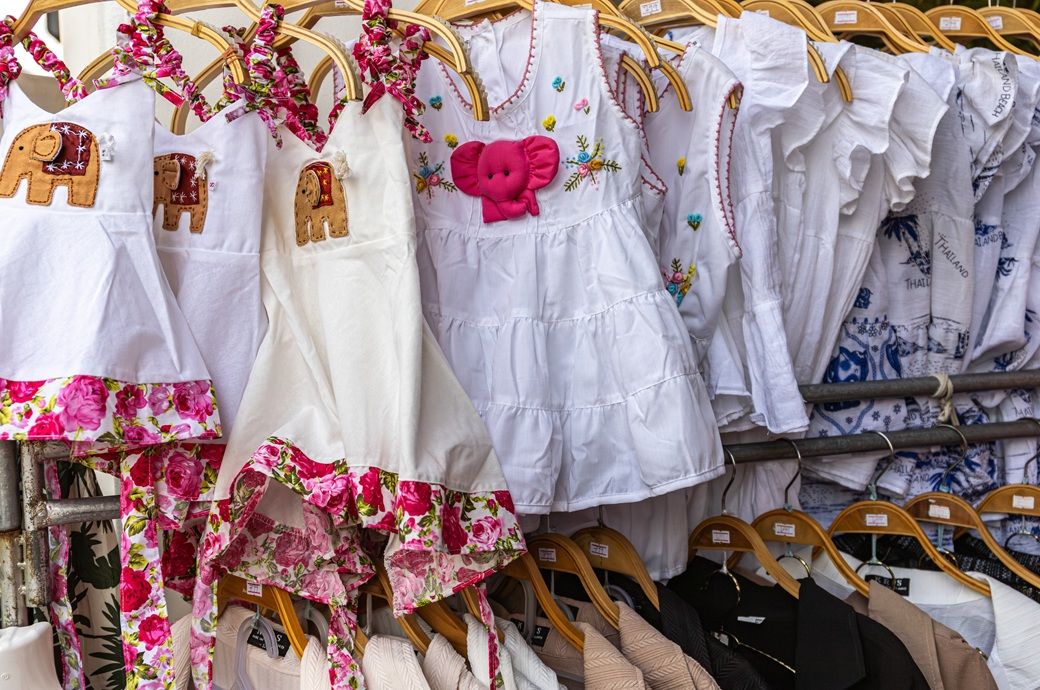
The country imported apparel worth $**.*** million during January-March ****, up **.* per cent from $**.*** million in the corresponding period of ****. The latest figures indicate that inbound apparel shipments have remained on a steady growth path since ****, according to *fashion.com/market-intelligence/texpro-textile-and-apparel/” target=”_blank”>sourcing intelligence tool TexPro.
The Russia-Ukraine war has had a significant economic impact on Georgia. The conflict triggered a large influx of Russian and Ukrainian migrants, which initially acted as an economic boon for the country. It fuelled rapid growth, lifted consumer spending, and increased demand for housing, services, textiles, and apparel. However, the war also deepened geopolitical polarisation and accelerated Georgia’s economic and energy reliance on Moscow.

Net sales of Upland cotton for the 2025–26 marketing year totalled 131,800 RB (running bales, each weighing 226.8 kg), up sharply from 47,700 RB in the previous week and 16 per cent higher than the prior four-week average. The recovery followed a steep decline in the week ending May 7 when sales had fallen 61 per cent week-on-week and 66 per cent below the four-week average.
US Upland cotton export sales rebounded to 131,800 RB in the week ending May 14, 2026, after the previous week’s sharp fall.
Pakistan led buying, followed by Vietnam and Turkiye, while new-crop sales surged to 216,000 RB.
Shipments stayed below the recent average.
Pima sales improved slightly but remained weak, with India the top buyer and destination.
Pakistan emerged as the largest buyer during the latest reporting week with purchases of 65,300 RB, including reductions of 200 RB. Vietnam followed with 26,100 RB, including 4,500 RB switched from China, 900 RB switched from South Korea, 100 RB switched from Japan, and reductions of 4,400 RB. Turkiye booked 20,100 RB, including reductions of 100 RB, while Malaysia purchased 5,300 RB and China 3,400 RB. These gains were partly offset by reductions of 1,100 RB for Peru and 900 RB for South Korea.
New crop Upland sales for the 2026–27 marketing year rose sharply to 216,000 RB, compared with 29,700 RB in the previous week. Pakistan accounted for the bulk of new crop sales with 206,100 RB, followed by Indonesia and Turkiye at 4,500 RB each, and Mexico at 900 RB.
Upland export shipments remained broadly steady during the week. Exports totalled 289,400 RB, unchanged from the previous week but 11 per cent below the prior four-week average. Vietnam remained the leading destination with 110,800 RB, followed by Turkiye at 28,700 RB, Pakistan at 26,000 RB, Mexico at 22,100 RB, and Bangladesh at 21,200 RB.
Pima cotton sales showed a marginal weekly improvement but remained well below recent average levels. Net sales for the 2025–26 marketing year totalled 9,500 RB, up 2 per cent from the previous week but 52 per cent below the prior four-week average. India remained the largest buyer with 7,600 RB, followed by Pakistan at 1,100 RB, Peru at 500 RB, Thailand at 200 RB, and Vietnam at 100 RB.
New crop Pima sales for the 2026–27 marketing year stood at 7,700 RB, slightly below 7,900 RB in the previous week. Sales were reported for Peru at 4,000 RB and India at 3,700 RB.
Pima export shipments declined further during the week. Exports totalled 9,900 RB, down 18 per cent from the previous week and 19 per cent below the prior four-week average. India was the top destination with 4,600 RB, followed by China at 3,200 RB, Costa Rica at 1,700 RB, Pakistan at 300 RB, and Mexico at 100 RB.
Overall, the latest USDA data indicate a recovery in US Upland cotton export sales after the previous week’s sharp fall, supported mainly by strong buying from Pakistan, Vietnam, and Turkiye. However, export shipments remained below the recent average, while Pima demand continued to show weakness despite India’s sustained buying interest.
Fibre2Fashion News Desk (KUL)


Gordon Ramsay reveals ‘most important thing in life’

Shop numbers return to growth after years of decline, say experts

Drake sets new record at ‘Iceman,’ ‘Habibti’ and ‘Maid of Honour’

-

 Entertainment1 week ago
Where Pete Davidson, Elsie Hewitt stand after breakup: Details revealed
-

 Politics1 week ago
Rising diesel costs from Iran war strain US school budgets
-

 Tech1 week ago
Why Is Your Grill So Dumb? The Best Grills Set Temp Like an Oven
-

 Tech1 week ago
This Solar-Powered Smart Sprinkler Keeps My Lawn Watered Without Any Power Cables
-
 Fashion1 week ago
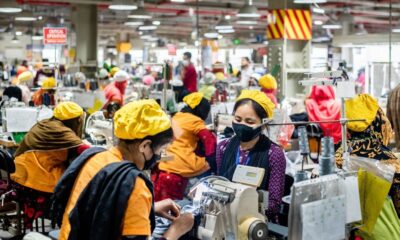
RMG trade bodies seek policy support from Bangladesh PM
-

 Fashion1 week ago
India calls for aligning standards, customs procedures with Africa
-

 Fashion6 days ago
Nigeria Kwara Garment Factory, KWS Garment Production Village ink pact
-

 Entertainment1 week ago
Princess of Wales praised as ‘step ahead’ of royal family