

Fashion
WOW expands Spain’s retail scene with Dimas Gimeno’s “phygital” vision

Translated by
Nazia BIBI KEENOO
Published
October 31, 2025
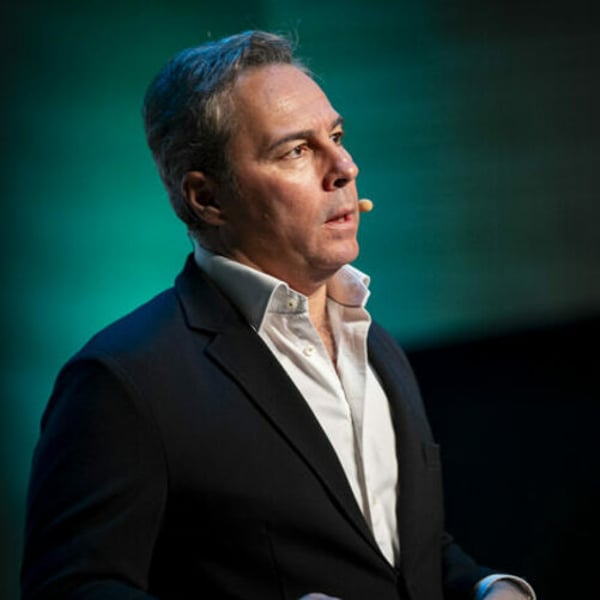
WOW opened its doors on Madrid’s Gran Vía in 2022, introducing a new department store concept to the heart of the Spanish capital. In 2023, it launched a second location on Calle Serrano and, by 2025, the company aims to reach €30 million ($32 million) in sales, with long-awaited profitability expected between 2026 and early 2027. Its founder, Dimas Gimeno—former president of El Corte Inglés—spoke on Oct. 30 at the 4th Aragonese Congress on Commerce and Innovation, held in Zaragoza and organized by the Government of Aragon. FashionNetwork.com spoke with Gimeno about his vision for the retail sector, the key challenges it faces, and the evolution of the WOW platform.
FashionNetwork.com: You mentioned at the beginning of your talk that retail defines a city’s identity. How can that identity be maintained in a world where commerce is increasingly uniform?
Dimas Gimeno: By focusing on the local. It’s essential to recognize that a city—and its retail scene—should showcase local products. Spain is particularly privileged because it offers extraordinary craftsmanship and gastronomy. We are also manufacturers and home to thriving brands—that’s what tourists are looking for.
FNW: You maintain that omnichannel hasn’t worked, despite being the major focus of many brands, and that we must move toward the “phygital” model. Why?
D. G.: Omnichannel was a logical idea at the time, but poorly executed. The mistake was trying to digitize the physical world instead of starting from a fully digital mindset. Businesses attempted to adapt new tools to an old model rather than redesigning their approach entirely. It’s not about digitizing the physical—it’s about thinking 100% digitally and, from there, building the physical presence. Some call this “unified commerce”; I call it “phygital.”
The key is understanding that channels no longer exist. We must stop separating “physical” and “digital.” Today’s customer moves fluidly, interacting with your brand across multiple touchpoints.
FNW: Do customers no longer make that distinction between channels?
D. G.: If you ask them, they likely don’t care. A customer might discover a brand on social media, purchase through e-commerce, and then visit the physical store. The store is where loyalty forms and brand relationships deepen—conversion rates are also higher as a result.
Think of the online shopping cart: the ideal would be for the same cart to be accessible both online and in-store. Omnichannel fails when it simply digitizes a physical process. The first step toward true unification is making your entire range available online—a goal many brands still struggle with.
FNW: How can small businesses face this challenge, given that they define cities’ identities?
D. G.: By staying authentic and unique. Small businesses excel in this area because they offer a unique personality, a sense of legacy, and genuine relationships with customers. Their main obstacle is technology: they often can’t invest in digital tools. The solution lies in collaborative platforms that bring small retailers together to create shared online marketplaces. Public funding should help support the development of these initiatives.

FNW: Why do you believe physical stores represent the future of retail?
D. G.: Because I’m a shopkeeper at heart—and a former salesperson. I’ve seen firsthand how a well-executed store can inspire customers to buy everything. That’s something digital alone can’t achieve. Add a distinctive product range and motivated, well-trained sales staff equipped with the right tools, and you create something unbeatable. That’s how you compete with major platforms—by offering what they can’t.
FNW: Customer experience has been a buzzword in recent years. What does it really mean for retailers?
D. G.: The experience is everything. You can have a beautiful store, but if the salesperson doesn’t treat the customer well, it fails. It’s about creating an environment that feels welcoming, where staff connect with shoppers on a personal level. When a customer plans to buy one thing and ends up buying seven, that’s customer experience. It’s about knowing your customer, anticipating their needs, and giving them reasons to return.
FNW: You emphasize sales staff. Is it difficult to find those profiles in retail today, as in hospitality?
D. G.: It is. The service industry is often not viewed as a prestigious career path, which makes hiring challenging. At WOW, we attract talented young salespeople by providing solid training, motivation, and clear career growth opportunities. If companies hire people for a year and then replace them without offering opportunities for advancement, no one will stay. Retail needs to value sales as a long-term profession.
FNW: Speaking of WOW, what’s the company’s current status?
D. G.: We’ve been operating for three and a half years. Our vision hasn’t changed, but we’ve learned how to translate innovation into profitability. You can have an original concept, but you also need a business model that works. We’re not profitable yet, but we can see it on the horizon—expected by next year or early the following year.
Our growth strategy centers on physical retail. Barcelona is the next obvious step, but our digital channel is our biggest opportunity. Online expansion enables us to reach new markets faster and with reduced risk. Ultimately, growth only matters if it’s profitable.
FNW: What share does online currently represent in your sales?
D. G.: Less than a year ago, we migrated our e-commerce operations to Shopify, which meant resetting the digital system. Online sales are now growing fast, and by 2026, we expect them to account for over 15% of total business—and eventually, much more.
FNW: Is your platform available outside Spain?
D. G.: Yes, though for now we only ship within the European Union. By 2026, we plan to expand into new markets.
FNW: Which store performs better—Gran Vía or Serrano?
D. G.: Serrano performs better overall because it’s larger and more consistent, but Gran Vía continues to surprise us. It’s visually striking and benefits from Madrid’s bustling retail corridor. Serrano attracts repeat customers, while Gran Vía gains strong visibility from tourists.
FNW: You talk about curating the assortment. What does that mean?
D. G.: Curation was WOW’s starting point—it’s about building a distinctive product selection. But we’re not just a showcase of brands; we’re a commercial platform. We initially carried high-end luxury and semi-luxury labels but shifted toward a more profitable model. It’s not about expensive versus affordable—it’s about offering originality and innovation. We aim to feature brands that are not typically found in most physical stores. That’s the essence of WOW’s value proposition.
This article is an automatic translation.
Click here to read the original article.
Copyright © 2025 FashionNetwork.com All rights reserved.












Current account excluding gold and energy indicated net deficit of $3.9 billion, while goods saw a deficit of $9.5 billion.
Turkiye recorded a current account deficit (CAD) of $9.6 billion in March, the country’s central bank said.
Treasury and Finance Minister Mehmet Simsek said the CAD is expected to widen this year, due to high energy and non-energy commodity prices.
Simsek said the deterioration is likely to remain temporary and manageable, thanks to stronger macroeconomic fundamentals and policy gains.
According to annualised data, current account deficit recorded as $39.7 billion (2.6 per cent of gross domestic product) in March, while the goods deficit recorded as $77.8 billion.
Simsek said the deterioration is likely to remain temporary and manageable thanks to stronger macroeconomic fundamentals and policy gains, domestic media outlets reported.
Turkiye is heavily reliant on imported energy, whose prices spiralled due to the Middle East conflict.
Simsek said elevated global commodity prices would put pressure on the external balance, but emphasised that the government’s economic programme had improved resilience against such shocks.
He said foreign direct investment (FDI) inflows totalled $1 billion in March, bringing annualised foreign direct investment to $12.6 billion.
The new investment incentive package under discussion in parliament now is expected to strengthen the country’s financing structure and support long-term capital inflows, he added.
Fibre2Fashion News Desk (DS)

During the first quarter of ****, the UK’s imports of textile fabrics eased down *.** to £*,*** million (~$*,*** million), against £*,*** million in January-March **** but slightly higher from £*,*** million in the fourth quarter of ****. Its imports of fibre were noted at £** million (~$***.** million) steady as £** million in Q*, **** but slightly lower than £** million in Q*, ****.
During the third month of this year, the country’s clothing imports declined *.** per cent to £*.*** billion (~$*.*** billion), compared with £*.*** billion in March ****. But the inbound shipment was slightly higher month on month compared with £*.*** billion in February ****.
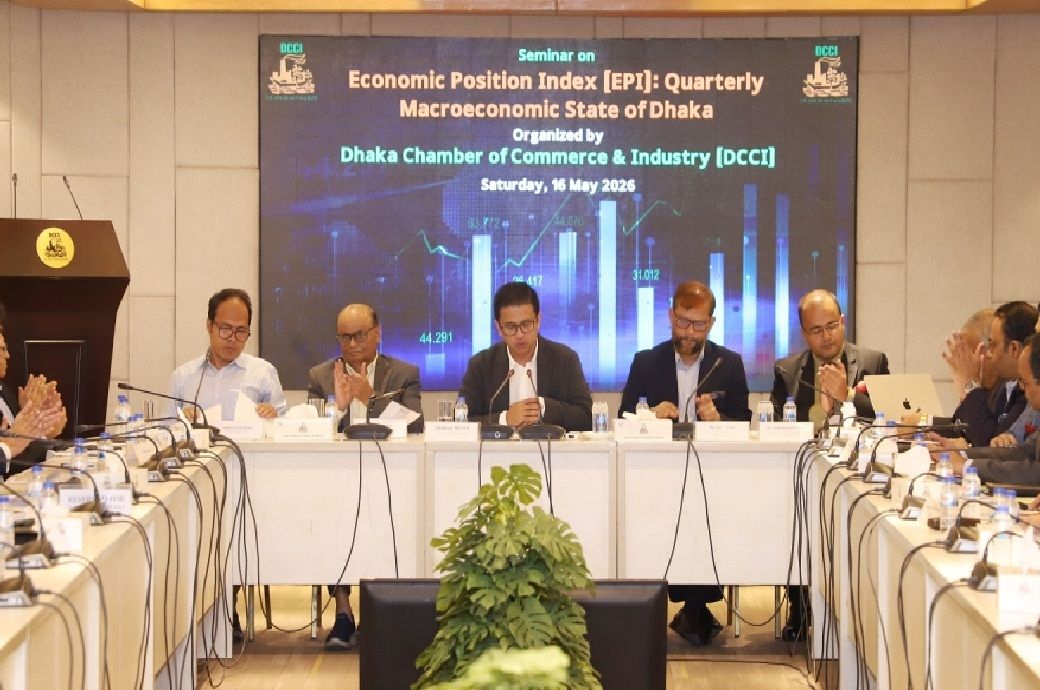
Higher rents, utility bills and fuel prices are eating away at already thin profit margins, it found.
High inflation is cutting deep into Bangladesh consumer spending, with weak demand turning one of the biggest concerns for businesses, DCCI said.
Higher rents, utility bills and fuel prices are eating away at already thin profit margins.
DCCI’s economic position index revealed that consumers have sharply reduced spending as the cost of living continues to rise.
SMEs are feeling the pressure the most.
The chamber’s economic position index (EPI) revealed that consumers have sharply reduced spending as the cost of living continues to rise, putting pressure on retailers, transport operators and other service providers.
Small and medium enterprises (SMEs) are feeling the pressure the most as they struggle to manage higher operating costs without losing customers.
Businesses also cited difficulties in obtaining bank loans, while delays in licensing and other regulatory procedures are adding to costs.
The DCCI report identified a shortage of skilled workers, particularly in technical and customer service roles, as another challenge for the sector.
The country’s inflation rose to 9.04 per cent in April from 8.71 per cent in March, according to official statistics.
Fibre2Fashion News Desk (DS)


CDC says American tests positive for Ebola in Africa, risk in the U.S. remains low

Elon Musk just lost another lawsuit. Will he keep fighting?

India will become history if it attempts any future misadventure, warns defence czar

-

 Entertainment6 days ago
Conan O’Brien hat tricks as Oscar host
-

 Tech1 week ago
Could Contact-Tracing Apps Help With the Hantavirus? Not Really
-

 Fashion5 days ago
Italy’s Zegna Group’s Q1 growth boosted by strong organic performance
-

 Entertainment1 week ago
Martin Short: Facing tragedy with joy
-

 Entertainment1 week ago
Tom Brady gets back at Kevin Hart during Netflix roast
-

 Sports1 week ago
Jacob Fatu unleashes vicious assault on Roman Reigns after World Heavyweight Championship loss at WWE Backlash
-

 Entertainment1 week ago
Martha Stewart: How to make an omelet
-

 Tech1 week ago
CUDA Proves Nvidia Is a Software Company