

Fashion
BGMEA urges Bangladesh govt to reconsider recent policy decisions

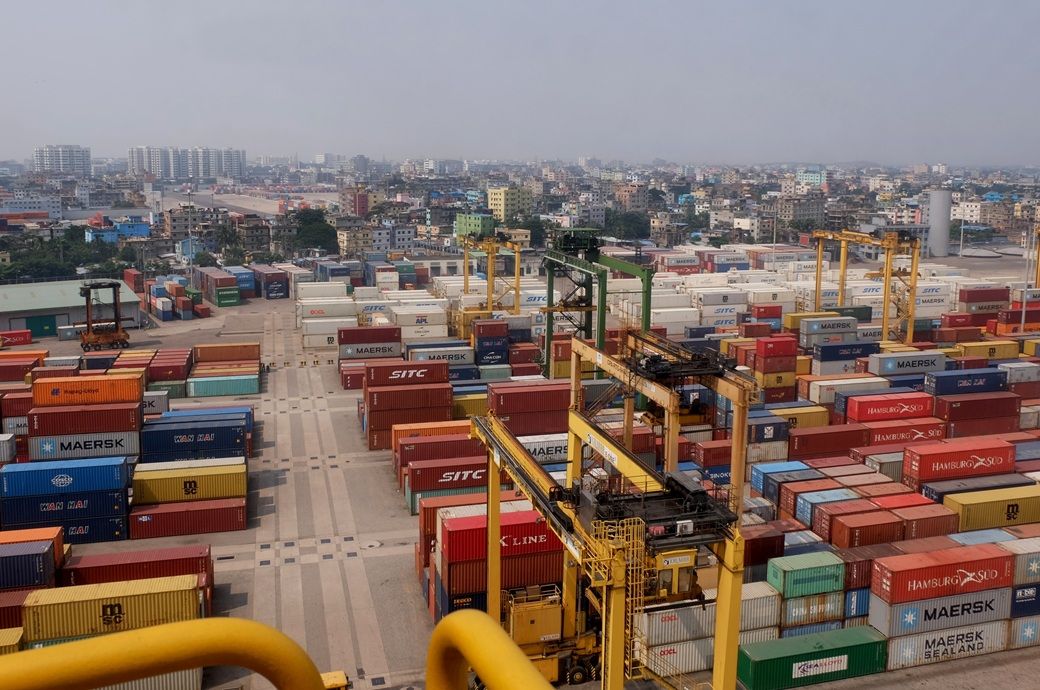
The association urged the interim government to reconsider the policy decisions.
The Bangladesh Labour (Amendment) Ordinance 2025, the rise in Chattogram Port tariffs and the timeline for graduation from the LDC status together pose serious challenges for the balance, investment and competitiveness of the RMG industry, according to trade body BGMEA.
The association urged the interim government to reconsider the policy decisions and ensure a business-friendly environment.
After extensive discussions at the Tripartite Consultation Council (TCC) and its working committee, a balanced proposal was arrived at regarding trade union formation, allowing a union to be formed in factories employing 50 to 500 workers with the consent of at least 50 workers. However, the advisory council later changed the provision without consultation, setting the range at 20-300 workers.
“If a union can be formed with just 20 workers, outsiders may also become involved, leading to internal conflict, instability and disruption in production,” BGMEA president Mahmud Hasan Khan was quoted as saying by domestic media outlets.
He said India requires the consent of at least 10 per cent of workers or a minimum of 100 workers to form a union, while Pakistan requires 20 per cent. Compared to these standards, Bangladesh’s proposed framework will be the weakest and most unstable in South Asia, he lamented.
The TCC had earlier decided that a company could choose either the Future Fund or Progoti scheme for pension. But under the new proposal, workers can participate in both schemes simultaneously, forcing employers to maintain two separate financial mechanisms.
This will create administrative complications, increase expenses and lead to disorder in fund management, he alleged.
The inclusion of ‘officers and employees’ in the definition of ‘worker’ as another major risk, he pointed out, blurring the line between management and workers and creating confusion in responsibility and decision-making, he said.
While rivals have already adopted investment-friendly reforms in technology, infrastructure and labour laws, such irrational laws implemented in Bangladesh will lead to a decline in foreign investment, a fall in exports and a rise in instability across industries, he cautioned.
Though the Ministry of Shipping claims port tariffs have not been raised in 40 years, as Chattogram Port collects its fees in US dollars, entrepreneurs are already paying 308 per cent more in local currency due to depreciation of taka, he said.
He urged the government to ensure a business-friendly environment, resolve the gas crisis, simplify customs and National Board of Revenue processes, improve infrastructure and logistics, and make low-cost financing available.
Fibre2Fashion News Desk (DS)









Despite the tariff hike being larger than the 1930 Smoot-Hawley tariffs, the aggregate impact on the US economy appears small—between 0.1 per cent of gross domestic product (GDP) and minus 0.13 per cent, wrote Pablo Fajgelbaum, professor of economics at the University of California, Los Angeles, and Amit Khandelwal, Don-Soo Hahn professor of global affairs and economics at Yale University.
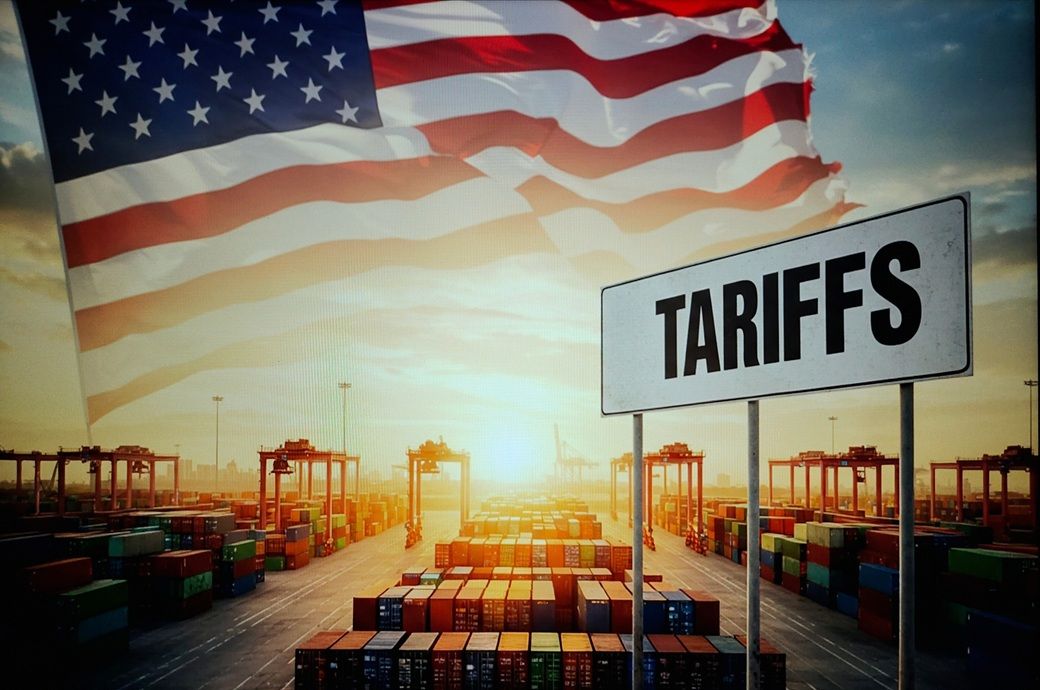
Though President Donald Trump’s 2025 tariff hikes raised US trade protectionism to the highest level in at least 80 years, these so far have had only a small effect on the US economy, a paper discussed at the Brookings Papers on Economic Activity conference recently noted.
That is because federal revenue generated by the tariffs and gains to US producers largely offset the tariffs paid by US importers.
That is because federal revenue generated by the tariffs and gains to US producers largely offset the tariffs paid by US importers, they wrote.
While the aggregate net economic impact may be small, the authors noted that the tariffs also have distributional impacts between producers and importers. They estimate roughly 90 per cent of the tariffs have been passed through to importers, with foreign exporters absorbing only about 10 per cent of the cost by lowering their before-tariff prices.
Except from China, the majority of US exports have not faced retaliatory tariffs. And, the tariffs’ magnitude may be smaller than perceived by the public because announced tariffs “exceeded the actual tariffs imposed at the border,” they wrote.
Moreover, 57 per cent of imports entered the US duty-free. That includes most imports from Canada and Mexico, which enter under the United States-Mexico-Canada Free Trade Agreement of 2020.
The authors found evidence that the tariffs are achieving the administration’s objectives of raising federal revenue and decoupling trade with China. However, they found no evidence, or said it is too early to determine, whether other stated goals will be met, including lowering import prices excluding tariffs, reducing the US trade deficit, increasing trade with friendly nations, boosting manufacturing jobs and wages, and reshoring strategic industries, a release from the Brookings Institution said.
The authors found that the reduction of US-China trade, which began shrinking with the application of tariffs in 2018, during the first Trump administration, “accelerated markedly in 2025”. However, the overall US goods trade deficit in 2025 rose modestly from 2024 and manufacturing jobs declined slightly despite the tariffs.
Fibre2Fashion News Desk (DS)
The economic trajectory, which remained steady until early 2026, is now facing fresh headwinds as the conflict has disrupted key global supply chains, especially in energy and logistics, critical pillars of India’s economic stability.
The latest Monthly Economic Review by India’s Department of Economic Affairs projects a more uncertain economic outlook, citing disruptions to energy supplies and trade routes amid the Middle East conflict.
However, strong domestic growth, steady credit expansion, and resilient services exports continue to cushion the impact.
Despite rising risks, India has entered this phase from a sector steady.
The scale of disruption is stark. Ship movements through the Strait of Hormuz have nearly come to a standstill, from 200-300 a week to one a week, the review notes. This dramatic slowdown has tightened global oil and gas supply, pushing prices higher and increasing volatility across international markets.
The report warns of supply disruptions to oil, gas and fertilisers, higher import prices, higher logistics costs, and a possible decline in remittances by Indians in the Gulf countries.
These risks are particularly significant for India, which relies heavily on energy imports and has a large expatriate workforce in the Gulf region, contributing to remittance inflows.
Despite the risks, the review says India entered this phase from a position of strength.
On the domestic front, industrial activity has remained resilient.
“Retail inflation rose to a 10-month high of 3.21 per cent in February 2026, driven primarily by a sharp uptick in food prices,” said the review.
At the same time, the financial system continues to support growth. Bank credit expanded strongly, and the overall flow of financial resources to the commercial sector grew at 33.2 per cent (YoY).
The Finance Ministry review report emphasises the need for policy vigilance amid rising uncertainty.
Fibre2Fashion News Desk (DS)
Tamil Nadu’s exports stood at ₹67,863 crore (~$7.22 billion), reinforcing its leadership driven by strong apparel and knitwear clusters. India’s textile and apparel exports reached ₹3,19,573 crore in 2024–25, reflecting steady expansion from ₹2,33,304 crore (~$24.84 billion) in 2020–21, as per data shared by the minister.
Gujarat followed with exports of ₹50,150 crore (~$5.34 billion), contributing 15.7 per cent to the national total, supported by its strength across fibres, yarns and fabrics. Haryana recorded ₹34,843 crore, while Maharashtra and Uttar Pradesh posted ₹33,611 crore (~$3.57 billion) and ₹31,804 crore (~$3.38 billion) respectively, each contributing around 10–11 per cent to India’s overall exports.
Tamil Nadu led India’s textile and apparel exports in FY25 with a 21.2 per cent share (₹67,863 crore), followed by Gujarat (15.7 per cent).
Total exports rose to ₹3.19 lakh crore from ₹2.33 lakh crore in FY21.
Haryana recorded the fastest growth, while Uttar Pradesh also expanded strongly, signalling shifting export dynamics across major states.
In terms of growth, Haryana emerged as the fastest-growing major state, registering a CAGR of 11.9 per cent between 2020–21 and 2024–25, outperforming the national average of 8.2 per cent. Uttar Pradesh also showed strong expansion with a double-digit growth trajectory, reflecting rising competitiveness in apparel exports.
Among southern hubs, Karnataka exported ₹23,961 crore (~$2.55 billion), maintaining steady growth, while Rajasthan reached ₹14,560 crore (~$1.55 billion), showing moderate expansion. In contrast, Punjab’s exports declined to ₹11,820 crore (~$1.25 billion), indicating pressure in certain segments.
Overall, the data highlights a high concentration of export value in leading states such as Tamil Nadu and Gujarat, alongside strong growth momentum in states like Haryana and Uttar Pradesh, pointing to a gradual shift in India’s textile export dynamics.
Fibre2Fashion News Desk (KUL)


Trump’s tariffs had limited impact on US economy: Study

49ers GM quells buzz around electrical substation theory

How Taylor Swift ended up reuniting with ex John Mayer after public digs

-

 Politics6 days ago
Afghanistan announces release of detained US citizen
-

 Sports6 days ago
Broadcast industry CEO says consolidation is ‘essential’ to compete for NFL soaring media rights prices
-

 Entertainment6 days ago
UN warns migratory freshwater fish numbers are spiralling
-

 Sports1 week ago
Men’s March Madness live tracker: Updates on Saturday’s games
-
 Business6 days ago
Property Play: Home flippers see smallest profits since the Great Recession, real estate data firm says
-

 Tech6 days ago
Can a Home Appliance Fix the Problem of Soft-Plastic Waste?
-

 Sports1 week ago
Arne Slot: Liverpool’s defeat to Brighton ‘hurts a lot’
-

 Fashion6 days ago
ICE cotton slips on weaker crude, profit booking