

Business
Merck tops estimates on Keytruda strength and narrows profit outlook, as it lowers estimated tariff hit


Merck on Thursday reported third-quarter earnings and revenue that topped estimates as it saw strong demand for its cancer immunotherapy Keytruda.
The drugmaker also narrowed its full-year profit outlook to reflect lower estimated tariff costs, among other factors. Shares of Merck closed flat on Thursday.
Sales of Keytruda topped $8 billion for the first time in a quarter, rising 10% from the same period a year ago. Revenue from the drug of $8.14 billion came in just slightly under the $8.24 billion analysts were expecting, according to StreetAccount estimates.
The results come as Merck slashes $3 billion in costs by the end of 2027, and prepares to offset revenue losses from the upcoming patent expiration of Keytruda in 2028.
The pharmaceutical giant now expects its 2025 adjusted earnings to come in between $8.93 and $8.98 per share. That compares with its previous outlook of $8.87 to $8.97.
Merck said that reflects several new items, including “lower estimated costs related to the impact of tariffs.” During the previous two quarters, the company included a $200 million estimated hit from tariffs that President Donald Trump has implemented to date, but not his planned pharmaceutical-specific levies. Merck did not disclose a new estimate for the cost of existing tariffs.
Merck said the guidance also reflects a benefit from an amended deal with AstraZeneca related to a pill for a specific genetic disorder, partially offset by costs tied to the company’s now-completed acquisition of Verona Pharma.
Merck expects revenue for the year to come in between $64.5 billion and $65 billion, narrowed on both ends from its previous guidance of $64.3 billion to $65.3 billion.
Here’s what Merck reported for the third quarter compared with what Wall Street was expecting, based on a survey of analysts by LSEG:
- Earnings per share: $2.58 adjusted vs. $2.35 expected
- Revenue: $17.28 billion vs. $16.96 billion expected
The company posted net income of $5.79 billion, or $2.32 per share, for the quarter. That compares with net income of $3.16 billion, or $1.24 per share, for the year-earlier period.
Excluding acquisition and restructuring costs, Merck earned $2.58 per share for the third quarter.
Merck raked in $17.28 billion in revenue for the quarter, up 4% from the same period a year ago.
Merck continued to see trouble with China sales of Gardasil, a vaccine that prevents cancer from HPV, the most common sexually transmitted infection in the U.S.
In February, Merck announced a decision to halt shipments of Gardasil into China beginning that month. In July, CFO Caroline Litchfield said the company will not resume shipments to China through at least the end of 2025, noting that inventories remain high and demand is still soft.
Gardasil generated sales of $1.75 billion for the quarter, down 24% from the same period a year ago due to lower demand in China. Still, that was in line with what analysts were expecting, according to StreetAccount.
Investors are eager for additional updates on Gardasil’s presence in China and any details from Merck on potential drug pricing deals with Trump as part of his controversial “most favored nation” policy. Trump has so far inked agreements with Pfizer, AstraZeneca and EMD Serono, the largest fertility drug manufacturer in the world, that aim to make their medicines easier for Americans to access.
In an earnings call on Thursday, Merck CEO Rob Davis said the company shares the Trump administration’s goal of “decreasing patient out-of-pocket costs for our products in the U.S. while at the same time realizing greater prices for our medicines and vaccines in countries that have not been paying fair value for the innovation we provide.”
Merck is “actively engaged” with the administration to achieve those efforts.
Pharmaceutical, animal health sales
Merck’s pharmaceutical unit, which develops a wide range of drugs, booked $15.61 billion in revenue during the third quarter. That’s up 4% from the same period a year earlier.
The increase in Keytruda was driven by higher uptake of the drug for earlier-stage cancers and strong demand for the treatment for metastatic cancers, which spread to other parts of the body, the company said.
Meanwhile, Merck’s newer drug Winrevair, which is used to treat a rare, deadly lung condition, recorded $360 million in sales for the quarter. Analysts had expected the medication to bring in $413 million, according to StreetAccount estimates.
Winrevair’s growth largely reflects higher uptake in the U.S. But it was partially offset by the timing of distributor purchases of the drug and lower net pricing in the country, mainly due to changes to Medicare prescription drug plans.
Merck’s animal health division, which develops vaccines and medicines for dogs, cats and cattle, posted nearly $1.62 billion in sales, up 9% from the same period a year prior. The company said that mainly reflects higher demand for livestock products.
Correction: Sales for Merck’s animal health division were up 9% from the same period a year prior. An earlier version misstated the percentage.




Heineken has announced a substantial investment exceeding £44 million into hundreds of its pubs across the UK, a move expected to create approximately 850 jobs.
The Dutch brewing giant’s Star Pubs operation, which manages 2,350 sites nationwide, is undertaking this significant financial commitment despite a challenging period for the pub sector.
The industry has faced considerable pressure over the past year, grappling with escalating labour costs and increases in national insurance contributions.
Concurrently, consumer spending has been constrained by concerns over inflation and rising unemployment, further impacting pub revenues. However, pubs did receive additional business rates support from the government last month, aimed at alleviating some of these financial burdens.
Lawson Mountstevens, managing director of Star Pubs, indicated that the investment strategy is partly designed to bolster revenues and help the group navigate the recent “sustained increases in running costs”.
This year, £44.5 million will be allocated to upgrades for 647 pubs. A notable 108 of these venues are earmarked for particularly significant cash injections, with each transformation costing at least £145,000.
Heineken clarified that while the majority of its pubs are group-owned, they are independently operated by local licensees. A key focus for this investment, particularly in the lead-up to the 2026 football World Cup, will be on sports-focused venues.
The pub firm and brewer has a history of significant investment in British pubs, having pumped £328 million into the sector since 2018. Work has already commenced at 52 locations, including eight projects dedicated to reopening boarded-up pubs that have endured lengthy closures.
Mr Mountstevens also urged the government to reduce the tax burden on pubs, arguing it would ease cost pressures and foster further job creation within the industry.
He stated: “We can only do so much; the root-and-branch reform of business rates that the industry has been calling for over many years is urgently required, as well as a lowering of the burden of taxation on pubs, including VAT and beer duty.”
He concluded with a direct appeal: “We are calling on the Government to support us in bringing out the best in the Great British pub.”

GameStop’s boss Ryan Cohen says he sees potential to make eBay a much bigger rival to Amazon.
Source link
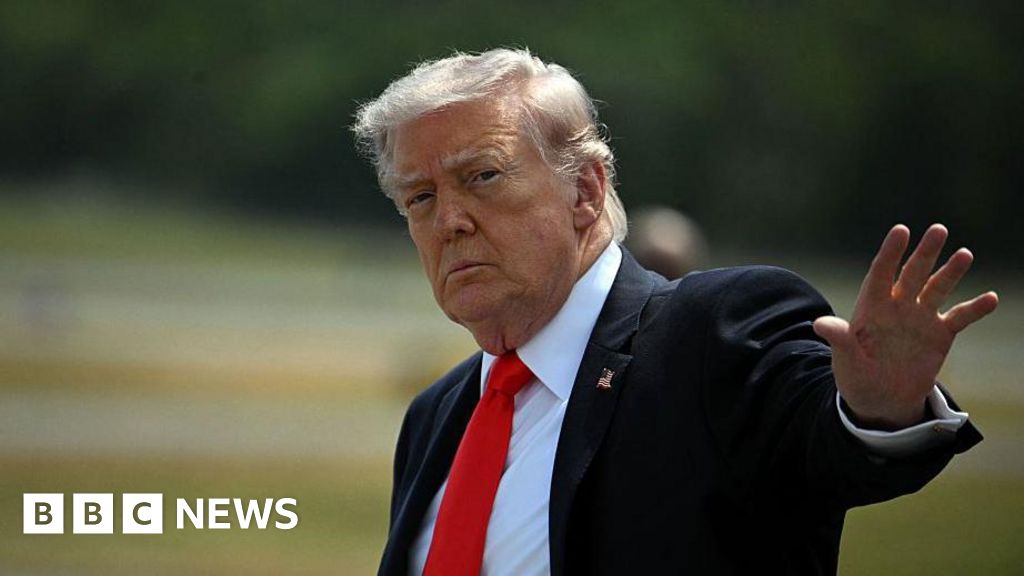
It comes as the US said on Monday it will begin to help “guide” vessels out of the Strait of Hormuz.
Source link


Iran says it forced US warship back from Strait of Hormuz

It took 40 years for technology to catch up to this zipper design

Britney Spears case ends with guilty plea in reckless driving matter

-

 Tech1 week ago
A Brain Implant for Depression Is About to Be Tested in Humans
-

 Tech1 week ago
Almost 90% of women leave tech industry within 10 years | Computer Weekly
-
 Business1 week ago
Pakistan’s oil market is fuelling the crisis | The Express Tribune
-
 Business7 days ago
‘I had £20,000 stolen and had to fight a 13-month fraud reporting rule to get it back’
-

 Sports6 days ago
Pro wrestling star Steph De Lander reveals how colleague’s advice helped lead her to title triumph at ACW
-

 Entertainment1 week ago
Melania Trump says ABC should ‘take a stand’ on late-night host Kimmel
-
 Tech6 days ago
This Ambitious Laptop Doesn’t Leave Much Room for Your Hands
-

 Entertainment7 days ago
Norway joins Type 26 Frigate Programme to boost NATO naval power