

Business
Pakistan’s oil market is fuelling the crisis | The Express Tribune

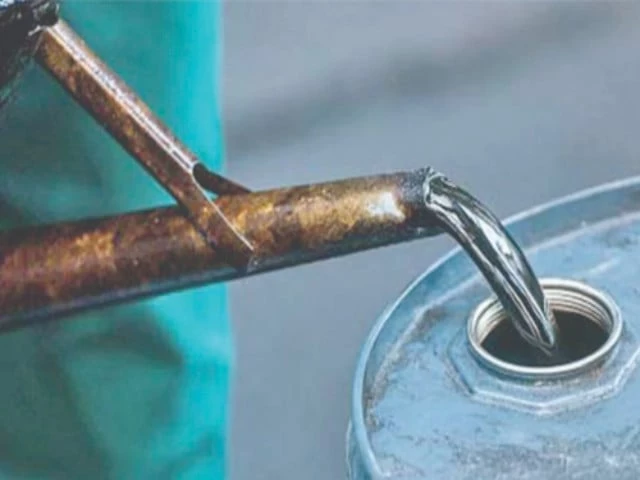
Govt must let prices reflect costs and replace blanket subsidies with targeted cash support
Kerosene oil.
ISLAMABAD:
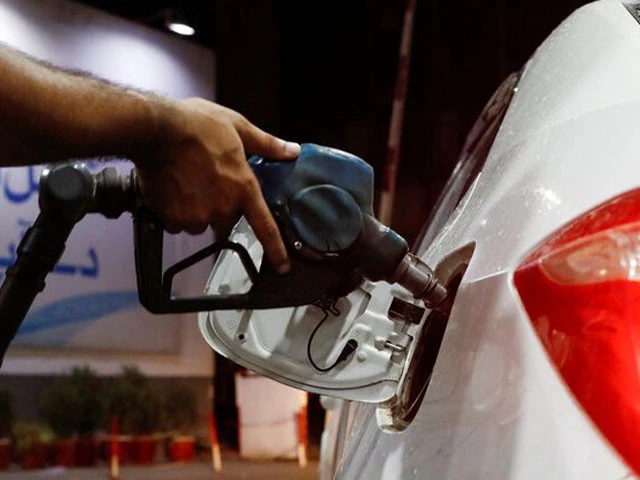
When war returns to the Middle East, oil stops being a commodity and becomes a headline. The latest bout of conflict has again injected fear into energy markets, lifted freight and insurance costs, and pushed crude benchmarks upward. For Pakistan, an oil-importing country with a chronically tight external account, that global surge has quickly translated into fresh price hikes at the pump – and with them, the familiar anxiety about inflation, transport costs and the government’s next move.
Since March 1, the price of diesel has gone up by 37.7% and that of petrol by 37.3%, which is a historical high. Pakistan State Oil (PSO) has recently reported that the premium it paid on diesel is now over $35 per barrel, a steep rise from a range of $5-10 per barrel.
The temptation, as always, is to “manage” the problem by freezing prices, squeezing margins and announcing blanket relief. That is why the government initially announced it would absorb price hikes through price differential claims (PDCs). By now, the Oil and Gas Regulatory Authority (Ogra) has processed Rs38 billion to oil marketing companies to adjust their cost and price at the pump. Thankfully, the government has now announced the discontinuation of any amount of fuel subsidy, as PDCs were piling up every day. The reason we have not witnessed any queues at petrol pumps is that the government has largely followed market signals.
The shock is global; the damage is local
When the state fixes retail prices below cost, it is effectively asking someone – an oil marketing company, a dealer or the treasury – to absorb the loss. Firms respond by cutting supply, delaying imports and running down inventories; the government responds by delaying payments, adjusting levies or rationing by administrative order. The result is predictable: uncertainty, rent-seeking and a bigger hole in public finances. In other words, the oil shock is unavoidable; the chaos is a choice.
The familiar policy trap: discretion over rules
Pakistan’s downstream petroleum market is neither fully controlled nor genuinely competitive. It is a hybrid where private operators bear operational risk, but the government keeps the steering wheel. That mix encourages lobbying and improvisation instead of efficiency and investment. It also produces a set of interventions that sound consumer-friendly yet usually backfire.
Price freezes and “absorption” delay the shock, then force a larger jump later – while encouraging hoarding in anticipation. Levy gymnastics, treating fuel taxes as a plug for revenue shortfalls, turn prices into a political knob, not an economic signal. Uniform pricing without choice means that if every station sells at the same price, consumers cannot reward efficiency, and firms cannot compete on cost or service.
The alternative is not “no government” but rules over discretion: let prices reflect costs, let competition discipline margins, and let the state focus on oversight and targeted relief instead of managing pump prices day to day.
How a freer market can solve (or at least shrink) the crisis
First, prices prevent shortages – even in a crisis. Higher prices are painful, but they ration scarce supply to its highest-valued uses and signal suppliers to bring more fuel. When prices can adjust, imports arrive, stocks are released and demand moderates. When prices are blocked, the adjustment happens through queues, closures and a black-market premium that hurts the poor most.
Second, competition beats committees. In a more open market, companies and dealers compete on procurement, logistics, quality control and service – and yes, sometimes on price. Some variation across locations is normal because transport costs differ. What matters is that consumers can choose, and inefficiency is punished through lost market share rather than rescued through lobbying. Third, predictable rules build resilience. Pakistan needs more storage, better pipelines and modern retail infrastructure. Those investments happen when firms believe costs will be recovered under clear rules.
Fourth, markets reward better risk management. When firms carry real price risk, they improve procurement, diversify contracts and explore risk-hedging where feasible. When the government socialises risk through blanket subsidies and delayed payments, inefficiency is protected – and the taxpayer becomes the insurer of last resort.
What the state should do (and stop doing)
First, reaffirm commitment to automatic pass-through of international prices and exchange rate movements on a transparent schedule. The government has wavered from this commitment, but it has returned to the right path.
Second, open the market to real competition by easing entry and letting firms compete on logistics, storage and retail – while enforcing quality and metering standards. Fixing profit margins may not be in favour of consumers; it may benefit the industry.
Third, strengthen competition oversight to deter collusion and protect consumers – especially when volatility is high. Take strict action against hoarding done for price hikes.
Fourth, stop using fuel as a revenue shock absorber; pursue broad-based taxation and spending discipline instead of hiding deficits in pump prices. Decrease reliance on the petroleum development levy (PDL). Fifth, replace blanket subsidies with targeted cash support for low-income households and essential public transport, time-bound and fiscally budgeted. On this account, federal and provincial governments have already announced reasonable measures.
Conclusion
Free markets do not eliminate volatility; they organise the adjustment so that scarcity shows up as a price signal, not as a shortage. In a crisis, that difference is not academic – it is the line between order and panic.
THE WRITER IS FOUNDER AND CEO OF THE POLICY RESEARCH INSTITUTE OF MARKET ECONOMY, AN INDEPENDENT ECONOMIC POLICY THINK TANK





Now one of the biggest sportswear firms, Anta’s rise follows a playbook adopted by many Chinese giants.
Source link
Business
Gold price prediction today: Will gold prices continue to be volatile? Key levels to watch out for April 27, 2026 week – The Times of India

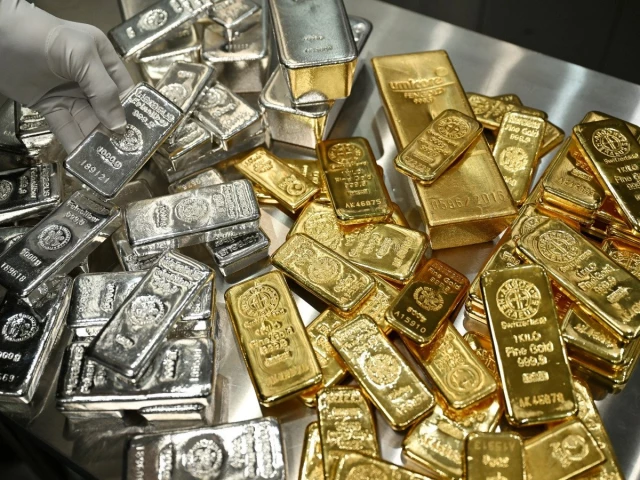
Gold price prediction today: Gold prices will closely track movements on the rate decisions by several central banks, including the US Federal Reserve, this week, says Manav Modi, Senior Analyst, Commodity Research at Motilal Oswal Financial Services Ltd.Gold is currently consolidating after sharp swings in a broad range, indicating a pause rather than a reversal. Price action shows a higher-high structure intact, but the recent sideways movement suggests indecision near the upper supply zone around 158,000–160,000. The formation resembles a short-term flag/triangle continuation pattern, where a breakout on either side will define the next directional move. Volume has tapered slightly, reinforcing the consolidation narrative.Gold prices recently moved from the upper band toward the mid-band (20 DMA), and are now attempting to stabilize. The bands have started to contract, signaling a potential volatility expansion ahead. Sustaining above the mid-band (~150,500–151,000 zone) keeps bullish bias intact, while a breakdown below this could trigger a deeper mean reversion toward the lower band.For the week, immediate support for gold prices is placed at around Rs 150,500, which is followed by stronger support near Rs 148,500. On the upside, the resistance stands at around Rs 155,500, and after that the key supply zone is at Rs 158,000. A decisive close for gold above Rs 158,000 levels can then resume the broader uptrend. However, a break in gold prices below levels of Rs 148,500 may shift the momentum to bearish in the near term.The economic docket is filled with data points and events this week as the focus will be on FED, BOJ, ECB and ECB policy meetings. US consumer confidence, GDP, inflation and durable goods orders data will also be in radar.(Disclaimer: Recommendations and views on the stock market, other asset classes or personal finance management tips given by experts are their own. These opinions do not represent the views of The Times of India)

British families tell BBC Panorama how the Iran war is affecting their monthly budgets.
Source link


UNCTAD, Maritime and Port Authority of Singapore launch partnership

Lexie Brown denies Klay Thompson cheated on Megan Thee Stallion with her

Strait of Hormuz disruption ‘systemic shock’ threatening SE Asia: ERIA

-

 Sports1 week ago
WWE WrestleMania 42 Night 2: Live match results and analysis
-

 Sports1 week ago
NCAA men’s gymnastics championship: All-time winners list
-

 Fashion1 week ago
UK’s Sosandar returns to profitability amid robust FY26 performance
-

 Politics6 days ago
UK’s Starmer seeks to deflect blame over Mandelson appointment
-

 Entertainment7 days ago
Lee Anderson, Zarah Sultana kicked out of UK Parliament for calling PM ‘liar’
-

 Entertainment1 week ago
Ruby Rose old essay resurfaces detailing night of alleged Katy Perry assault
-

 Entertainment1 week ago
Nathalie Baye, low-key legend of French cinema, dies aged 77
-
 Business1 week ago
No fuel shortage: Govt assures 100% domestic LPG, PNG, CNG supply amid Hormuz energy crunch – The Times of India