

Business
Tata Motors, M&M, Kia, TVS: Auto Sales Shift Into Top Gear In October On Festive Cheer, GST Cuts


Last Updated:
India’s auto industry saw record October 2025 sales as Mahindra & Mahindra, Toyota Kirloskar, Kia, Tata Motors, Skoda, TVS Motor and Escorts Kubota posted strong festive growth.

Auto Sales Data October 2025.
Auto Sales October 2025: India’s automobile industry accelerated strongly in October 2025, fuelled by festive-season demand and the recent GST rate rationalisation, pushing several manufacturers to record-breaking monthly performances across segments. From SUVs to two-wheelers and tractors, most major automakers have so far reported double-digit growth, buoyed by strong deliveries around Navratri and Diwali and a revival in rural sentiment on the back of a favourable monsoon.
Mahindra & Mahindra: Record SUV Month
Mahindra & Mahindra posted an overall sales jump of 26% to 1,20,142 units in October. Passenger vehicle sales rose 31% year-on-year to 71,624 units, marking the company’s highest-ever monthly SUV sales.
“In October, we achieved SUV sales of 71,624 units, a growth of 31 per cent, which is the highest SUV sales we have clocked ever in a month,” said Nalinikanth Gollagunta, CEO – Automotive Division.
In farm equipment, tractor sales rose 13% to 73,660 units, supported by improved monsoon trends and GST rate cuts. M&M’s farm equipment head Veejay Nakra said timely Rabi sowing and good Kharif harvest progress bode well for demand.
Toyota Kirloskar: Festive Editions Boost Demand
Toyota Kirloskar Motor reported a 39% surge in total sales to 42,892 units, backed by festive-edition launches of the Hyryder and Fortuner.
“The favourable economic environment during the festive season, reinforced by the government’s forward-looking GST reforms, has boosted market confidence,” said Varinder Wadhwa, Vice-President, Sales & Service.
Exports stood at 2,635 units.
Kia India: Best Month Ever
Kia recorded its highest-ever monthly sales in India, jumping 30% to 29,556 units. The Sonet led volumes with 12,745 units, while the Carens Clavis and its EV version contributed 8,779 units. Seltos continued strong at 7,130 units.
“October 2025 marks a historic milestone in Kia India’s journey,” said Atul Sood, SVP & National Head, Sales & Marketing, adding that EV sales momentum reinforced the company’s “future-ready mobility” focus.
Tata Motors: EV Push Gains Pace
Tata Motors Passenger Vehicles’ sales rose 26.6% to 61,295 units, with SUVs accounting for over 47,000 units, the highest-ever 77% share of monthly sales. EV sales surged 73.4% to 9,286 units. The company delivered over 1 lakh vehicles between Navratri and Diwali, up 33% year-on-year.
With this, the homegrown auto giant retained its position as the country’s second-largest passenger vehicle (PV) manufacturer in October 2025.
Skoda Auto India: Highest-Ever Monthly Sales
Skoda clocked 8,252 units in October, its biggest monthly tally ever, driven by the Kylaq compact SUV and sustained demand for the Kodiaq, Kushaq and Slavia.
With 61,607 units sold in January-October, the company has already surpassed its best-ever annual sales record from 2022.
“This milestone… is a testament to the strength of purpose and agility of execution,” Skoda India Brand Director Ashish Gupta said.
Maruti Suzuki Leads With Retail Sales
Maruti Suzuki India continues to lead with retail sales of 2,38,534 units in October 2025. In September 2025, Maruti Suzuki had retailed 1,23,242 units.
TVS Motor: Two-Wheelers and Exports Shine
TVS Motor reported an 11% rise in total sales to 5,43,557 units. Two-wheeler sales grew 10% to 5,25,150 units, led by a 16% jump in motorcycles and 7% growth in scooters.
EV sales were up 11% at 32,387 units, while exports rose 21% to 1,15,806 units. Three-wheeler sales surged 70% to 18,407 units. The company noted strong demand but flagged “magnet availability” as a near-term challenge.
Escorts Kubota: Positive Farm Sentiment
Escorts Kubota’s tractor sales rose 3.8% to 18,798 units. Domestic sales grew 3.3% to 18,423 units, while exports jumped 38.4% to 375 units.
The company cited strong rural sentiment driven by good reservoir levels, government support and the timing of the festive season. While rains in some states impacted crops, demand for the Rabi season remains stable, it said.
(With inputs from agencies)

Haris is Deputy News Editor (Business) at news18.com. He writes on various issues related to personal finance, markets, economy and companies. Having over a decade of experience in financial journalism, Haris h…Read More
Haris is Deputy News Editor (Business) at news18.com. He writes on various issues related to personal finance, markets, economy and companies. Having over a decade of experience in financial journalism, Haris h… Read More
November 01, 2025, 15:18 IST
Read More

Two ads promoting British beef and milk have been banned after television presenter and environmental campaigner Chris Packham complained that they misled consumers about the products’ carbon footprints.
Both ads for the Agriculture and Horticulture Development Board’s (AHDB) Let’s Eat Balanced campaign used the carbon footprint of British beef and milk to promote the products, firstly stating: “British beef not only tastes great, but has a carbon footprint that’s half the global average*.”
The asterisk linked to text that stated: “Full lifecycle emissions of CO2 eq (carbon dioxide equivalent) per kg of beef.”
The ad for milk stated: “British milk not only tastes good, but is also produced to world-class standards, and has a carbon footprint a third lower than the global average.”
Packham complained to the Advertising Standards Authority (ASA) that the ads, and specifically the carbon footprint claims, were misleading as they did not reflect the full environmental impact of British meat and dairy.
The AHDB said the ads’ mention of carbon emissions would be understood in relation to the environmental impact of beef and milk that occurred between the “cradle-to-retail” stages.
But the ASA said the average consumer “being reasonably well-informed, observant and circumspect” would understand the claims to apply beyond the retail stage and include actions such as cooking and wastage.
The ASA said: “While we acknowledged the potential difficulties in producing post-retail emissions data, the claims in the ads suggested those emissions were included and we therefore expected the evidence provided to also include them.
“We therefore concluded that the evidence presented was insufficient to support the full life-cycle claims in the ads, which was how the average consumer was likely to interpret them.
“We reminded AHDB that environmental claims should be based on the full life cycle unless the ad stated otherwise.”
AHDB’s director of communications and market development, Will Jackson, said: “Let’s Eat Balanced is doing what it was designed to do, providing clear, factual, evidence-led information about British food, nutrition and farming standards.
“Since the investigation began, we have conducted independent consumer research which found that the majority of respondents interpreted these adverts as relating to the production phase only, from farm to retail.
“This research provides important insight into consumer understanding and supports our belief that consumers were not misled by the information we shared in these two specific adverts.”

BENGALURU: India’s Gen Z workforce is embracing what experts describe as “portfolio careers” – balancing multiple professional identities and income streams simultaneously. New research from LinkedIn shows that 75% of Gen Z entrepreneurs in India now manage multiple income streams, significantly higher than the 62% among Gen X entrepreneurs. The findings point to a growing preference among younger professionals for flexibility, autonomy and diversified sources of income. “We’re also seeing the rise of the ‘portfolio era’, with more professionals creating multiple income streams and redefining what a career can look like. This shift is making entrepreneurship more accessible than ever before,” said LinkedIn India country manager Kumaresh Pattabiraman.Rather than depending on a single full-time role, many professionals are simultaneously building businesses, freelancing, consulting, creating online content and monetising specialised skills through digital platforms. The trend comes amid a broader rise in entrepreneurial activity in India. LinkedIn recorded a 104% year-on-year increase in members adding “Founder” to their profiles – the highest growth among all global markets.AI is also emerging as a major enabler of this shift. The report found that 85% of Gen Z entrepreneurs consider AI and digital tools important to their business operations.

Sam Altman said Elon Musk tried many times for total control of OpenAI, which he’s now suing.
Source link


India’s apparel sourcing window reopens—for now

Will LeBron James retire after current season?

South Korea reviews phased support for Strait of Hormuz security efforts

-

 Tech1 week ago
DHS Demanded Google Surrender Data on Canadian’s Activity, Location Over Anti-ICE Posts
-
 Business1 week ago
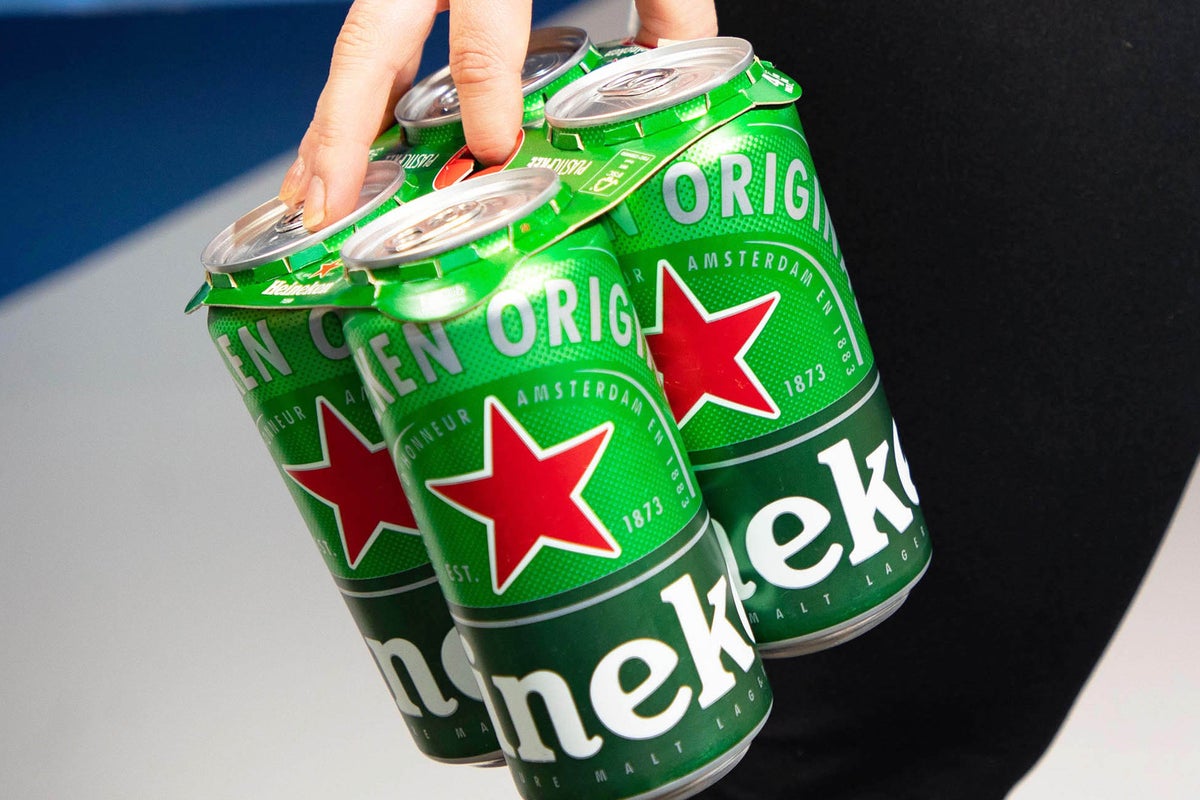
Heineken plans huge investment in hundreds of UK pubs ahead of World Cup
-

 Tech5 days ago
A new frontier: Identity stack evolves for agentic systems | Computer Weekly
-

 Tech4 days ago
‘Orbs,’ ‘Saucers,’ and ‘Flashes’ on the Moon: Pentagon Drops New UFO Files
-
 Business1 week ago
India among most resilient large EMs, better placed for future global shocks; policy reforms & strong buffers help: Moody’s – The Times of India
-

 Tech5 days ago
What Microsoft Executives Really Thought About OpenAI in 2018
-

 Fashion5 days ago
New orders in German manufacturing up 5% MoM in Mar 2026: Destatis
-

 Sports5 days ago
Shaheen Afridi achieves landmark feat during opening Test against Bangladesh