

Fashion
Shein sets up shop at Paris’ BHV: What’s on offer and what’s the concept?

Published
November 5, 2025
Wednesday, November 5, at 1pm. The opening of the Shein boutique at BHV Marais drew a large crowd. For several hours, the first customers waited in a long queue at the foot of the Parisian department store to enter the Chinese brand’s first permanent bricks-and-mortar store. On the other side of the street, dozens of demonstrators, local elected officials and union representatives voiced their disapproval at the much-maligned brand setting up shop.
The protest was largely ignored by the many enthusiastic customers celebrating the event, which began on the sixth floor, in the area dedicated to Shein, with an introductory speech followed by a countdown marking the official opening of the doors. Once the symbolic ribbon had been cut, Frédéric Merlin, managing director of BHV and Société des Grands Magasins (SGM), led the first customers through the store, presenting the different areas before concluding the tour at the tills. Facing numerous journalists from around the world, he said he was “very pleasantly surprised to see the enthusiasm for this opening, which is attracting new customers as well as regular BHV customers.”
The event quickly took on the feel of mass consumption, somewhere between curiosity and a shopping frenzy.
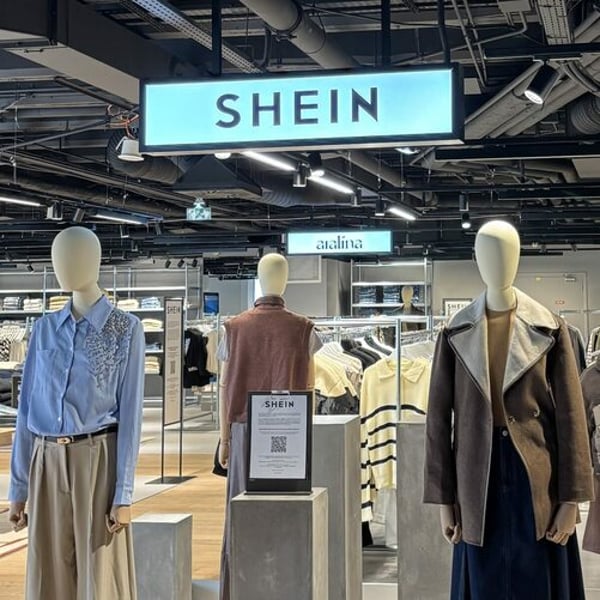
The new 1,000-square-metre space, mainly dedicated to womenswear, occupies a large open area segmented into several zones. Shein does not, however, occupy the entire level: a small part of the sixth floor is still devoted to Christmas décor. But there was certainly no party atmosphere in that area on Wednesday.
There is no major retail innovation in the layout. But the range is clearly compartmentalised: casualwear, sportswear, formalwear and accessories. Around 80% of the items are aimed at a female clientele across different profiles, the remainder forming a more limited menswear offer: zip-up jumpers, cargo trousers and other casual basics.
Clothes are presented on simple shelves fixed along the walls, while in the centre more classic rails display the vast majority of pieces on hangers. The overall look is restrained and clearly easy to reconfigure, but the staging is elevated by carefully chosen furnishings: marble, stone or glass tables add a chic touch, complemented by tempered-steel details.
The spaces are structured by zone, identified by Shein sub-brands such as Aralina, Motf, Dazy and Anewsta, offering a clear read of the range and a more premium visual impression. Each has a staging area with mannequins and a product presentation space. A few comfortable armchairs dotted around allow visitors to take a break, a sign that the brand also wanted to enhance the visitor experience.

On price, the promise of accessibility is clear: from a sports bra at €7.49 to a Dazy down jacket at €127.49, the store’s most expensive item. Yet although around 6,000 items have been selected, there is no sign of the €2 or €3 pieces that also helped drive the brand’s online success. Each in-store product carries a QR code on its label linking to the product page on the brand’s website, where prices are sometimes much lower online.
Another of Shein’s digital promises that does not necessarily carry over into the physical world is its offer for all body types. Sizes range from XS to XL, a more limited choice than online.
It is worth noting that the store features few screens, contrary to what you might expect from an e-commerce player. Here, Shein is asserting a physical presence and the classic conventions of apparel retail.
Finally, the opening did not escape controversy: beyond the gatherings in front of the building and the significant police presence around the event, protesters entered the Shein area to brandish placards and shout slogans against the Chinese retailer.
Despite this, inside the crowds were out in force. Bags filled, rails emptied. Shein has made a successful entry into the physical world, with a concept calibrated to appeal to a broad audience.
But what about the other floors of the department store? Merlin said he expected very low footfall on Wednesday. To try to generate traffic, the department store promised a voucher equivalent to the amount of Shein purchases made on Wednesday. Given the lacklustre traffic on the other seven levels, the pulling power of Shein as a locomotive for the whole of BHV remains to be demonstrated.
With Olivier Guyot
This article is an automatic translation.
Click here to read the original article.
Copyright © 2025 FashionNetwork.com All rights reserved.






The pivot is urgent because the old model is under pressure. April **** looked strong: Ready-Made Garment (RMG) exports rose **.** per cent year on year to $*.** billion. But the ten-month picture is weaker. From July-April FY****–**, apparel exports stood at $**.** billion, down *.** per cent. Knitwear fell *.** per cent to $**.** billion; woven fell *.** per cent to $**.** billion. The rebound is real, but so is the drag underneath.
AWARE is the sharpest EU-facing signal: blockchain-backed product data for Digital Product Passport (DPP) readiness. Open Supply Hub adds the factory-identity layer, pushing production information into an open platform. GIZ brings the longer reform spine, from May **** to February ****, covering energy efficiency, circularity, chemical management, renewable-energy skills and textile-waste transparency.
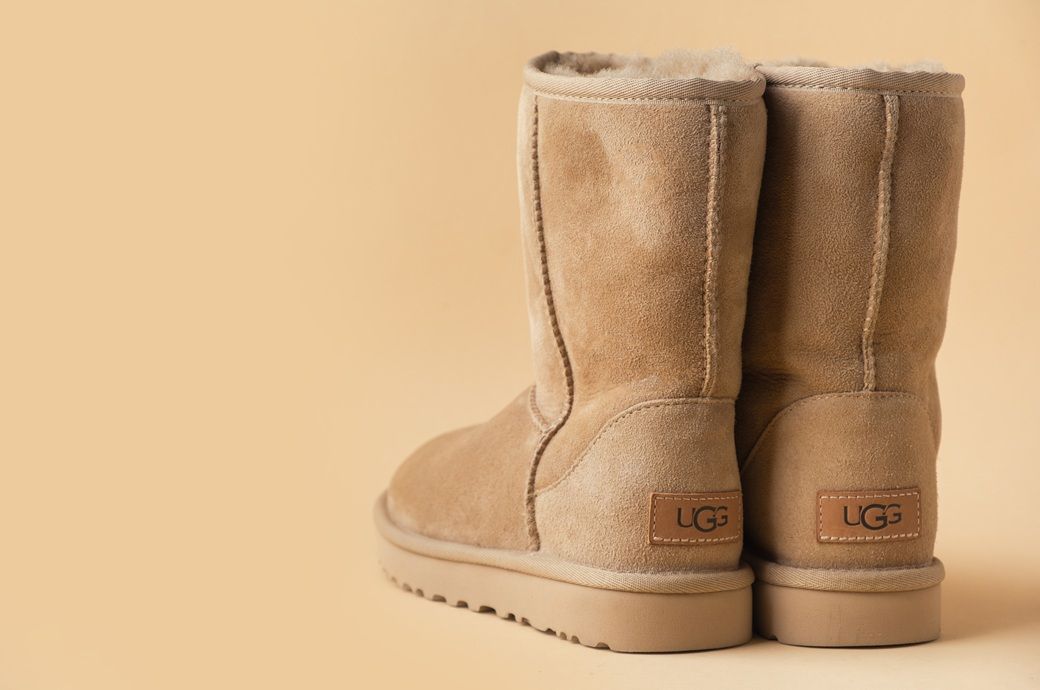
Kenneth Straka, Senior Product Development Manager at Deckers Outdoor Corporation, said that Deckers places strong emphasis on sustainability, noting that founder John Luke often reminded the team that the French word for sustainability is durability. This idea aligned with discussions at the Global Fashion Summit, where the theme centred on “Building Resilient Futures” in the sustainable and circular economy.
Durability has helped UGG become one of the most sought-after boot brands and a key sales driver for Deckers, alongside its sportswear brand Hoka. “One of the things we think about in terms of circularity is making products that last a long time and remain with consumers throughout their lives. We want products that consumers can wear for ** or ** years,” Straka said in an interview with Fibre*Fashion on the sidelines of the Global Fashion Summit in Copenhagen.
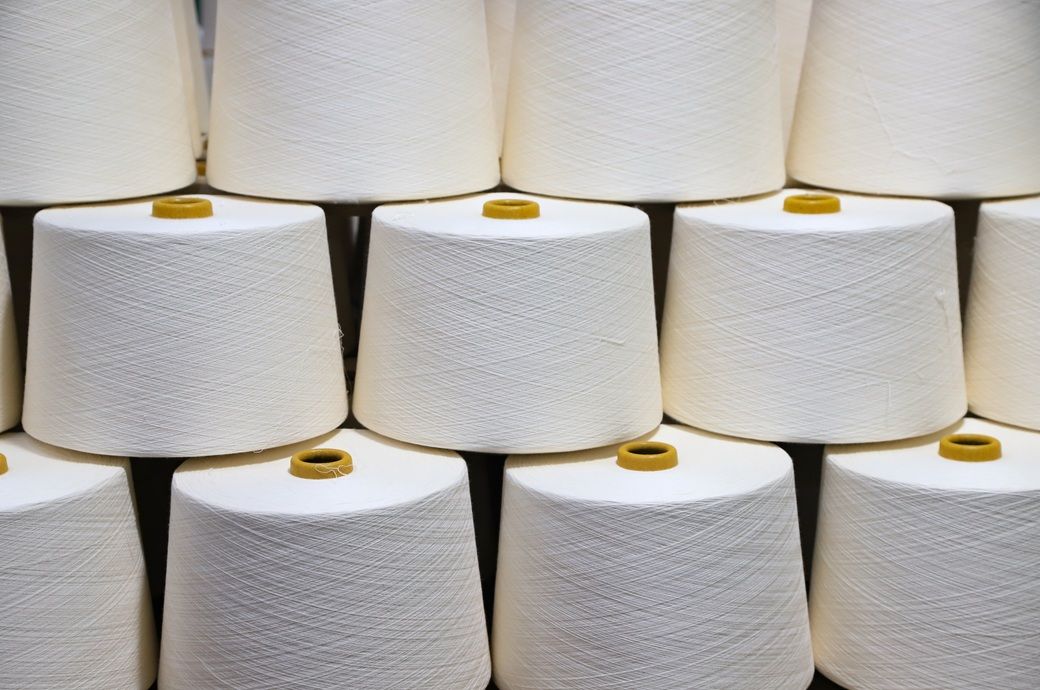
In the Tiruppur market, cotton yarn prices increased by ****;*–* per kg in this week despite sluggish local demand. Prices were quoted higher because of limited supply from spinning mills. A trader from the Tiruppur market told Fibre*Fashion, “Domestic demand remained limited, but spinning mills are not relying solely on the domestic market for cotton yarn sales. They are focusing more on exports, where demand and prices remain attractive. Mills have raised yarn prices following higher ICE cotton prices and the CCI’s increase in auction base prices, although ICE cotton has witnessed a sharp decline over the past two days.”
In Tiruppur, knitting cotton yarn prices were noted as: ** count combed cotton yarn at ****;***–*** (~$*.**–*.**) per kg (excluding GST), ** count combed cotton yarn at ****;***–*** (~$*.**–*.**) per kg, ** count combed cotton yarn at ****;***–*** (~$*.**–*.**) per kg, ** count carded cotton yarn at ****;***–*** (~$*.**–*.**) per kg, ** count carded cotton yarn at ****;***–*** (~$*.**–*.**) per kg, and ** count carded cotton yarn at ****;***–*** (~$*.**–*.**) per kg.


The border as lifeline

Bangladesh apparel reset: Compliance edge or energy trap?

Military jets’ crew members safely eject after Idaho air-show collision

-

 Entertainment5 days ago
Conan O’Brien hat tricks as Oscar host
-

 Tech1 week ago
Could Contact-Tracing Apps Help With the Hantavirus? Not Really
-

 Tech1 week ago
I Tried the Best Captioning Smart Glasses, and Only One Leads the Pack
-

 Fashion5 days ago
Italy’s Zegna Group’s Q1 growth boosted by strong organic performance
-

 Sports1 week ago
Bobby Cox, legendary Atlanta Braves manager who led 1995 World Series champions, dead at 84
-

 Entertainment1 week ago
Martin Short: Facing tragedy with joy
-

 Entertainment1 week ago
Tom Brady gets back at Kevin Hart during Netflix roast
-

 Entertainment1 week ago
Martha Stewart: How to make an omelet