

Fashion
US’ Brooks Running powers ahead with 17% Q3 surge

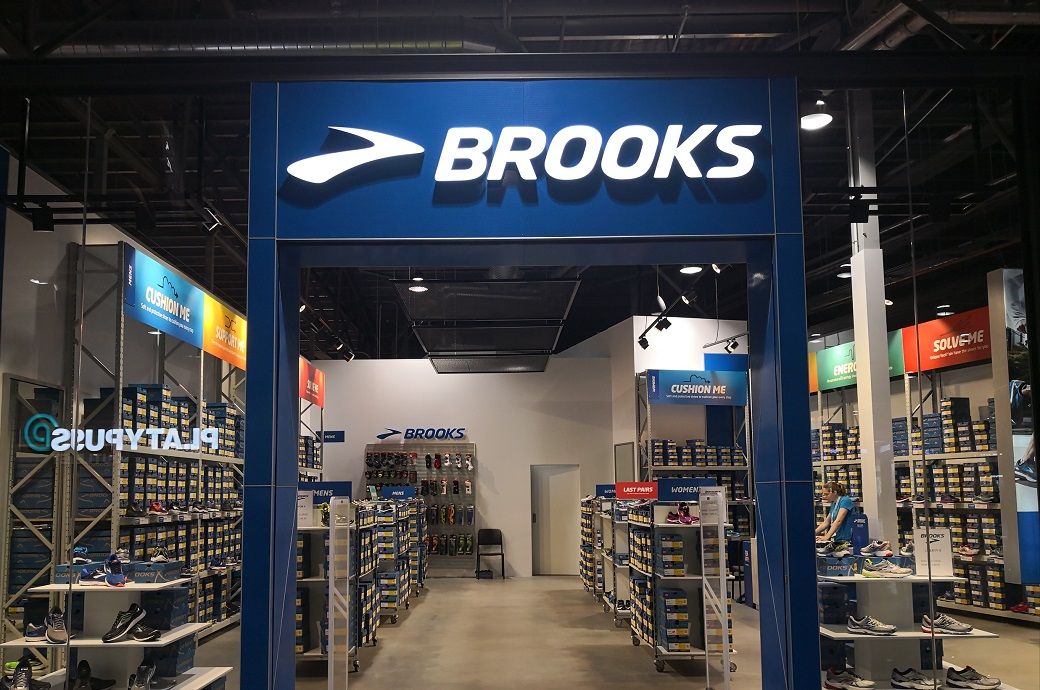
The company accelerated global expansion efforts, growing year-to-date (YTD) revenue by 23 per cent in Europe, Middle East, and Africa (EMEA) and 82 per cent in Asia Pacific and Latin America (APLA) over the same horizon last year. Brooks’ unwavering focus on runners continues to strengthen its position on the global stage as the running category expands worldwide.
Brooks Running has posted its ninth straight quarter of YoY growth, with Q3 FY25 revenue up 17 per cent, fuelled by double-digit gains across all regions and channels.
EMEA revenue rose 23 per cent and APLA 82 per cent year-to-date.
Strong footwear demand, immersive brand activations, and product launches such as Cascadia Elite boosted performance and market share globally.
The global running market continued to grow in Q3, driven by strong demand for performance running footwear. In the US, where adult performance running footwear increased 13 per cent in Q3, the company achieved highest market share at national retail, Brooks Running said in a press release.
YTD through Q3, Brooks held three of the top six adult performance footwear styles sold at US national retail. In France and Germany, where in Q3 performance running footwear grew 9 per cent and 23 per cent, respectively, Brooks outpaced both markets with 15 per cent growth in France and 29 per cent growth in Germany.
“Our entire global team wakes up every day thinking about the runner—how they move, what they feel, the experience they desire and expect from their Brooks gear,” said Dan Sheridan, CEO of Brooks Running. “I am super proud of the way Brooks is executing, even against a backdrop of continued economic impacts and uncertainty. More people around the world are running and choosing an active lifestyle and Brooks is central to their health and wellness goals.”
In Q3, Brooks launched five footwear styles in three core performance categories—cushion, trail, and speed—fuelling a 17 per cent growth in YoY footwear revenue. The brand also previewed the all-new Cascadia Elite, a shoe that’s helped propel Brooks’ elite trail athletes to 12 first place finishes and 30 podiums this season. Core franchises continued to post gains with Adrenaline GTS up 20 per cent and Glycerin up 29 per cent while full-price products grew 21 per cent.
Through its ongoing relationship with runDisney, Brooks launched limited-edition product at the Disneyland Halloween Half Marathon Weekend in September.
From the Brooks House of Mountains at Ultra-Trail du Mont-Blanc (UTMB) in Chamonix to the Brooks Hyperion Houseboat at the TCS Sydney Marathon, Brooks brought its unique energy to the global running community in Q3 through a series of immersive brand experiences at iconic running events.
In Tokyo and Berlin, Brooks opened its signature Hyperion Houses where runners could try on new products and experience the brand in real life, added the release.
Fibre2Fashion News Desk (SG)





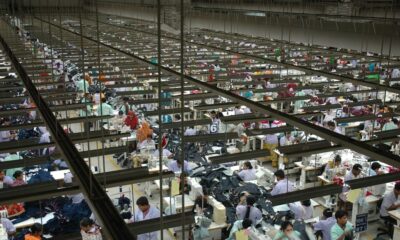




Current account excluding gold and energy indicated net deficit of $3.9 billion, while goods saw a deficit of $9.5 billion.
Turkiye recorded a current account deficit (CAD) of $9.6 billion in March, the country’s central bank said.
Treasury and Finance Minister Mehmet Simsek said the CAD is expected to widen this year, due to high energy and non-energy commodity prices.
Simsek said the deterioration is likely to remain temporary and manageable, thanks to stronger macroeconomic fundamentals and policy gains.
According to annualised data, current account deficit recorded as $39.7 billion (2.6 per cent of gross domestic product) in March, while the goods deficit recorded as $77.8 billion.
Simsek said the deterioration is likely to remain temporary and manageable thanks to stronger macroeconomic fundamentals and policy gains, domestic media outlets reported.
Turkiye is heavily reliant on imported energy, whose prices spiralled due to the Middle East conflict.
Simsek said elevated global commodity prices would put pressure on the external balance, but emphasised that the government’s economic programme had improved resilience against such shocks.
He said foreign direct investment (FDI) inflows totalled $1 billion in March, bringing annualised foreign direct investment to $12.6 billion.
The new investment incentive package under discussion in parliament now is expected to strengthen the country’s financing structure and support long-term capital inflows, he added.
Fibre2Fashion News Desk (DS)
During the first quarter of ****, the UK’s imports of textile fabrics eased down *.** to £*,*** million (~$*,*** million), against £*,*** million in January-March **** but slightly higher from £*,*** million in the fourth quarter of ****. Its imports of fibre were noted at £** million (~$***.** million) steady as £** million in Q*, **** but slightly lower than £** million in Q*, ****.
During the third month of this year, the country’s clothing imports declined *.** per cent to £*.*** billion (~$*.*** billion), compared with £*.*** billion in March ****. But the inbound shipment was slightly higher month on month compared with £*.*** billion in February ****.

Higher rents, utility bills and fuel prices are eating away at already thin profit margins, it found.
High inflation is cutting deep into Bangladesh consumer spending, with weak demand turning one of the biggest concerns for businesses, DCCI said.
Higher rents, utility bills and fuel prices are eating away at already thin profit margins.
DCCI’s economic position index revealed that consumers have sharply reduced spending as the cost of living continues to rise.
SMEs are feeling the pressure the most.
The chamber’s economic position index (EPI) revealed that consumers have sharply reduced spending as the cost of living continues to rise, putting pressure on retailers, transport operators and other service providers.
Small and medium enterprises (SMEs) are feeling the pressure the most as they struggle to manage higher operating costs without losing customers.
Businesses also cited difficulties in obtaining bank loans, while delays in licensing and other regulatory procedures are adding to costs.
The DCCI report identified a shortage of skilled workers, particularly in technical and customer service roles, as another challenge for the sector.
The country’s inflation rose to 9.04 per cent in April from 8.71 per cent in March, according to official statistics.
Fibre2Fashion News Desk (DS)


Two Americans arrested at Japanese zoo

Turkiye’s current account deficit expected to widen in 2026: Minister

UK’s clothing imports fall 3% in Q1, sharply lower than Q4 2025

-

 Entertainment6 days ago
Conan O’Brien hat tricks as Oscar host
-

 Tech1 week ago
Could Contact-Tracing Apps Help With the Hantavirus? Not Really
-
 Fashion5 days ago
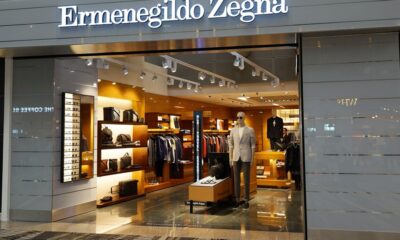
Italy’s Zegna Group’s Q1 growth boosted by strong organic performance
-

 Sports1 week ago
Bobby Cox, legendary Atlanta Braves manager who led 1995 World Series champions, dead at 84
-

 Entertainment1 week ago
Martin Short: Facing tragedy with joy
-

 Entertainment1 week ago
Tom Brady gets back at Kevin Hart during Netflix roast
-

 Sports1 week ago
Jacob Fatu unleashes vicious assault on Roman Reigns after World Heavyweight Championship loss at WWE Backlash
-

 Entertainment1 week ago
Martha Stewart: How to make an omelet